Red Gold Saya Katana
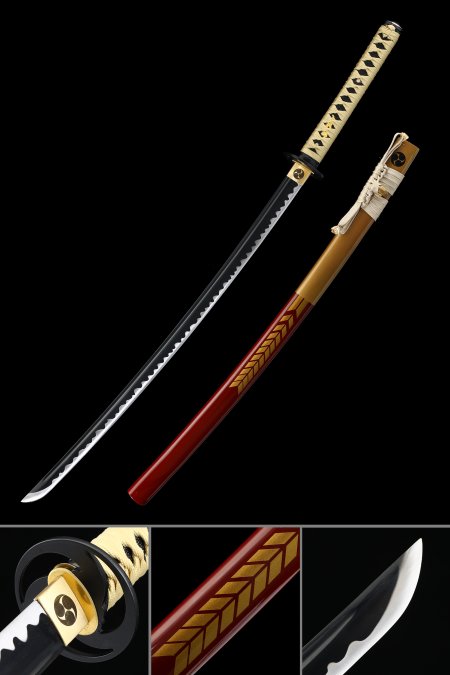
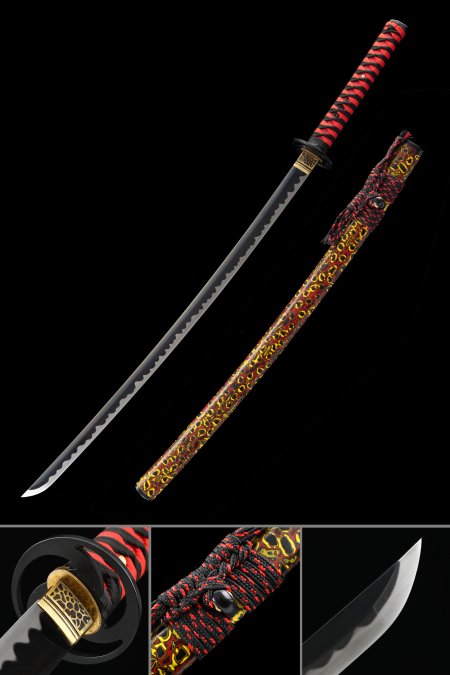
The Red Gold Saya Katana collection pairs bold lacquered hardwood scabbards in striking red-gold finishes with hand-forged manganese steel blades - a combination that commands attention on any display wall or collector's shelf. Each piece is crafted full-tang with hand-wrapped tsuka cord, delivering the structural integrity and visual drama that serious collectors demand. Every order ships free with easy returns, so adding a centerpiece to your collection is completely risk-free.

Free Shipping
259.00 USD

Related Collections
Frequently Asked Questions
What makes manganese steel a good choice for display katana?
Manganese steel is valued in collectible sword production for its high hardness and resistance to surface deformation during the forging process. Unlike standard carbon steel, manganese steel maintains a consistent, uniform finish after heat treatment - which is why it's particularly well-suited to the black blade aesthetic seen in this collection. The dark surface isn't a coating or paint; it's a result of how the steel interacts with the forging and quenching process. For display purposes, this means the blade holds its visual character over time without the patchy oxidation that can affect lower-grade steels. Full-tang construction using manganese steel also ensures the blade and handle form a single rigid unit, which is important for long-term structural stability on a display stand or wall mount.
How is the red-gold finish applied to the hardwood saya?
The red-gold saya in this collection is finished using a lacquer process applied over shaped hardwood. Unlike a single-coat paint finish, lacquering involves multiple layers built up and cured progressively, which creates visual depth in the color. Under direct light the surface reads as a warm gold; in softer or angled light, the red undertones become more prominent. This layered quality is what distinguishes a properly lacquered saya from a simple dyed or painted scabbard. The hardwood base provides a stable substrate that resists warping when stored in a climate-controlled environment, and the lacquer itself acts as a moisture barrier that helps preserve the finish over years of display use.
How does the tsuka wrap color affect the overall display presentation?
Tsuka wrap color is one of the most immediately visible design decisions on a katana, and in this collection it's used intentionally to either reinforce or contrast with the red-gold saya. The red-black wrap variant creates a unified palette where the handle echoes the tones of the scabbard, producing a cohesive display piece that reads well from a distance. The beige cord variant takes the opposite approach - the neutral handle color lets the red-gold saya dominate visually while providing a traditional, understated counterpoint. Collectors who display multiple pieces together often find that mixing wrap colors across a group creates visual variety without introducing clashing hues. The underlying handle structure is identical across variants; the wrap is both the aesthetic differentiator and the functional grip surface.
Is the dragon motif on the saya hand-carved or applied separately?
On select variants in this collection, the dragon motif is rendered as surface detail integrated into the saya's finish rather than a separately attached hardware piece. This approach keeps the scabbard profile clean and prevents raised elements from creating pressure points where the blade seats inside the saya. The detail level on these motifs is calibrated for close-range display viewing - fine enough to reward inspection when the piece is held, but bold enough to remain legible when displayed on a wall mount at arm's length. Collectors specifically interested in dragon-themed display pieces may also want to explore the broader Dragon Katana collection, which includes additional variants with dragon motifs expressed through different decorative formats including tsuba and tsuka fittings.
What display and storage conditions best preserve a lacquered saya?
Lacquered hardwood scabbards perform best when stored and displayed away from direct sunlight and humidity fluctuations. Prolonged UV exposure can cause the red pigments in the lacquer to fade unevenly, while high humidity cycles can introduce minor surface cracking in the lacquer layers over time. For indoor display, a stable room temperature between 60-75°F with moderate humidity is ideal. Avoid placing the piece near heating vents, exterior windows, or areas with frequent temperature swings. For storage, wrapping the saya loosely in a soft cloth before placing it in a protective bag prevents surface contact scratches. The blade itself benefits from a light application of choji oil or camellia oil on the steel surface every few months to maintain its finish and prevent any surface oxidation.