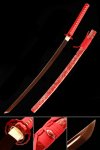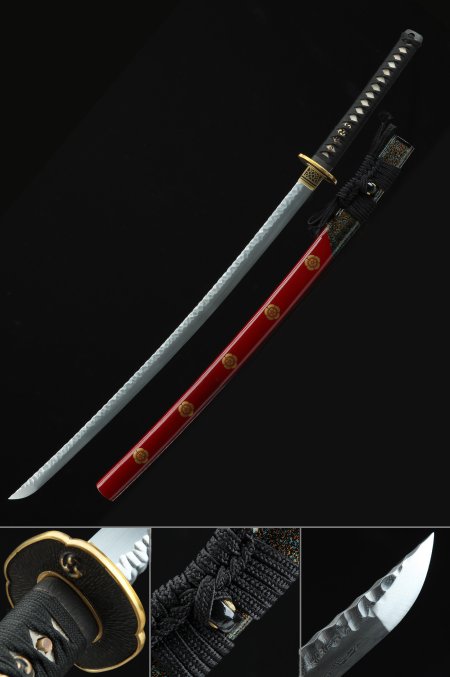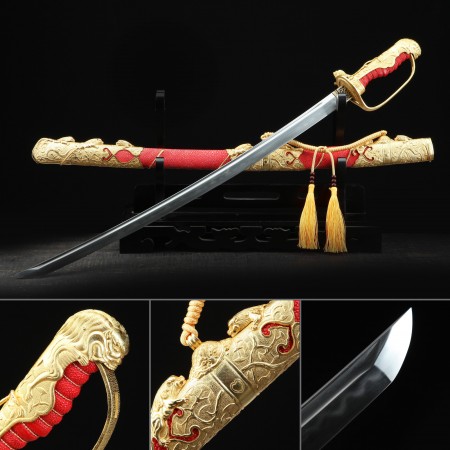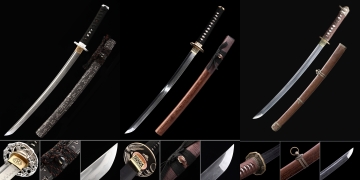
Red Melaleuca Steel Katana

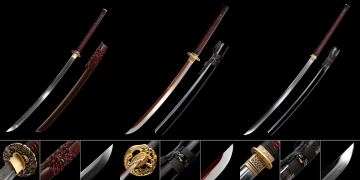
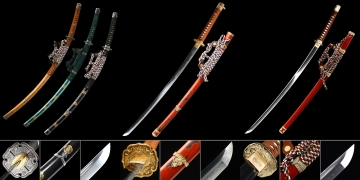
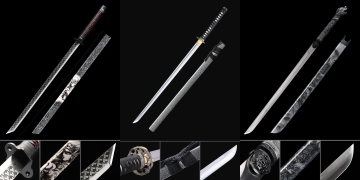
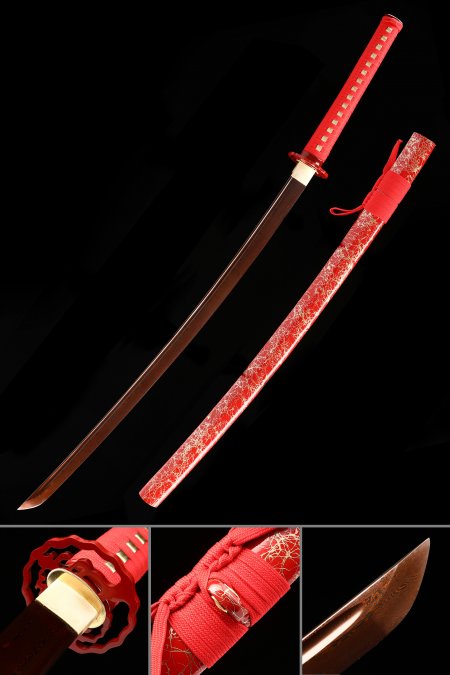
Red Melaleuca Steel katanas bring together the visual drama of layered Damascus-style patterning and rich crimson lacquerwork into pieces built for serious display. Each blade is hand-forged from folded melaleuca steel, revealing a flowing grain that collectors prize for its depth and individuality. Mountings range from gold dragon saya to rayskin-wrapped handles, giving every piece a distinct character on the shelf. Enjoy free shipping on your order and a hassle-free return policy.

Showing 3 Products

Frequently Asked Questions

What is melaleuca steel and how is it made?
Melaleuca steel is a folded high-carbon steel produced by repeatedly heating, folding, and working a steel billet during the forging process. Each folding cycle doubles the existing layers, and after many folds the steel develops a flowing woodgrain or ladder-like surface pattern that becomes visible once the blade is ground and polished. The name refers to the resemblance of the pattern to the layered bark of the melaleuca tree. This technique is purely a hand-forging process — no two resulting grain patterns are alike, which is one of the main reasons collectors prize it. The folding also helps distribute carbon more evenly through the steel, contributing to the visual consistency of the final pattern. For display purposes, the grain is best appreciated under a single directed light source that rakes across the flat of the blade.
Does the red lacquer saya require any special care?
Red piano lacquer and hand-applied lacquer finishes are durable but sensitive to a few specific conditions. Prolonged direct sunlight is the main threat — UV exposure causes the red pigment to fade gradually and can cause the lacquer surface to develop fine cracks or a cloudy haze over time. For indoor display, positioning away from south-facing windows or using UV-filtering glass in a display case is a practical precaution. The lacquer surface should be cleaned with a soft dry cloth; avoid silicone-based sprays or furniture polish, which can leave a film. If a small chip appears, clear lacquer touch-up pen products used for instrument finishes work well for minor repairs. Storing the saya horizontally in low-humidity conditions helps preserve both the lacquer and the underlying wood structure.
How does melaleuca steel differ from monosteel or T10 blades?
Monosteel blades — including popular grades like T10 and 1095 — are forged from a single homogeneous steel bar. They offer reliable, predictable performance and are easier to produce consistently. Melaleuca steel, by contrast, starts as a billet that is folded many times, creating a layered grain structure visible on the polished surface. This grain is the defining visual feature collectors seek. T10 in particular is valued for its fine carbide distribution from the added tungsten content, producing a blade that polishes to a clean mirror surface. Melaleuca steel trades that clean mirror look for visible patterning and surface depth. Neither is objectively superior — they represent different aesthetics and different forging traditions, and serious collectors often display examples of both as a study in contrast.
What should I look for in the fittings when evaluating quality?
On a well-assembled collectible katana, the tsuba (guard) should fit snugly on the habaki (blade collar) with minimal side-to-side play. Cast alloy tsuba with pierced or relief motifs — such as dragon or lion designs — should show clean edges and consistent finish, not blurry cast lines or rough spots. The saya should accept and release the blade smoothly; binding or excessive looseness both indicate fit issues. For handles, rayskin (samegawa) wrap should show tight, even coverage with the nodules clearly defined, and the ito braid should have consistent diamond spacing down the full length of the tsuka. Gold-accented fittings should be examined under light for even plating coverage, particularly at edges and recessed areas. These details separate thoughtfully assembled display pieces from bulk-produced alternatives.
Is a red melaleuca katana a good gift for a Japanese sword collector?
For a collector who already owns more common monosteel or stainless display pieces, a folded melaleuca steel katana with red lacquer mountings makes a genuinely distinctive addition because it introduces a different forging tradition and a strong visual identity into the collection. The layered grain pattern gives the recipient something to study and discuss — it is a conversation piece in a way that plain satin-finish blades are not. The red and gold colorway also photographs exceptionally well, which matters for collectors who document their displays. If you are unsure about the recipient's existing collection, pairing a red piece with a complementary black or dark-finish katana allows them to build a two-sword display arrangement with strong visual contrast. Full-tang construction and a real hamon are features that knowledgeable collectors will notice and appreciate immediately.

Customer Reviews