What makes a tactical katana different from a traditional Japanese katana?
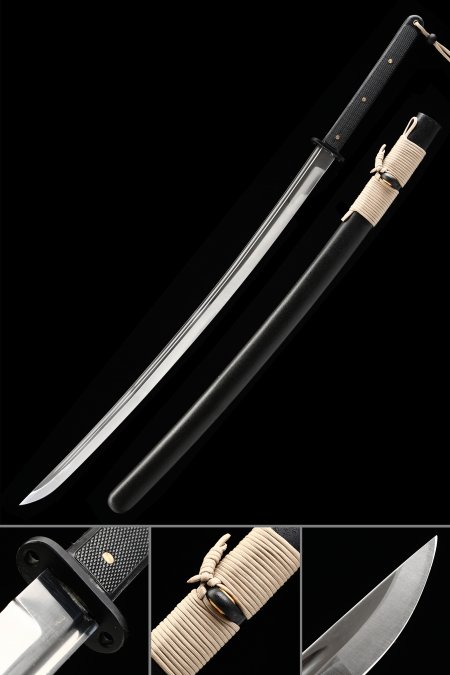
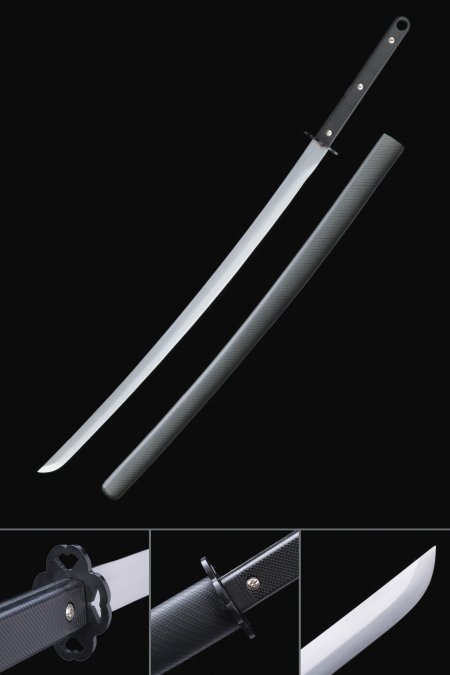
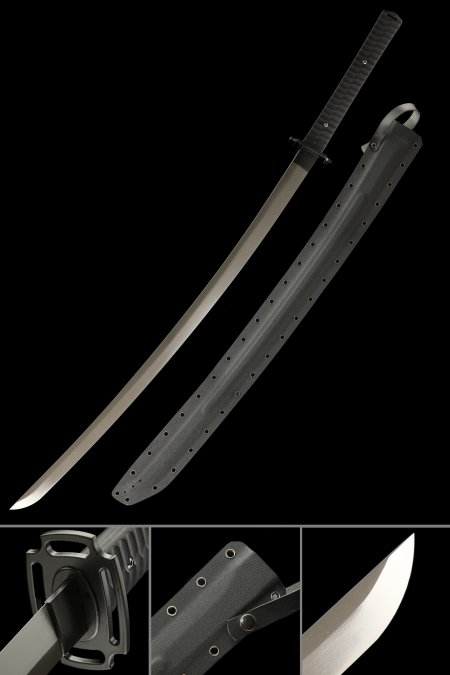
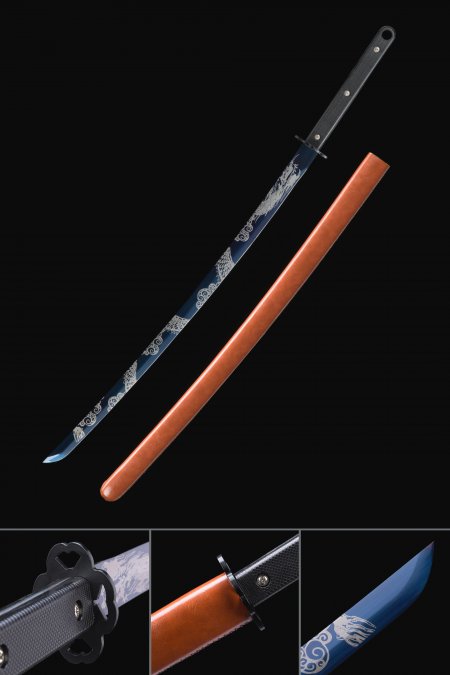
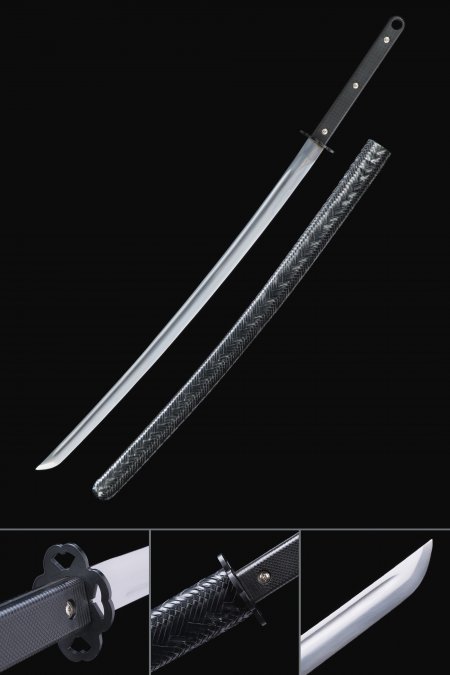
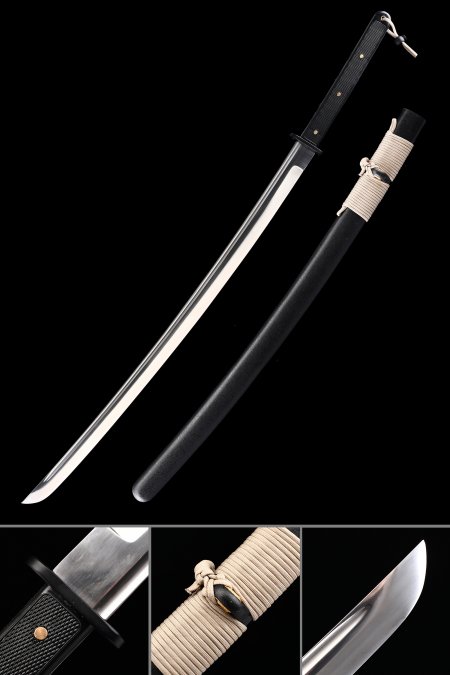
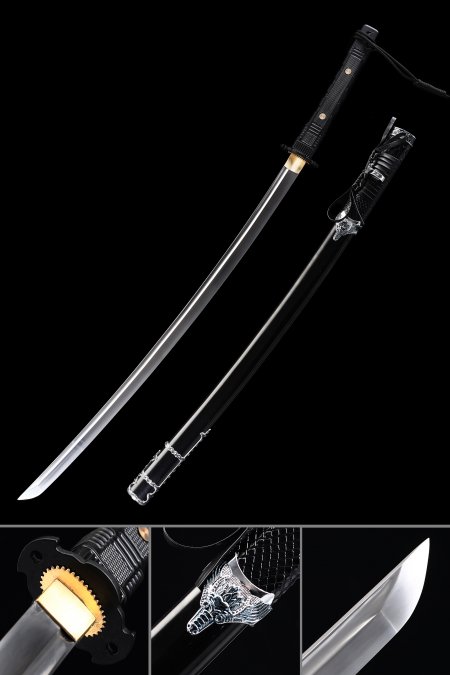
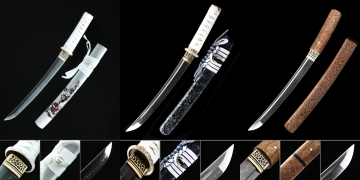
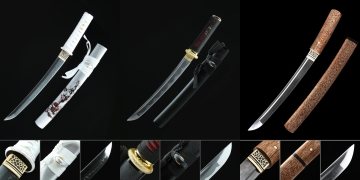
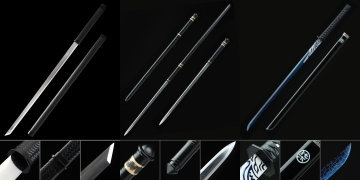
A tactical katana uses the same fundamental geometry as a traditional Japanese katana - the curved single-edged blade, the two-handed handle length, the full-tang construction that runs the steel through the complete handle - while applying a contemporary aesthetic treatment to the presentation. The differences are primarily in the surface finishing and fittings rather than the blade itself. Where a traditional katana uses ito cord wrapped over same ray skin on the handle, a tactical katana uses leather wrapping or a cord wrap in black. Where a traditional katana uses a decoratively finished tsuba and polished metal fittings, a tactical katana uses minimalist or matte-finished fittings. The saya is typically black or dark, and the overall color scheme is darker and more austere than the traditional presentation. The blade underneath these presentation differences is made from the same materials - 1095 carbon steel and spring steel in this collection - and goes through the same forging, heat treatment, and tempering process as any other sword in the catalog. The tactical aesthetic is a surface layer; the real sword construction is identical.
What is spring steel and how does it compare to 1095 carbon steel for a katana?
Spring steel is a category of alloy steel characterized by high yield strength and excellent ability to flex and return to its original shape without permanent deformation. The most common spring steel in sword production is 9260, which contains silicon as the primary alloying element - silicon significantly increases the steel's elastic limit, giving the blade a characteristic springiness when flexed. Compared to 1095 carbon steel at 0.95 percent carbon, 9260 spring steel achieves hardness through a different mechanism and produces a blade that is less brittle than a similarly hardened high-carbon steel, which makes it more suitable for a sword that will experience significant bending forces. The trade-off is that spring steel does not take as fine an edge as the best high-carbon steels and the surface character differs from the hamon-capable carbon steels. For a tactical katana designed to be an active-handling display collectible, spring steel's combination of toughness and flexibility is appropriate. For a display piece where edge quality and surface character are the priority, 1095 carbon steel is the better choice.
How does the black leather handle affect the grip and display of a tactical katana?
Black leather wrapping on a tactical katana handle provides a firm, consistent grip surface that is different in character from ito cord wrapping over ray skin. Leather conforms more uniformly to the hand than cord wrapping, producing a smooth grip without the slightly raised texture of a traditional ito pattern. For a display collectible that is handled and examined regularly, leather is a practical and durable handle material that maintains its appearance well under normal use. For display purposes, the black leather handle creates a unified dark color scheme across the sword - black blade, black leather handle, dark fittings - that reads as a coherent design statement rather than a traditional presentation. The leather wrapping is visible and recognizable as a material choice rather than the standard ito, which gives the tactical katana a clearly contemporary character distinct from any traditionally finished sword in the same display.
Is a tactical katana appropriate for display alongside traditional Japanese swords?
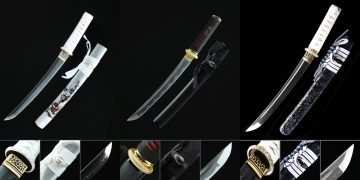
A tactical katana creates an interesting visual contrast alongside traditionally finished Japanese swords and can work well in a mixed display that intentionally shows the range of the katana format across different aesthetic approaches. The traditional swords provide historical and cultural context; the tactical katana demonstrates that the same fundamental design has a contemporary relevance and continues to be interpreted in new ways. In a display where this conversation between historical and contemporary is the organizing idea, the tactical katana has a natural place. In a display organized around historical authenticity or traditional craft, the tactical katana's contemporary aesthetic may feel out of context. The choice depends on the collection's overall purpose. For collectors who have both traditional and contemporary aesthetic interests, a mixed display where the tactical katana is clearly a different category from the traditional swords - perhaps on a separate tier or in a distinct display area - creates the contrast without implying that the two are equivalent types.