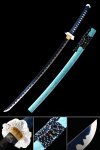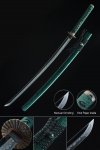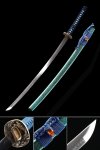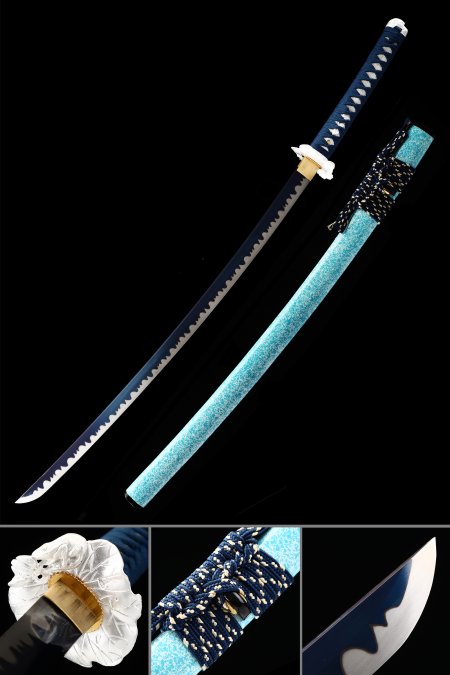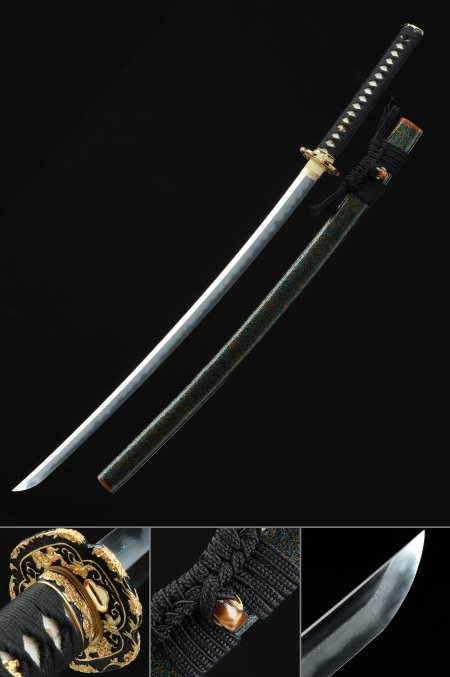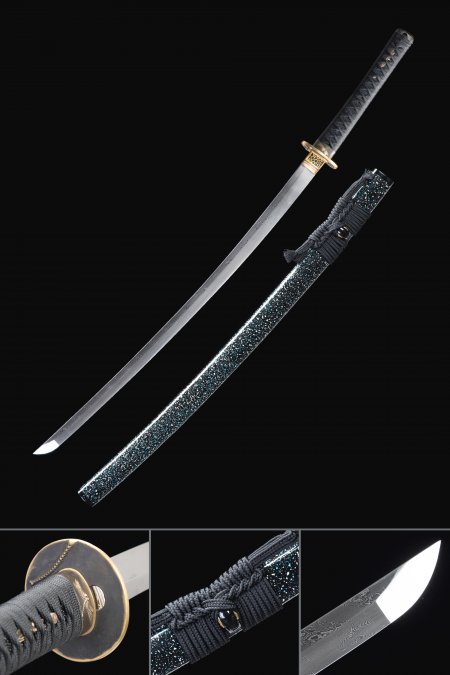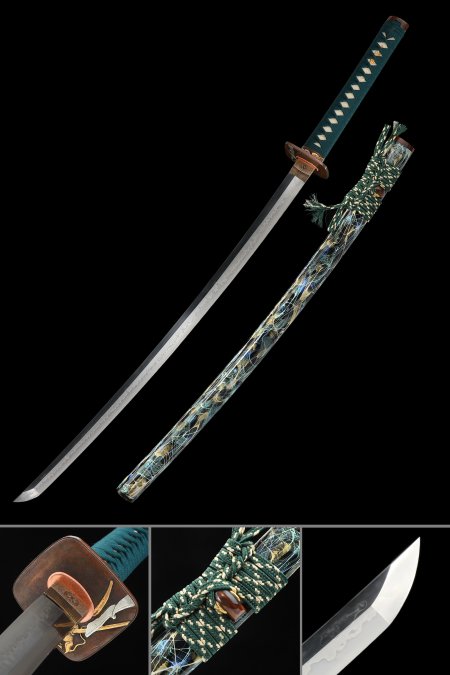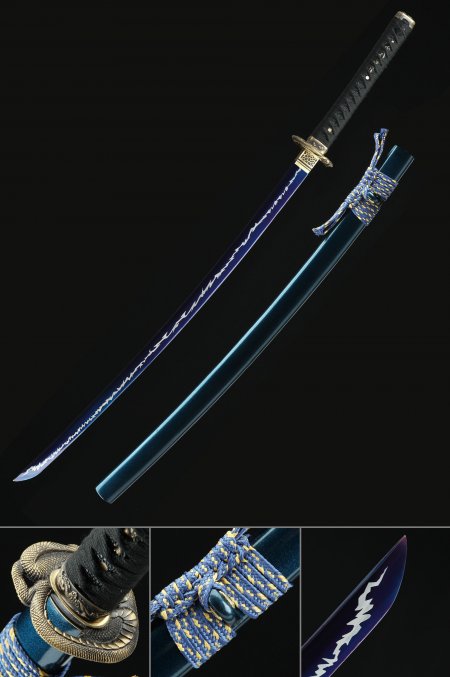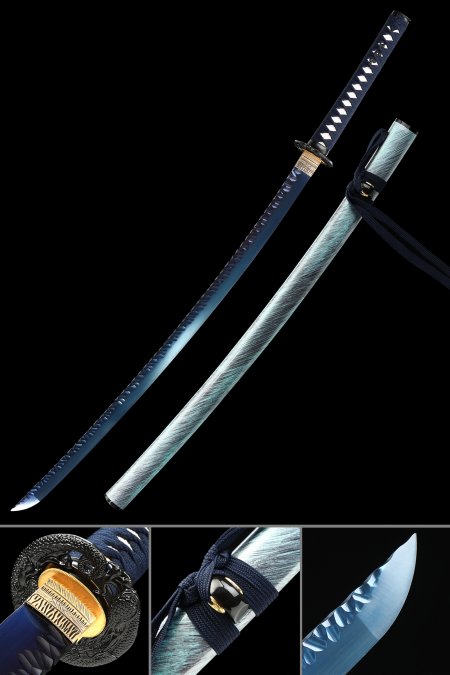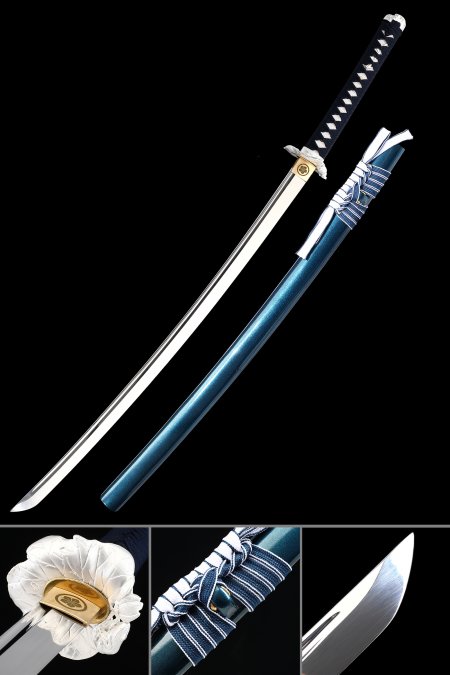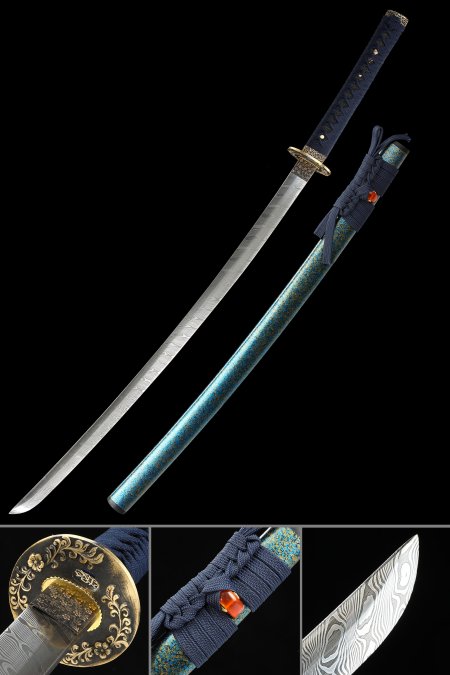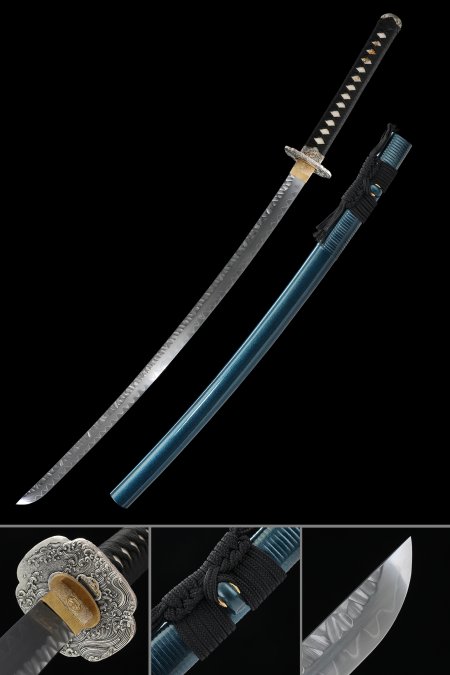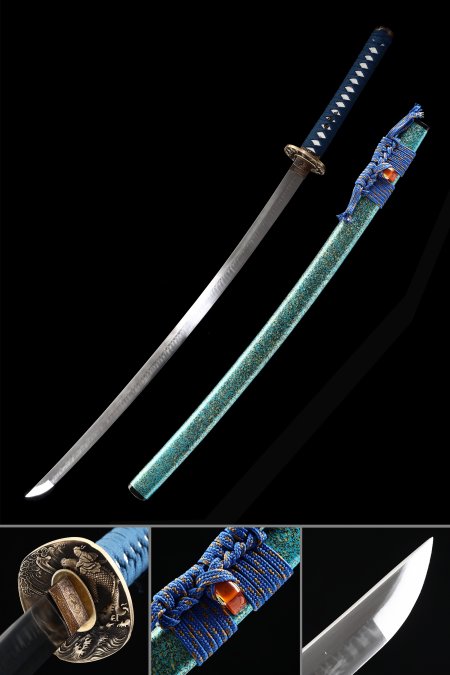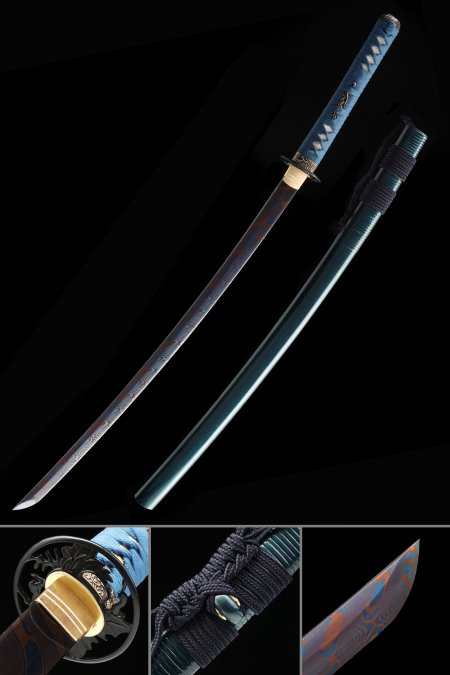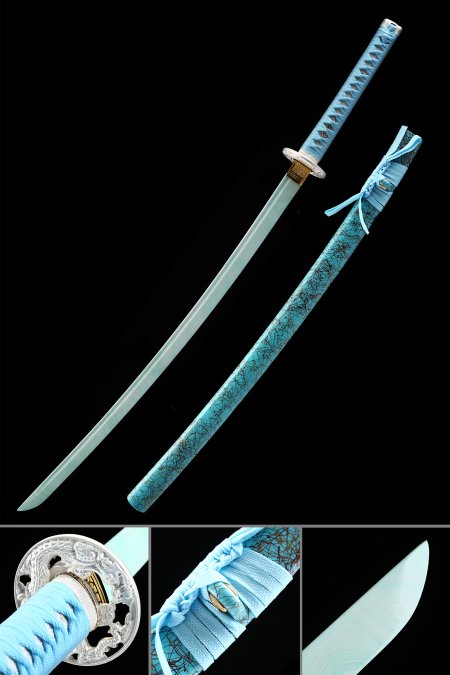
Teal Saya Katana

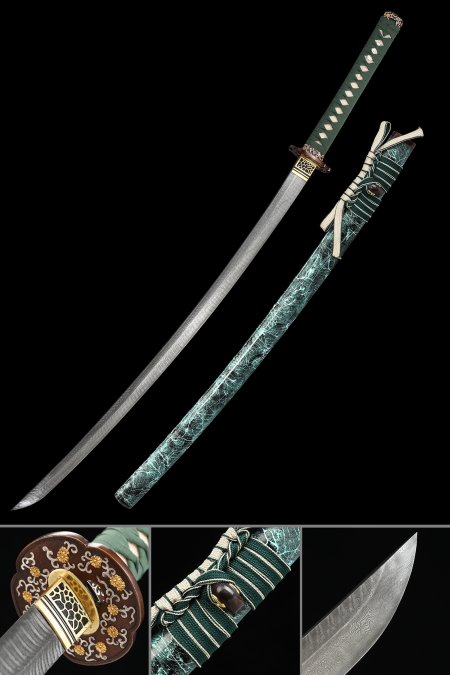
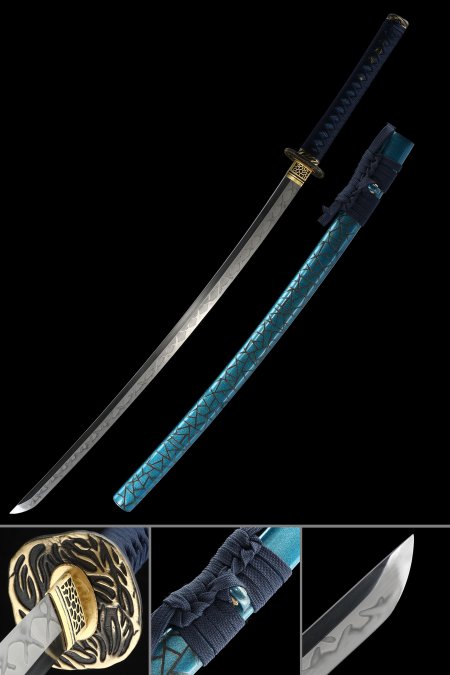
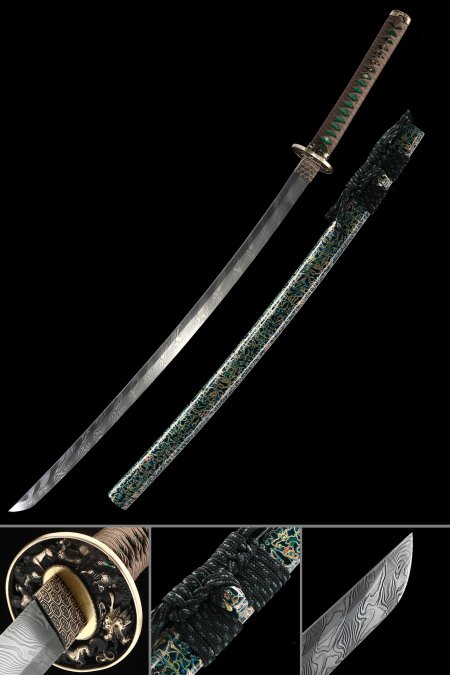
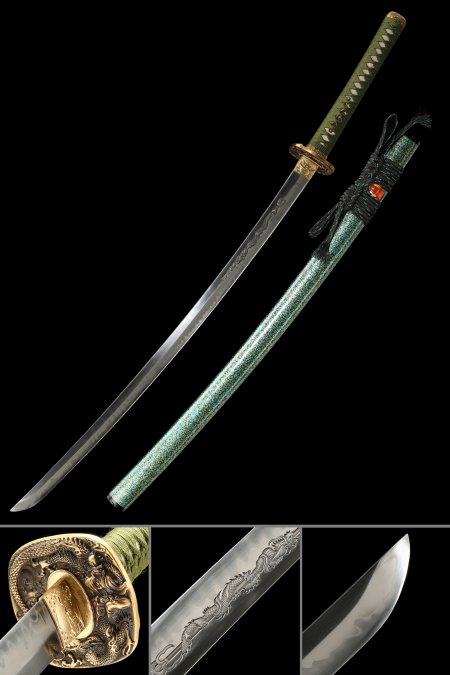
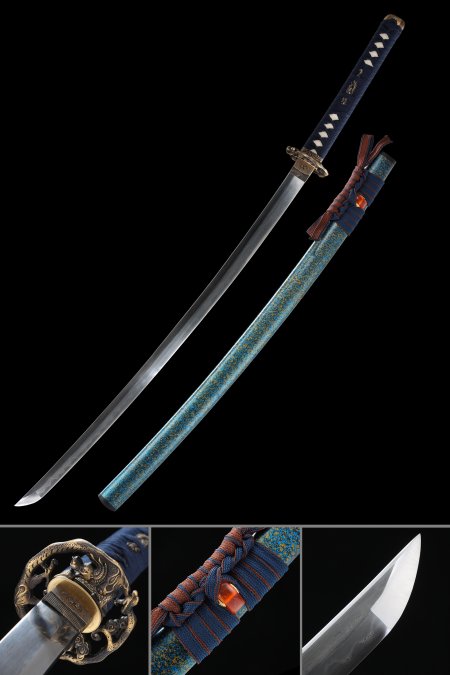
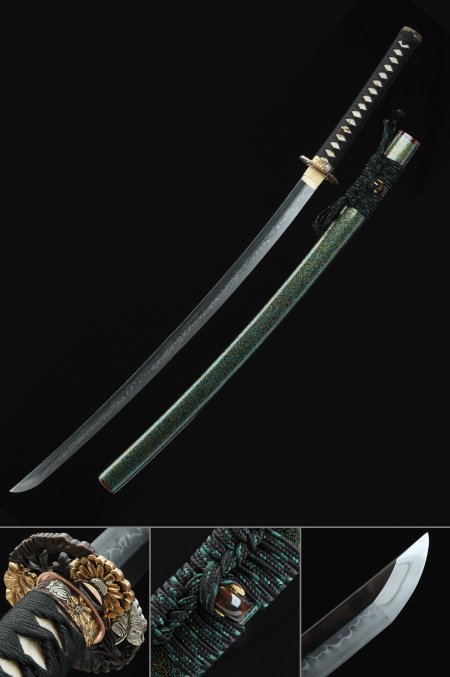
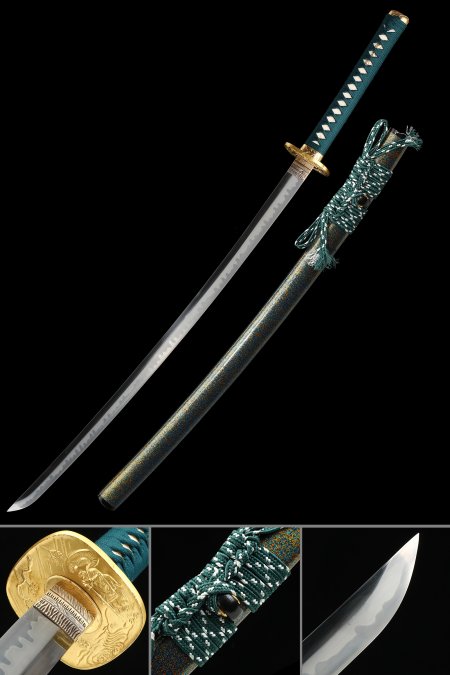
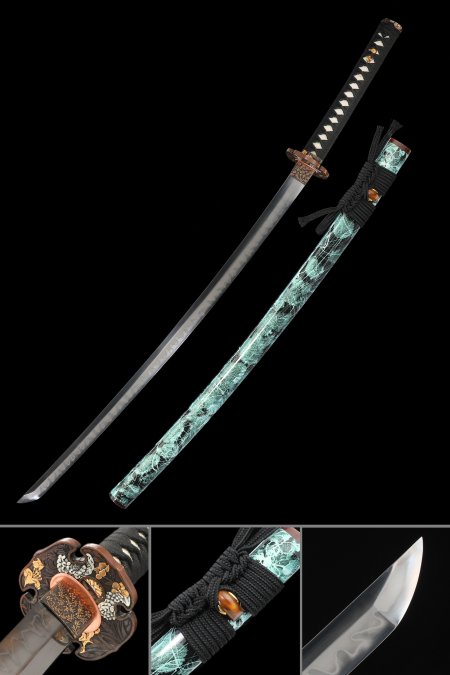
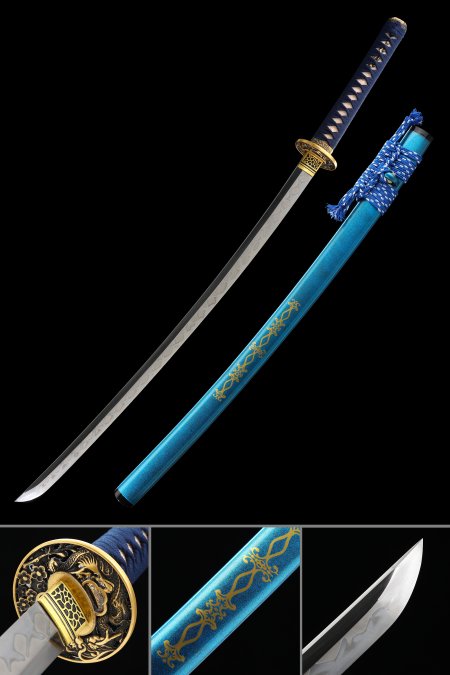
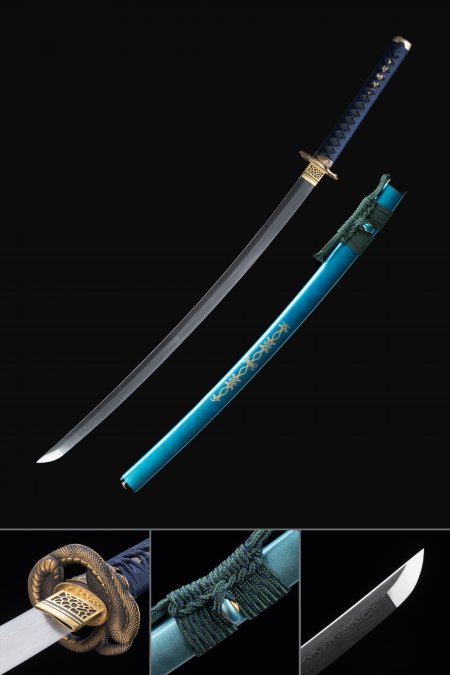
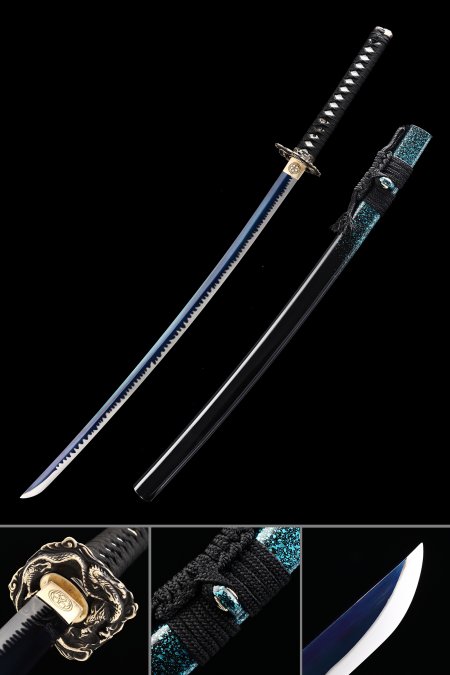
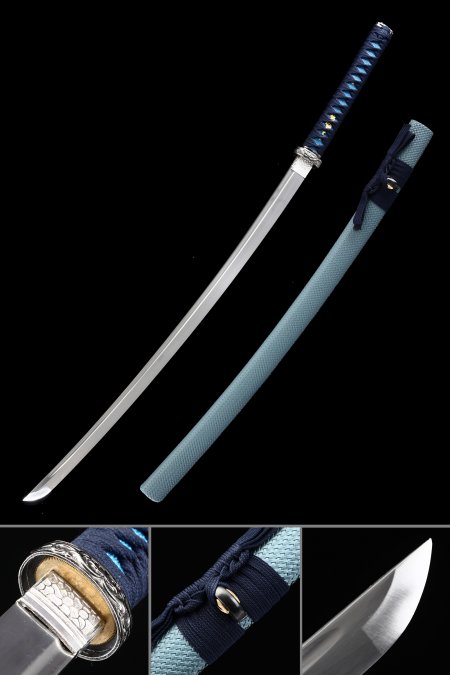
Teal saya katana collectibles bring together vivid lacquerwork and refined Japanese sword craftsmanship in a way that turns every display into a focal point. Each piece in this collection pairs a rich teal-lacquered scabbard with hand-forged carbon or Damascus steel blades, ornate tsuba designs, and carefully wrapped ito handles - details that reward a collector's eye. Free standard shipping is included on all orders, backed by our hassle-free return policy.
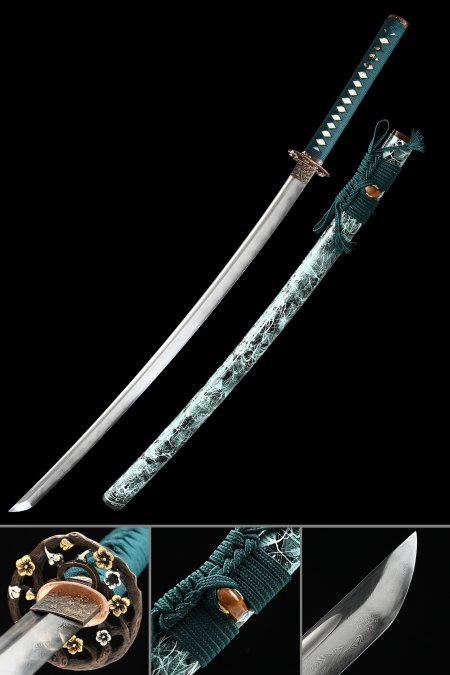
Showing 26 Products

Frequently Asked Questions

What makes teal lacquer saya different from standard wood scabbards?
A teal lacquered saya is constructed from a seasoned wood core - typically magnolia or a similar close-grained timber - over which multiple coats of lacquer are applied and cured between layers. This process builds a hard, moisture-resistant shell with genuine color depth rather than a simple painted surface. Standard unfinished or lightly oiled wood saya provide basic protection but show grain variation and are more susceptible to humidity changes over time. The lacquer finish seals the wood more completely, stabilizes the saya against seasonal humidity shifts, and gives the scabbard a polished presentation quality that is particularly valued in display-oriented collectibles. The teal tone itself is achieved through pigmented lacquer compounds, and the multi-coat process means the color has a subtle translucency that shifts between green and blue depending on the light source - a characteristic that plain painted finishes cannot replicate.
How does T10 clay-tempered steel differ from 1095 in a collectible katana?
Both T10 and 1095 are high-carbon steels well-suited to katana production, but they differ in composition and the results they produce during heat treatment. T10 contains a small amount of tungsten, which refines the grain structure and contribuves to a harder, more wear-resistant edge even after repeated polishing. When clay-tempered - a process where refractory clay is applied along the spine before quenching - T10 develops a visible hamon, the activity line that marks the boundary between the hardened edge and the more flexible spine. This hamon on a T10 blade tends to show fine crystalline detail called nie and nioi, features that experienced collectors examine closely and that distinguish authentic differential hardening from a simulated acid-etched line. A 1095 blade without clay tempering can still produce excellent results, but the hamon detail and the specific grain characteristics prized by discerning collectors are most pronounced in the T10 clay-tempered examples.
What should I know about caring for a Damascus steel katana on long-term display?
Damascus steel katana require slightly more attentive display care than mono-steel blades because the pattern-welded surface has microscopic valleys between the folded layers where moisture can accumulate. For long-term display, apply a thin, even coat of choji oil or a dedicated blade oil every two to three months, or more frequently in humid climates. Use a soft, lint-free cloth and avoid silicone-based products, which can interfere with the steel's appearance over time. Store or display the blade away from direct sunlight, which can cause the oil film to dry unevenly and may affect the lacquer on the teal saya as well. When handling during cleaning, use cotton gloves or hold the blade with a cloth - fingerprint oils are mildly acidic and will begin to etch the surface if left unaddressed. Horizontal display stands are generally preferred over vertical wall mounts for Damascus pieces, as they distribute the blade's weight evenly and reduce long-term stress on the habaki collar.
Are dragon and koi tsuba purely decorative, or do motifs carry traditional meaning?
Tsuba motifs in the Japanese sword tradition were rarely chosen arbitrarily. Dragon designs - ryū - historically represented power, wisdom, and protection, and appeared on ceremonial pieces associated with samurai of significant standing. In a contemporary collectible context, a dragon tsuba in bronze or silver continues to carry that visual authority, and its relief work is evaluated by collectors for the quality of its casting and the sharpness of detail in scales and claws. Koi motifs carry their own distinct symbolism rooted in perseverance and transformation - the koi fish ascending a waterfall is a well-known motif in East Asian iconography. On a teal saya katana, a koi tsuba creates a thematically unified aquatic aesthetic that many collectors find particularly appealing for coordinated display arrangements. Neither motif affects the structural function of the tsuba, but for collectors interested in building historically informed displays, understanding the iconography adds a layer of context that makes each piece more meaningful.
Can teal saya katana be displayed alongside blue-toned pieces in a collection?
Teal saya katana pair exceptionally well with blue-toned pieces because teal occupies a natural middle ground in the cool color spectrum, reading as neither purely blue nor purely green. In a wall-mounted or stand-displayed arrangement, teal lacquer scabbards create visual harmony with midnight-blue, navy, or cobalt ito wrapping without competing for attention. Collectors building a thematic cool-tone display often anchor the arrangement with one or two teal saya pieces and flank them with entries from a dedicated blue katana selection, varying the blade finishes - polished silver, hamon-active, or Damascus patterned - to create textural contrast within the color story. The key to a cohesive multi-piece display is varying one element while keeping another consistent: if the saya colors are related, introduce contrast through tsuba material or ito wrap texture rather than adding a third unrelated color into the grouping.

Customer Reviews

Gregory A Carey Pennsylvania, United States

This was my first purchase with True Katana so I went with one of the lesser expensive swords. Upon receiving the sword, I found it to be of good quality for the money. That being said I did have an issue with removing the sword from the scabbard. The first time took some finesse and patience as the sword did not want to budge. I eventually was able to free it and worked the sword back and forth until it smoothed out. All in all a fine sword for the money. I will be moving up in price range with my soon to be next purchase with this company.
1045 Carbon Steel Katana with Teal Blade and Dragon Tsuba in Blue Saya - Full Tang Collectible Sword 1045 Carbon Steel Katana with Teal Blade and Dragon Tsuba in Blue Saya - Full Tang Collectible Sword
David Greenwood New York, United States

I could not be more pleased with my order of the pictured katana. First, the packaging was very well done. Order arrived in a styrofoam box wrapped in water proof yellow tape. Inside, the blade was in its scabbard (saya) which was in a clear plastic wrap for protection. Upon removing the blade, I found it inside of an oiled tubular plastic wrap for corrosion protection. Second, the scabbard had a beautiful, consistent coloration and was made of hardwood with gold fittings - classy. Third the blade - 5/16" thick at the crossguard (tsuba) tapering to 3/16" at the tip. The differential heat treating line was stunning. The blade was very sharp and the handle was also covered in clear plastic wrap for protection. What a great value - I will definitely be a repeat customer!

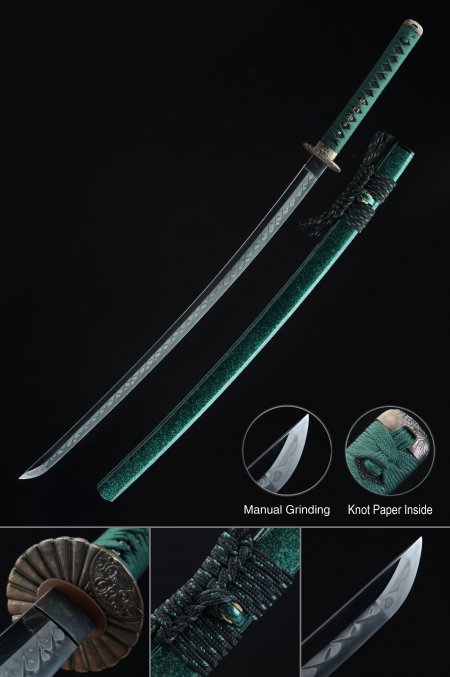
T10 Clay Tempered Katana with Real Hamon in Green Saya - Full Tang Collectible Sword with Copper Tsuba T10 Clay Tempered Katana with Real Hamon in Green Saya - Full Tang Collectible Sword with Copper Tsuba