Text Blade Katana

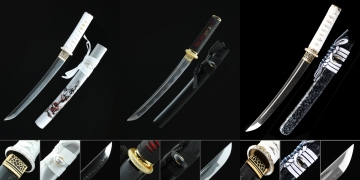
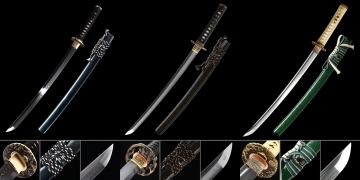
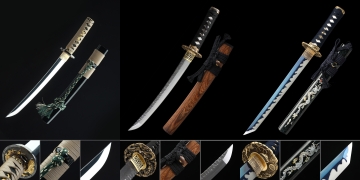
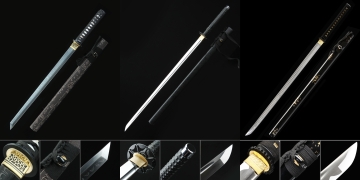
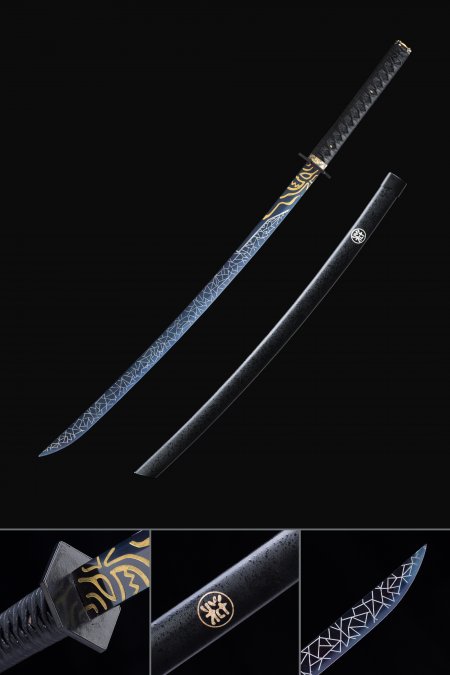
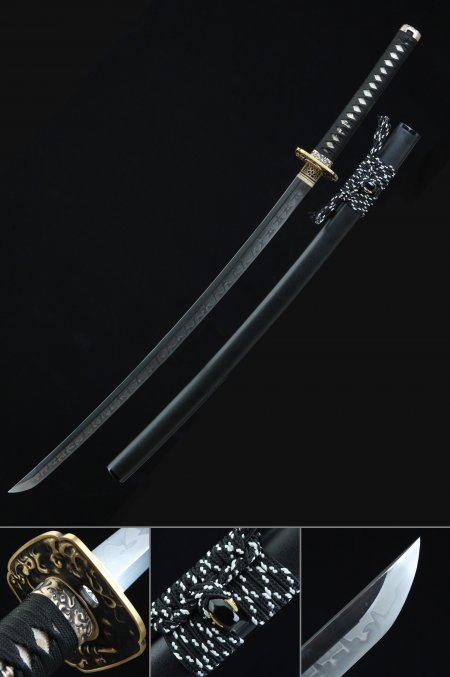
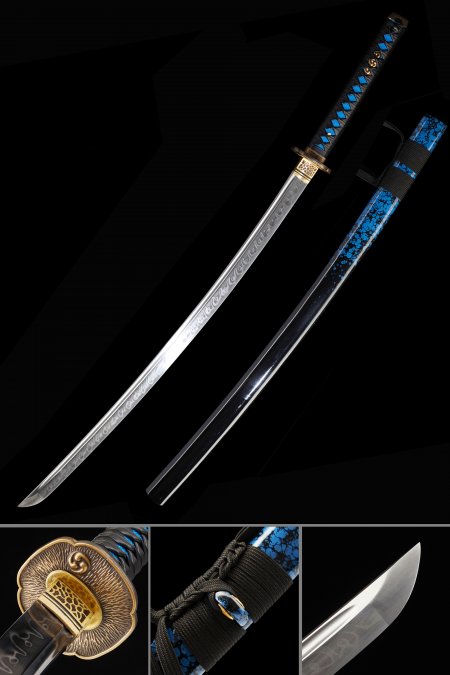
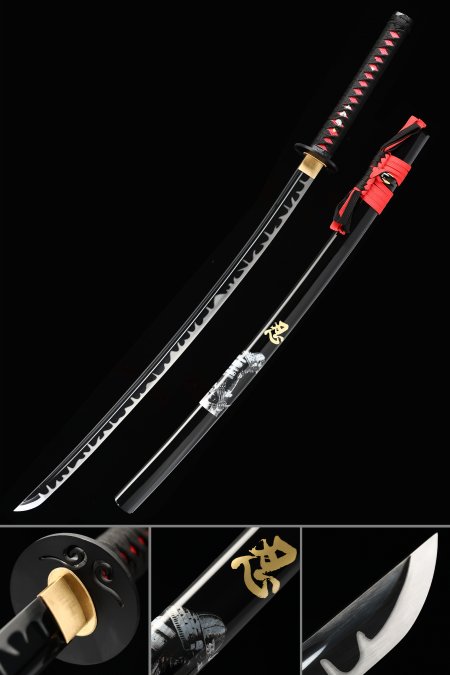
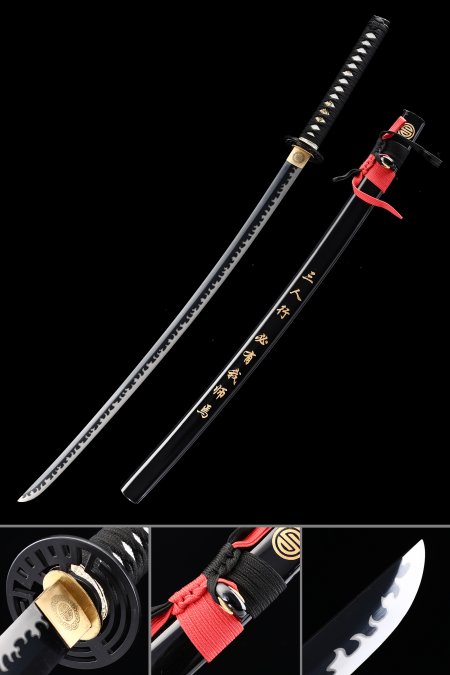
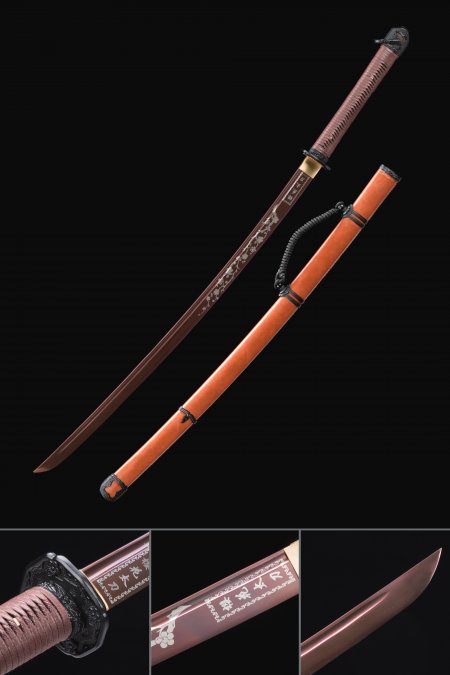
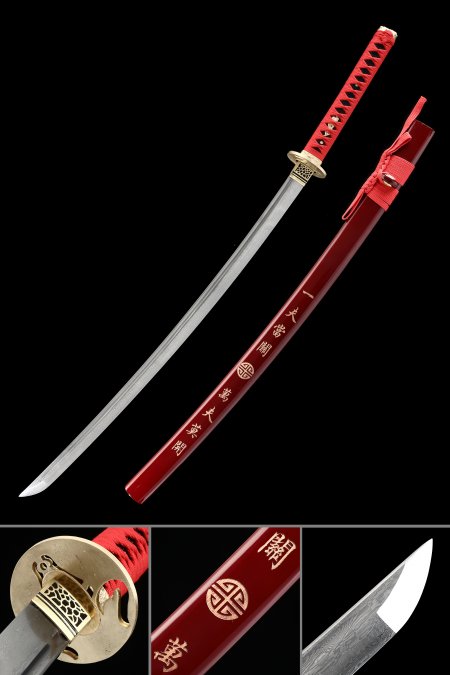
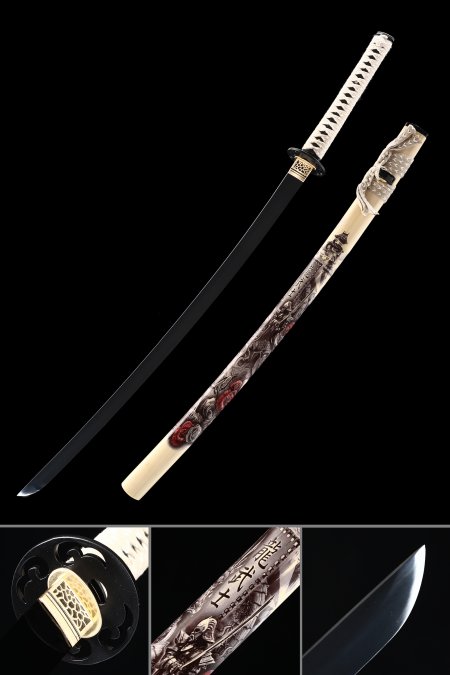
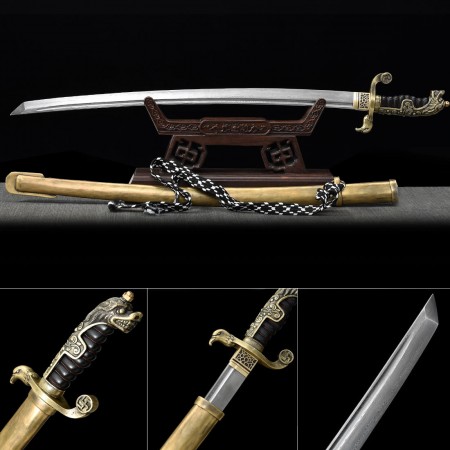
Text blade katanas bring an additional layer of artistry to traditional Japanese sword collecting, with kanji characters, ornate scrollwork, and thematic engravings worked directly into the steel or lacquered saya. Each piece in this collection showcases hand-applied detailing across a variety of blade steels — from manganese and Damascus to T10 and 1045 carbon — paired with thoughtfully coordinated fittings that reflect both classical craftsmanship and collector-driven aesthetics. Whether you're drawn to bold black blades with red-and-black tsuka wraps or cosmic-themed engravings with tiger tsuba, every katana here is crafted as a display collectible worthy of a serious collection. Enjoy free shipping and hassle-free returns on every order.
Showing 16 Products

Frequently Asked Questions

What does "text blade" mean on a collectible katana?
The term "text blade" refers to katanas where kanji characters, calligraphic script, or symbolic inscriptions are engraved or etched directly onto the blade surface. In traditional Japanese sword culture, blade inscriptions — called "mei" when they appear as maker signatures — have been a mark of artisanal identity for centuries. On modern collectible katanas, text engraving is applied decoratively, often featuring phrases related to honor, strength, or samurai philosophy. The engraving is typically done through acid etching or mechanical engraving after the blade is finished, and the depth and clarity of the lettering is a useful indicator of production quality. Shallow, smudged characters suggest lower-end work; clean, consistent depth with smooth edges indicates more careful craftsmanship.
How does manganese steel compare to T10 for engraved blades?
Manganese steel and T10 carbon steel both appear frequently in collectible katana production, but they behave differently as engraving surfaces. Manganese steel is valued for its toughness and consistent surface hardness, which makes it a reliable base for kanji engraving and geometric patterns — the steel holds definition well and resists chipping along engraved edges during the finishing process. T10 tool steel is a high-carbon alloy with a finer grain structure, which means engraving on T10 tends to achieve greater sharpness in fine-line detail work. T10 also takes polishing to a higher luster, so engraved areas contrast more visibly against the polished field around them. For pure display purposes, both are excellent; collectors who want the finest engraving definition and the most polished overall presentation will generally find T10 the more rewarding choice.
Can a text blade katana be safely displayed long-term?
Yes, with a few straightforward precautions. Engraved blade areas can accumulate moisture in their recessed channels more readily than a flat polished surface, which makes routine light oiling especially important for long-term display. A thin application of high-grade mineral oil or traditional choji oil every few months — applied with a soft cloth and worked into engraved grooves with a fine brush — will prevent surface oxidation. Keep the katana away from direct sunlight, which can fade lacquered saya finishes and degrade any painted decorations on wooden scabbards over time. Humidity control matters too: storing or displaying in environments above 70% relative humidity accelerates corrosion in engraved channels. A wall-mounted display rack or a purpose-built katana stand that holds the blade horizontally is ideal for even weight distribution during long-term display.
Are anime-inspired replica katanas considered legitimate collectibles?
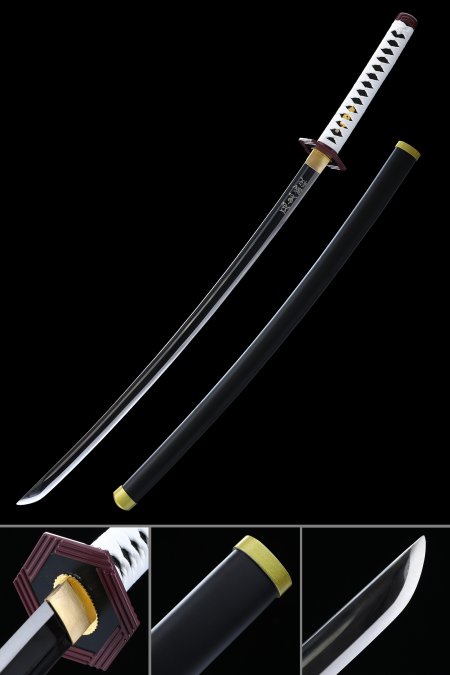
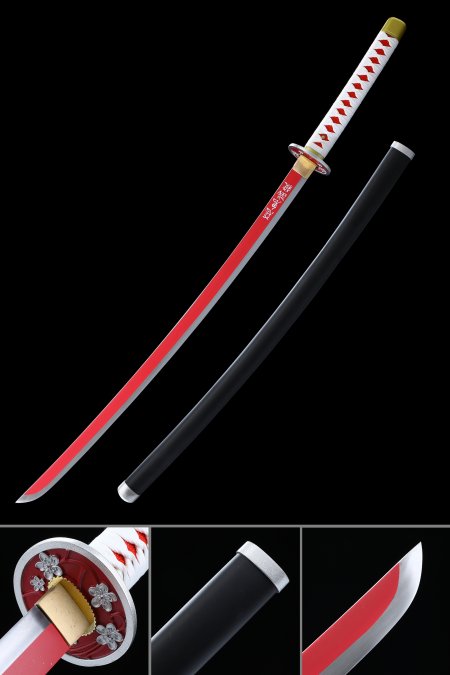
Within the collector community, anime-inspired replicas occupy a well-established and growing segment. Pieces like the Kanao Sword from Kimetsu No Yaiba are crafted on the same full-tang, real-steel platforms as non-themed collectible katanas — the 1045 carbon steel construction, the coordinated tsuba and tsuka fittings, and the engraved detailing are all genuine craftsmanship decisions, not shortcuts. What distinguishes a quality anime replica from a cheap novelty is exactly that underlying construction: real steel, full-tang assembly, and fittings that are mounted and wrapped with the same attention given to traditional-style pieces. Collectors who focus on this category often treat the thematic accuracy of the design — how faithfully the blade color, engraving style, and fitting choices mirror the source material — as the primary quality metric alongside the build itself.
What should I look for in tsuba and handle fittings on engraved katanas?
On a text blade katana, the tsuba and handle fittings should be understood as part of the same visual statement as the engraved blade — they either reinforce the theme or undermine it. Look for tsuba material and finish that coordinates intentionally with the blade's engraving style: an iron tsuba with a simple silhouette suits a katana with clean kanji text, while a gold brass or ornate scroll tsuba pairs naturally with more elaborate blade decoration. The ito wrap — the cord winding on the tsuka — should be tightly and evenly applied with a consistent diamond pattern; loose or uneven wrapping is a clear indicator of rushed assembly. Menuki, the small decorative ornaments seated beneath the ito, are worth examining closely on higher-end pieces, as their subject matter often mirrors the blade's thematic imagery. Together, these details separate a genuinely composed collectible from a piece that simply has engraving added to an otherwise generic build.

Customer Reviews

Hannah Long New Mexico, United States

I bought this as a gift, mainly meant for a wall display, and it is perfect for my purpose! I cannot attest to blade sharpness or durability, as it was purchased as a decorative piece - but it seems like a fairly sturdy piece. I'm not worried about it breaking, the sheath feels sturdy, and it sits comfortably in your hands. Very cool!

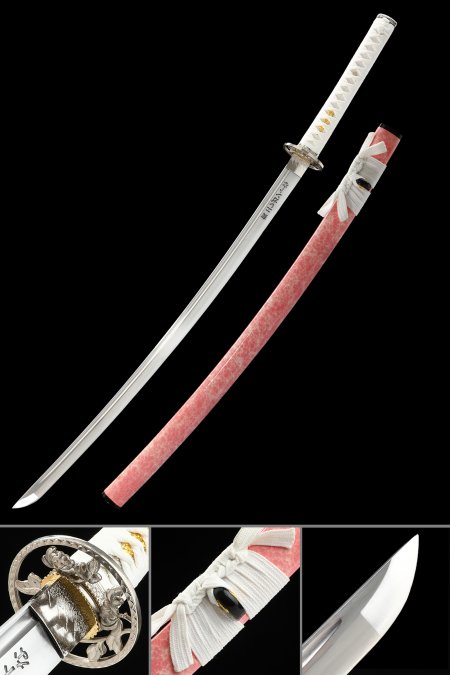
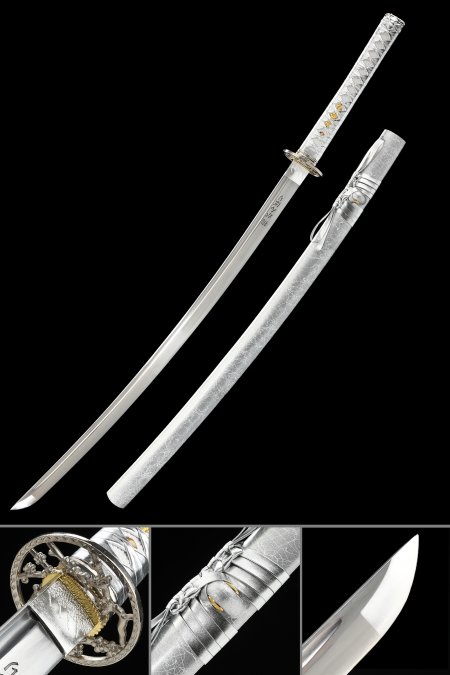
1065 Carbon Steel Full Tang Katana with Silver Saya, Floral Alloy Tsuba and White Cord Handle 1065 Carbon Steel Full Tang Katana with Silver Saya, Floral Alloy Tsuba and White Cord Handle