What steel is used in Wave Tsuba Ninjato replicas?
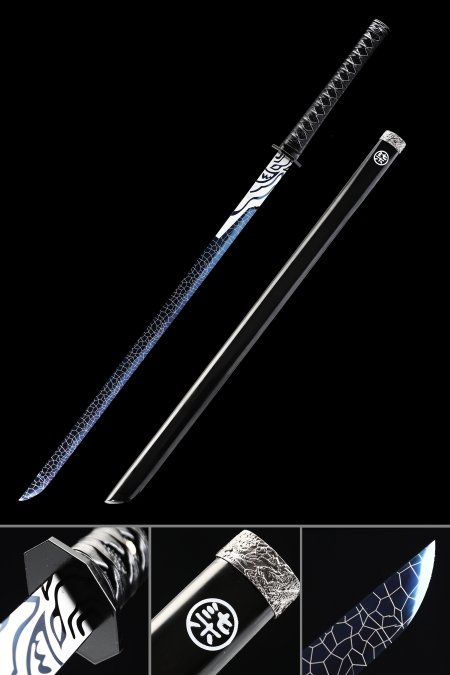
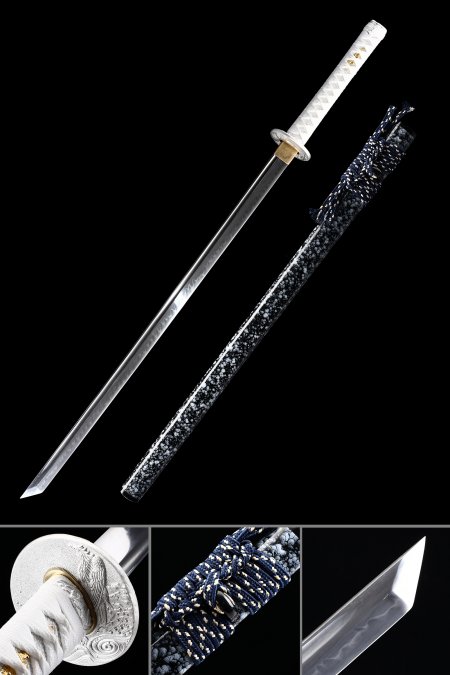
The two core steel options in this collection serve different collector priorities. T10 carbon steel is a high-carbon tool steel (roughly 1.0% carbon content) prized for its ability to develop a visible hamon - the temper line that appears along the blade edge after differential clay-coating and quenching. Each T10 blade's hamon pattern is essentially unrepeatable, giving collectors a piece that is unique at the metallurgical level. Manganese steel, by contrast, is an alloy formulated for toughness and hardness retention; the blue crackle finish applied to the manganese variant adds a surface texture dimension that T10 blades don't offer. Neither steel is a purely decorative choice - both have distinct structural and visual properties that affect how the replica looks and ages over time in a display environment.
How does a ninjato differ from a traditional katana?
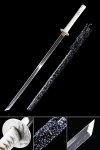
The most immediately visible difference is blade curvature. A katana features a characteristic sori - a gentle arc ground into the blade during forging - while the ninjato is straight or very slightly curved, producing a uniform profile from tang to tip. This geometry also affects how the sword sits in its saya: a straight blade requires a scabbard with no corresponding curve, which changes the silhouette entirely. The tsuba style associated with the ninjato is typically more squared or stylized compared to the round or oval guards common on katana. In the Wave Tsuba Ninjato collection specifically, the wave-form guard introduces organic curves back into the design, creating a deliberate visual contrast with the straight blade that collectors often find more compositionally interesting than a purely geometric guard would be.
What does the blue crackle blade finish actually look like?
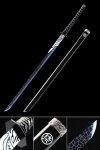
The blue crackle finish is a surface treatment applied to the blade flat - not the edge geometry - that produces a fractured, texture-rich appearance resembling aged or stressed lacquer. The coloration sits in a deep cobalt-to-navy range rather than a bright or metallic blue, giving it a subdued, almost patinated quality under natural light. Because the crackle pattern forms organically during the finishing process, no two blades carry an identical texture map. Under raking light, the surface reads with considerable three-dimensional depth. Paired with a black lacquer saya, the contrast between the textured blade and the smooth, gloss scabbard reinforces the display appeal. Collectors who prefer their pieces to have a visually assertive presence - rather than the understated mirror polish of a traditional finish - typically find the crackle treatment a compelling choice.
How should I store a ninjato replica to preserve its condition?
Long-term display and storage of carbon steel replicas requires a few consistent practices. First, handle the blade with cotton gloves or a clean cloth - skin oils are mildly acidic and will initiate surface oxidation on bare carbon steel within weeks if left uncleaned. Before extended storage, apply a thin, even coat of choji oil or a neutral mineral oil to the blade flat using a soft cloth, then wipe away any excess to avoid pooling near the habaki. Store the sword horizontally or on a display stand that supports both the saya and the handle without placing stress on any single point. Avoid storage areas with fluctuating humidity; a consistent environment between 40-55% relative humidity is ideal. If the sword will be sheathed in its saya for extended periods, remove it every few months to inspect for moisture accumulation inside the scabbard, which can cause localized rust on the blade spine.
Is a Wave Tsuba Ninjato a good choice as a collector's gift?
For a recipient who has an existing interest in Japanese sword culture or martial arts aesthetics, a Wave Tsuba Ninjato replica makes a distinctive and considered gift precisely because the design choices are specific rather than generic. The wave guard motif, the choice between T10 and manganese steel, and the contrast between blade finish and saya color give the giver meaningful decisions to make - which signals intent beyond a simple purchase. For display-focused collectors, the straight blade silhouette also tends to stand out on a sword rack precisely because it reads differently from the curved profiles that dominate most collections. If the recipient already owns katana replicas, adding a ninjato introduces a complementary counterpoint. Pairing with a dedicated sword stand or wall mount completes the presentation and makes the gift immediately displayable without additional purchases.