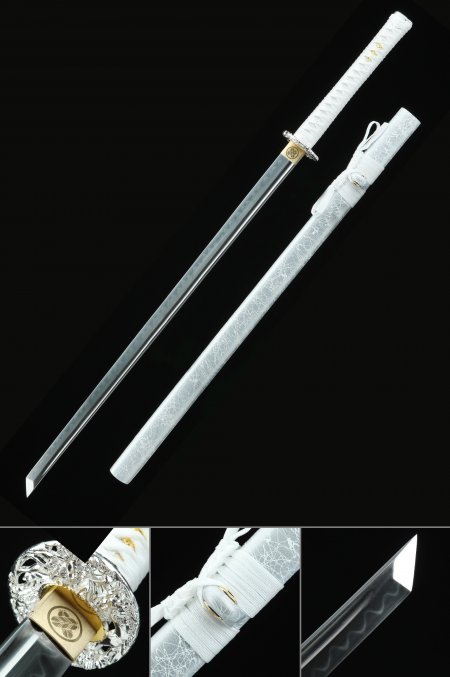
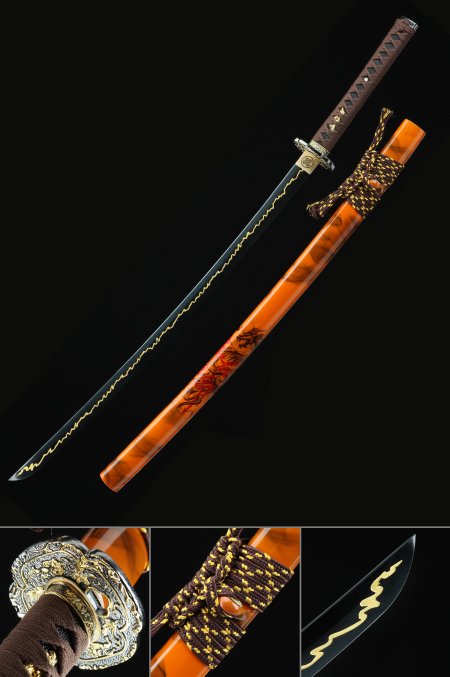
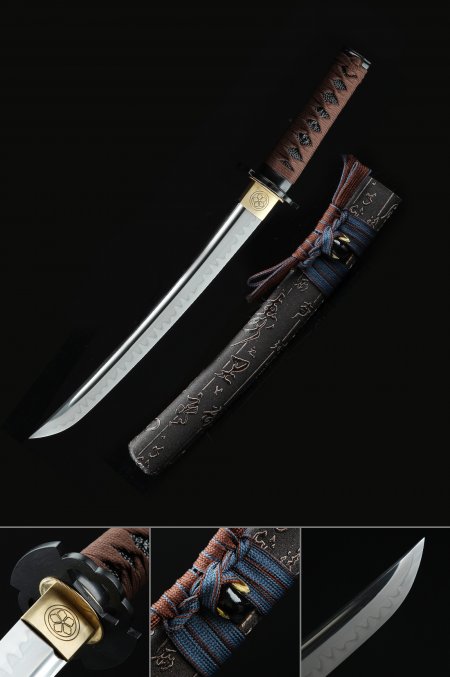
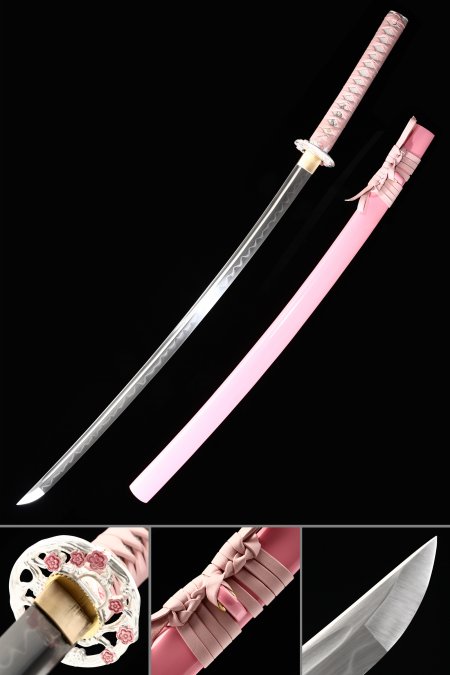
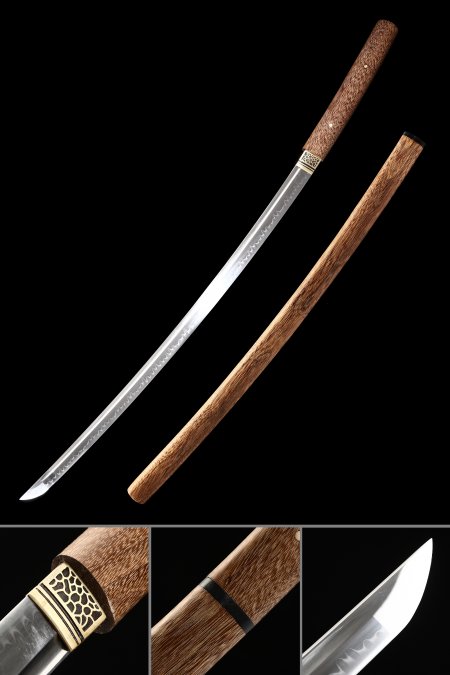
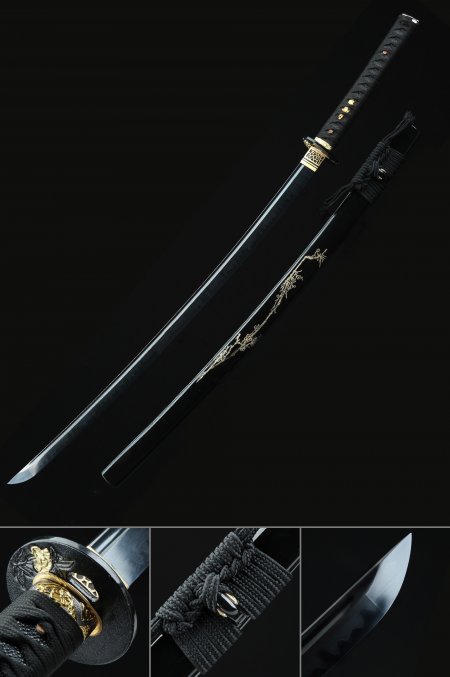
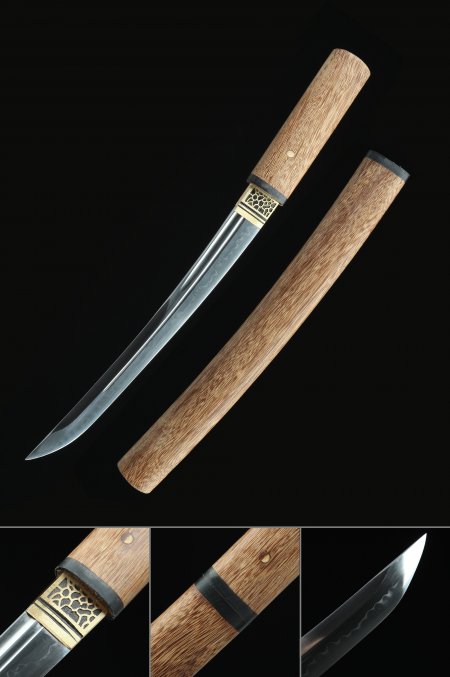
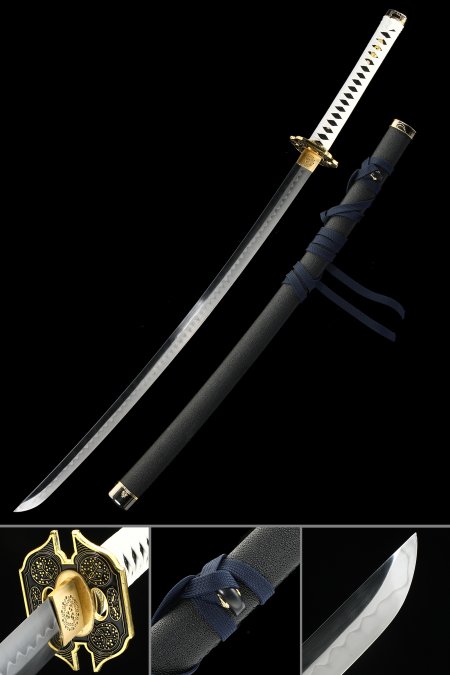
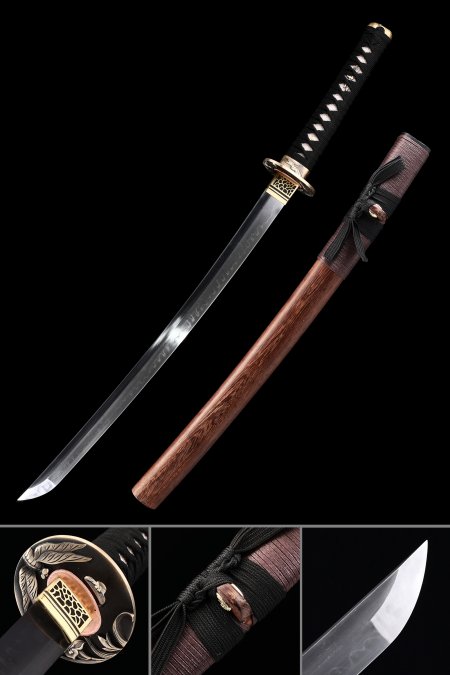
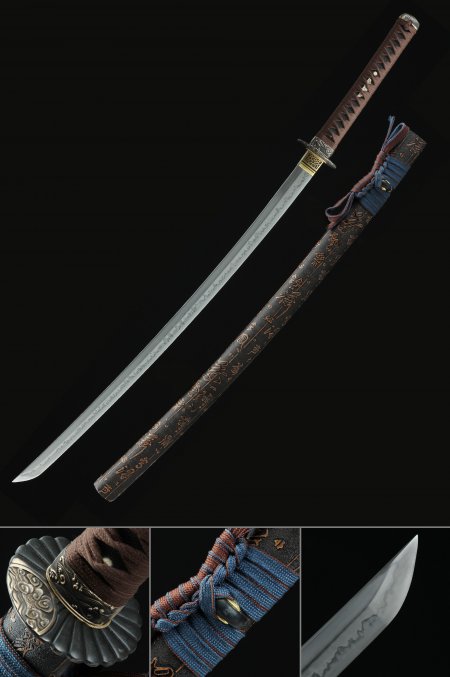
How does clay tempering create the hamon on these naginata?

 Updated Feb 2026

Clay tempering, or tsuchioki, involves coating the blade's spine and flat surfaces with a thick layer of refractory clay while leaving the edge thinly coated or exposed. When the blade is heated to critical temperature and quenched, the exposed edge cools rapidly and transforms into hard martensite, while the insulated spine cools more slowly and retains a softer, more flexible pearlite structure. The visible boundary between these two metallurgical zones is the hamon. Because the clay is applied by hand, every hamon pattern is unique — no two T10 naginata will display exactly the same line. The effect is both functional, creating a hard edge backed by a resilient spine, and deeply aesthetic, producing a misty, undulating line that becomes more pronounced with careful polishing.
Popular Products

20% OFFjapanese katana
209.00 USD
259.00 USD
15% OFFtanto sword
149.00 USD
179.00 USD
20% OFFchokuto sword
159.00 USD
199.00 USD
15% OFFjapanese katana
199.00 USD
239.00 USD
15% OFFtanto sword
179.00 USD
209.00 USD
15% OFFpink katana
189.00 USD
219.00 USD
20% OFFshirasaya katana
209.00 USD
259.00 USD
20% OFFblack katana
209.00 USD
259.00 USD
15% OFFshirasaya tanto
149.00 USD
179.00 USD
20% OFF
259.00 USD
329.00 USD
20% OFFwakizashi sword
219.00 USD
279.00 USD
20% OFFfull tang katana
319.00 USD
399.00 USD
20% OFFjapanese katana
209.00 USD
259.00 USD
15% OFFtanto sword
149.00 USD
179.00 USD
20% OFFchokuto sword
159.00 USD
199.00 USD
15% OFFjapanese katana
199.00 USD
239.00 USD
15% OFFtanto sword
179.00 USD
209.00 USD
15% OFFpink katana
189.00 USD
219.00 USD
20% OFFshirasaya katana
209.00 USD
259.00 USD
20% OFFblack katana
209.00 USD
259.00 USD
15% OFFshirasaya tanto
149.00 USD
179.00 USD
20% OFF
259.00 USD
329.00 USD
20% OFFwakizashi sword
219.00 USD
279.00 USD
20% OFFfull tang katana
319.00 USD
399.00 USD

Explore Our Collections