What makes a hamon on a naginata "real" vs. artificial?
Updated Mar 2026
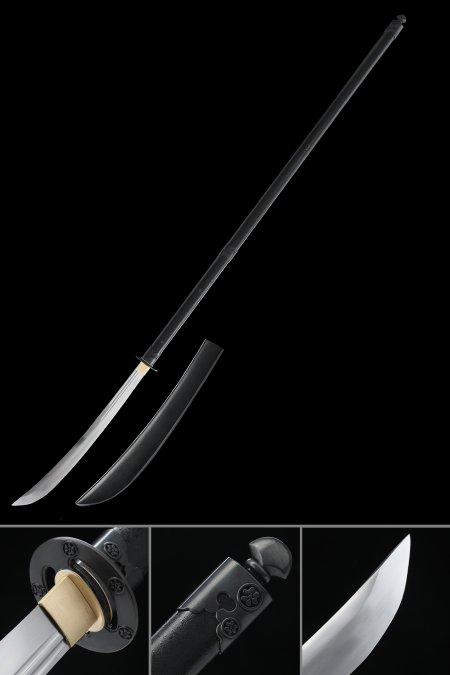
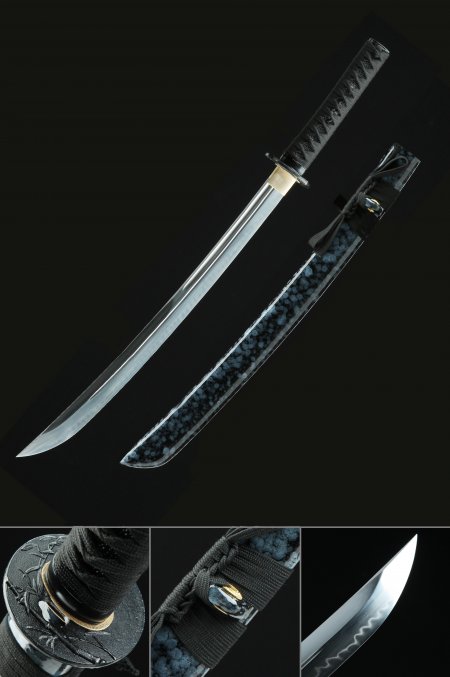
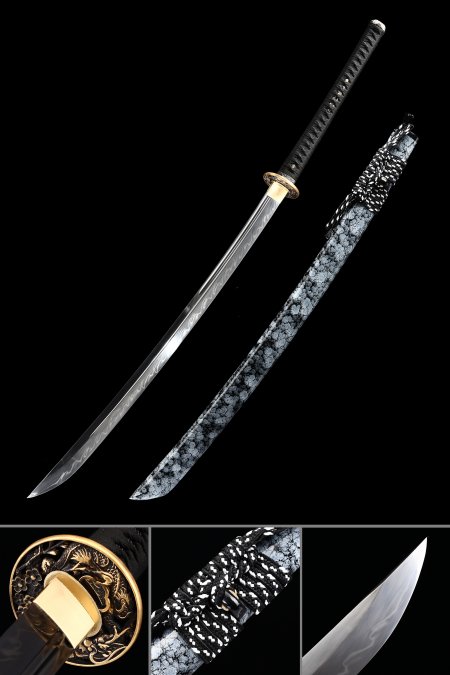
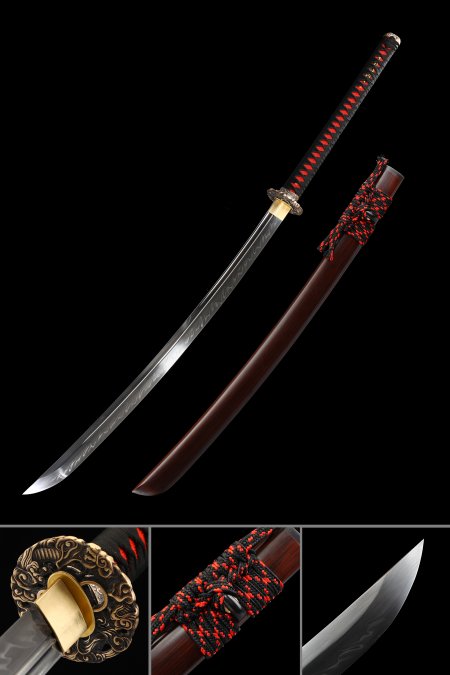
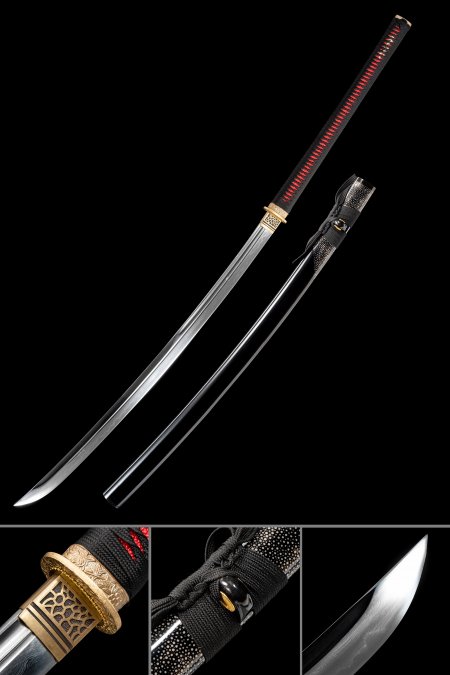
A real hamon results from differential clay tempering during the forging process. The smith applies a clay mixture to the blade spine before quenching, so the edge cools faster than the spine and hardens into a martensitic structure. The visible boundary between hard edge and softer spine is the hamon. An artificial hamon, by contrast, is acid-etched or sandblasted onto a uniformly hardened blade purely for aesthetics—it carries no structural meaning and disappears if the blade is repolished. On a genuine clay-tempered naginata, the hamon remains present through any polish because it is a property of the steel’s internal crystalline structure, not a surface treatment.