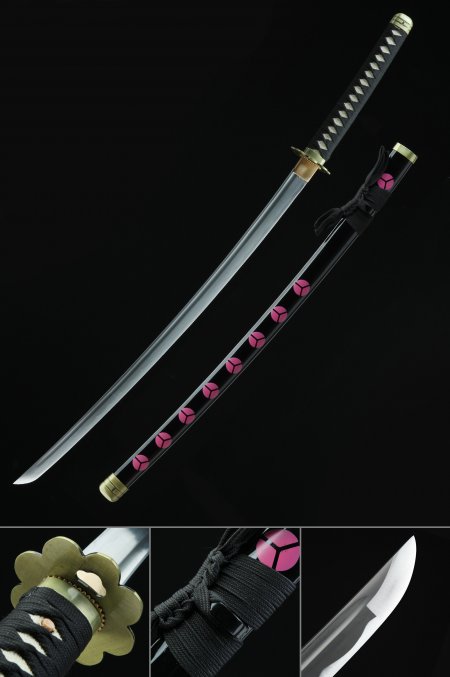
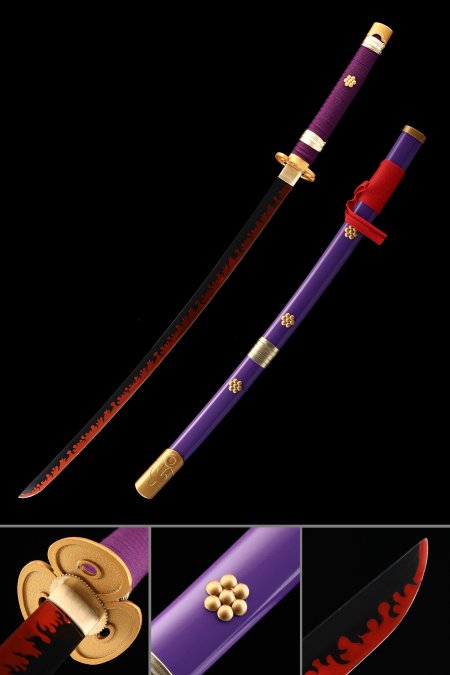
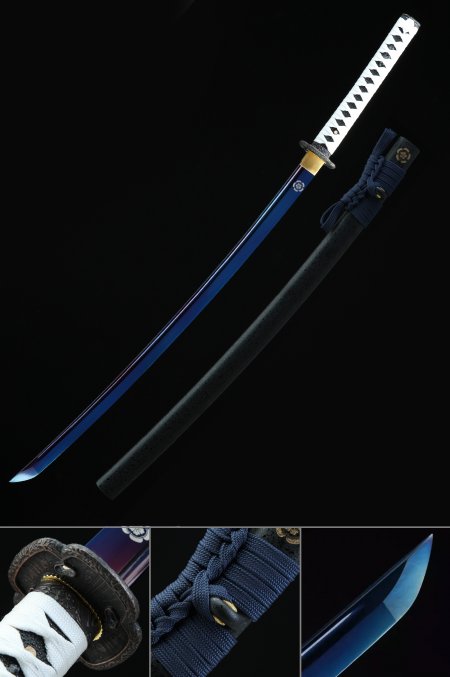
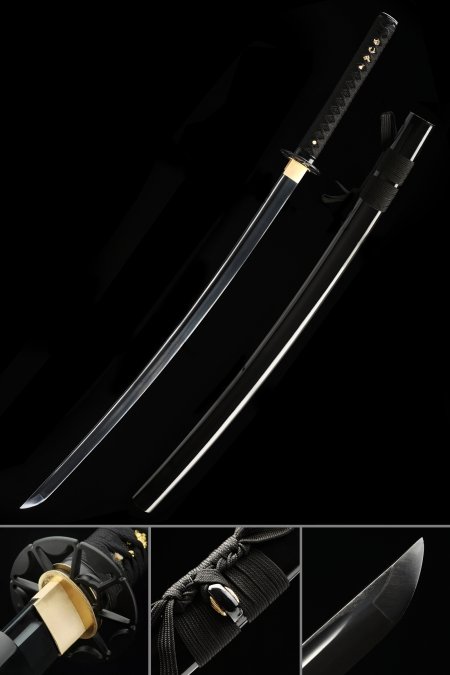
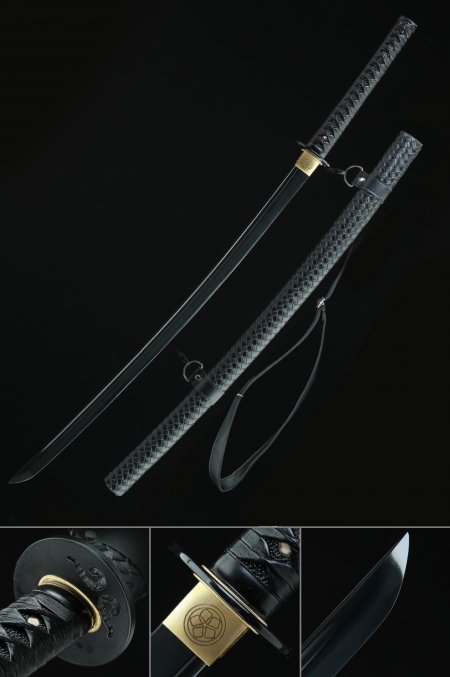
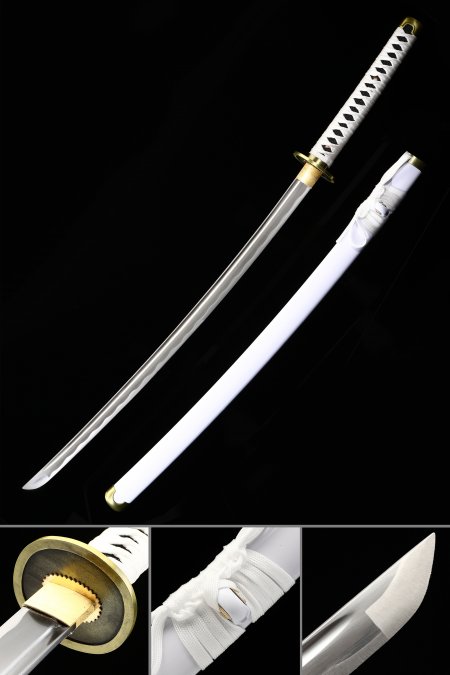
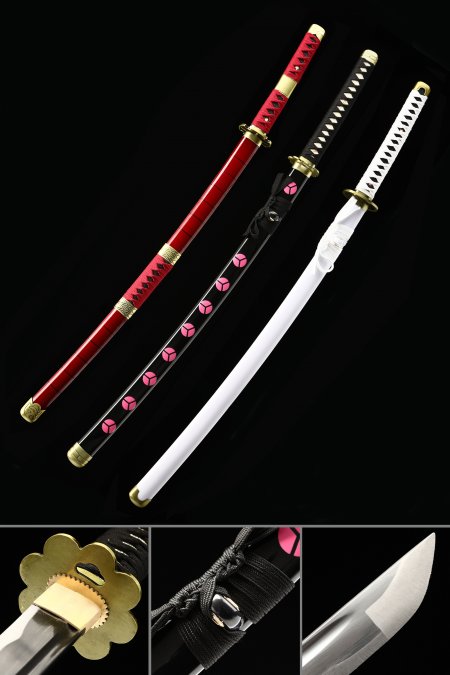
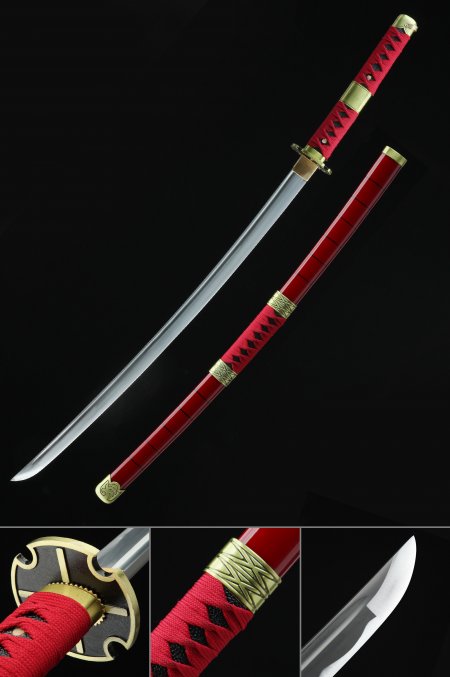
What do the orange and black tsuka wrapping colors signify?
Updated Mar 2026
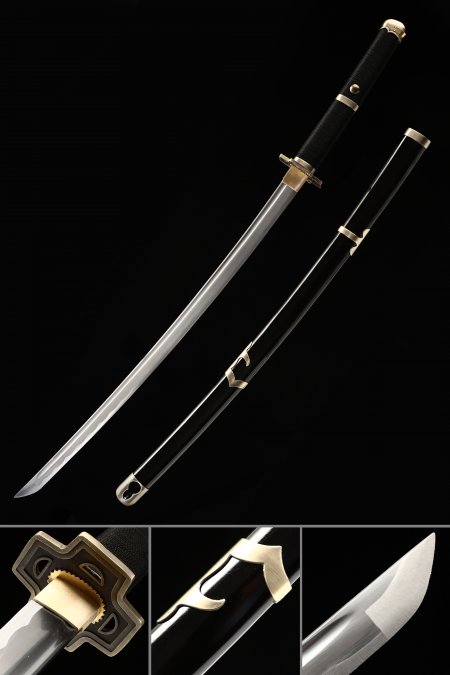
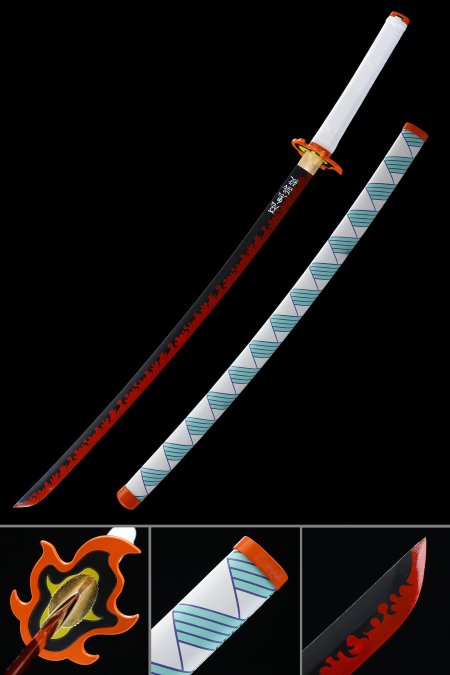
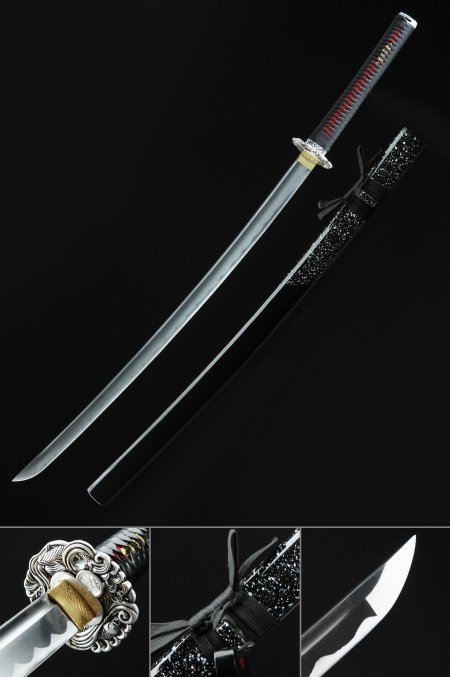
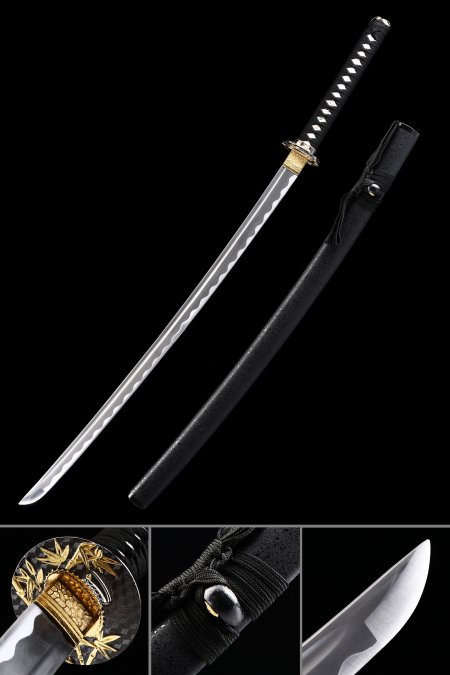
In historical Japanese sword culture, ito color and wrapping pattern were meaningful choices rather than purely aesthetic ones. Black was frequently associated with formality, austerity, and high-ranking samurai schools, while warmer accent colors - including orange and gold - were used to signal vitality, distinction, or clan identity. The combination of black and orange in modern collectible koshirae draws on this tradition while creating a striking visual contrast that photographs exceptionally well and stands out prominently on a display rack. The underlying same (ray skin) beneath the ito provides texture that gives the wrap its characteristic raised, tactile grip surface - a construction detail that distinguishes hand-wrapped tsuka from molded or plastic alternatives.