Black Orange Handle Katana
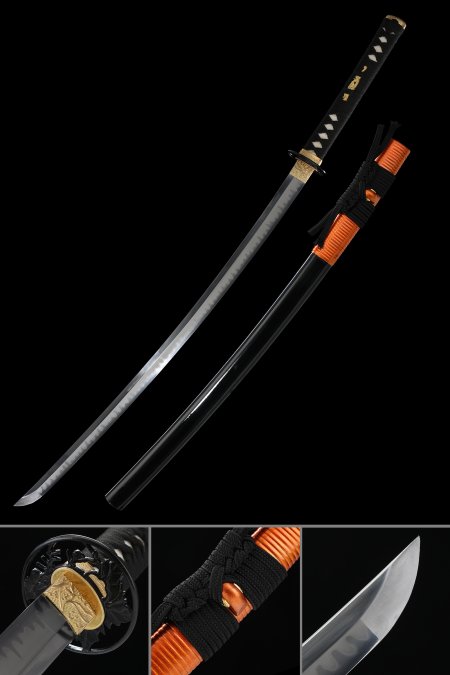
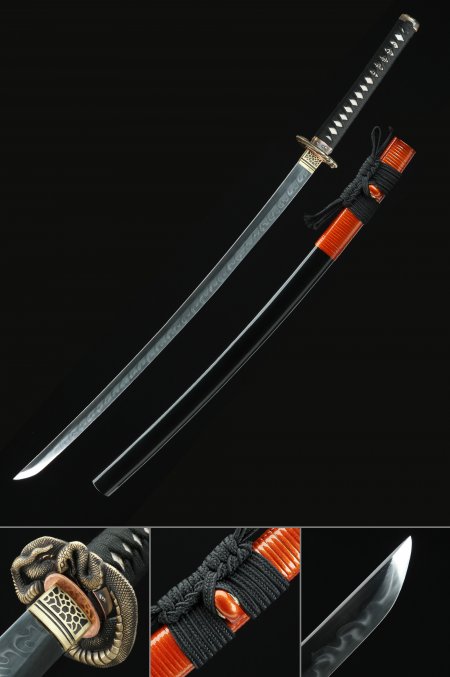
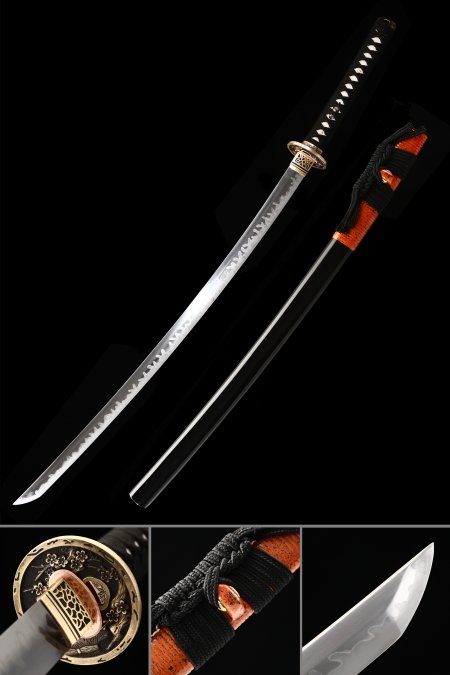
Bold contrast meets refined craftsmanship in our Black & Orange Handle Katana collection. Each blade is hand-forged from high-carbon T10 steel, featuring authentic hamon temper lines, genuine ray skin wrapping, and rich orange-and-black tsuka bindings - all finished with ornate tsuba designs and glossy black lacquer saya. Every piece ships free with hassle-free returns, crafted exclusively for the discerning collector and display enthusiast.
Related Collections
Frequently Asked Questions
What makes T10 steel a preferred choice for collectible katana?
T10 is a high-carbon tool steel containing roughly 1.0% carbon along with a small amount of silicon, which increases wear resistance compared to simpler high-carbon steels like 1060 or 1095. What makes it particularly valuable in collectible katana is its response to differential clay tempering - the process that produces a genuine hamon. Because T10 holds hardness well in the edge zone while remaining tougher toward the spine after quenching, the resulting temper line is both visually defined and metallurgically authentic. Collectors can examine the nie and nioi activity along the hamon under raking light, much as they would on a traditionally forged blade. For display-focused collectors who also value material authenticity over purely decorative construction, T10 represents a meaningful step above stainless or spring steel alternatives.
Is the hamon on these katana real or decorative?
The hamon on every katana in this collection is a genuine differential temper line, not an acid-etched or bead-blasted simulation. Each blade is coated with clay along the spine before the hardening quench - a process known as tsuchioki. The clay insulates the mune, causing it to cool slowly and remain relatively tough, while the uncoated ha cools rapidly and hardens. This creates a distinct transition zone visible as the hamon. Under close inspection or angled light, you can observe activities like nie (larger crystalline structures) within and near the temper line - a hallmark of authentic differential heat treatment. Decorative hamons, by contrast, are purely cosmetic surface treatments that do not reflect the actual hardness profile of the blade and carry no collector significance beyond aesthetics.
How should I maintain a black lacquer saya long-term?
Black lacquer saya are relatively low-maintenance but benefit from a few consistent habits. Keep the saya away from prolonged direct sunlight, which can cause the lacquer to fade, crack, or develop a yellowish tint over time. Avoid extreme humidity swings - the wooden core beneath the lacquer can expand and contract, eventually stressing the finish. For routine care, a soft dry cloth is all that is needed to remove fingerprints or dust. Do not use silicone-based polishes or solvent cleaners, as these can degrade traditional lacquer coatings. When storing the katana, keep the blade lightly oiled with choji oil before sheathing, which also helps prevent moisture from being trapped against the steel inside the saya - protecting both the blade and the interior wood lining.
What do the orange and black tsuka wrapping colors signify?
In historical Japanese sword culture, ito color and wrapping pattern were meaningful choices rather than purely aesthetic ones. Black was frequently associated with formality, austerity, and high-ranking samurai schools, while warmer accent colors - including orange and gold - were used to signal vitality, distinction, or clan identity. The combination of black and orange in modern collectible koshirae draws on this tradition while creating a striking visual contrast that photographs exceptionally well and stands out prominently on a display rack. The underlying same (ray skin) beneath the ito provides texture that gives the wrap its characteristic raised, tactile grip surface - a construction detail that distinguishes hand-wrapped tsuka from molded or plastic alternatives.
How do these katana compare to similarly priced stainless steel display pieces?
Stainless steel katana - typically 420 or 440 stainless - are common in the decorative market and are usually produced by casting or machine grinding rather than forging. They do not respond to differential heat treatment, so any hamon shown is purely decorative. T10 carbon steel katana, by contrast, are forged and differentially tempered, producing a blade with genuine metallurgical structure and a real hamon that reflects actual craftsmanship. For the collector, this distinction matters: T10 pieces carry legitimate material provenance that stainless display pieces cannot replicate. The trade-off is that carbon steel requires periodic oiling to prevent surface oxidation, while stainless is more passive. Collectors who prioritize authenticity and long-term display value consistently prefer carbon steel, accepting the modest maintenance requirement as part of responsible ownership.
Customer Reviews
Stan M Kompst
Nevada, United States
PROMPT DELIVERY. WELL PACKAGED FOR SHIPMENT PROTECTION. I AM VERY PLEASED WITH MY PURCHASE, AND, SHOULD I DECIDE TO PURCHASE ANOTHER SWORD, I WILL DEFINITELY BUY IT FROM TRUE KATANA.
Stan Kompst
 |
T10 Carbon Steel Katana with Hamon - Black Lacquer Saya, Orange & Black Tsuka, Gold Cherry Blossom Tsuba |