How is a T10 steel sword's hamon temper line formed?
Updated Feb 2026
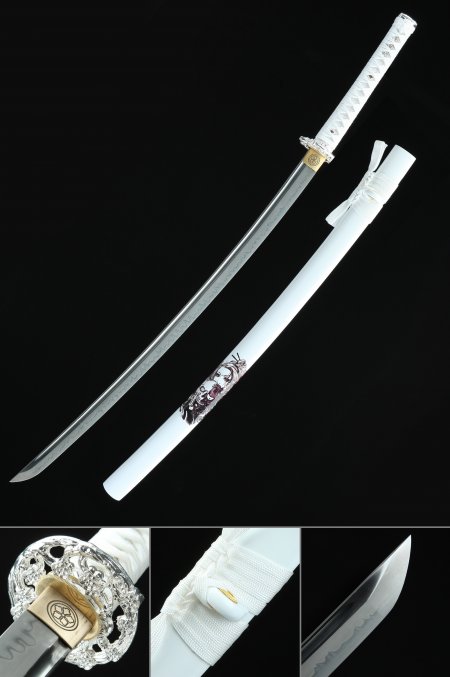
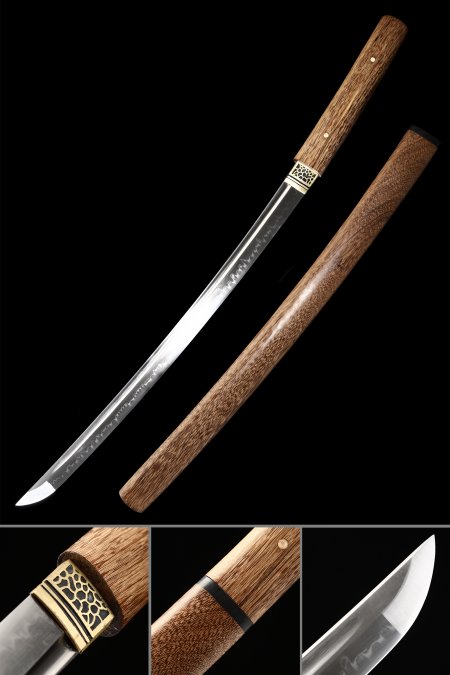
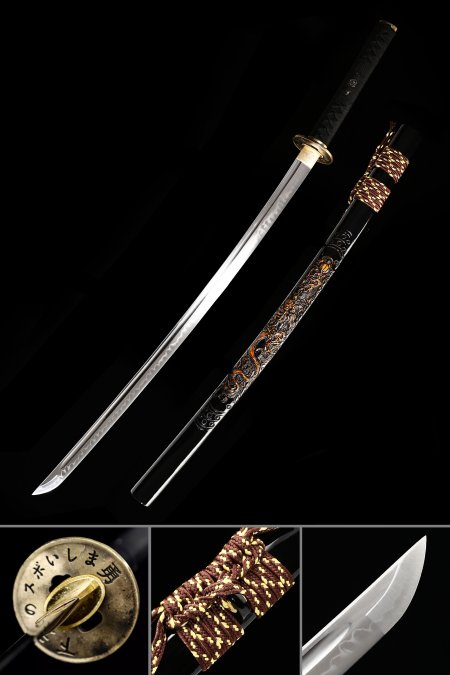
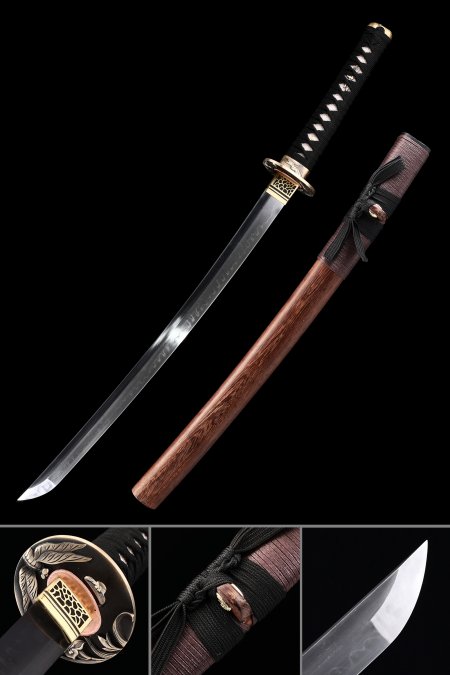
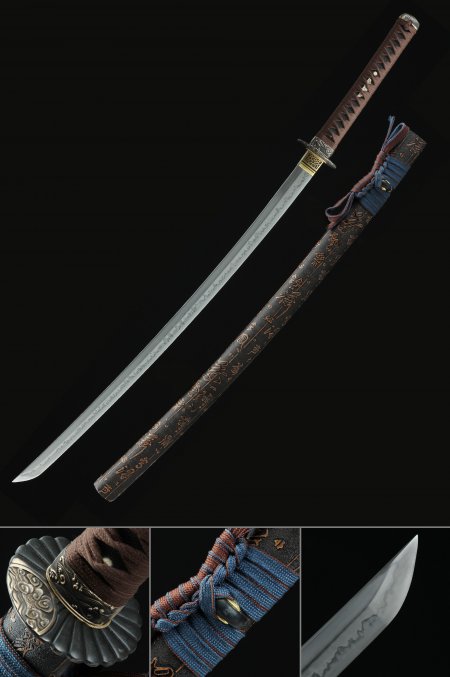
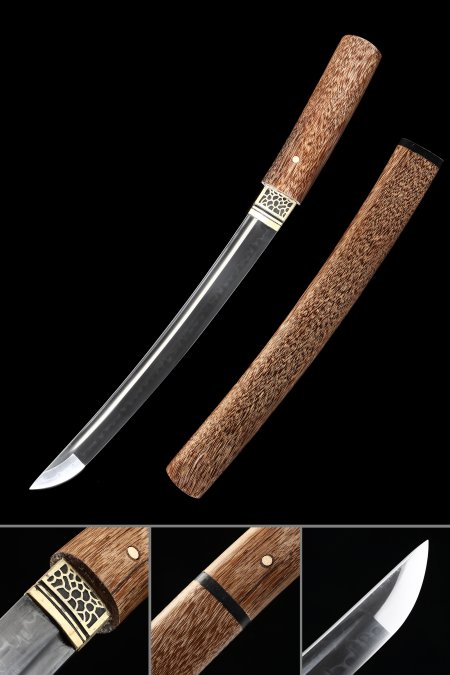
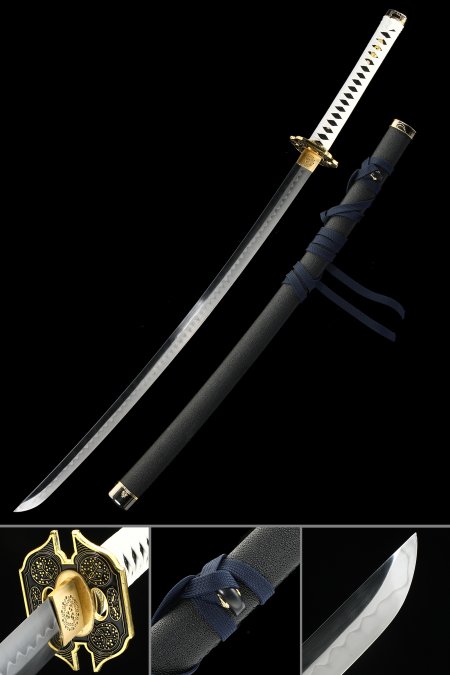
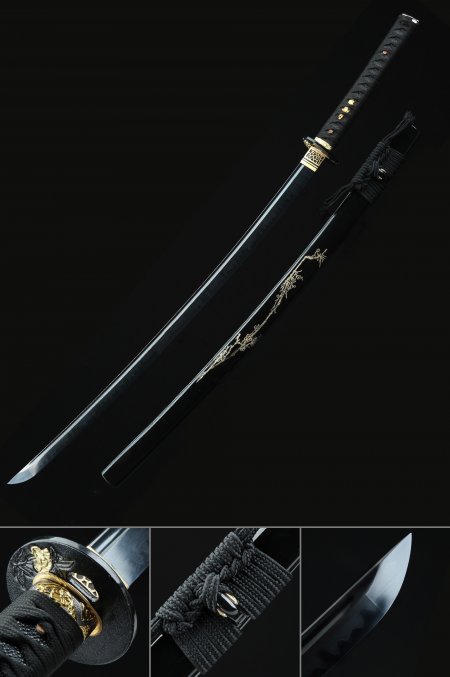
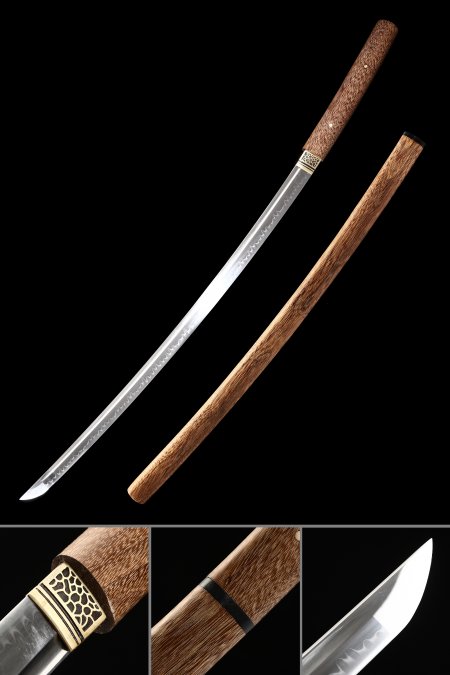
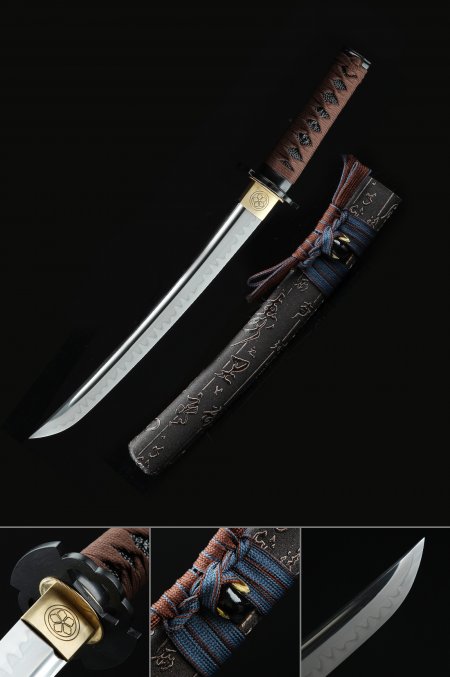
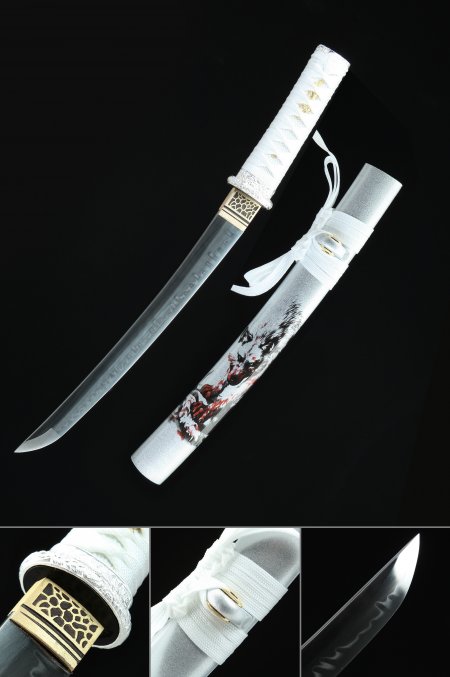
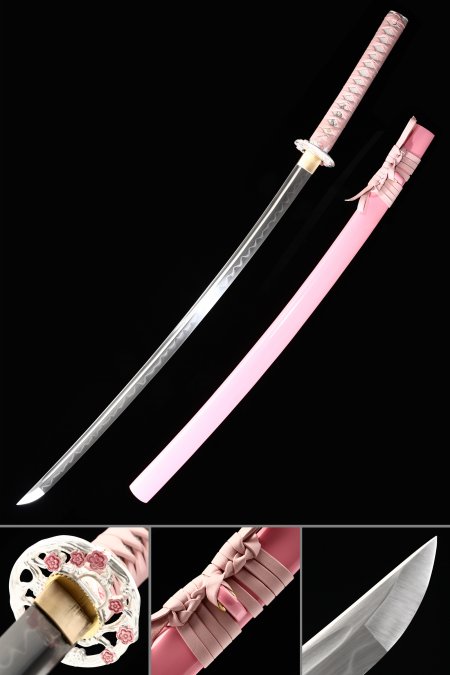
The hamon on a T10 steel sword is formed during the differential heat treatment stage of production, using a clay-coating method associated with traditional Japanese sword making. Before the blade is heat-treated, the smith applies a clay mixture in a specific pattern along the blade - typically leaving the edge zone exposed or covered with a thin layer, while applying a thicker clay coat to the spine and body of the blade. When the coated blade is brought to quenching temperature and rapidly cooled in water or oil, the different clay thicknesses cause different cooling rates across the blade surface: the exposed or thinly coated edge cools more rapidly and hardens to a higher degree, while the more heavily coated spine cools more slowly and remains tougher and more flexible. The boundary where these two zones meet is the hamon. After heat treatment, the blade is ground, polished, and often acid-etched to reveal the hamon, which appears as a wave-patterned or cloud-patterned line running along the blade edge. T10's fine grain structure makes this hamon particularly clear and well-defined.