What is a shirasaya and why is it used for wakizashi presentation?
Updated Feb 2026
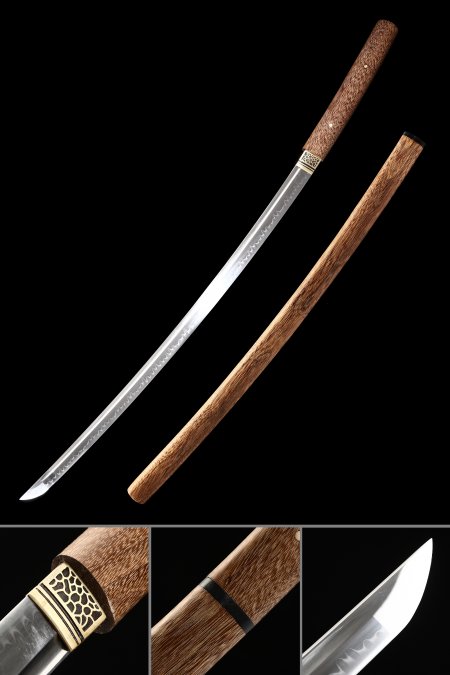
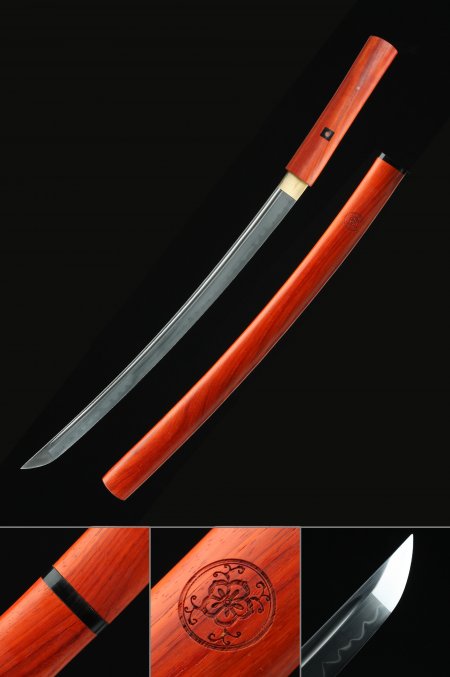
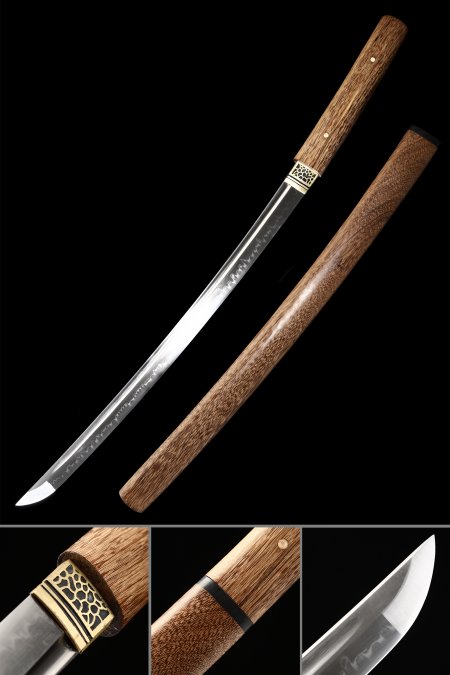
A shirasaya is the plain, unadorned wooden mounting format for a Japanese sword - a simple wooden handle and matching wooden scabbard without any of the conventional sword fittings such as tsuba guard, ito wrapping, menuki ornaments, or lacquer coating. The name translates roughly as 'white scabbard,' referring to the natural unfinished wood surface. The shirasaya format is historically associated with two contexts: long-term blade preservation and the presentation of a blade to emphasize its intrinsic quality rather than its decorative fittings. For a T10 clay-tempered wakizashi with a well-defined hamon, the shirasaya presentation is ideal because the absence of decorative elements focuses all visual attention on the blade itself - the hamon line, the grain structure of the steel, and the geometry of the tip. The plain wood also provides practical benefits: natural wood does not trap moisture against the blade in the way that lacquered scabbards can, making the shirasaya one of the better long-term storage formats for a high-carbon steel blade.