
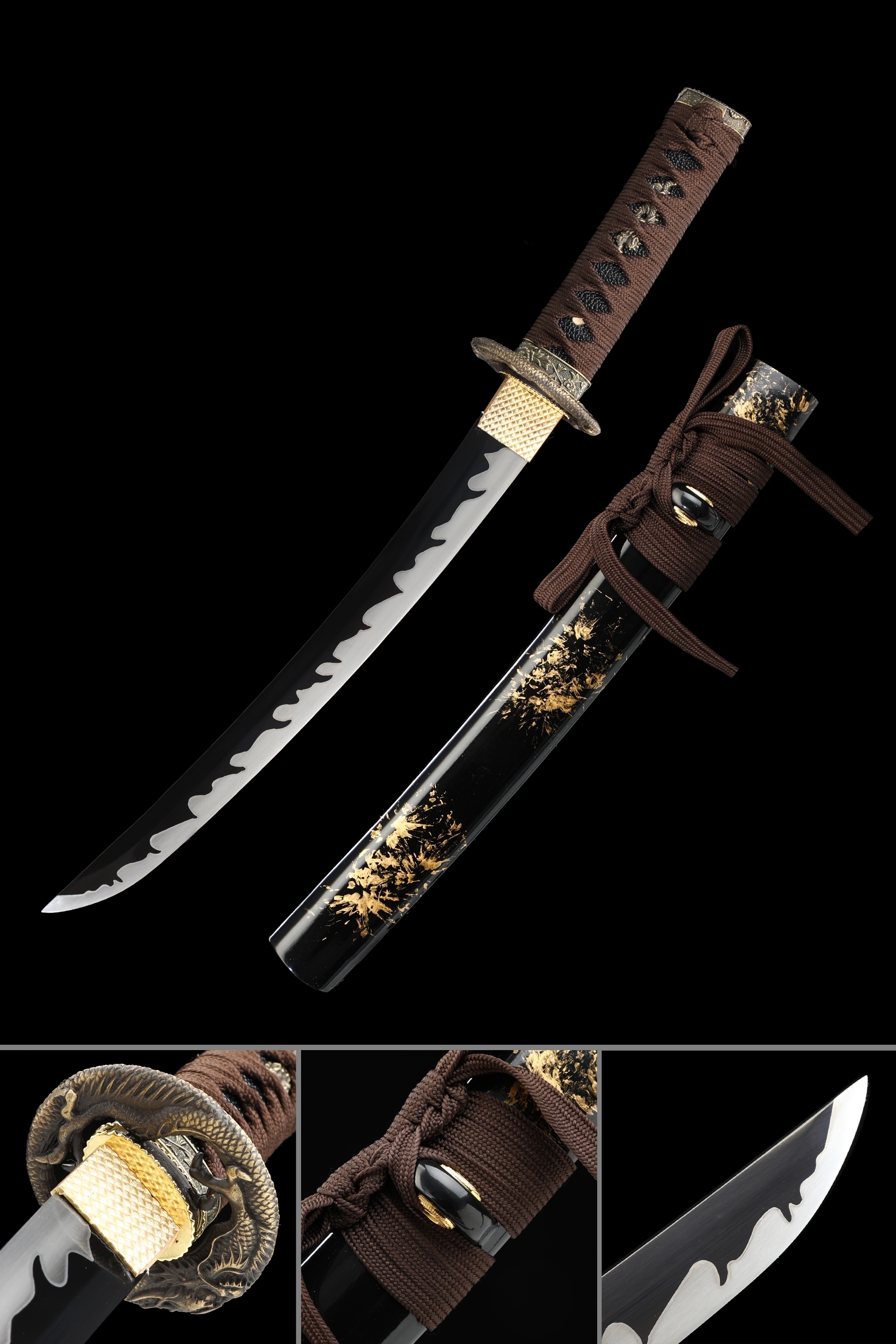
Manganese Steel Tanto with Black Blade, Dragon Tsuba in Koshirae Style - Brown Cord Handle
229.00 USD
10% OFF
Apply code: TK10OFF at the checkout page when you spend 129+
In-stock
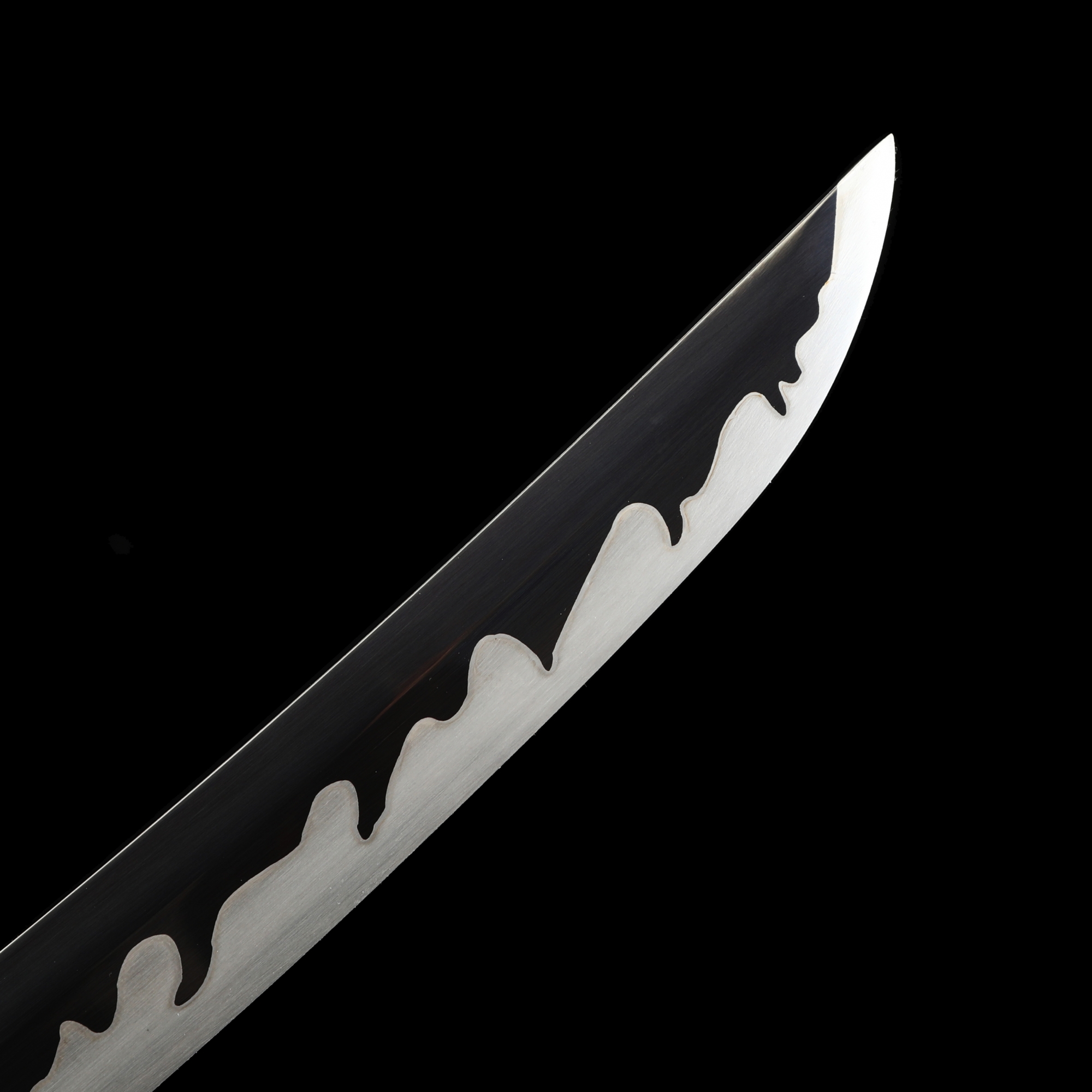
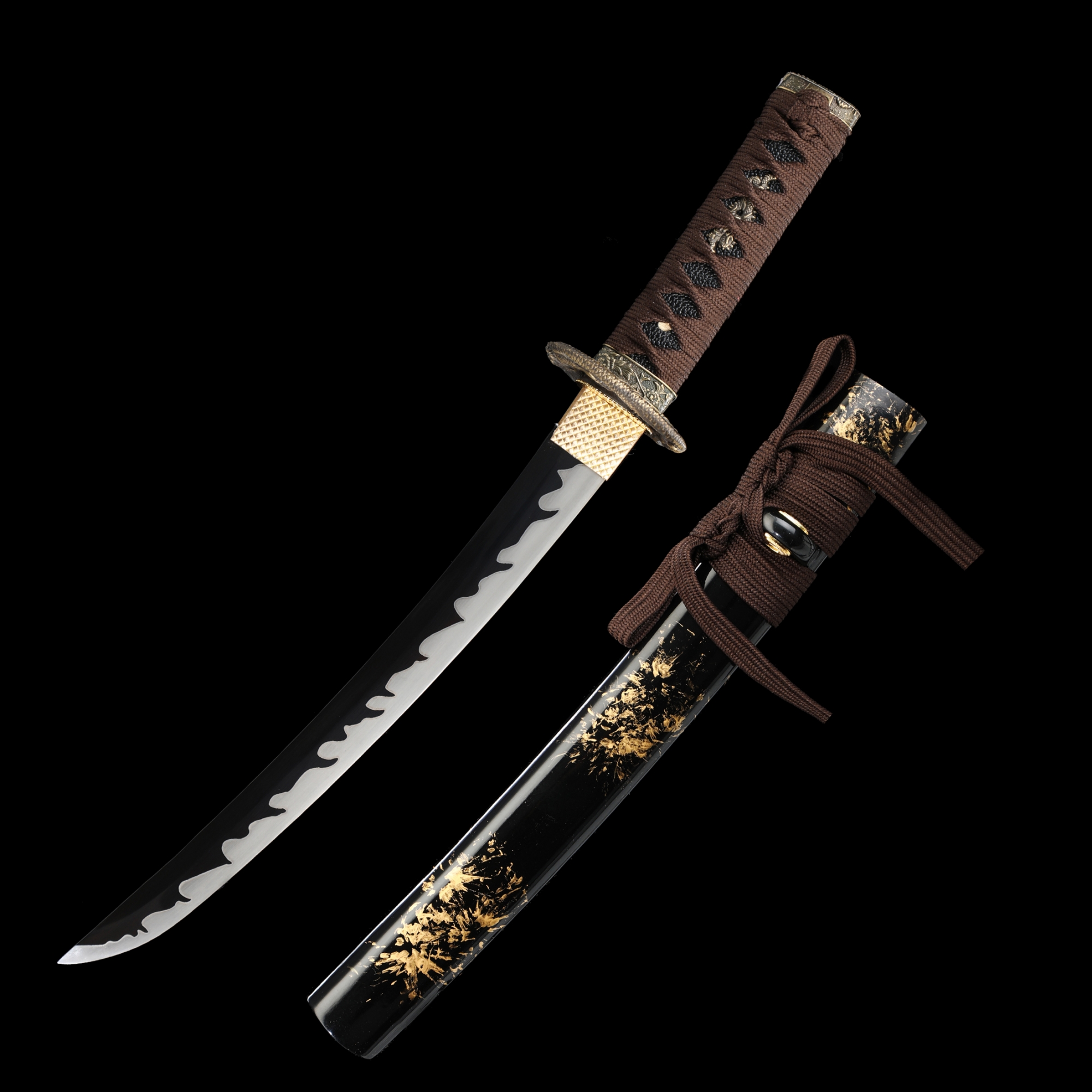
- Manganese steel full tang blade hardened to HRC 62, finished in black with a hand-polished hamon line running the 28.74-inch nagasa.
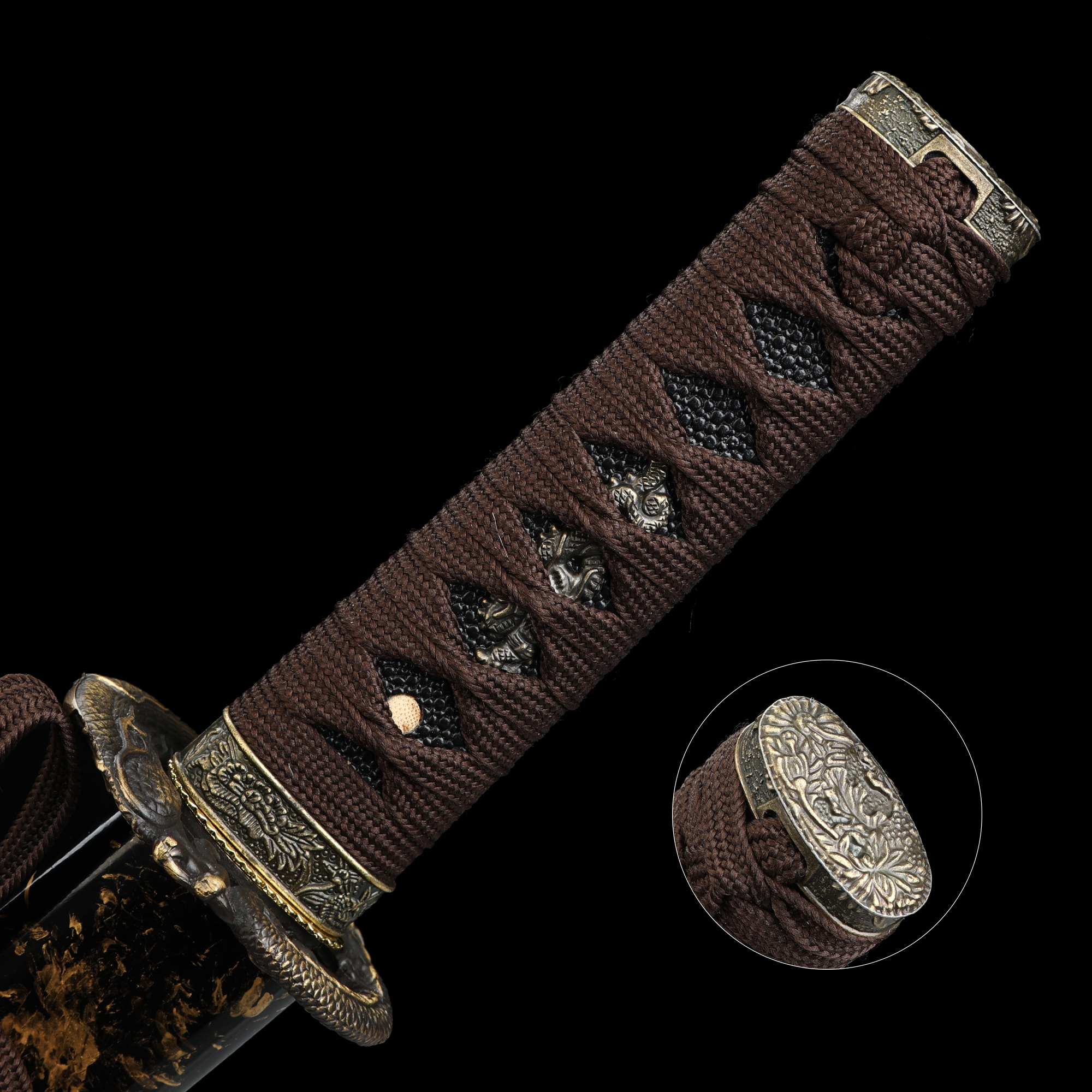
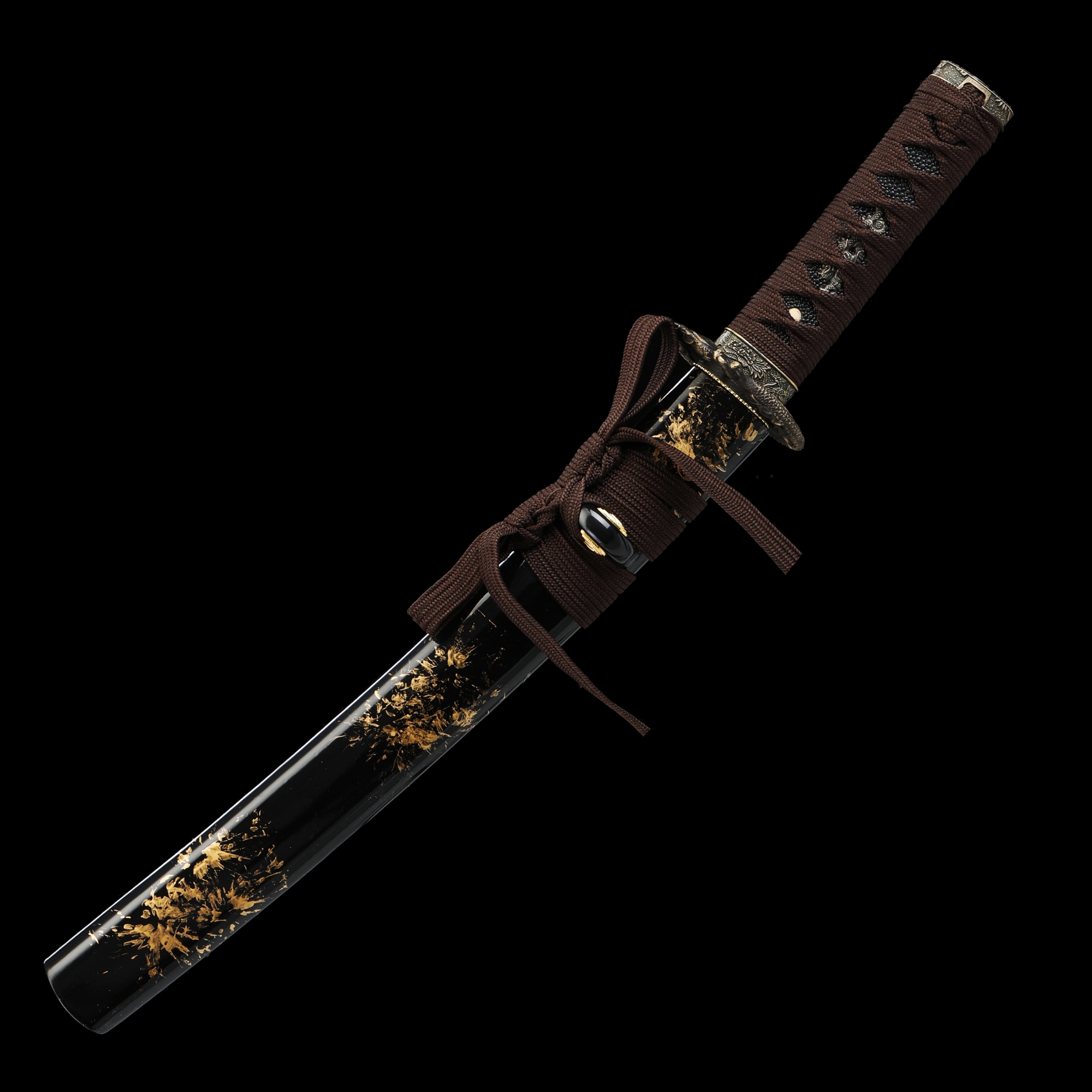
- Tsuka wrapped in brown cotton cord over real black rayskin (samegawa), delivering a secure, textured grip with traditional diamond-pattern lacing.
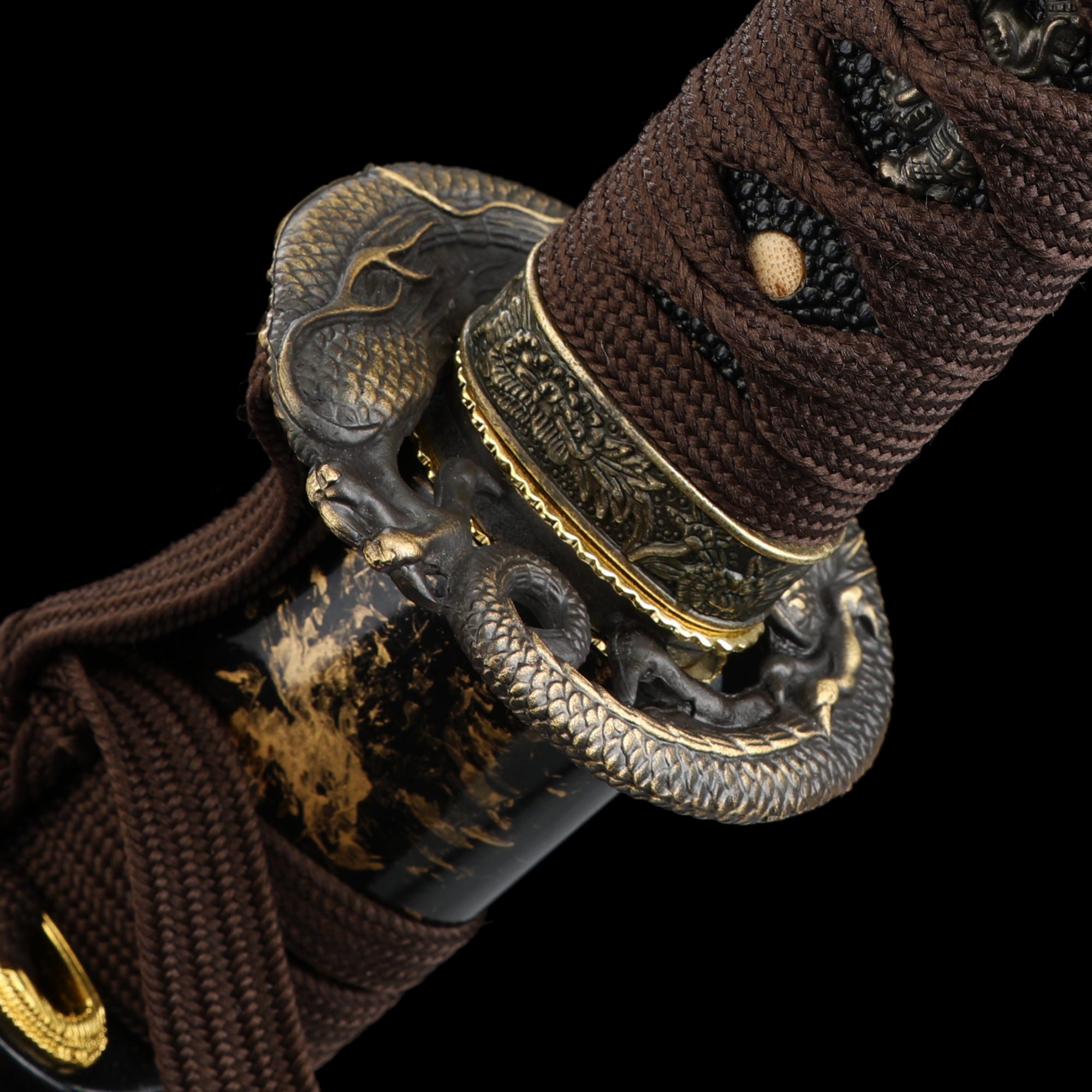
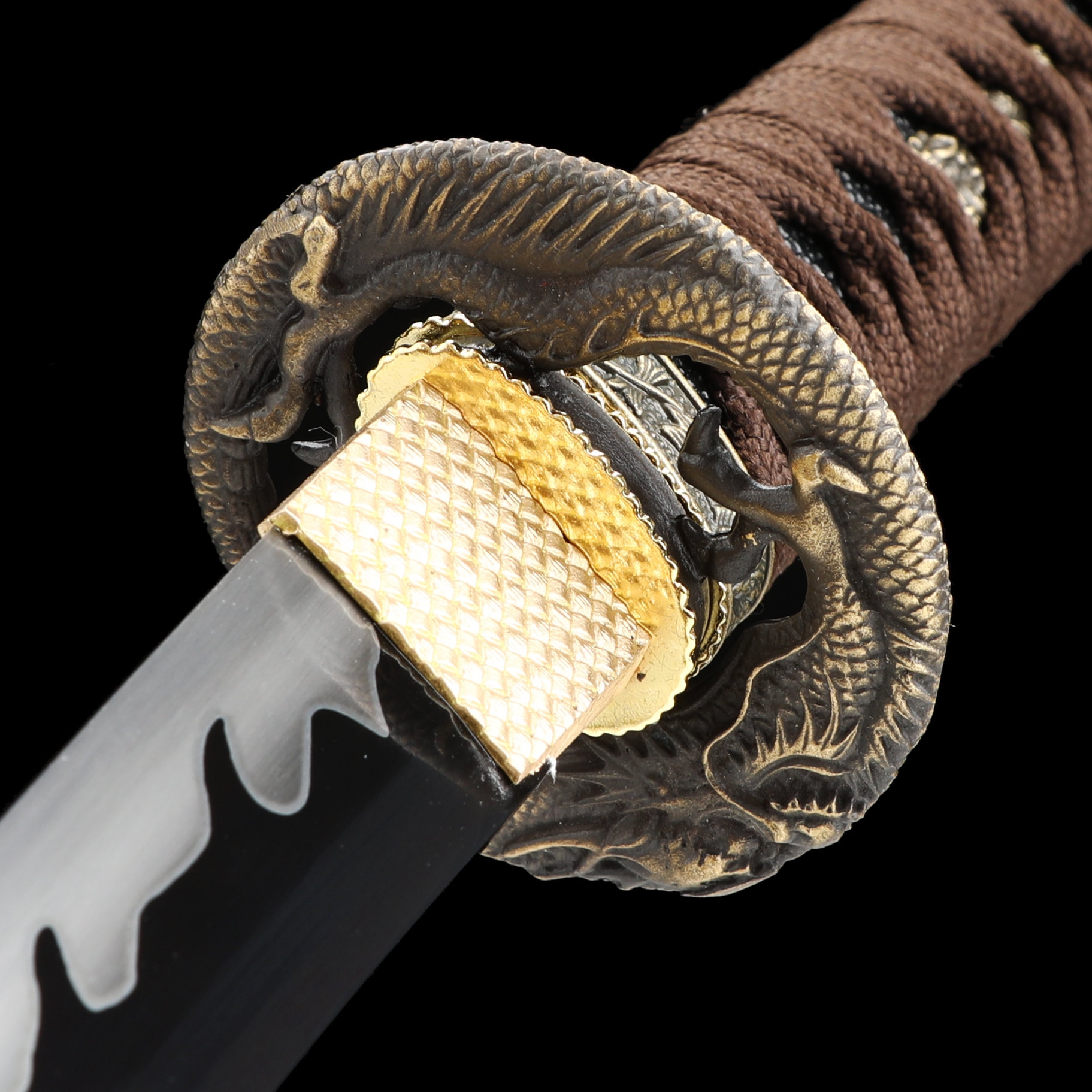
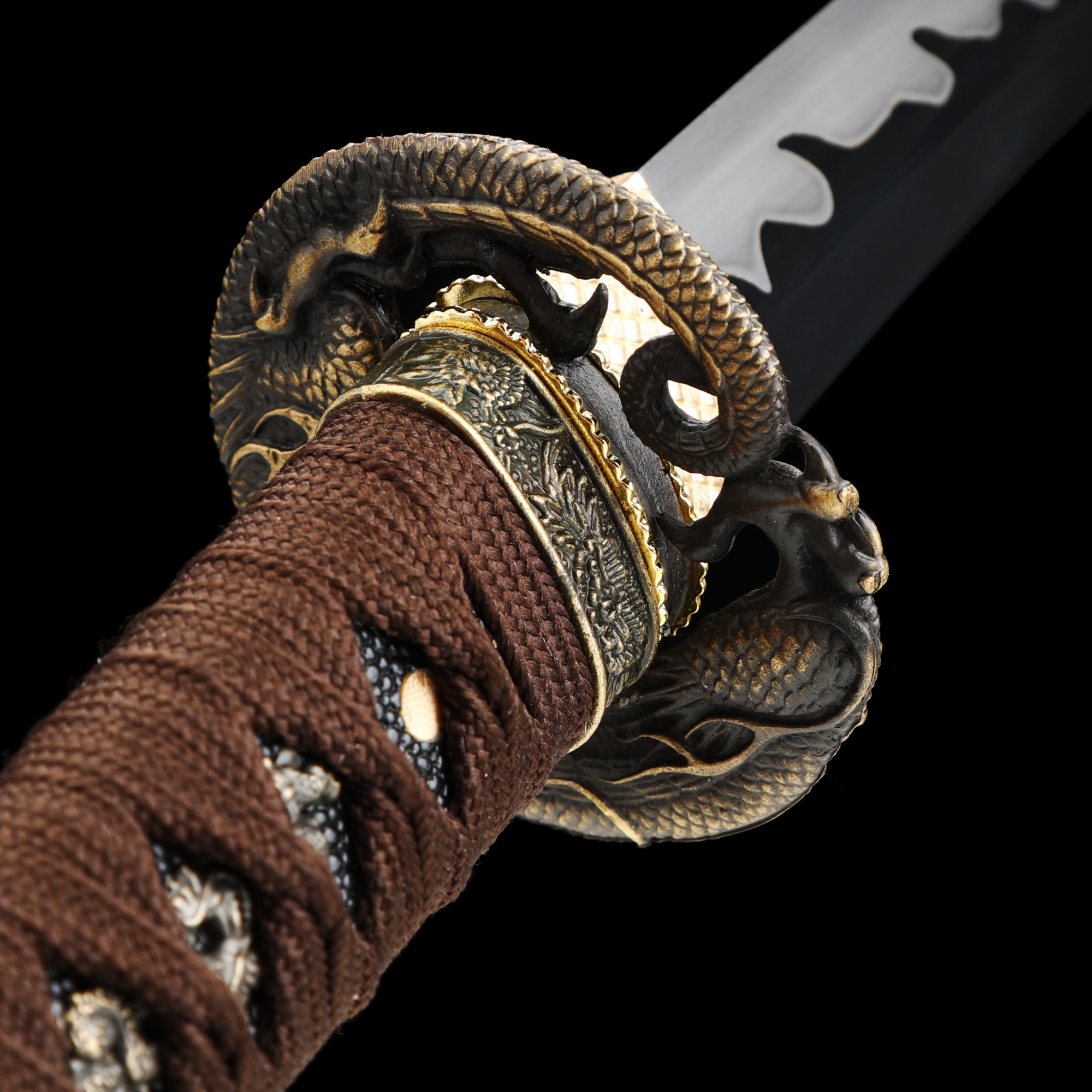
- Bronze-tone alloy tsuba cast in a dragon motif, flanked by a gold-crosshatch fuchi that bridges handle and blade with sharp visual contrast.
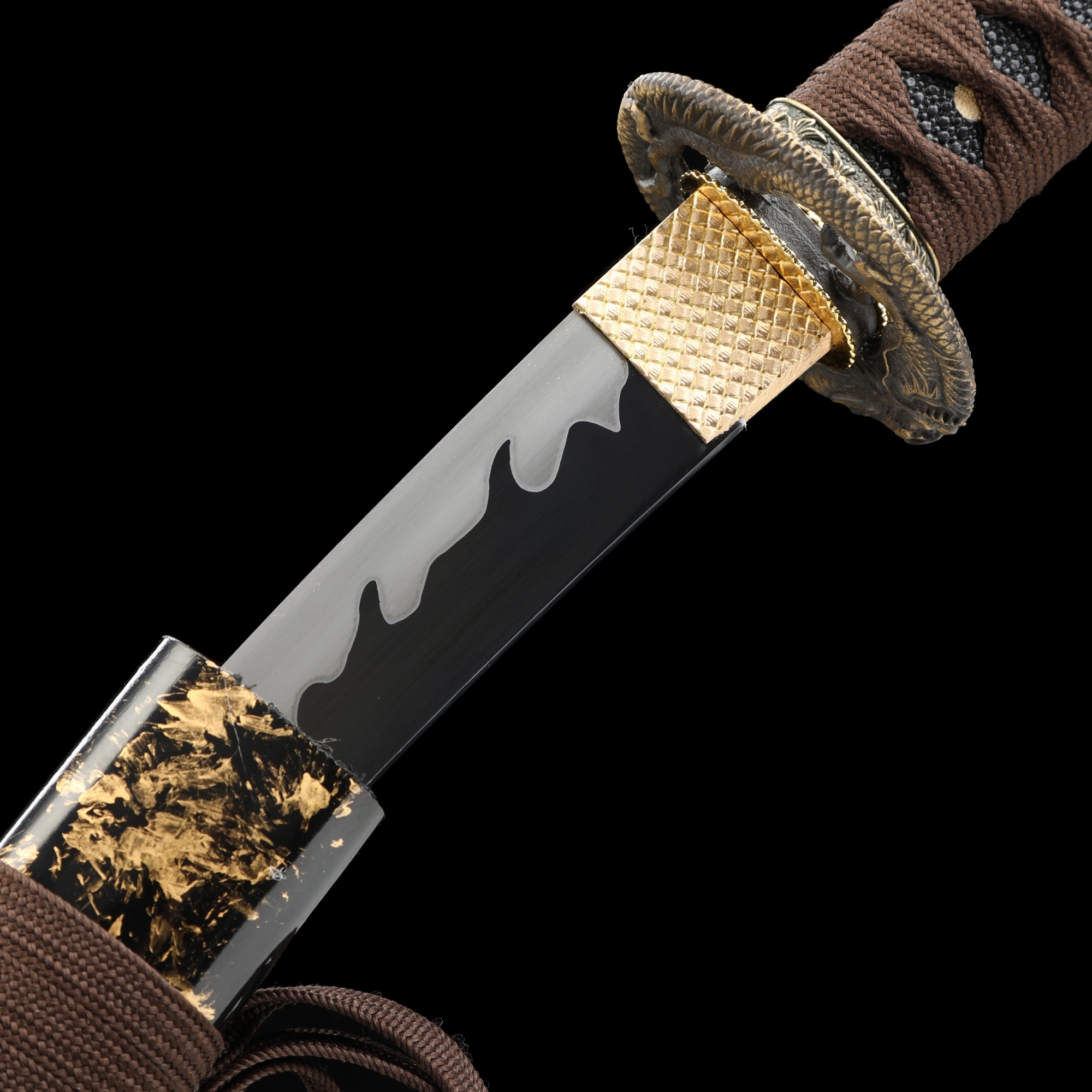
- Black hardwood lacquer saya features hand-applied gold vine artwork across the koiguchi end, paired with a matching brown sageo cord.
- Full koshirae assembly weighs 1.54 lb at 21.65 inches overall, making this tanto a well-proportioned display piece with authentic construction details.
 | Handmade by seasoned sword-smiths. |
 | Free U.S. express shipping. |
 | 30 day money back guarantee! |
 | SSL end-to-end encrypted secure payments. |
 | Trusted by 150,000+ purchased customers. |
Product Details
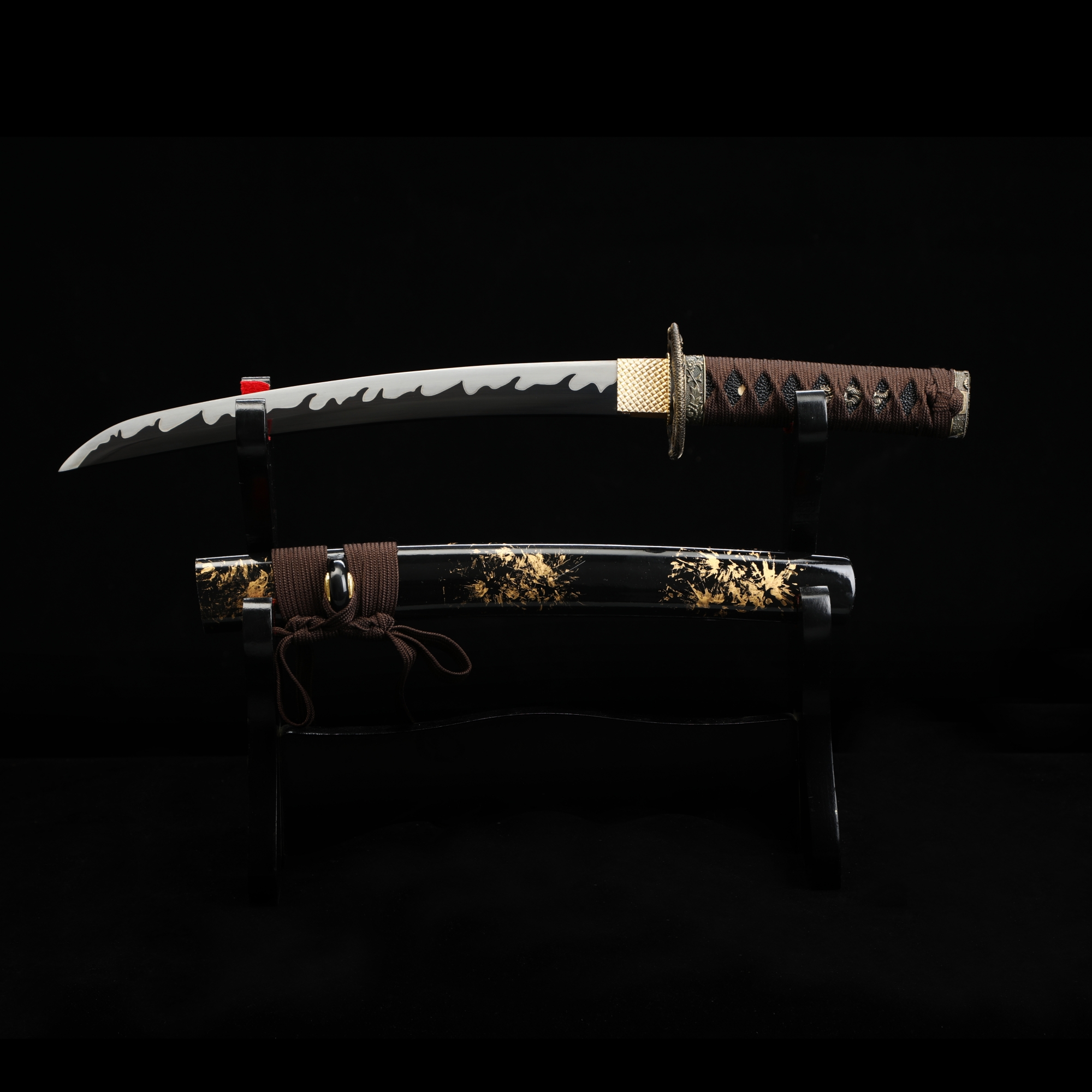
The 28.74-inch manganese steel nagasa is the centerpiece of this tanto, hardened to HRC 62 and finished in a deep black that runs the full length of the blade. A visible hamon line traces the edge, the result of careful heat treatment that defines the transition between the hardened cutting edge and the blade body. The full tang construction runs uninterrupted from tip to kashira, keeping the 1.54 lb assembly balanced across its 21.65-inch overall length. Explore the full range in our Black Manganese Steel Tanto collection.
The tsuka measures 10.62 inches and is wrapped in brown cotton cord using a traditional diamond-lace pattern over genuine black rayskin (samegawa). The textured rayskin beneath the wrap creates natural grip nodes that lock the cord in place, while the brown-and-black color pairing gives the handle a grounded, earthy tone that contrasts cleanly against the black blade.
A bronze-tone alloy tsuba cast in a dragon theme sits at the collar of the blade. The dragon relief wraps around the oval guard with fine surface detail, and the gold-finish fuchi immediately below it adds a warm metallic accent that ties the handle hardware together. The seppa washers seat the tsuba flush, keeping the fit tight with no play at the guard.
The saya is shaped from hardwood and finished in a matte black lacquer that gives the scabbard a clean, even surface. The lower section of the saya carries hand-applied gold vine artwork - scattered chrysanthemum and foliage forms in warm gold against the black ground. A brown sageo cord, matching the tsuka ito, laces through the kurikata and ties off with a drop knot, completing the koshirae-style presentation.
At 21.65 inches long and 1.54 lb, this tanto sits well in a display stand or mounted horizontally. The saya measures 29.92 inches and ships in a 23.6 x 3.9 x 3.5-inch package at 2.2 lb. Every component - from the dragon tsuba to the gold vine saya - is selected to work as a cohesive set, making this tanto a considered addition to any Japanese sword collection.
- Manganese steel full tang blade hardened to HRC 62, finished in black with a hand-polished hamon line running the 28.74-inch nagasa.
- Tsuka wrapped in brown cotton cord over real black rayskin (samegawa), delivering a secure, textured grip with traditional diamond-pattern lacing.
- Bronze-tone alloy tsuba cast in a dragon motif, flanked by a gold-crosshatch fuchi that bridges handle and blade with sharp visual contrast.
- Black hardwood lacquer saya features hand-applied gold vine artwork across the koiguchi end, paired with a matching brown sageo cord.
- Full koshirae assembly weighs 1.54 lb at 21.65 inches overall, making this tanto a well-proportioned display piece with authentic construction details.
Specification
| Item Number | TK-JP-G10708 |
|---|---|
| Primary Color | Black |
| Primary Material | Manganese Steel |
| Tsuka Color | Brown |
| Tsuka Skin Color | Black |
| Tsuka Skin Material | Real Rayskin |
| Tsuka Length | 10.62 |
| Tsuba Color | Bronze |
| Tsuba Material | Alloy |
| Tsuba Theme | Dragon |
| Saya Color | Black |
| Saya Material | Hardwood Lacquer |
| Saya Surface | Matte |
| Saya Length | 29.92 |
| Sageo Color | Brown |
| Nagasa Material | Manganese Steel |
| Nagasa Color | Black |
| Nagasa Length | 28.74 |
| Nagasa Hardness | 62 |
| Nagasa Sharppend | Yes |
| Saya Theme | Gold Vine |
| Nagasa Hamon | Yes |
| Style | Koshirae |
| Dimensions | 21.7 x 1.3 x 0.3 Inches |
| Weight | 1.5 Pounds |
| Packing Size | 23.6 x 3.9 x 3.5 Inches |
| Shipping Weight | 2.2 Pounds |