Beige Black Handle Katana

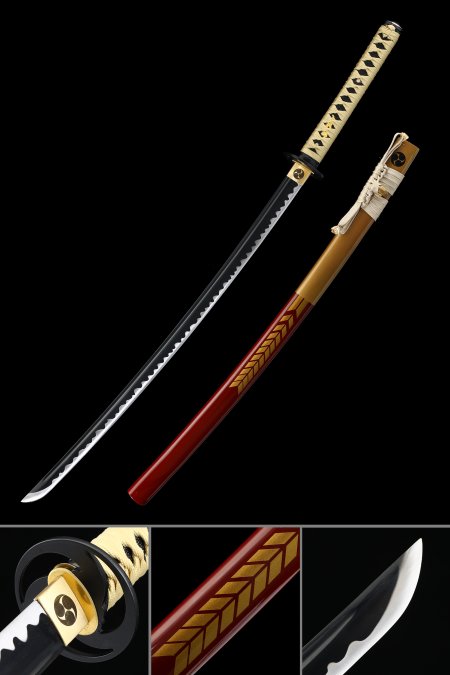
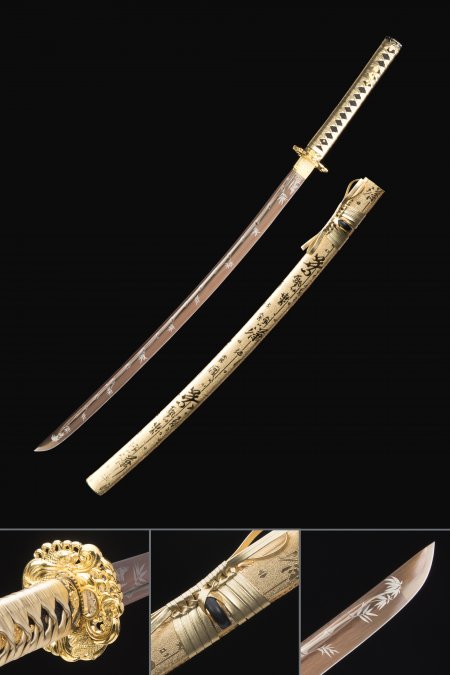
Beige and black handle katana combine the natural warmth of cream-toned ito wrapping with the sharp contrast of lacquered black fittings, creating a visual balance prized among discerning collectors. Each piece in this collection is built full-tang with hand-selected materials - from engraved blades to hand-lacquered hardwood saya - crafted to stand as a centerpiece in any display. Enjoy free standard shipping on all orders, backed by our hassle-free return policy.
Showing 3 Products

Frequently Asked Questions

What does beige ito wrapping mean on a katana?
Ito refers to the braided cord wrapped over the ray skin (same) on a katana's handle. Beige ito typically uses natural cotton, silk, or synthetic cord in an undyed or lightly toned finish. Historically, lighter handle wrappings were associated with formal or ceremonial presentation swords, as the pale tone highlighted the precision of the wrap pattern rather than concealing it. On a display piece, beige ito creates a clean contrast against darker tsuba and fittings, making the geometric weave pattern immediately visible. The tightness and consistency of the wrap pattern is a reliable indicator of overall assembly quality - loose or uneven sections indicate corners were cut in production.
How is Damascus steel different from 1045 carbon steel in katana collecting?
Damascus steel in modern katana production refers to pattern-welded steel - two or more steel types forge-folded together to create a layered visual surface. The flowing lines and swirling grain are purely decorative in most collectible examples, though the folding process does distribute carbon more evenly through the billet. 1045 carbon steel, by contrast, is a single-composition medium-carbon steel that polishes to a consistent mirror or satin finish with no surface patterning. Collectors who prioritize surface artistry and visual uniqueness tend to favor Damascus-pattern blades, while those drawn to traditional Japanese blade aesthetics often prefer the clean geometry of mono-steel like 1045. Neither is inherently superior - the choice depends on the display context and personal aesthetic preference.
Does the black blade finish on manganese steel katana require special care?
Black blade finishes are typically achieved through heat treatment, forced oxidation, or acid etching rather than paint or coating. On manganese steel katana, the dark surface tone often results from the steel's natural response to the hardening process. Because this finish is part of the steel's surface layer rather than an applied coating, it is relatively durable - but it can show fingerprint oils and fine abrasions more visibly than a polished silver blade would. For collectors, the recommended care involves wiping the blade with a clean, lint-free cloth after handling to remove skin oils, followed by a light application of choji oil or food-grade mineral oil. Avoid abrasive cloths or metal polishes, which can disrupt the surface treatment and alter the finish character.
Are these katana suitable as display gifts for sword enthusiasts?
Yes - pieces in the beige black handle category are well-suited as collectible gifts precisely because the color pairing reads as intentional and sophisticated even to viewers unfamiliar with katana construction details. The contrast between the cream handle wrap and black lacquered saya creates immediate visual appeal without requiring background knowledge to appreciate. For gift purposes, look for pieces that include a fitted saya with secure koiguchi retention and a full-tang construction - these details signal quality that experienced collectors will recognize immediately. Pairing the sword with a display stand elevates the presentation significantly and allows the recipient to showcase the piece without additional purchases.
How should lacquered hardwood saya be stored long-term?
Lacquered hardwood saya are sensitive to both humidity and temperature swings. Prolonged exposure to dry air can cause the wood to contract and develop hairline cracks in the lacquer surface, while high humidity encourages mold and finish lifting. The ideal storage environment maintains relative humidity between 45% and 55%, away from heating vents, exterior walls, and windows with direct sun exposure. Store the piece horizontally on a padded rack or vertically on a single-tier stand with the blade edge facing upward, which is the traditional Japanese convention. If using a fabric storage bag, choose natural cotton rather than synthetic materials that can trap condensation. Inspect the saya surface every few months for any early signs of finish separation and address promptly with a conservation-grade wax.

Customer Reviews

Randy Cece New Jersey, United States

The sword is beautiful. I bought two swords on Amazon and they both broke within a week. My son (who is into Katana Swords) was devastated. This sword is built so much better and it’s very sleek. He’s only 6 so he’s not allowed to touch it without Mommy or Daddy right next to him. I’m teaching him to respect the sword and to understand it’s a very powerful weapon. We love it. Thanks for making such a great product.

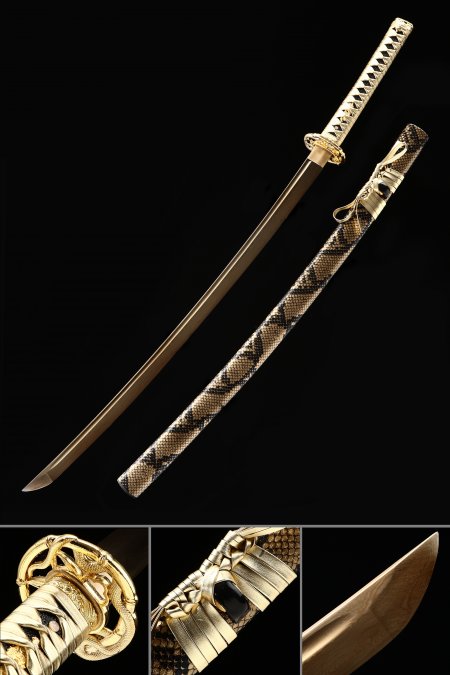
Golden Damascus Steel Katana with Snake Tsuba and Python-Pattern Saya - Full Tang Collectible Sword Golden Damascus Steel Katana with Snake Tsuba and Python-Pattern Saya - Full Tang Collectible Sword