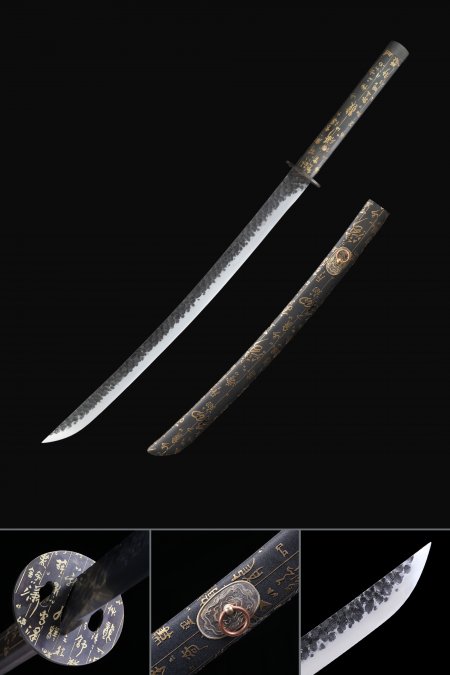
Black Gold Handle Wakizashi

The Black Gold Handle Wakizashi collection brings together hand-forged short swords dressed in striking black-and-gold koshirae — a pairing that honors traditional Japanese aesthetics while commanding immediate visual presence. Each piece features carefully fitted components, from engraved saya to ornate tsuba, making them highly sought-after display collectibles for serious enthusiasts. Every order ships free, and returns are handled with the same care we put into the blades themselves.
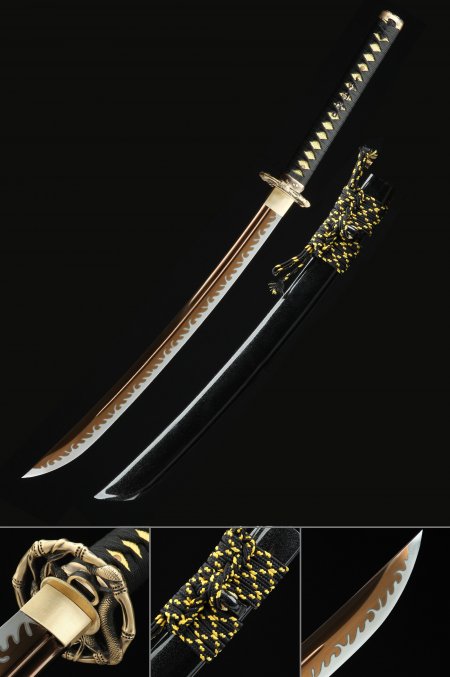
Showing 2 Products

Related Collections

Black And Gold Katana14 items


11 Reviews

Gold Ninjato2 items


3 Reviews

Black Gold Tsuba Katana128 items


381 Reviews

Gold Black Tsuba Katana124 items


545 Reviews

Frequently Asked Questions

What makes manganese steel a good choice for display wakizashi?
Manganese steel contains a higher manganese content than standard carbon steel, which refines the grain structure and produces a smooth, consistent surface after polishing. For display collectibles, this matters because the blade's visual finish is a primary concern — the fine grain catches light evenly, allowing the natural hada-like texture to show without aggressive pitting or inconsistency. It also holds a polished edge profile cleanly over time, meaning the blade maintains its visual sharpness in a display setting without requiring frequent maintenance. From a collector's perspective, manganese steel strikes a practical balance: it is durable enough to hold its form under normal display conditions while being workable enough for smiths to deliver refined aesthetic results.
How does black-gold koshirae differ from traditional Japanese sword fittings?
Classical Japanese koshirae from the Edo period typically favored subdued, naturalistic color palettes — dark lacquered saya in browns, deep blues, or muted blacks paired with iron or shakudo fittings. The black-and-gold koshirae style is a modern collector-oriented aesthetic that amplifies contrast for visual impact, pairing high-gloss or matte black lacquer with gold-tone or gilded fittings on the tsuba, menuki, and saya accents. This approach is not historically inaccurate in spirit — gold was used in ceremonial daisho presentations for high-ranking samurai — but it represents a deliberate amplification of those formal elements for contemporary display purposes. Collectors drawn to this style tend to prioritize visual drama and cohesive theming over strict period accuracy.
What does the kanji engraving on the saya typically represent?
Kanji engraving on a wakizashi saya generally serves one of two purposes: decorative inscription of poetic or philosophical phrases, or the inclusion of auspicious characters associated with virtue, strength, or fortune. Common examples include characters meaning "purity," "honor," "endurance," or short verse fragments drawn from classical Japanese literature and Zen poetry. On collectible pieces, the engraving elevates the saya from a protective sheath to a readable cultural artifact, giving the display piece an additional layer of scholarly interest. For collectors who engage with Japanese history or language, this detail adds genuine talking-point value when the piece is displayed or presented as a gift.
How should I store a lacquered black-gold wakizashi long-term?
Lacquered saya are sensitive to two main environmental threats: humidity fluctuations and prolonged direct light exposure. High humidity can cause the lacquer to bubble or peel at the seams, while very dry conditions may lead to minor cracking over time. Ideal storage sits between 45–55% relative humidity. Keep the piece away from windows and direct sunlight, which will fade gold-tone fittings and dull the black lacquer finish. Apply a thin coat of choji oil or a neutral blade oil to the steel every three to four months to prevent surface oxidation, using a soft cotton cloth rather than synthetic materials that may leave micro-scratches. Store the wakizashi either in its display box or on a dedicated sword stand — never resting the saya against a hard edge, which can chip the lacquer.
Can a black-gold wakizashi be displayed as part of a daisho set?
Yes — pairing a black-gold wakizashi with a matching katana is one of the most compelling display configurations for collectors interested in the daisho tradition. The daisho, meaning "big-small," refers to the paired long and short swords historically worn together by samurai. When both pieces share the same koshirae style — identical or closely matched lacquer color, gold-tone fittings, and complementary tsuba motifs — the display reads as a unified set rather than two unrelated swords. A two-tier horizontal sword stand is the standard mounting solution, with the katana on the upper tier and the wakizashi below. For collectors looking to build this presentation, our Black Gold Handle Katana collection offers compatible pieces designed to sit naturally alongside the wakizashi in this collection.

Customer Reviews

Keith Goehner New York, United States

So, it's a little on the heavy side. The plastic covering the blade was ripped, stand the scabbard is loaded up with the oil the blade was shipped in - so whenever I unsheath it, the blade has way too much oil on it. The hamon is super fake looking. It should have a natural hamon because in the item description, it states the blade is clay tempered. Otherwise, I am happy with it overall. I guess the next one I buy will have to be more expensive- to get the features that I thought I was getting with this one.
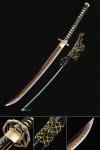
High Manganese Steel Gold Blade Wakizashi with Snake Tsuba in Black-Gold Koshirae High Manganese Steel Gold Blade Wakizashi with Snake Tsuba in Black-Gold Koshirae
Cart 0 Items

Your cart is empty