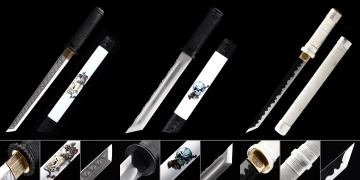
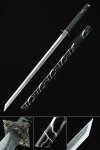
Black White Saya Ninjato

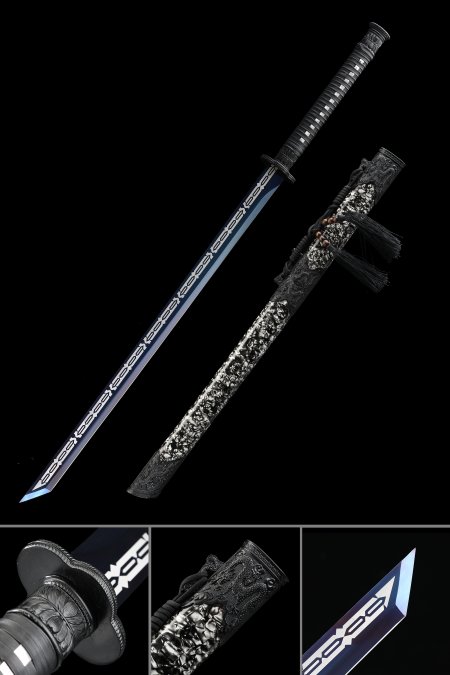
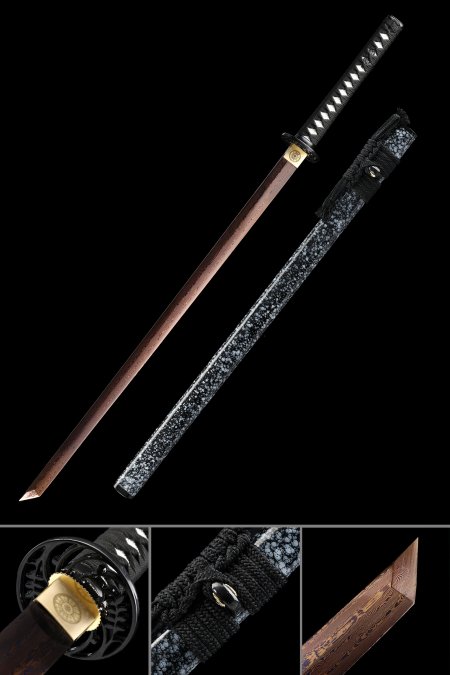
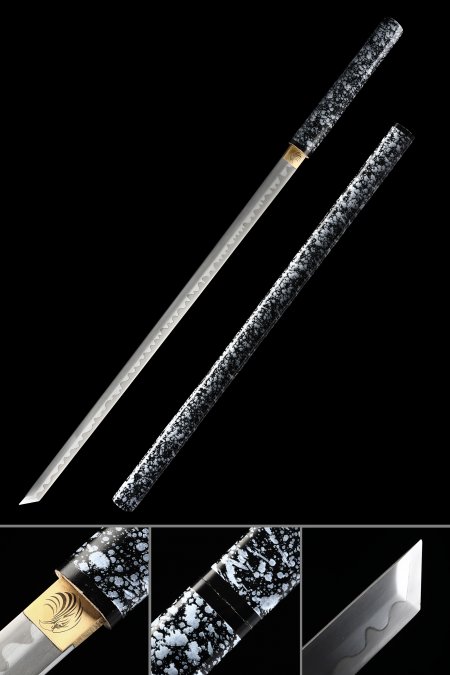
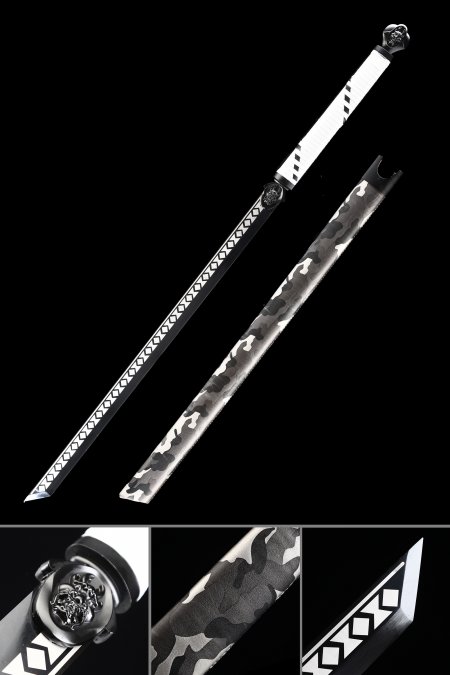
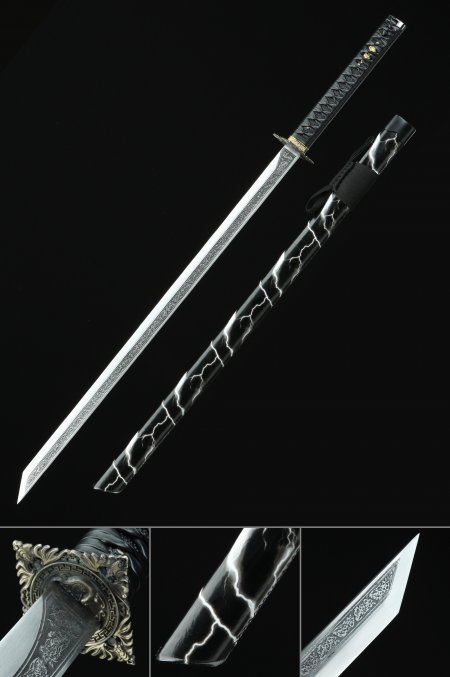
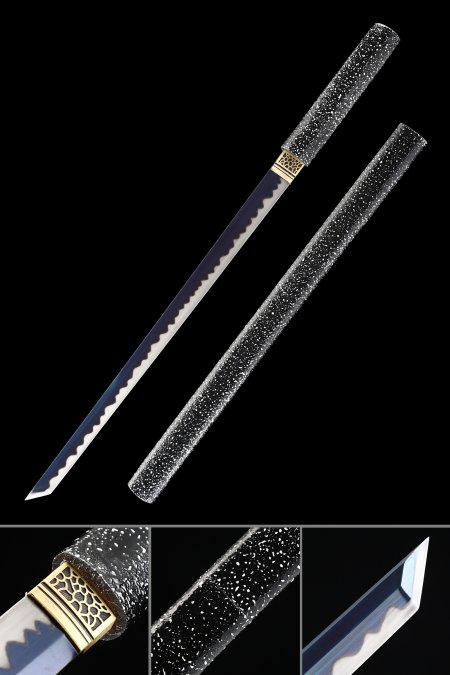
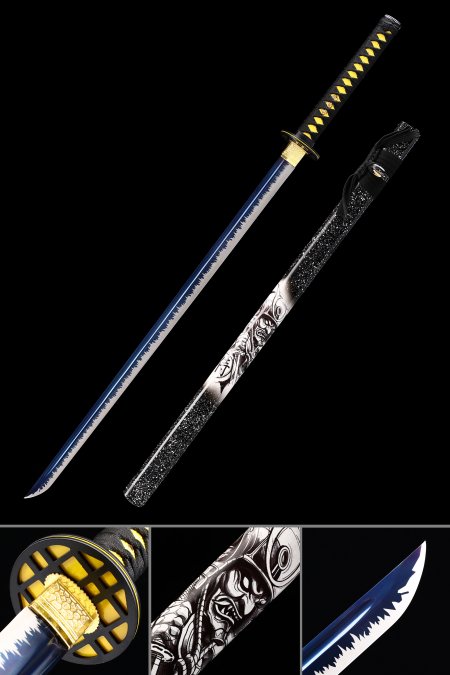
The Black White Saya Ninjato collection brings together straight-bladed ninja swords dressed in striking monochrome scabbards - from speckled lacquer to marble-finish wood - each piece a study in contrast and craft. Forged in high-carbon and manganese steels, these ninjato feature hand-fitted koshirae, sculpted tsuba, and cord-wrapped handles that reward close inspection. Every sword ships free and may be returned with ease, so building your display collection is always a confident decision.
Showing 7 Products

Frequently Asked Questions

What makes a ninjato different from a traditional katana?
A ninjato is distinguished primarily by its straight or near-straight blade geometry, as opposed to the pronounced curvature of a katana. This results in a different balance point - weight sits closer to the hand rather than distributing forward along a curved edge - which changes how the piece presents on a stand or wall mount. The tsuba on a ninjato is often square or rectangular rather than round, another visual marker collectors use to identify the form instantly. These swords are collected and displayed as representations of a distinct school of Japanese blade-making tradition, separate from the curved tachi and katana lineage.
How does T10 steel differ from 1095 in a display ninjato?
T10 tool steel contains a small percentage of tungsten and slightly elevated carbon, which produces a finer grain structure and allows the differential hardening process to create a more detailed, high-contrast hamon line along the edge. Collectors who value visual complexity in the blade's temper line often gravitate toward T10 for this reason. 1095 high-carbon steel, by comparison, responds very predictably to clay-coat quenching and delivers a clean, bold hamon that reads clearly from a distance - ideal for wall-mounted display where fine grain detail is less visible. Neither is superior; the choice depends on whether you prize close-inspection detail or clean display impact.
How should I store a lacquered saya to prevent cracking?
Lacquer is sensitive to rapid humidity changes and prolonged direct sunlight. Store your black-and-white lacquered saya in an environment where relative humidity stays between 40% and 60% - a display case with a small silica gel packet helps maintain stability. Avoid placing the sword near air conditioning vents or heating units, as these create cycles of dry air that cause micro-cracking in lacquer over time. If displaying horizontally on a katana stand, rotate the saya position every few months so the same surface doesn't bear contact stress continuously. Wipe the lacquer surface occasionally with a soft, dry cloth; avoid any solvent-based polishes that can dull or lift the finish.
Can Damascus ninjato be displayed alongside mono-steel pieces?
Absolutely - Damascus pattern-welded blades create excellent visual contrast in a grouped display precisely because their layered grain pattern catches light differently than a mono-steel blade with a single hamon line. When mounting a Damascus ninjato next to a 1095 or T10 piece, the juxtaposition highlights the distinct character of each steel type and turns the display into an informal study of blade-making approaches. A black-and-white saya unifies the grouping aesthetically even when the blade materials differ, giving the collection visual coherence without making every piece look identical. This kind of intentional curation is a hallmark of serious collectors.
What display accessories complement a monochrome ninjato collection?
A black lacquered double or triple sword stand in horizontal configuration is the most straightforward choice, letting the contrasting saya finishes speak without visual competition from the stand itself. For wall mounting, black iron brackets with minimal profile keep the focus on the swords' silhouettes and the monochrome saya patterns. Collectors who prefer a display case environment often line the interior with neutral gray or charcoal fabric, which prevents the white-speckled or marble-finish sayas from appearing washed out under case lighting. A small spotlight at a low angle brings out the texture of cord-wrapped tsuka and the grain detail in lacquer - dramatically improving how the collection photographs for documentation or sharing.

Customer Reviews