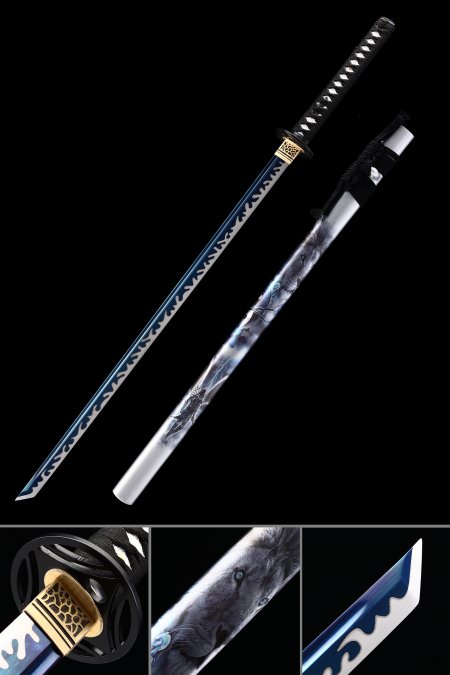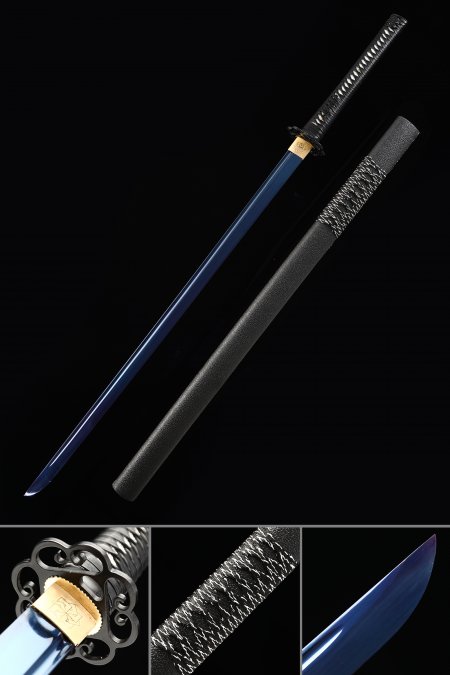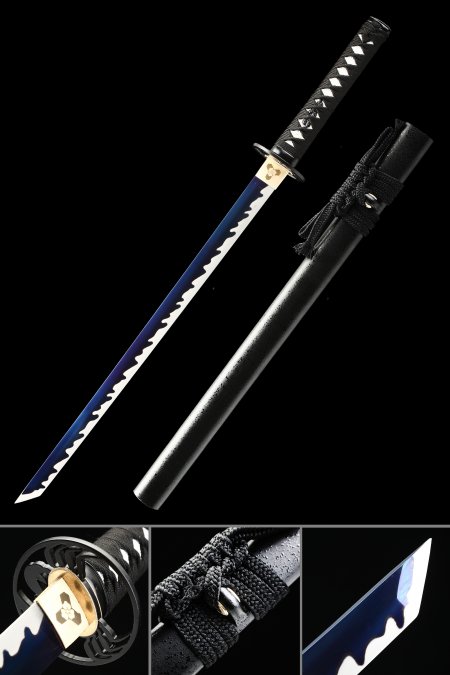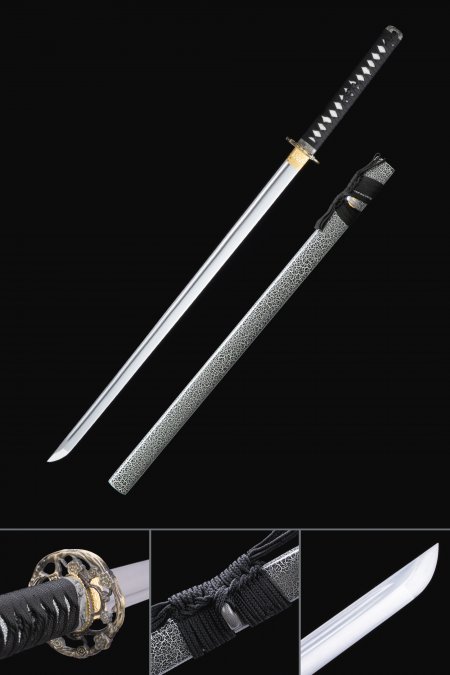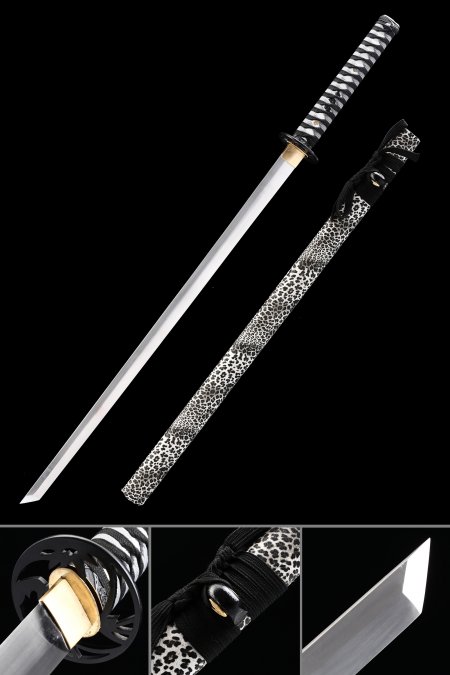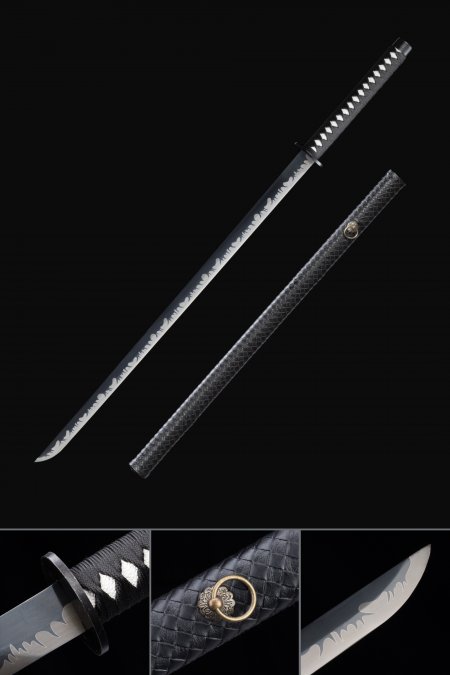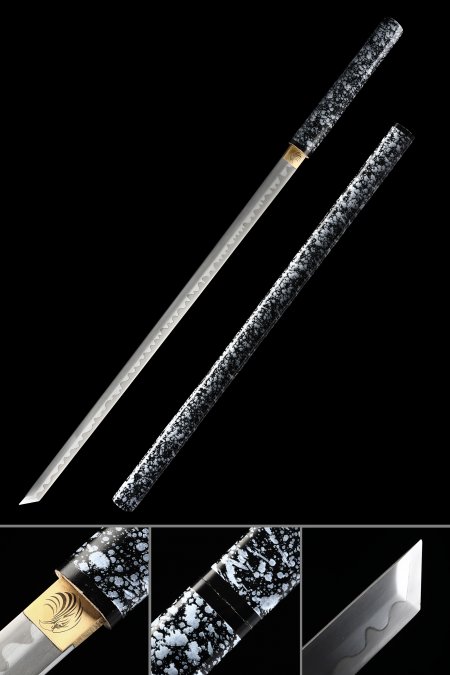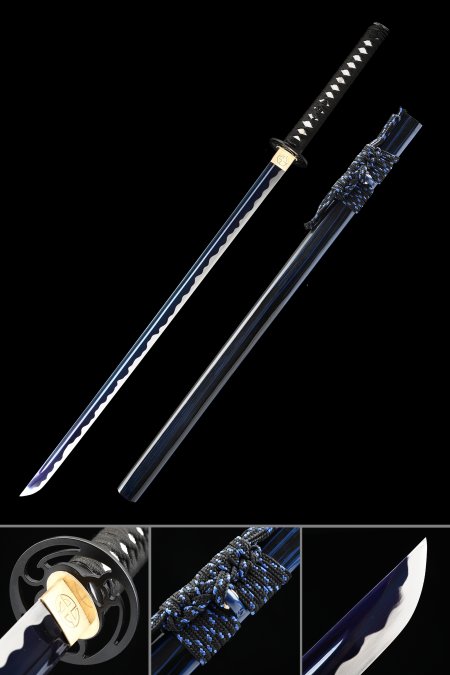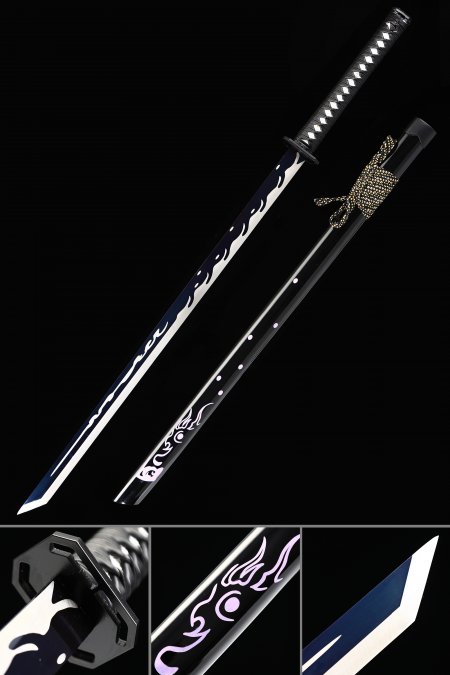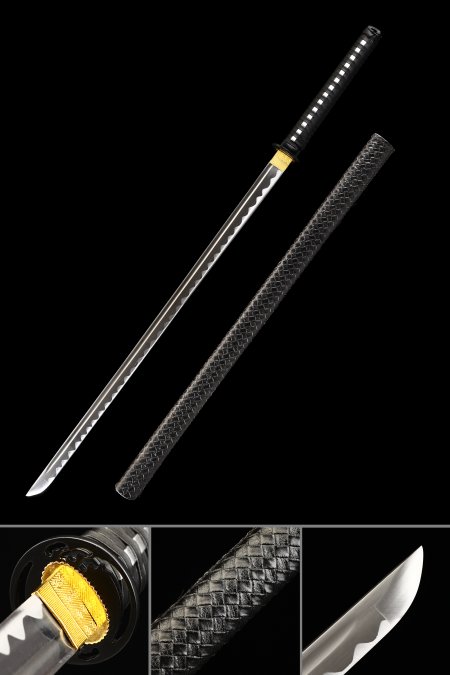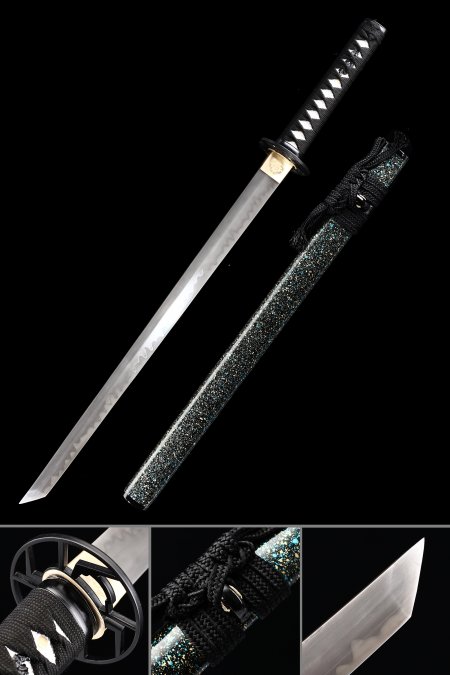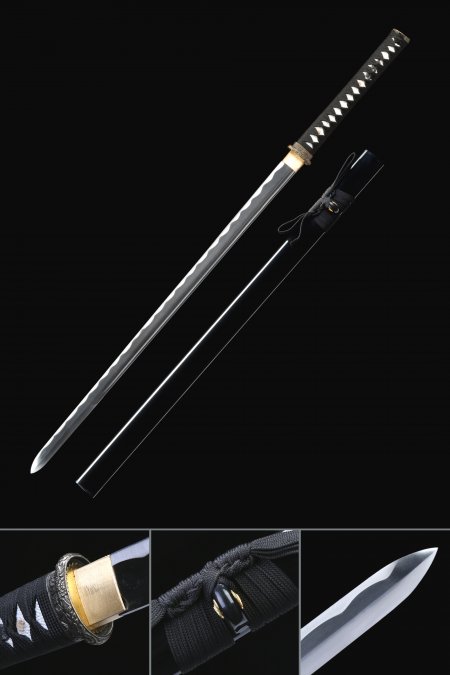
Black White Handle Ninjato

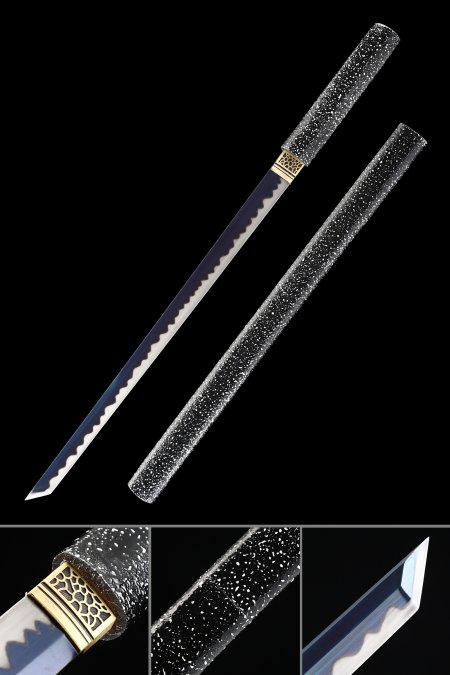
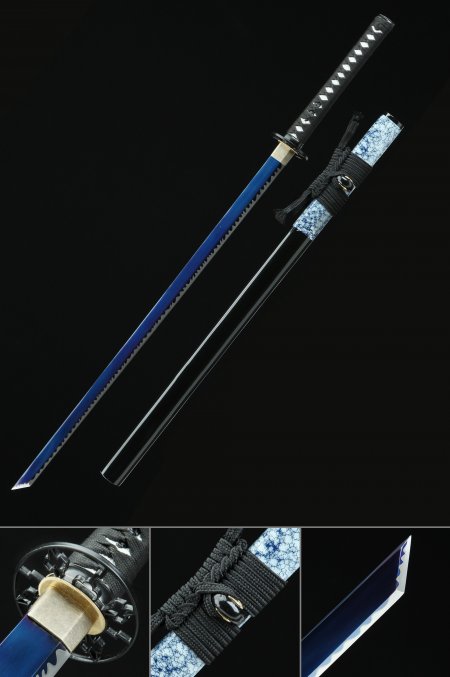
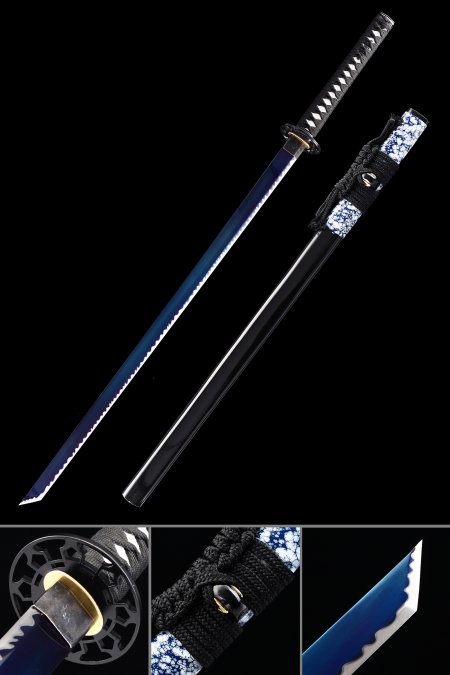
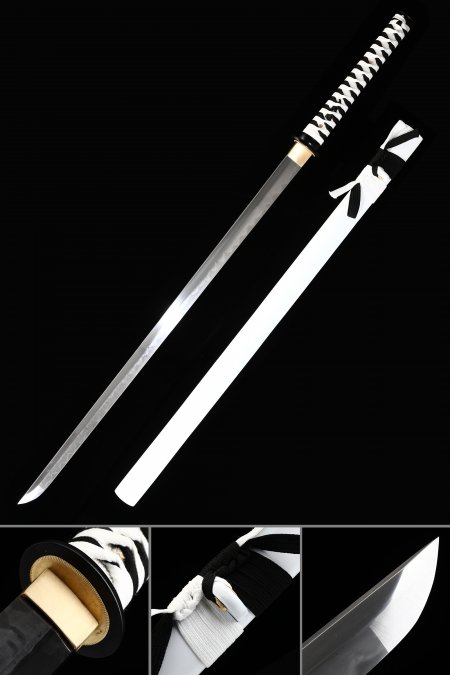
Every piece in this collection pairs a straight-edged ninjato silhouette with a bold two-tone handle aesthetic — black and white wrapping, ray skin, and cord combinations that make each sword a genuine display centerpiece. Blades span 1045, 1060, 1095, T10, and manganese steel options, from clay-tempered hamon finishes to flame-engraved dark coatings, so there is always a construction tier matched to your collecting focus. Free standard shipping is included on all orders, and our hassle-free return policy ensures your collecting experience is risk-free from the first click.
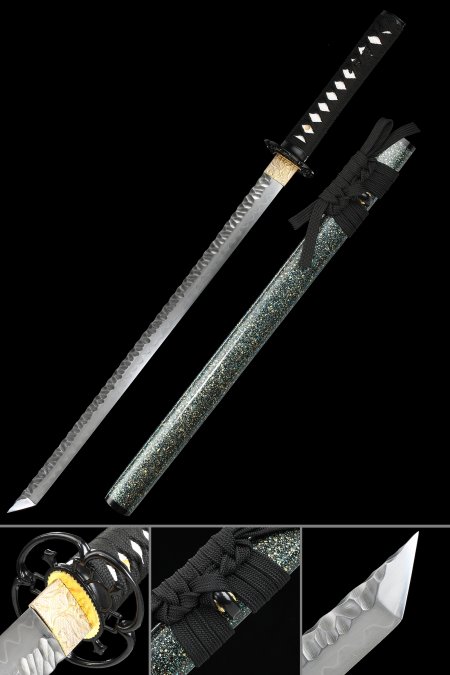
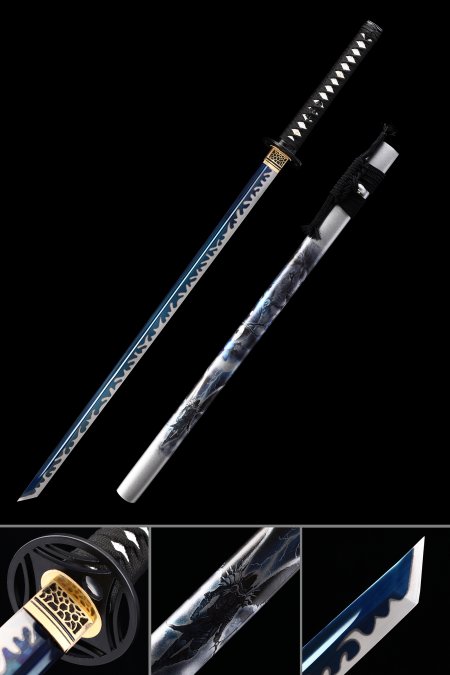
Showing 19 Products

Related Collections

Black Odachi11 items


14 Reviews

White Tanto6 items


34 Reviews

Black Hamidashi7 items


31 Reviews

Black Saya Katana590 items


3142 Reviews

Frequently Asked Questions

What makes a ninjato different from a katana?
The most immediate difference is blade geometry. A katana features a pronounced curvature along its length — the result of differential clay tempering during the forging process — while a ninjato has a straight or near-straight blade profile. This geometric distinction changes everything about how the sword looks in display and how the overall proportions read. Ninjato also tend to have a square or simplified tsuba rather than the decorative round guard common on katana, and the saya (scabbard) is typically straight rather than curved to match. For collectors, these differences make a ninjato a visually distinct piece that contrasts well alongside curved-blade Japanese swords in a mixed display.
What does clay tempering do to a ninjato blade?
Clay tempering — known as tsuchioki — involves coating specific areas of the blade with a clay mixture before the quenching step of heat treatment. The exposed edge cools rapidly, forming a hard martensitic steel structure, while the clay-insulated spine cools slowly, staying softer and more flexible. The boundary between these two zones becomes visible on the finished blade as the hamon, a wavy or clouded temper line that runs along the edge. On T10 tool steel ninjato in this collection, that hamon is genuine rather than acid-etched, meaning it reflects actual metallurgical variation in the steel. Collectors specifically seek real hamon as a quality indicator and as an aesthetic feature that deepens under raking light or oil application.
How do manganese steel ninjato differ from carbon steel versions?
Manganese steel is an alloy that incorporates manganese as a primary secondary element, which contributes to its distinctive surface response — including the dark blue and near-black coloration seen across several pieces in this collection. That chromatic quality makes manganese steel a preferred material for blades with flame engravings or dark lacquer saya pairings, where the blade tone and the scabbard finish are meant to read as a unified visual statement. Carbon steel grades like 1060, 1095, and T10 are more conventional in color (bright silver-grey) but offer better predictability in heat treatment, which is why clay-tempered hamon work is typically done on T10 rather than manganese alloys. The right choice depends on whether your collecting priority is surface aesthetics or steel-grade provenance.
How should I store and maintain a display ninjato long-term?
Carbon and alloy steel blades require a thin, even coat of blade oil — choji oil or a modern mineral substitute — applied every few months, or more frequently in humid environments. Use a soft cloth or a traditional nugui-gami paper to work the oil from the habaki (blade collar) toward the tip, always moving with the edge rather than across it. Store the ninjato horizontally or at a slight incline in its saya to prevent oil from pooling unevenly. Avoid display cases near exterior walls, heating vents, or windows, as temperature cycling and condensation are the most common causes of surface oxidation on display swords. Inspect the handle pin (mekugi) annually to confirm it has not loosened, especially on full-tang pieces where the tsuka fits tightly over the tang.
Is a black and white ninjato a good choice as a gift for a collector?
The two-tone handle aesthetic makes black and white ninjato particularly giftable because the visual contrast is immediately legible to anyone, not just experienced collectors. Someone new to Japanese sword collecting will appreciate the dramatic presentation, while a more seasoned collector will recognize the steel grade and construction details as meaningful signals of quality. For gifting, T10 clay-tempered pieces with a visible hamon offer the strongest story — the hamon line alone gives the recipient something specific to notice, discuss, and appreciate over time. Pairing a ninjato with a display stand completes the gift as a ready-to-display set from day one. If the recipient already collects katana or wakizashi, a straight-blade ninjato adds genuine geometric contrast to an existing display.

Customer Reviews

Emory Swenk Oregon, United States

the first two swords i ordered are brilliant. they came from China and arrived quickly. i am very pleased. i ordered a third sword which was shipped from California and i was less pleased. the scabbard and hilt were not as pictured. i keep getting emails to review my orders so here i am. love the first two but am somewhat unhappy with my third sword. overall this is a great company and i will be back. cheers

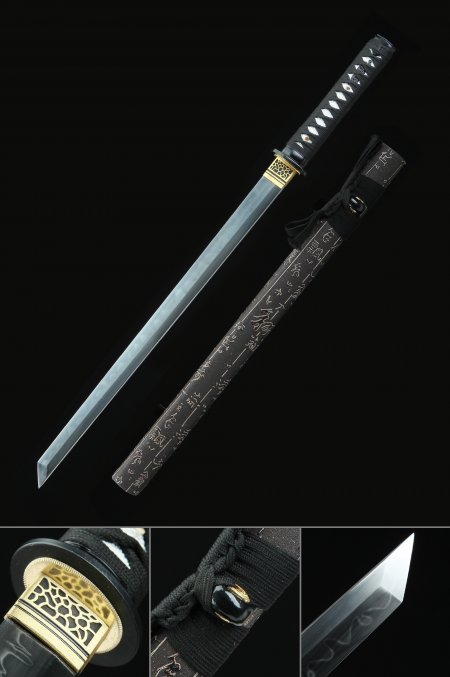
T10 Carbon Steel Chokuto Ninjato with Clay Tempered Hamon - Kanji Saya in Black and Brown Full Tang T10 Carbon Steel Chokuto Ninjato with Clay Tempered Hamon - Kanji Saya in Black and Brown Full Tang
Cart 0 Items

Your cart is empty