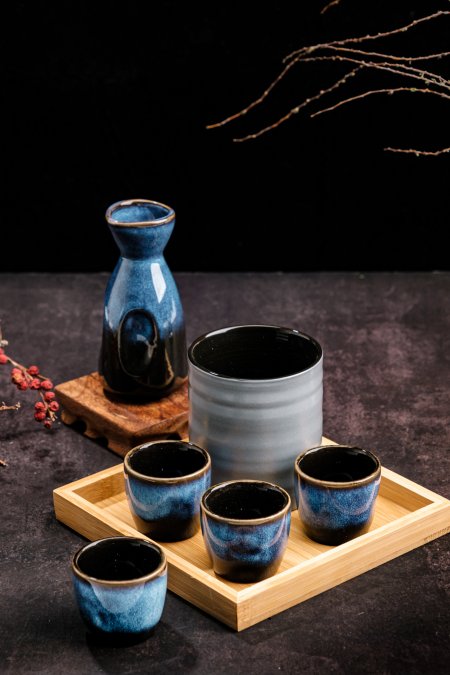
Blue Ceramics Japanese Sake Set
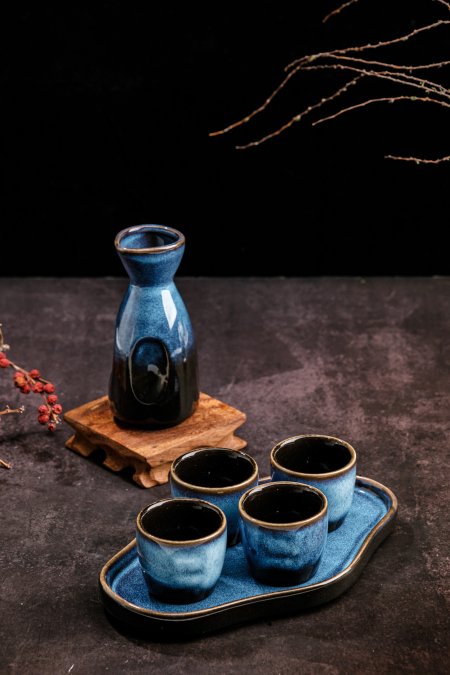
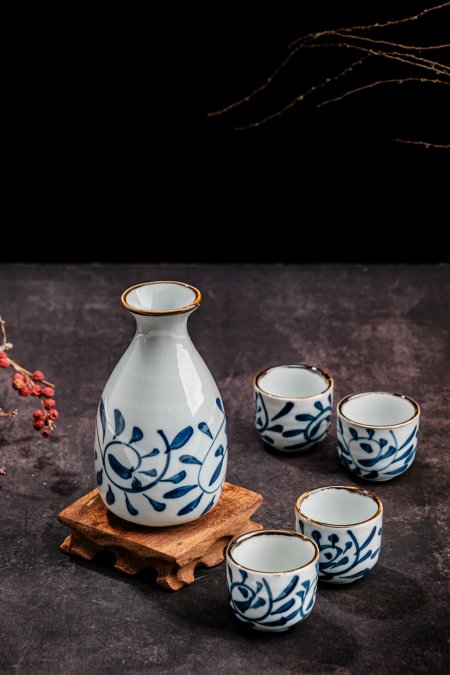
A beautifully crafted blue ceramics Japanese sake set brings the elegance of traditional Japanese dining culture into your home. Each set pairs a hand-thrown carafe with coordinating cups finished in rich cobalt and azure glazes that echo centuries-old kiln traditions. Whether displayed on a shelf or used during a ceremonial pour, these pieces make a thoughtful gift and a timeless addition to any Japanese art collection. Enjoy free standard shipping on every order, plus hassle-free returns for complete peace of mind.
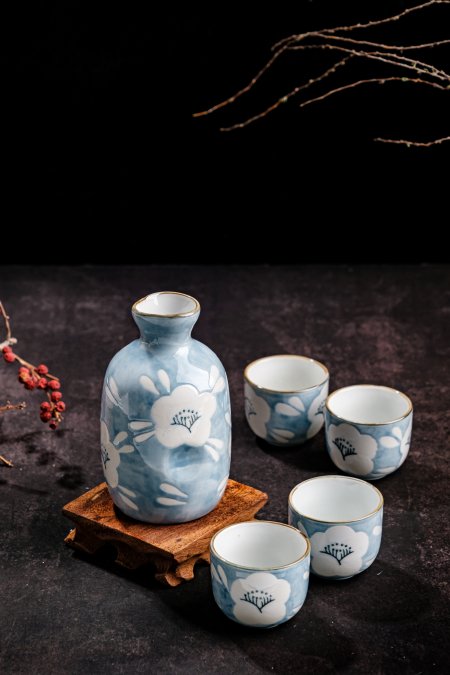
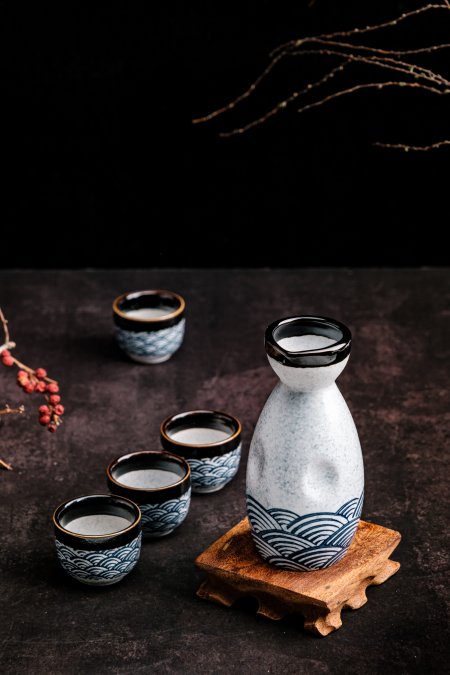
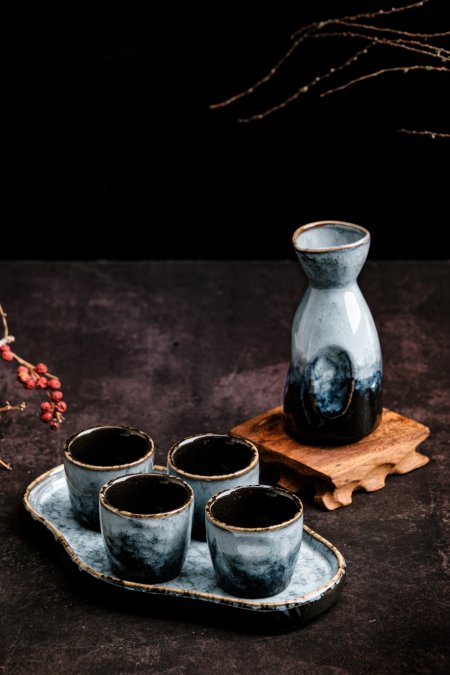
Related Collections
Blue Tanto10 items
Blue Tanto Sword21 items
Frequently Asked Questions
What makes blue ceramics sake sets distinct from other styles?
Blue ceramics sake sets are distinguished primarily by their glaze composition. The signature cobalt blue color comes from cobalt oxide applied either under or over a clear glaze before high-temperature firing, typically between 1,200°C and 1,300°C. During firing, the cobalt bonds with silica in the glaze to produce a stable, non-fading blue that ranges from deep navy in thicker applications to translucent sky tones where the glaze is thin. This is fundamentally different from painted or decal-transfer blue patterns, which sit on the surface and can flake over time. A genuine cobalt-glazed piece shows color variation across its surface — pooling in crevices, lightening on raised edges — that gives each set a handcrafted signature no two pieces share exactly.
How do ceramic trays and bamboo trays differ for display?
The tray choice significantly affects both the visual presentation and the practical use of a sake set. Ceramic trays with coordinating blue glaze create a unified, gallery-quality display where every element speaks the same visual language — ideal for a dedicated shelf or a Japanese-style interior. The ceramic surface is easy to wipe clean and provides a stable, non-reactive base. Bamboo trays, by contrast, introduce an organic warmth that offsets the cool porcelain tones and references the natural materials found in traditional Japanese serving culture. Bamboo is lighter and has a slight give that reduces the risk of chips if a cup is set down quickly. For collectors who rotate their sets between display and occasional use, bamboo trays tend to be more forgiving in everyday handling.
Is a tokkuri carafe functional or purely decorative?
The tokkuri is both. Its classic narrow-neck, flask-body form was engineered specifically for serving sake: the constricted opening slows the pour for precise cup filling and, when the bottle is submerged neck-deep in warm water, the shape allows even heat distribution that gently warms the sake without scalding it. As a display object, the tokkuri's proportions are inherently sculptural — the swelling shoulder and tapered neck create a silhouette that photographs beautifully and holds visual weight on a shelf. Collectors who display rather than use their sets should still handle the carafe occasionally, as ceramic stored in static conditions for extended periods in dry climates can develop micro-stress in the glaze. A light hand-washing once or twice a year keeps the piece in optimal condition.
How should I store a ceramic sake set to prevent chipping?
Chipping in ceramic sake sets almost always occurs at two points: the foot ring on the base of each cup, and the lip of the carafe. To protect the foot ring, place a thin felt or microfiber square between stacked cups — glaze-on-glaze contact under even slight pressure can cause micro-fractures that eventually become visible chips. Store the carafe upright rather than on its side, and avoid placing anything on top of it. For long-term storage in a cabinet, individual cloth pouches or acid-free tissue wrapping prevent cups from knocking together during vibration from foot traffic or nearby doors. Keep the storage environment moderately humid — extremely dry air can stress glaze over years, while excessive moisture encourages mold in any bamboo tray elements.
Does a blue sake set make a good gift for someone new to Japanese culture?
A blue ceramics sake set is one of the most accessible entry points into Japanese material culture precisely because it combines aesthetic appeal with a clear cultural context. Unlike more specialized collectibles, a sake set comes with an immediately understandable purpose and a visual style — the cobalt blue palette — that resonates with a broad audience. Sets that include a tray present as a complete, ready-to-display composition rather than individual objects, which makes the gifting moment more impactful. For recipients who are beginning to explore Japanese art and craft, pairing a sake set with a brief note about the tokkuri form or the cobalt glaze tradition adds meaningful context that transforms a beautiful object into a small piece of cultural education.