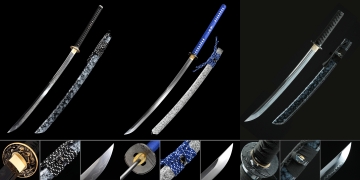
Blue Sageo Ninjato

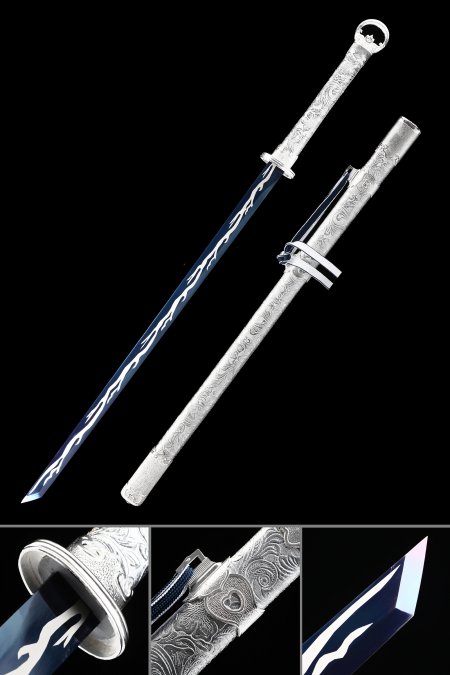
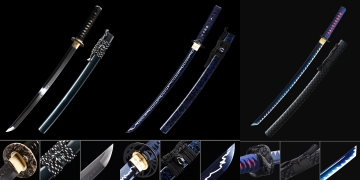
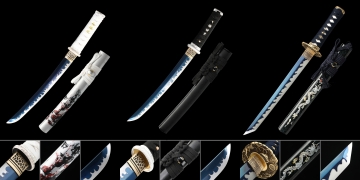
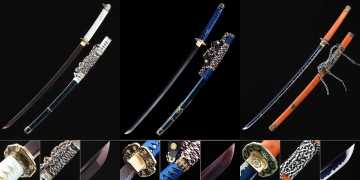
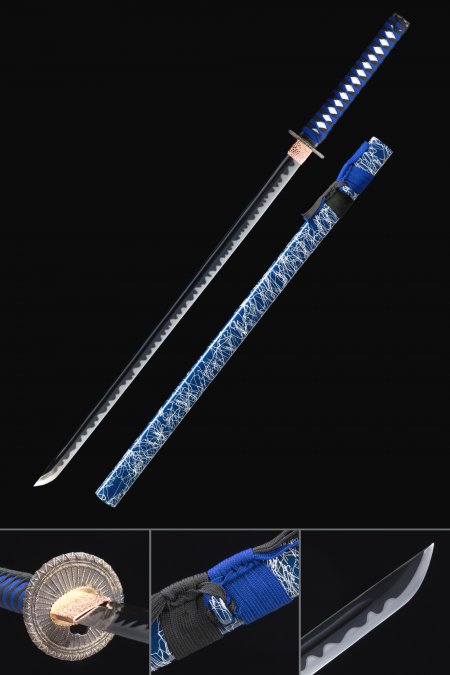
A blue sageo ninjato brings together the straight-bladed geometry of the ninja-style sword with the striking visual accent of a blue-wrapped cord and coordinated scabbard. Each piece in this collection is hand-forged from quality steel - including manganese, T10 carbon, and Damascus - and finished with full-tang construction for structural integrity worthy of any serious display. Whether you're building a themed collection or searching for a distinctive gift, these swords ship free with hassle-free returns.
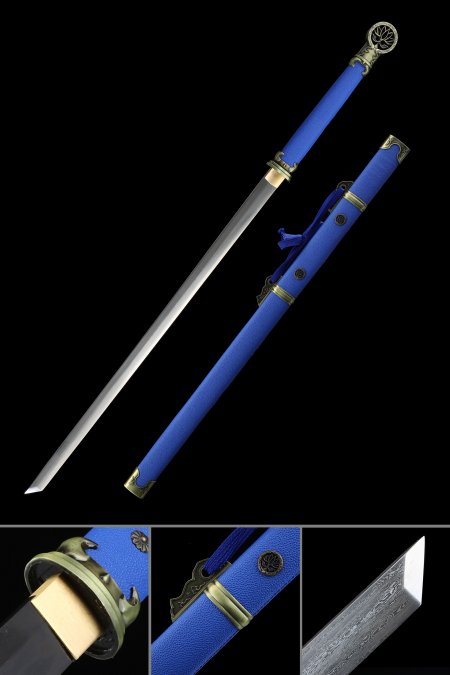
Showing 7 Products

Related Collections

Blue Ninjato14 items


47 Reviews

Blue Dragon Katana4 items


Reviews

Blue Steel Sword7 items


2 Reviews

Frequently Asked Questions

What makes a ninjato different from a katana?
The ninjato is distinguished by its straight or minimally curved blade profile, in contrast to the pronounced curve of a traditional katana. The geometry results in a different balance point and a distinct visual character that collectors immediately recognize. Ninjato are also typically fitted with a square tsuba rather than the rounded or asymmetric guards common on katana, and the saya tends to be straighter and more angular. From a historical standpoint, the ninjato as a defined sword type is largely a product of 20th-century popular culture rather than a rigorously documented feudal-era form, which makes it particularly interesting as a collector's object - it exists at the intersection of mythology, film iconography, and genuine sword-making craft.
What does sageo mean, and why does the color matter?
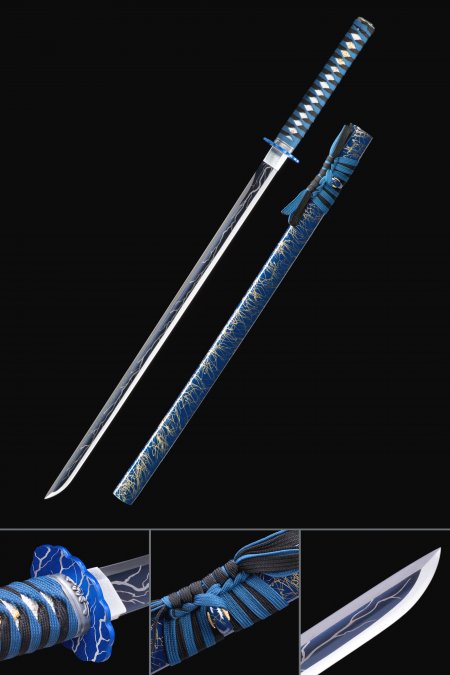
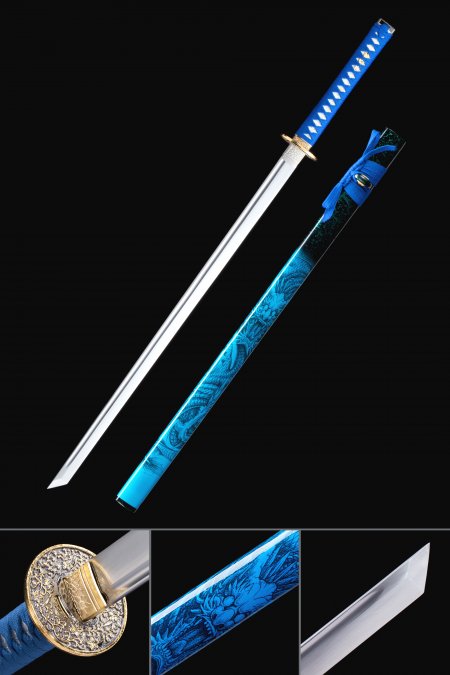
Sageo refers to the braided or woven cord attached to the kurigata - the small knob on the side of a saya - used to secure the scabbard when worn or stored. On a display piece, the sageo is a finishing detail that contributes significantly to the sword's overall aesthetic coherence. Blue sageo is chosen deliberately to create a unified color story with the saya lacework, ito wrapping, or blade finish. On pieces like the blue lightning saya ninjato or the blue dragon saya with gold scroll tsuba, the sageo color acts as a visual bridge between components. Collectors who care about presentation often consider the sageo one of the first things they notice when evaluating a sword's finish quality.
How does Damascus steel differ from T10 or manganese in a display sword?
Each steel type produces a noticeably different visual and tactile result. Manganese steel is tough and relatively homogeneous in appearance - its surface takes a clean polish and holds up well under handling, making it a practical choice for pieces that will be moved or adjusted frequently on a display stand. T10 high-carbon steel is harder and capable of producing a genuine hamon - the temper line created during differential heat treatment - which adds a layer of craftsmanship visible along the blade's length. Damascus steel, formed by forge-welding multiple steel layers and drawing out the pattern through folding, creates a flowing surface texture that is unique to each blade. No two Damascus blades are identical, which gives collectors something genuinely irreproducible. For a display-focused collection, Damascus typically commands the highest visual interest.
How should I store and maintain a blue sageo ninjato?
Proper storage protects both the blade and the decorative elements. Keep the sword horizontally on a dedicated stand, edge-upward if Japanese mounting convention matters to you, in a low-humidity environment away from direct sunlight - UV exposure fades lacquered sayas and can discolor cord wrapping over time. The blade should be lightly coated with a thin layer of choji oil or food-grade mineral oil every three to six months depending on your climate. Apply with a soft lint-free cloth and wipe off any excess to avoid pooling. Avoid touching the blade surface with bare fingers, as skin oils accelerate oxidation on carbon and high-manganese steels. For the sageo and ito, occasional gentle brushing with a soft dry brush removes dust without disturbing the braid tension.
Is a blue sageo ninjato a good gift for a sword enthusiast?
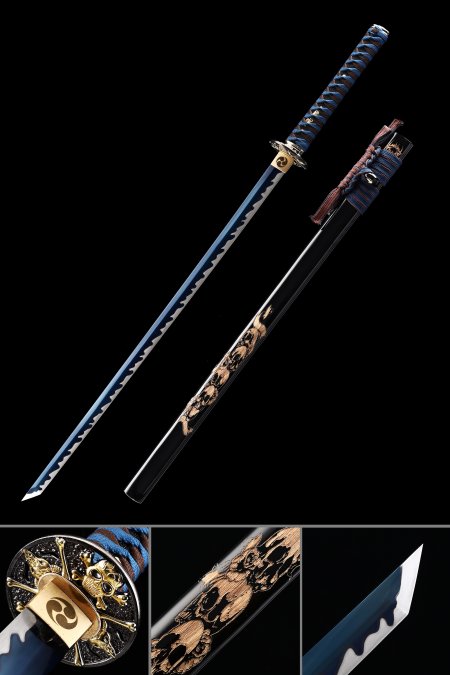
It is a particularly strong gift choice precisely because the styling is specific enough to feel considered rather than generic. A collector who already owns a traditional katana or wakizashi will appreciate a ninjato as a formally distinct addition - different blade geometry, different historical mythology, different visual register. The blue color theme adds a further layer of intentionality that signals the gift was selected with the recipient's aesthetic in mind rather than chosen at random. For someone newer to collecting, a ninjato with distinctive fittings - like the bronze lotus Damascus piece or the skull tsuba manganese steel variant - introduces them to the range of artistic expression possible within a single sword form. Pairing it with a display stand makes the gift immediately usable and visually complete.

Customer Reviews

Jeremiah O'callahan Ohio, United States

$389 USD. The t10 blade is very nice. Strong and well made with a beautiful hamon. The ninjato is well weighted and feels good in the hand.

The scabbard does not hold the sword well. The scabbard is very loose inside and at the mouth. The scabbard opening is to wide at the mouth, so The habaki catches the scabbard and does not re-sheath very smoothy. This is disappointing. The scabbard mouth is to large so the habaki and blade rattle around and move. There should be a snug fit, which holds the blade so it doesn't fall out if pointed towards the ground. The blade is nice, however it does not fit well in the scabbard which is very disappointing.
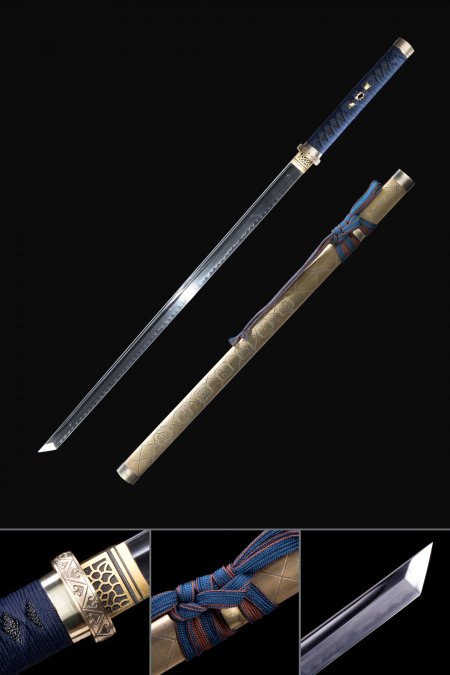
T10 Carbon Steel Chokuto Ninjato with Gold Tsuba in Blue Cord Wrap & Beige Engraved Hardwood Saya T10 Carbon Steel Chokuto Ninjato with Gold Tsuba in Blue Cord Wrap & Beige Engraved Hardwood Saya
Denis Gysbergh Belgium

Première commande sur TrueKatana.com , motivée par l'envoi à 0,00 :-D
Le colis a été envoyé de Malaisie, direction Belgique par FEDEX :
dédouanement : TVA 6% et juste 5euro de frais de traitement : agréablement surpris je m'attendais à beaucoup plus... Délai de livraison total, du paiement à la livraison : 14 jours calendrier.

le sabre est exactement comme sur les images de présentation du site, magnifique.
Je ne m'y connais pas dans les différents métaux et aciers pour y apporter une appréciation constructive. Je peux juste dire que c'est lourd et robuste : tout est bien fini, bien fixé, aucune pièce ne "gigote"...
La qualité des finitions bonne, sans quelques rares imperfections, à ce prix il ne faut pas s'attendre à des finitions au millimètre près.
l'illustration du Saya (crânes) sont gravés dans le bois, ce n'est pas une vulgaire impression sur la peinture!

Agréablement surpris donc pour cette première commande, le choix est difficile pour le(s) prochain(s) car, oui, aux prix raisonnables et frais d'importation minimes, je commande à nouveau, ça donne envie de refaire la déco !

Par contre, certains articles sont à 0,00 frais d'envoi , et d'autres 19,99USD :-/
sans savoir pourquoi ça ne donne pas envie d'acheter ceux-là...
Manganese Steel Blue Blade Straight Sword with Skull Tsuba - Full Tang, Blue-Black Ito, Black Lacquer Saya Manganese Steel Blue Blade Straight Sword with Skull Tsuba - Full Tang, Blue-Black Ito, Black Lacquer Saya