Brown Melaleuca Steel Katana
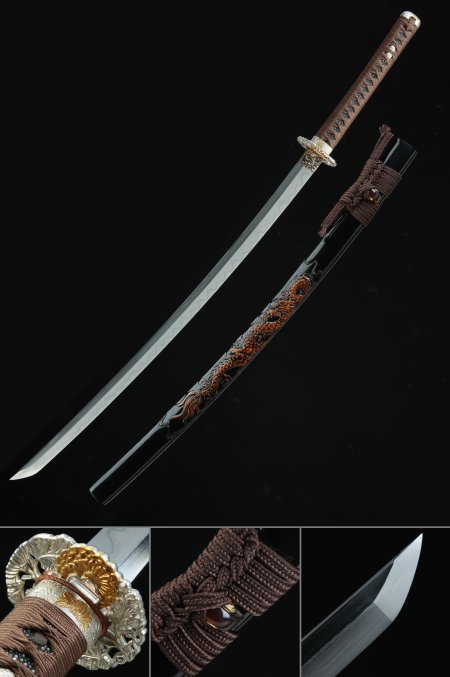
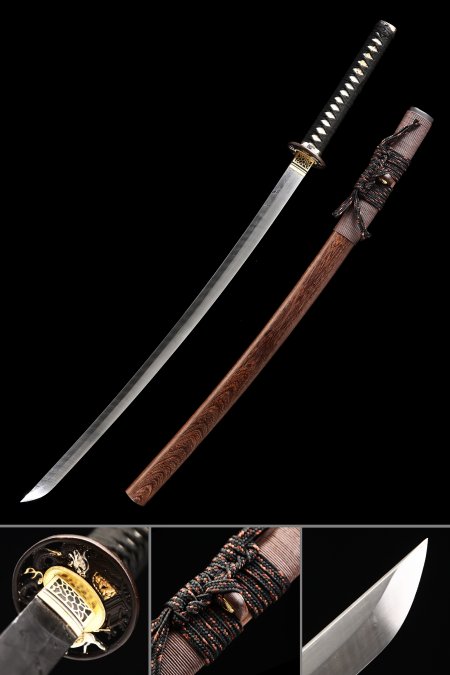
Brown Melaleuca Steel Katana blends the organic warmth of layered folded steel with rich brown tones across handle wrapping and hardwood saya. Each piece is hand-forged to full-tang construction, showcasing the distinctive grain patterns that emerge through the melaleuca folding process - a visual signature prized by serious collectors. Enjoy free standard shipping on all orders, backed by our hassle-free return policy.
Related Collections
Frequently Asked Questions
What does "melaleuca steel" mean in katana collecting?
"Melaleuca" is a transliteration of the Chinese term describing the layered, bark-like grain pattern that appears on repeatedly folded steel after polishing. During the forging process, two or more steel types are folded together multiple times, creating dozens to hundreds of thin laminated layers. When the blade is ground and polished, these layers emerge as organic, flowing surface textures that visually resemble tree bark or wood grain. Because the folding is done by hand, no two melaleuca blades produce the same pattern, making each collectible piece genuinely unique. This visual individuality - combined with the structural result of combining harder and softer steel layers - is a primary reason collectors seek out melaleuca-forged katana for display.
How does melaleuca steel differ from Damascus patterning?
Both melaleuca and Damascus steel involve layered construction, but their visual character and production logic differ meaningfully. Damascus (or pattern-welded) steel typically uses high-contrast steel billets manipulated to produce dramatic swirling or ladder patterns across the entire blade surface. Melaleuca steel, by contrast, tends to produce subtler, more organic textures - closer to natural wood grain - that reveal themselves gradually as light moves across the polished surface. Damascus patterns are often bolder and more immediately eye-catching; melaleuca patterns reward slower, closer inspection. For collectors, the choice often comes down to aesthetic preference: the striking visual drama of Damascus versus the quieter, naturalistic depth of melaleuca grain.
Why is brown ito commonly paired with melaleuca katana?
Brown ito (handle wrapping) is favored on melaleuca katana largely for visual harmony. The warm, earth-toned hue echoes the organic, bark-like textures revealed in the folded blade surface, creating a cohesive aesthetic language across the entire piece. From a materials standpoint, brown cotton or synthetic leather ito provides consistent texture for display purposes while aging gracefully without fading as dramatically as lighter colors. Collectors assembling thematic displays often find that the brown palette - extended through the ito, the hardwood saya, and sometimes the tsuba patina - presents a unified, naturalistic composition that photographs exceptionally well and complements traditional display stands.
How should I store a melaleuca katana to preserve its finish?
Proper storage is essential to maintaining the polished surface that makes melaleuca grain visible. Store the katana horizontally on a dedicated sword stand, blade edge facing upward in the traditional Japanese manner, in a stable environment with controlled humidity - ideally between 40% and 55% relative humidity. Avoid storing near exterior walls, HVAC vents, or windows where temperature swings can cause condensation. Apply a light coat of choji oil (clove-scented mineral oil traditional to sword care) or a neutral food-grade mineral oil to the blade every two to three months using a soft, lint-free cloth. Always handle the blade with clean cotton gloves to prevent fingerprint oils from initiating surface oxidation. The hardwood saya should also be kept dry and periodically inspected for any interior moisture buildup.
Is a full-tang katana a better collectible than a partial-tang one?
For serious collectors, full-tang construction is generally considered the benchmark of authentic craftsmanship. A full-tang blade extends completely through the handle (tsuka), secured by one or more mekugi (bamboo or brass pegs) passing through both the tang and handle. This construction mirrors the structural philosophy of historically authentic Japanese swords and signals genuine attention to detail in the assembly process. Partial-tang designs - where the blade extends only partway into the handle and is often set with epoxy - are more common in lower-grade decorative pieces and are generally regarded as less desirable by collectors who understand construction quality. When evaluating a melaleuca katana for a display collection, full-tang construction is one of the clearest indicators of a piece made to a higher standard.