What makes brown and red ito wrapping distinctive?
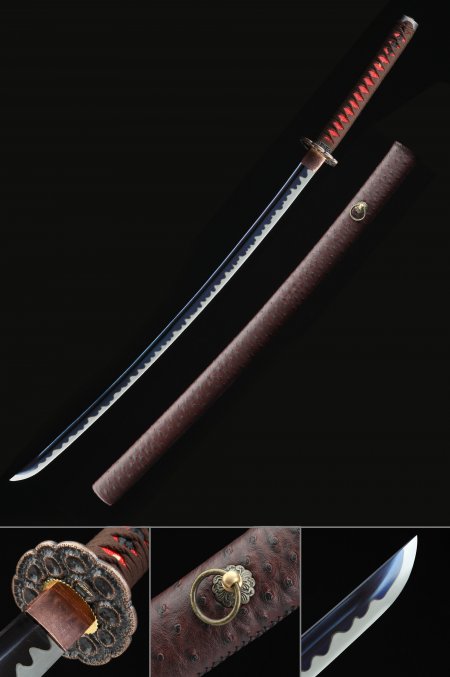
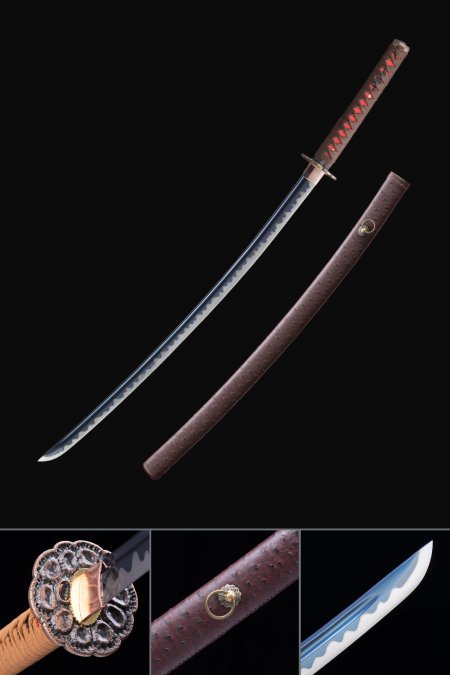
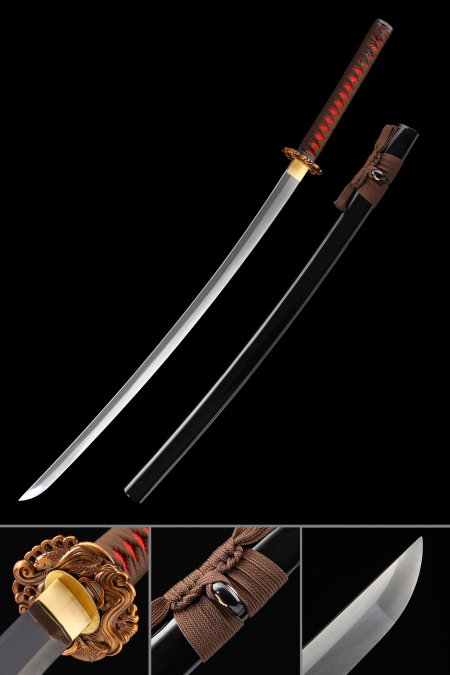
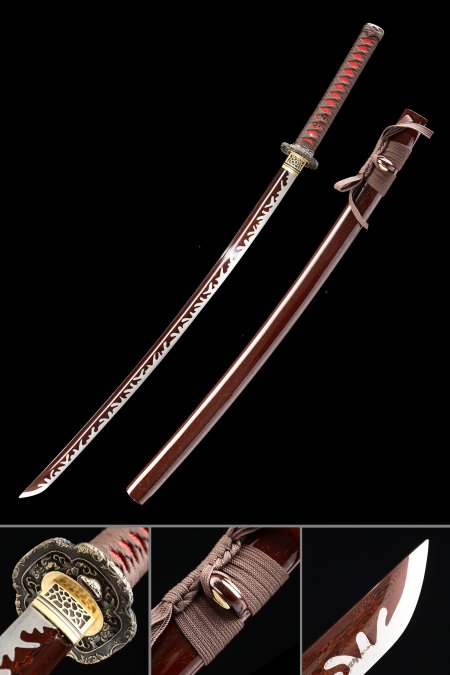
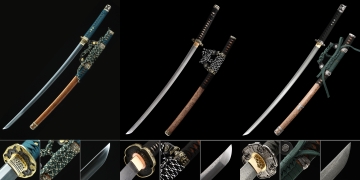
Ito is the cord used to wrap a katana's tsuka (handle), and the color is far from a superficial detail. Brown and red ito tones are traditionally associated with warmth, rank, and ceremonial significance in Japanese sword culture. The wrapping technique - known as tsukamaki - is done over a base of same (ray skin), whose pebbly texture creates grip points beneath the cord and adds visual depth where the ito diamonds reveal it. A well-executed brown or red tsukamaki shows tight, even diamond spacing with no slippage or gaps. On a display piece, this level of craftsmanship signals that the handle assembly followed traditional construction logic rather than being purely decorative.
How does Damascus steel differ from high manganese steel on these katana?
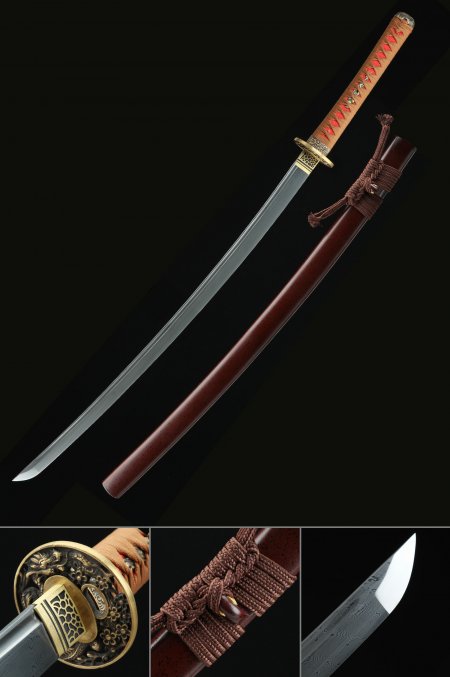
Both steels appear in this collection but produce very different visual and structural results. High manganese steel is a homogeneous alloy valued for surface hardness and a bright, polished finish - it presents a clean, mirror-like blade face that contrasts sharply against warm handle tones. Damascus steel is produced by forge-welding multiple layers of steel together and then manipulating the billet to produce flowing grain patterns across the surface. When acid-etched, these patterns become highly visible, giving each blade a unique, almost organic appearance. For collectors, Damascus offers greater visual individuality - no two blades share exactly the same pattern - while high manganese delivers a more classic, austere blade aesthetic.
What should I know about displaying a katana with a lacquered saya?
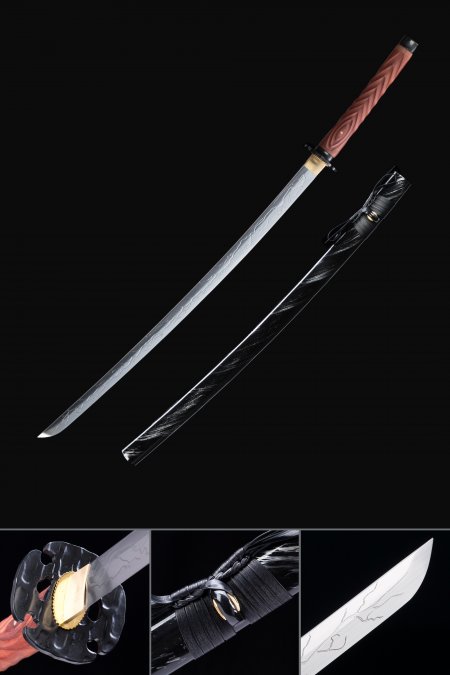
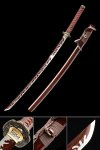
Lacquered saya - particularly the dark red and black variants found in this collection - require specific display conditions to preserve their finish long-term. Lacquer is sensitive to prolonged direct sunlight, which causes fading and micro-cracking over time. Displaying behind UV-filtering glass or away from south-facing windows will significantly extend the finish's life. Humidity is the other key factor: lacquer can craze or bubble in environments above 65% relative humidity. A stable indoor environment between 40-55% RH is ideal. When placing the katana on a stand, use a padded rack that contacts the saya at soft points rather than its edges to avoid pressure marks on the finish.
Do the dragon and chrysanthemum tsuba affect collector value?
Tsuba motifs carry genuine iconographic meaning that knowledgeable collectors recognize and appreciate. The dragon (ryu) is one of the most prestigious motifs in Japanese decorative arts, associated with power, protection, and auspiciousness - a gold dragon tsuba on a display katana signals deliberate thematic intent. The chrysanthemum (kiku) is the imperial flower of Japan, historically restricted to the imperial family and elevated in status accordingly. On a bronze tsuba, the chrysanthemum motif adds both aesthetic refinement and cultural layering. For collectors building a thematically coherent display, matching the tsuba motif to the overall color palette - as the brown-red handles here do naturally - is a detail that distinguishes a curated collection from a casual one.
Is a blue blade a good pairing for a brown-red handle katana?
The blue blade and brown-red handle combination is one of the more visually dynamic pairings in contemporary katana collecting. Blue blades achieve their color through a controlled heat or chemical oxidation process applied to carbon steel, producing a cool blue-grey tone across the surface. Against a warm brown or red ito wrap, this creates a complementary contrast - similar in principle to traditional color theory pairing warm and cool tones. The result photographs exceptionally well and draws the eye across the full length of the piece on a display stand. Collectors who prefer high visual impact without moving toward black or red blade aesthetics frequently favor this combination for exactly this reason.