Crane Saya Tanto
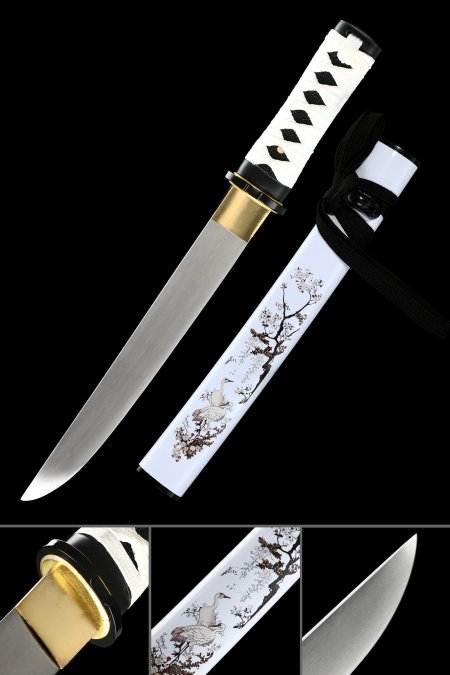
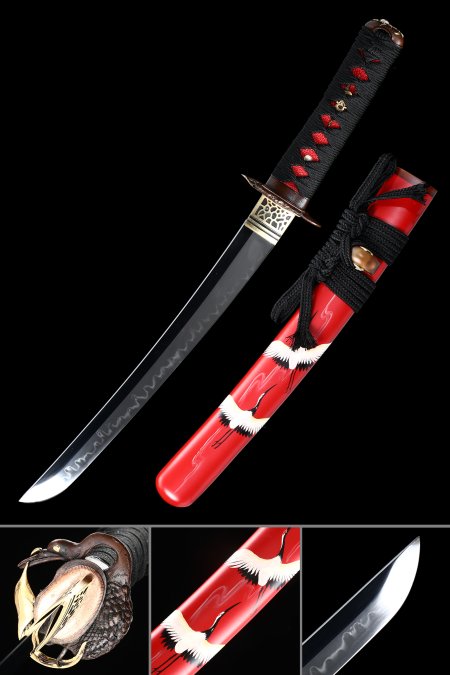
The Crane Saya Tanto collection brings together hand-forged tanto blades paired with meticulously lacquered or hand-painted scabbards featuring the iconic crane motif — a symbol of longevity and good fortune in Japanese culture. Each piece is crafted for discerning collectors who value both the integrity of the steel and the artistry of the koshirae. Enjoy free standard shipping on your order, backed by our hassle-free return policy.
Related Collections
Flame Blade Katana29 items
Beige Saya Katana32 items
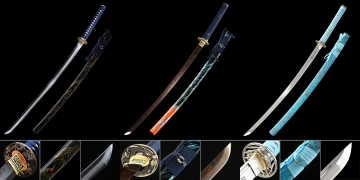
Crane Tsuba Katana29 items
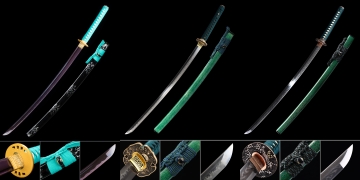
Teal Handle Katana37 items
Frequently Asked Questions
What makes T10 carbon steel a notable choice for a tanto blade?
T10 is a high-carbon tool steel alloyed with a small percentage of tungsten, which refines the grain structure and contributes to edge retention during the polishing and finishing stages. Its most prized characteristic for collectors is its behavior during differential hardening: when a clay coating is applied to the spine before quenching, T10 produces a distinctly active hamon — the temper line that runs along the lower portion of the blade. This line can appear as gentle undulations, tight nie activity, or misty nioi clouds depending on the smith's clay application technique. The visual result is a blade that appears almost alive under raking light, offering a different viewing experience than uniformly hardened steels. For display purposes, this translates into a piece that rewards close inspection and changes character with the angle of the light source.
How does a hand-painted saya differ from a standard lacquered scabbard?
A standard lacquered saya is finished with uniform color coats — often solid red, black, or brown — applied in multiple layers to build depth and a hard, protective surface. A hand-painted saya takes that lacquered base and adds representational imagery directly onto the finished ground using fine brushwork and pigment-mixed lacquer or urushi-compatible paints. The crane designs on these tanto scabbards are composed freehand, meaning no two pieces are precisely identical. Compositional elements like wing position, plum blossom placement, and the relative scale of figures vary from piece to piece. This process requires significantly more production time and skilled artisanship compared to stenciled or printed decoration, and it results in a scabbard that functions simultaneously as a carrying case and a painted art object. Collectors who examine these pieces closely often notice subtle variations in brushstroke texture that confirm the hand-made nature of each design.
What does full-tang construction mean for a tanto used in display?
Full-tang refers to the geometry of the blade's steel: rather than terminating at the handle collar, the steel extends in one continuous piece through the entire length of the handle, with the grip scales or wrapping fitted around it. In a display tanto, this matters for two reasons. First, it ensures the piece has genuine structural coherence — there is no hidden joint or pinned connection that could loosen over time, which means the tanto maintains its balance and alignment across decades of display. Second, full-tang construction is considered the more historically authentic format for Japanese tanto, as traditional blades were made with a nakago — a full-length tang — fitted inside the tsuka. For collectors who appreciate the difference between decorative replicas and pieces built to authentic construction standards, full-tang designation is a meaningful indicator of quality.
How should a lacquered tanto saya be stored and maintained long-term?
Lacquered wood scabbards are sensitive to two primary environmental conditions: humidity fluctuation and prolonged direct light exposure. Significant swings in relative humidity can cause the wooden core of the saya to expand and contract, which over time may cause the lacquer finish to develop hairline cracks or lifting at the edges. Ideally, these pieces should be stored or displayed in an environment maintained between 45–60% relative humidity. Direct sunlight should be avoided to prevent UV-related fading of both the lacquer ground and any painted pigments on the surface. When not on display, storing the tanto in its saya inside a padded case or wrapped in a soft cloth prevents surface abrasion. Occasionally wiping the saya with a dry, lint-free cloth removes accumulated dust without introducing moisture. The blade itself benefits from a light coat of choji oil or mineral oil applied with a cleaning cloth every several months to prevent surface oxidation.
Is a crane saya tanto a suitable collector's gift for someone new to Japanese blades?
A crane saya tanto makes an excellent entry point for someone beginning a Japanese blade collection, for a few practical reasons. The tanto format is compact — typically 15 to 30 centimeters in blade length — making it easy to display on a standard desktop or wall-mounted tanto stand without requiring dedicated case furniture. The crane and plum blossom motifs carry clear cultural meaning that new collectors can easily research and connect to broader themes in Japanese art history, which gives the piece a narrative dimension beyond the blade itself. The combination of a visually striking saya and a blade with an active hamon also means the piece offers multiple points of visual interest to discover over time. For someone receiving it as a gift, it functions both as a decorative art object and as a starting point for deeper engagement with Japanese metalwork and lacquerware traditions.
Customer Reviews
Elizabeth Patterson
West Virginia, United States
I can't believe how beautiful this sword is. Excellent work. I'm very happy I chose this one. But will be buying the others I was deciding on after the holidays. Excellent swords and service.
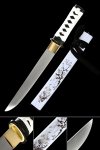 |
Manganese Steel Japanese Tanto with Crane and Plum Blossom Hand-Painted White Saya in Full Tang Design |