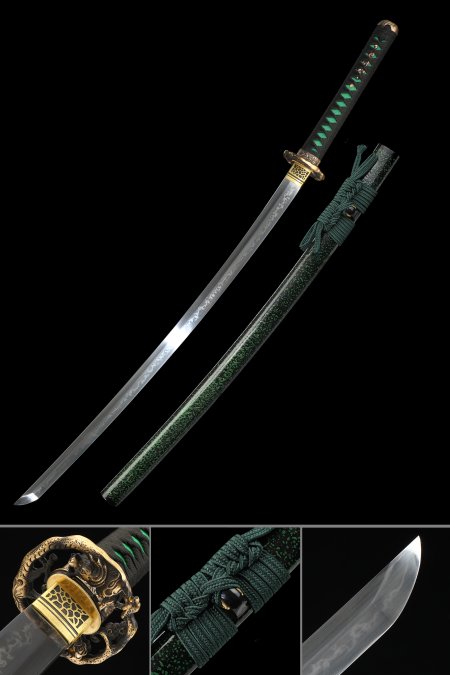
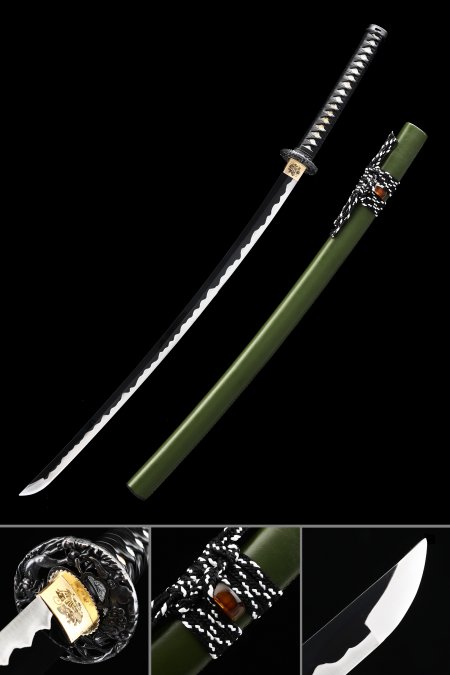
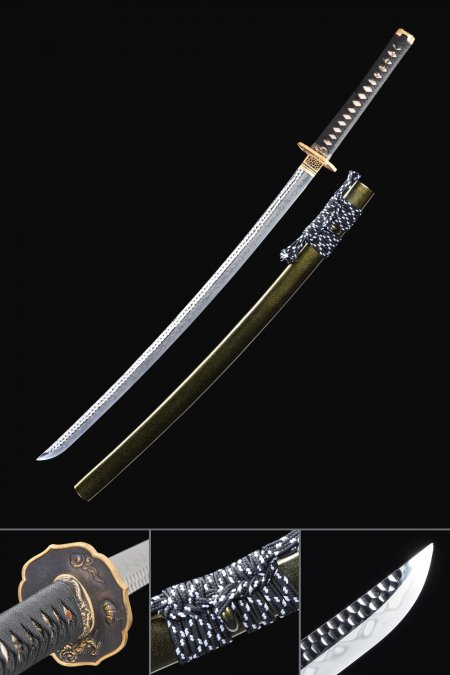
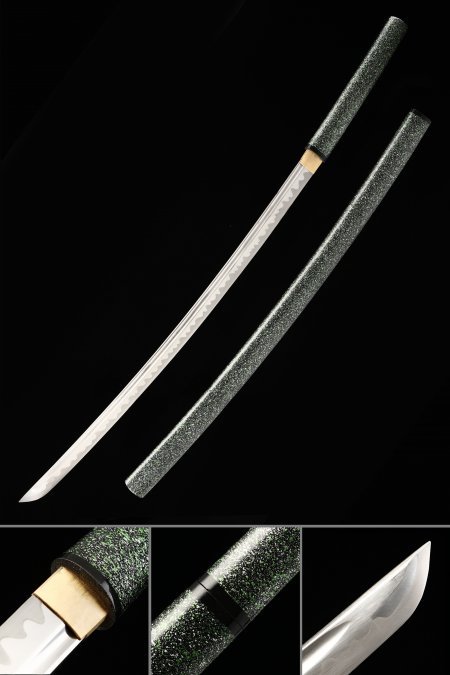
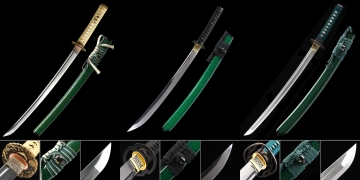
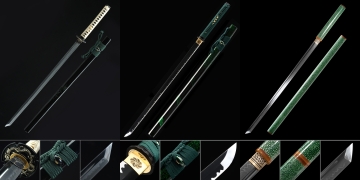
Dark Green Saya Katana

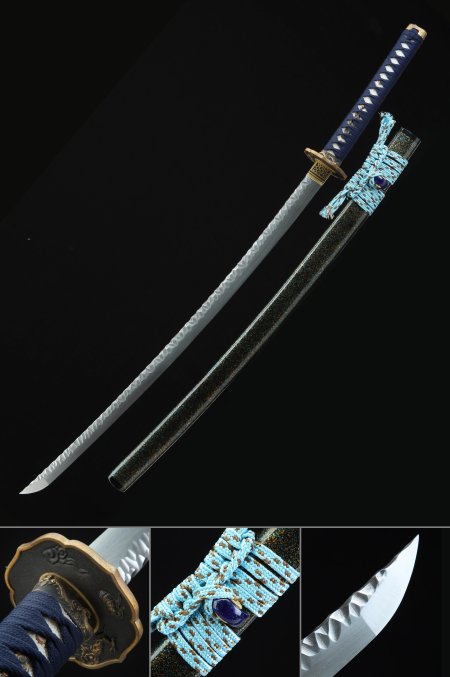
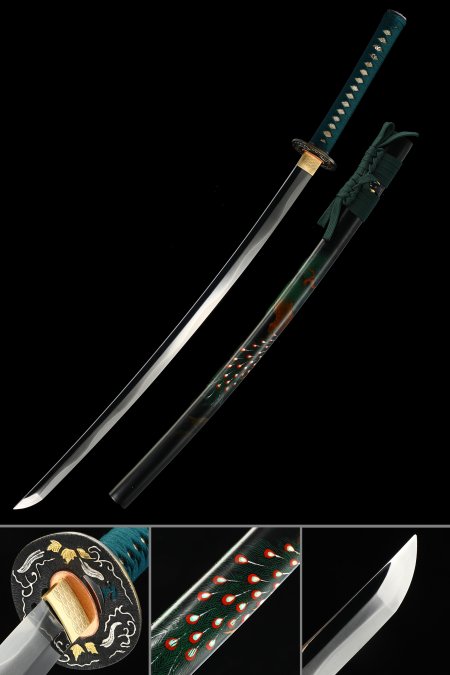
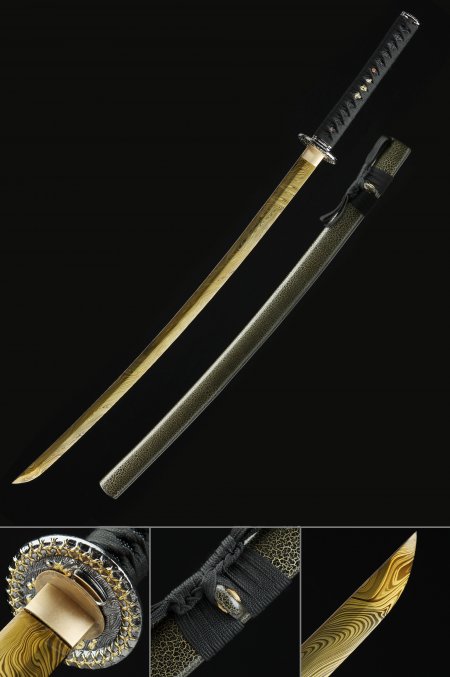
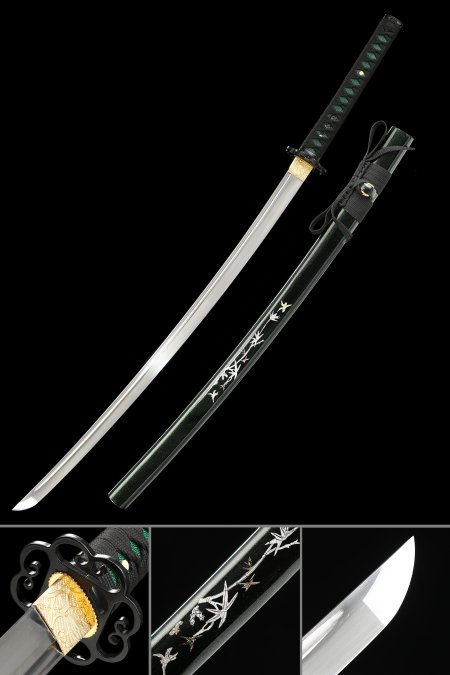
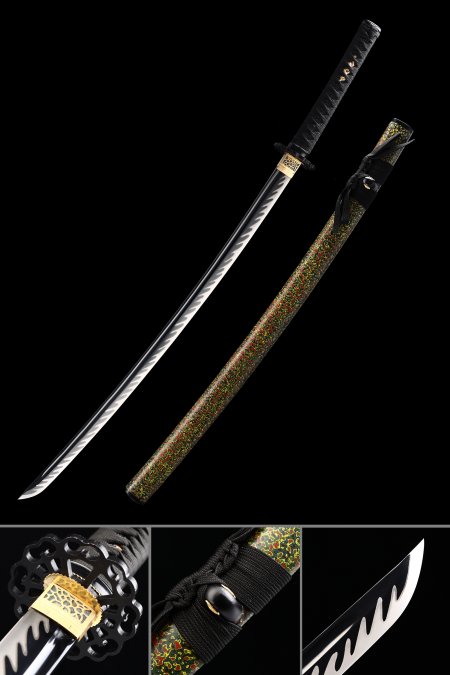
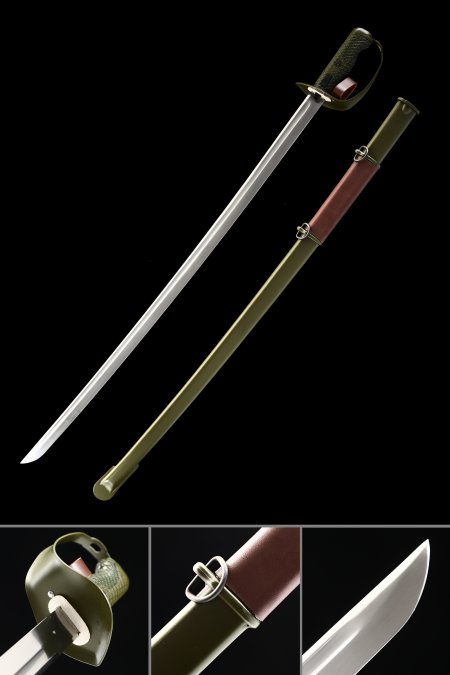
Dark green saya katana collectors will find a curated selection of hand-forged blades paired with richly lacquered, olive, and marble-finish scabbards that bring a distinctive depth of color to any display. From T10 carbon steel with authentic hamon to clay-tempered folded blades, each katana is crafted with full-tang construction and historically inspired fittings — including dragon tsuba, engraved blades, and hand-painted bamboo motifs. Free standard shipping is included on all orders, and we stand behind every piece with a hassle-free return policy.
Showing 12 Products

Frequently Asked Questions

What makes a dark green saya different from a standard wooden saya?
A standard wooden saya is typically finished with a clear or natural lacquer that showcases the grain of the underlying wood — most often ho wood or magnolia. A dark green saya, by contrast, undergoes one of several specialized surface treatments: solid lacquer application in deep olive or forest tones, crackle-finish lacquer that creates a textured, aged appearance, marble-effect lacquer that layers pigments for depth, or hand-painted decorative motifs such as bamboo. Each method requires additional preparation and finishing steps compared to a plain saya, and the resulting piece functions both as a protective scabbard and as an independent art object. For display collectors, the saya finish is often the primary visual anchor of the entire sword presentation.
How does T10 carbon steel differ from 1095 in katana collecting?
Both T10 and 1095 are high-carbon steels popular in collector-grade katana, but they differ in composition and character. T10 contains a small amount of silicon and has a slightly higher carbon content, which contributes to a finer grain structure under polish and a more distinct, well-defined hamon line after clay tempering. 1095 is a simpler, more uniform steel that is highly consistent and easier to work with, producing a reliable hamon but typically with less textural complexity. For collectors who prioritize the visual richness of the temper line as a focal point on display, T10 is generally considered the more refined choice. Both are appropriate for collectible and display purposes — the difference is largely one of grain character and polish depth rather than fundamental quality.
What is clay tempering, and why does it matter for display katana?
Clay tempering — known in Japanese as tsuchioki — is the process of applying a layer of clay to the blade's spine before the final quench in water or oil. The clay insulates the spine, causing it to cool more slowly than the edge, which results in a harder edge and a softer, more flexible spine. The boundary between these two zones becomes the hamon, the visible temper line that runs along the blade's length. For display collectibles, the hamon is one of the most prized visual features of a hand-forged blade: no two are exactly alike, and the natural undulation of a genuine hamon — as opposed to a machine-etched or acid-washed imitation — reflects actual metallurgical variation in the steel. Collectors who can identify a real hamon understand it as evidence of a blade that has undergone a legitimate heat-treatment process.
How should I store and maintain a lacquered saya katana on display?
Lacquered saya are relatively durable but sensitive to humidity fluctuations and prolonged direct sunlight. UV exposure can fade pigment depth over time, particularly in darker lacquer finishes, so positioning away from windows or using UV-filtering display cases is advisable. For the blade itself, a light application of choji oil — traditional Japanese camellia oil — every few months prevents oxidation and maintains the surface finish. When handling, use cotton gloves to avoid transferring skin oils to either the blade or the lacquer surface. Store horizontally or in a dedicated sword stand; avoid leaning the blade under its own weight for extended periods, as this can stress the habaki collar and saya mouth fitting. Never store in an airtight sealed environment, as trapped humidity accelerates both lacquer degradation and blade oxidation.
Are dragon tsuba a historically accurate fitting, or purely decorative?
Dragon motifs have a long and legitimate history in Japanese metalwork, including tsuba design. During the Edo period (1603–1868), tsuba craftsmen — known as tsubako — produced guards in openwork (sukashi) and relief styles featuring dragons, as the creature carried strong associations with power, water, and transformation in both Japanese and broader East Asian artistic tradition. Dragon tsuba were not exclusively ceremonial; they appear on both practical and presentation swords of the period. In contemporary collector-grade katana, dragon tsuba are produced in iron or iron-alloy and reference these historical precedents directly. For display purposes, the tsuba is often the most detailed and closely examined fitting on the sword, making the quality of its casting or forging and the sharpness of its relief work a meaningful indicator of overall craftsmanship.

Customer Reviews

Roberto Fuentes Florida, United States

Katana looks like a marvelous, beautiful piece of art, as is shown in the picture with a great steal. But unfortunately, It was the only best thing about this katana. As I looked at the katana, I noticed some damage in the blade due to the blade rattling in the saya. The Mekugi that holed the katana was forced in, and there were a lot of alignment issues because the habaki was more to the side, causing some handling problems. But with that said, you get what you can expect for this price.

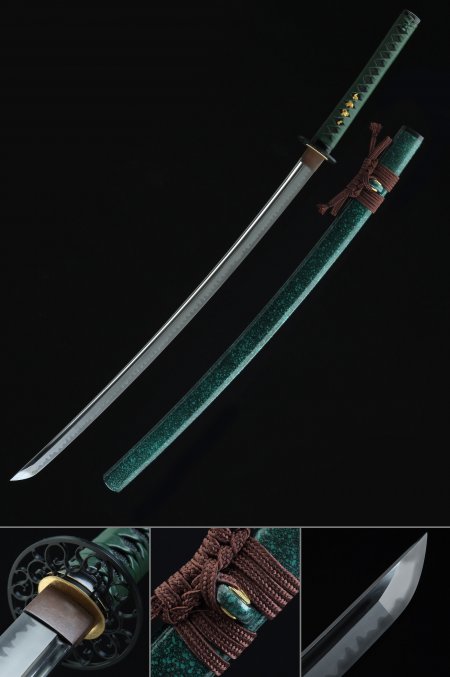
T10 Folded Clay Tempered Katana with Dark Green Textured Saya and Openwork Iron Tsuba - Full Tang Collectible T10 Folded Clay Tempered Katana with Dark Green Textured Saya and Openwork Iron Tsuba - Full Tang Collectible