82 Reviews
Free Shipping
169.00 USD
ON SALE! 20% OFF
Was: $209.00

Every Nichirin blade in this collection is hand-forged from real carbon steel — not plastic, not foam, not stainless wall hangers. Tanjiro's black blade, Zenitsu's yellow lightning edge, Rengoku's flame-colored steel, Giyu's deep blue, and the full Hashira lineup — each one built with a full tang, traditional handle wrapping over genuine ray skin, and a lacquered scabbard matched to the anime reference. These are collector-grade swords that look right on a display stand and feel right in your hands.
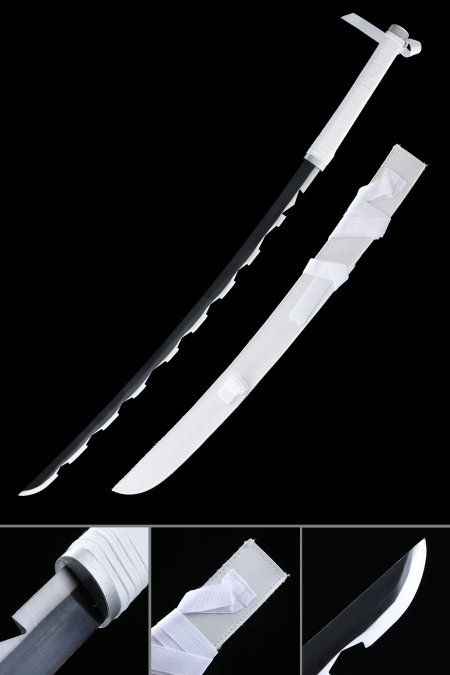
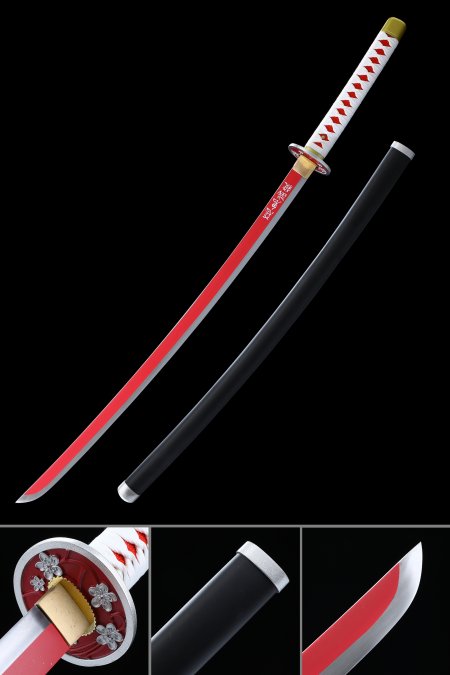
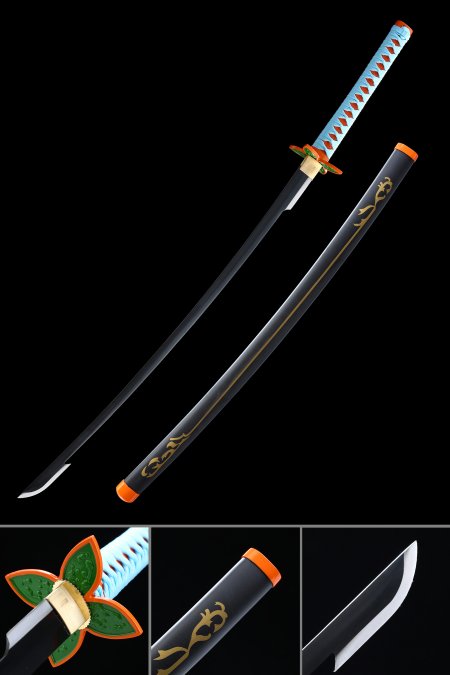
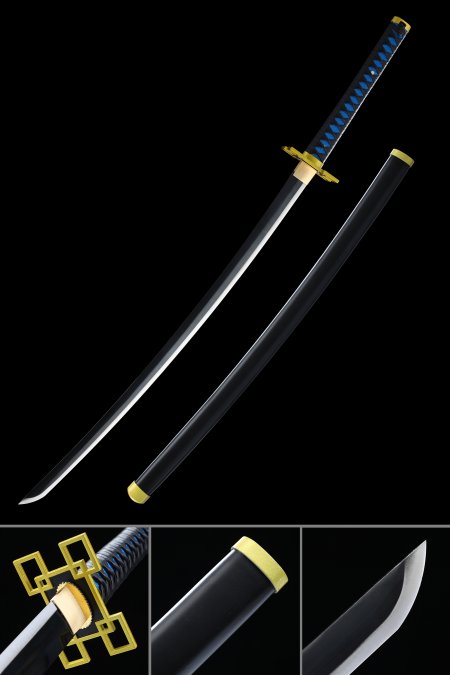
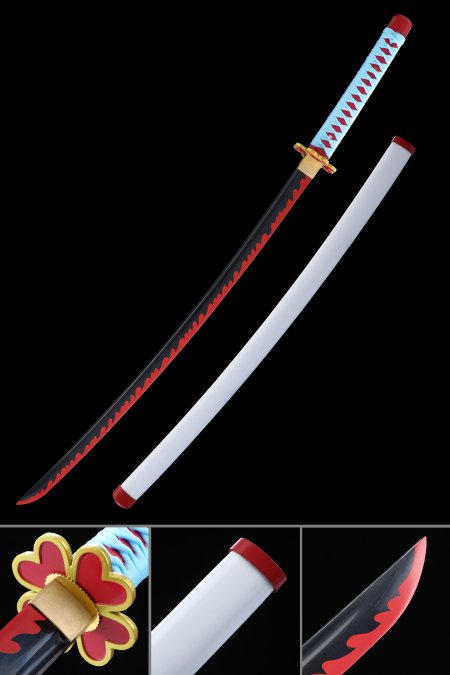
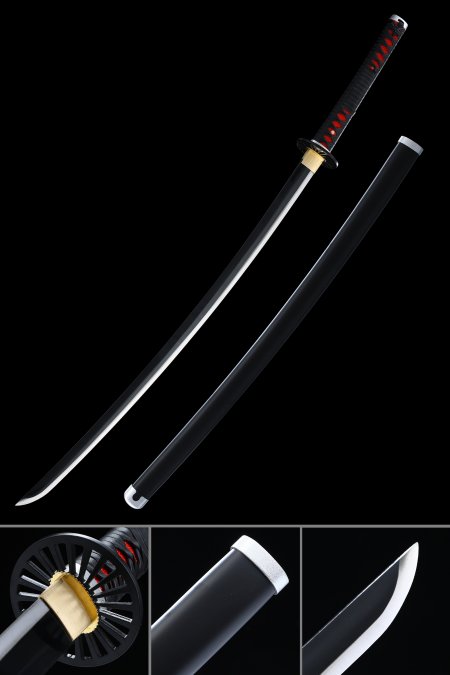
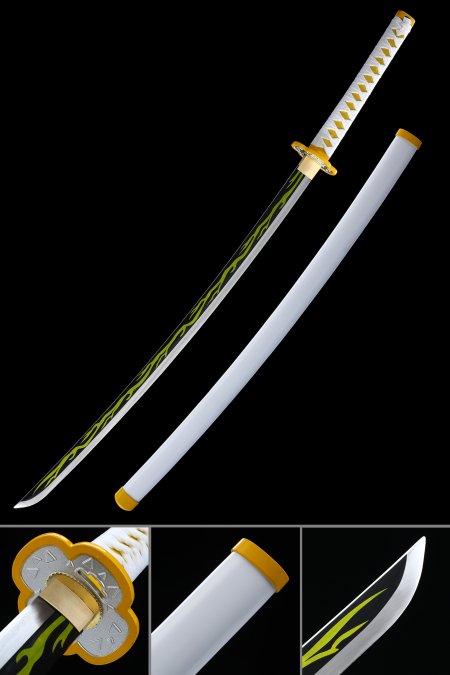
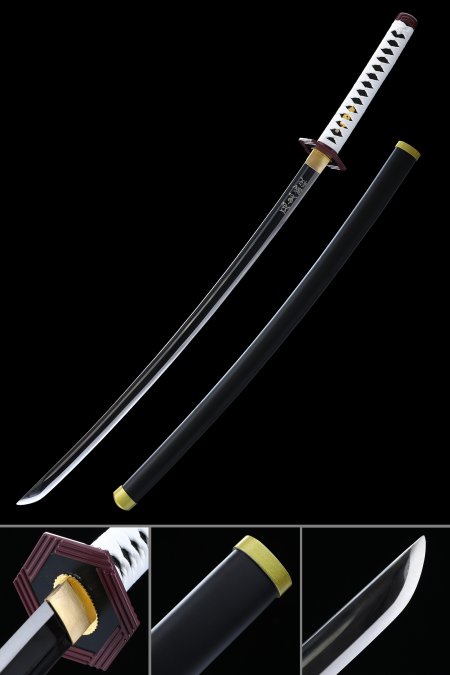
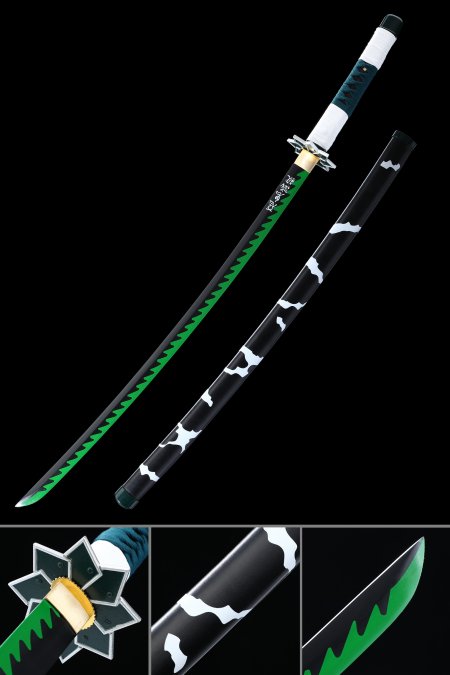
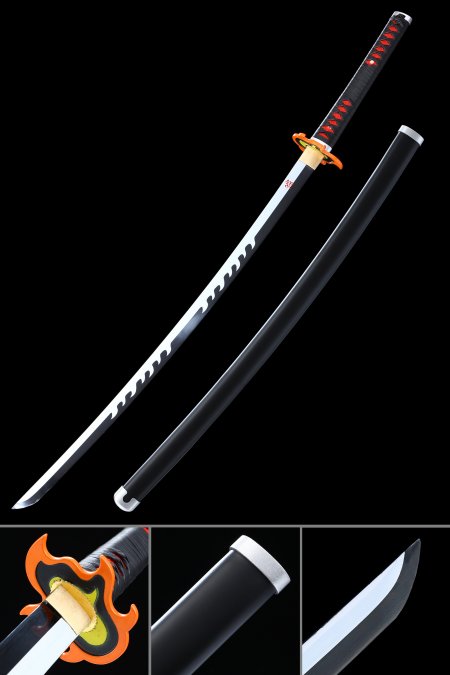
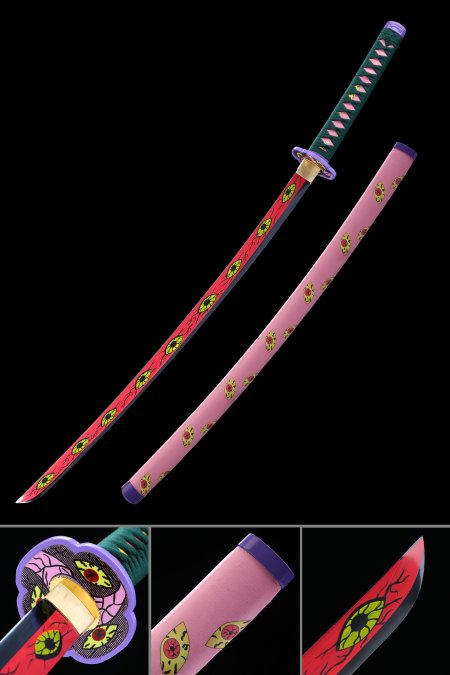
A Nichirin sword is the standard weapon carried by members of the Demon Slayer Corps in Kimetsu no Yaiba, and it's the only type of blade capable of permanently killing demons through decapitation. The name translates roughly to "Sun Sword" or "Sunlight Blade," which directly references the material origin — Nichirin blades are forged from two special ores called Scarlet Crimson Iron Sand and Scarlet Ore, both mined exclusively from high-altitude mountains like Sunlight Mountain that receive constant, uninterrupted sunlight throughout the year. Because these ores absorb solar energy during their geological formation, the finished swords retain sun-absorbing properties that make them lethal to demons in the same way direct sunlight is. When a Demon Slayer first draws their Nichirin blade, the steel changes color based on the wielder's innate affinity and the breathing style they practice — Water Breathing users see their blade turn blue, Flame Breathing turns it red, Thunder Breathing produces yellow, and so on through the full spectrum. This color-changing property is the source of their alternate name, "Color Changing Katanas," and it's the reason each character in the series carries a visually distinct weapon. The blade doesn't change color randomly — it responds to something fundamental about the wielder's nature, which is why the color is treated as a form of identity within the Corps. In practical collector terms, this color system is what makes Demon Slayer swords so appealing as a collection category — each blade is immediately identifiable by character, and displaying multiple colors together creates a visual representation of the full breathing style spectrum. The Nichirin sword collection captures every canonical color from the series, forged in real carbon steel with blade finishes that match the anime references.
Tanjiro Kamado's black Nichirin blade is one of the most discussed plot elements in Demon Slayer because black is the rarest and least understood sword color in the entire series. Within the Demon Slayer Corps, a black blade is historically considered a bad omen — the conventional belief is that black-bladed swordsmen don't live long or achieve prominence, and no one in living memory has been able to explain what the color actually signifies. This superstition causes Tanjiro significant anxiety early in the story when his blade turns black instead of a color associated with a known breathing style. The deeper truth, revealed gradually through the series, is that the black blade is connected to Sun Breathing — Hinokami Kagura — the original breathing technique from which all other styles descend. Sun Breathing was practiced by Yoriichi Tsugikuni, the strongest Demon Slayer in history and the only person who nearly killed Muzan Kibutsuji, and his blade was also black. The rarity of black blades isn't because they signal weakness — it's because Sun Breathing itself is nearly extinct, passed down through Tanjiro's family as a dance ritual rather than a formal combat technique. The black color essentially marks Tanjiro as the inheritor of the most ancient and powerful breathing lineage, which is the opposite of what the superstition suggests. For collectors, Tanjiro's black blade carries this narrative weight in addition to its visual distinctiveness — a jet-black Nichirin sword stands out dramatically against the vivid blues, yellows, and reds of other character blades on a display rack. The black Nichirin sword is the most requested single piece in the Demon Slayer collection, driven by both Tanjiro's popularity as the protagonist and the mystery surrounding the blade's meaning.
The answer depends entirely on what type of replica you're looking at, and the range is enormous — from foam toys that couldn't cut paper to fully functional hand-forged katana that could slice through tatami mats. At the low end, mass-produced costume props sold at big-box retailers are made from plastic or stainless steel with no edge, no tang structure, and no real sword characteristics beyond the general shape and color. These are fine as toys or casual cosplay props, but they have nothing in common with actual Japanese swords beyond appearance. At the serious collector end, hand-forged Demon Slayer replicas use real high-carbon steel — 1045, 1060, 1095, or T10 — with full-tang construction, traditional handle assembly over genuine ray skin, and blade geometry based on actual katana profiles. These swords are real in every meaningful sense: the steel is the same type used in functional Japanese swords, the construction follows traditional methods, and the blade is capable of holding an edge. Whether they arrive sharp depends on the specific product and the seller's configuration — some ship with a factory edge suitable for light cutting, while others arrive unsharpened for display and can be professionally sharpened later if the owner chooses. The key distinction for buyers is between stainless steel display pieces (which look like swords but aren't structurally sound for any use beyond hanging on a wall) and carbon steel full-tang replicas (which are real swords dressed in anime-inspired aesthetics). If you want a Demon Slayer sword that's genuinely a sword and not just a sword-shaped object, carbon steel and full tang are the two non-negotiable specifications. The Demon Slayer katana replicas in this collection are hand-forged from carbon steel with full-tang construction — real swords built to real standards, finished in character-accurate colors.
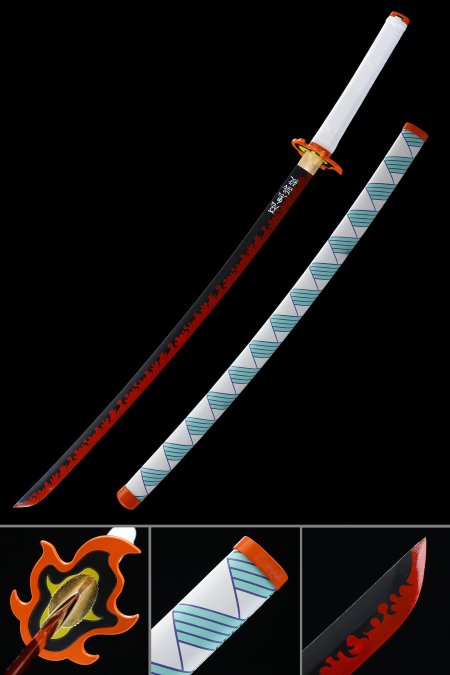
Rengoku's flame-colored Nichirin blade holds the top spot in sales and collector demand by a comfortable margin, and the reason is almost entirely emotional rather than aesthetic — although the aesthetic helps. Kyojuro Rengoku's arc in the Mugen Train movie created one of the most powerful character moments in modern anime, and the sword became a physical symbol of that emotional experience for millions of fans worldwide. Owning Rengoku's blade isn't just about liking the design — it's about carrying a piece of the story that moved you. The flame gradient finish on a well-made Rengoku replica is also genuinely one of the most visually striking blade treatments in the collection, transitioning from deep red near the habaki to bright orange and yellow toward the kissaki in a way that catches light beautifully from any angle. After Rengoku, Giyu Tomioka's deep blue Water Breathing blade typically ranks second in popularity — Giyu was the first Hashira audiences met in the series, and his stoic personality paired with the elegant blue blade appeals to fans who prefer understated intensity over dramatic flair. Shinobu Kocho's uniquely thin stinger-style blade has a dedicated following because it's the most visually distinct weapon in the Hashira lineup — nothing else looks like it, and the lavender color stands out in any collection display. Muichiro Tokito's white Mist blade gained significant popularity after the Swordsmith Village arc, and Sanemi Shinazugawa's green Wind blade appeals to fans who gravitate toward aggressive characters. The Rengoku sword is the piece most collectors acquire first after their initial Tanjiro purchase, making it the de facto second sword in a growing Demon Slayer collection.
You can bring a real steel Demon Slayer sword to most anime and comic conventions, but you need to understand and follow each specific event's weapon policy because the rules vary significantly from con to con. The majority of major anime conventions in North America — including Anime Expo, Otakon, Anime NYC, Katsucon, and dozens of regional events — allow metal swords and bladed props on the convention floor provided they are peace-bonded. Peace-bonding means a convention staff member or security volunteer physically secures the sword inside its scabbard using zip ties, cord, or tape so that the blade cannot be drawn during the event. This is standard procedure, and experienced cosplayers expect it — you arrive, go through the weapons check line, get your sword peace-bonded, and proceed into the convention. The important detail for Demon Slayer sword owners is that the scabbard quality matters for conventions, because the saya will be the visible element once the sword is peace-bonded. A character-accurate scabbard — Tanjiro's white saya, Zenitsu's yellow, Rengoku's red — looks great even when tied shut and communicates the character identity clearly. Some conventions have stricter policies that prohibit metal weapons entirely and only allow foam, wood, or other non-metal props. Comic-Con International (San Diego Comic-Con) is notably strict on this point. Renaissance faires generally welcome real steel with fewer restrictions than indoor conventions. Always check the specific event's published weapon policy before attending — it's usually listed on the convention website under "cosplay rules" or "prop weapon policy." For transport, a padded sword bag keeps the blade protected and concealed during the trip to and from the event. The Demon Slayer sword collection includes character-matched scabbards with every blade, which means your sword is convention-ready out of the box.
The best steel depends on what you plan to do with the sword and how much you want to invest, but for most Demon Slayer collectors, the sweet spot is 1060 or 1095 carbon steel. Here's the full breakdown by grade. 1045 carbon steel is the entry-level choice for real carbon steel replicas — it's tough, reasonably hard, and affordable, making it the practical option for collectors who want a genuine steel sword at a moderate price point. The blade won't chip easily if you handle it, and it takes character-colored finishes well. The limitation is that 1045 doesn't hold a sharp edge as effectively as higher-carbon grades, and it won't produce a visible hamon line through clay tempering. 1060 steel steps up the carbon content enough to improve hardness and edge retention noticeably while maintaining good toughness — it's the grade where the sword starts to feel like a real weapon rather than just a display piece with real materials. For a collector who occasionally draws the blade to admire it or demonstrate it to friends, 1060 offers a satisfying combination of visual quality and structural confidence. 1095 steel is the high-carbon standard for functional Japanese swords — hard enough to take a sharp edge, responsive to differential clay tempering that produces a genuine hamon line, and capable of the kind of performance that cutting enthusiasts look for. A 1095 Demon Slayer replica with a clay-tempered hamon adds an authentic Japanese sword-making element that elevates the blade beyond its anime inspiration. T10 tool steel represents the premium tier — exceptional toughness and edge retention with excellent response to clay tempering. The Nichirin sword range offers options across all these grades, so you can match the steel to your collecting priorities without compromising on character accuracy.
The canonical Nichirin sword colors shown in Kimetsu no Yaiba total at least ten distinct colors, each tied to a specific breathing style or wielder. Black belongs to Tanjiro Kamado and is connected to Sun Breathing — the original and most powerful breathing technique. Blue represents Water Breathing, wielded by Giyu Tomioka. Red marks Flame Breathing, carried by Kyojuro Rengoku. Yellow signifies Thunder Breathing, owned by Zenitsu Agatsuma. Green belongs to Wind Breathing, used by Sanemi Shinazugawa. Gray represents Stone Breathing, wielded by Gyomei Himejima. Pink is associated with Love Breathing, carried by Mitsuri Kanroji. White signals Mist Breathing, belonging to Muichiro Tokito. Lavender connects to Insect Breathing, Shinobu Kocho's derivative of Flower Breathing which itself branches from Water Breathing. Orange-gold represents Sound Breathing, Tengen Uzui's unique derivative style. Beyond these primary colors, Obanai Iguro's Serpent Breathing blade shows a blue-gray or indigo tone, and there's the special case of bright red Nichirin blades — a temporary state achieved by raising the blade's temperature through specific methods like Nezuko's Blood Demon Art or the sheer force of a powerful grip, which gives the sword enhanced demon-killing properties that hamper regeneration. Kokushibo's blade as an Upper Moon demon adds yet another variant — a fleshy, organic-looking blade with multiple branching edges that doesn't fit any standard Nichirin category. For collectors, the practical number of distinct swords to collect sits between twelve and fifteen depending on how you count character variants and special forms. The Demon Slayer sword collection covers the full character lineup, giving collectors access to every canonical blade color from the series.
The best display sword depends on your room aesthetic and what you want the sword to do visually — anchor a themed collection, serve as a standalone statement piece, or provide a conversation starter. For a single-sword display, Rengoku's flame blade consistently wins because the warm red-to-orange color gradient catches ambient light from any angle, photographs exceptionally well, and creates the strongest emotional response from visitors who recognize the character. The flame pattern reads clearly from across a room, making it effective as a focal point even in larger spaces. For collectors who prefer subtlety over drama, Giyu Tomioka's deep blue blade offers elegant restraint — the cool tone complements most interior color schemes without demanding attention, and the Water Breathing association gives it a refined quality that appeals to buyers with more understated taste. Tanjiro's black blade is the safest choice for rooms where you're not sure how a colorful sword will fit the existing decor — black is neutral, versatile, and carries the weight of the protagonist's story without any visual risk. For maximum visual impact in a dedicated display area, Mitsuri Kanroji's pink whip-sword is the most unusual piece in the collection — the flexible blade design looks unlike any other sword on the market, and the pink color guarantees it stands out from everything around it. Muichiro's white Mist blade creates a striking minimalist display, especially against dark backgrounds. Kokushibo's branching demon blade is the showstopper piece for horror and villain enthusiasts — it looks unsettling in the best possible way and generates more questions from visitors than any other sword in the lineup. The Muichiro sword and other Hashira blades each bring a different display personality, so the "best" choice is ultimately the one that matches both your character preference and your room's visual language.
Quality Demon Slayer replica swords built from carbon steel are full tang — meaning the blade steel extends continuously through the handle all the way to the pommel, secured in place by a bamboo mekugi peg through the nakago just like a traditional Japanese katana. Full-tang construction is the single most important structural feature that separates a real sword from a decorative object, because it determines whether the blade can withstand the forces generated during handling, swinging, or any impact without the blade detaching from the handle. In a full-tang sword, the handle components — the ray skin samegawa, the cotton or silk ito wrapping, and the fuchi and kashira fittings — are all assembled directly over the blade steel, creating an integrated unit where the blade and handle are essentially one continuous piece of metal dressed in traditional materials. This is the construction method used in every functional Japanese sword for the last several hundred years, and reputable replica makers follow the same approach. The alternative — rat-tail tang or through-tang construction — uses a thin rod welded or brazed to the blade base, and this construction is common in cheaper stainless steel display swords where structural integrity isn't a design priority. If a Demon Slayer sword listing doesn't explicitly mention full tang, be cautious — the omission usually means the sword uses a weaker tang construction that's fine for wall display but unreliable for handling. You can verify full-tang construction on any sword by removing the mekugi peg and sliding the handle off to inspect the nakago directly. The Demon Slayer katana replicas in this collection use full-tang construction across all steel grades, ensuring every blade — from entry-level 1045 to premium T10 — has the structural integrity of a properly built Japanese sword.
The blade was well made with good detail from the show it's inspired by and came at a timely manner it was a lovely gift to give to a family member.
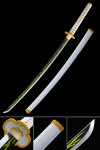 |
Zenitsu Agatsuma Sword - Kimetsu No Yaiba Thunder Breathing Nichirin, 1045 Carbon Steel, Yellow Blade |
10/10 would recommend it took 2 weeks but it’s worth it
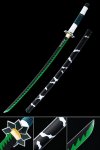 |
Sanemi Shinazugawa Sword - Kimetsu No Yaiba Wind Hashira Nichirin, 1045 Carbon Steel, Green Tsuba |
The sword came fast, its nice and sharp and I love how detailed it is
|
Zenitsu Agatsuma Sword - Kimetsu No Yaiba Thunder Breathing Nichirin, 1045 Carbon Steel, Yellow Blade |
Got here very fast (within about 4-5 days). Looks awesome as a centerpiece on my wall. Has a very durable feel to it. Would purchase from here again in the future.
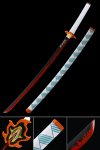 |
Rengoku Sword - Kimetsu No Yaiba Flame Hashira Nichirin Replica, 1045 Carbon Steel |
This was a very nice katana, exceeding my expectations based on the cost. It was my daughter's favorite Christmas gift and a great replica of the Shinobu katana from Demon Slayer
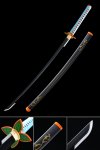 |
Shinobu Sword - Kimetsu No Yaiba Insect Hashira Nichirin Replica, 1045 Carbon Steel, Butterfly Tsuba |
It is amazing!!! Came very quickly and is really just beautiful. My husband absolutely loves it, and we will be getting more in the future!
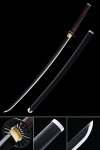 |
Tanjiro Kamado Sword - Kimetsu No Yaiba Nichirin Replica, 1045 Carbon Steel, White Scabbard |
I had to order a gift last minute (12/16) and was super nervous but Truekatana pulled through, was true to their advertising and delivered as promised. My gift arrived on 12/23 and it is exactly what I expected/ordered, perfect. Thank you! My only critique, to show fairness is that I didn't receive a shipping confirmation (adding to the super nervousness). Considering the whole experience I will still give 5 stars and order from them in the future.
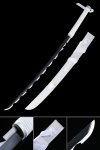 |
Inosuke Sword - Kimetsu No Yaiba Beast Hashira Nichirin Replica, 1045 Carbon Steel, Jagged Edge |
Good quality, pretty heavy, not too sharp. Definitely good for displaying. Definitely will get more from here, when I can
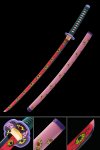 |
Kokushibo Sword - Kimetsu No Yaiba Upper Moon One Nichirin, 1045 Carbon Steel, Eye Tsuba |