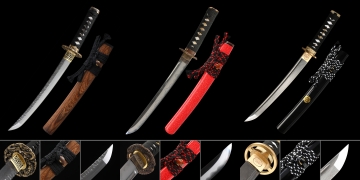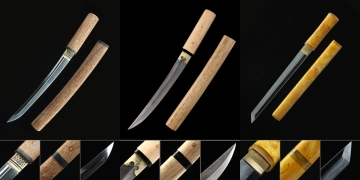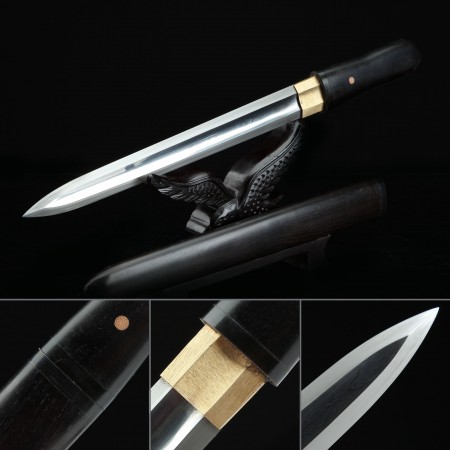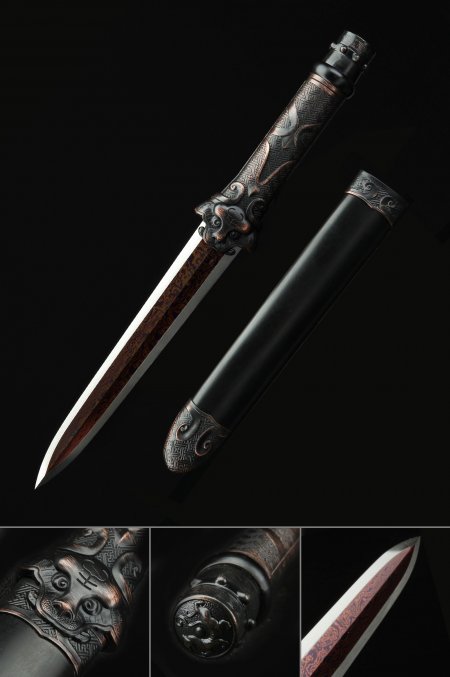
Double Edge Sharp Tanto

The Double Edge Sharp Tanto brings together two disciplines rarely united in a single blade — classical Japanese tanto geometry and the bold symmetry of double-edged construction. Each piece in this collection is hand-forged from high-carbon or folded Damascus steel, finished with period-appropriate fittings that reward close inspection. Whether displayed on a stand or stored in its lacquered saya, every tanto here is a statement of intentional craftsmanship. Enjoy free standard shipping on your order, backed by our hassle-free return policy.
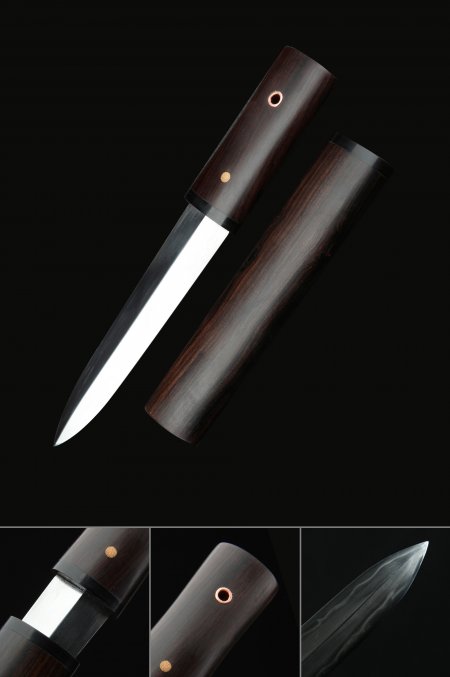
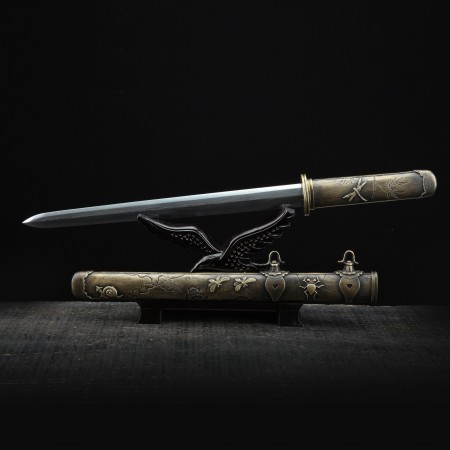
Showing 4 Products

Related Collections

Damascus Tanto Sword46 items


55 Reviews

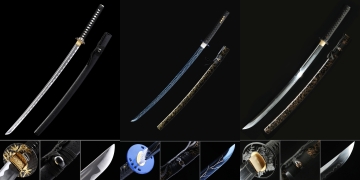
Short Sharp Katana92 items


628 Reviews

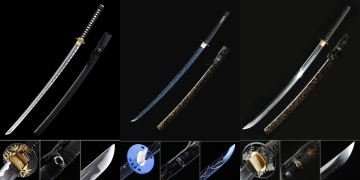
Very Sharp Katana119 items


601 Reviews

Frequently Asked Questions

What makes a double-edged tanto different from a standard tanto?
A standard tanto has one sharpened edge and a flat or slightly curved spine, giving the smith a clear reference surface during the grind. A double-edged tanto removes that reference — both sides must be worked symmetrically, which makes maintaining a consistent blade geometry significantly harder. The kissaki must be shaped so both edges converge evenly, and the cross-section through the blade body has to be balanced left-to-right. For collectors, this means a well-executed double-edged tanto is a more demanding benchmark of the maker's skill, and any asymmetry in the grind or temper line becomes immediately visible during close inspection.
Is Damascus steel or folded steel better for a display tanto?
Both are excellent display choices but for different reasons. Damascus steel — produced by welding together two or more steel alloys with different carbon content — creates bold, high-contrast banding patterns that read well from a distance and photograph dramatically. Folded steel, by contrast, produces a subtler wood-grain texture called hada that rewards close, hands-on inspection and connects more directly to classical Japanese smithing tradition. For a display case viewed from a few feet away, Damascus offers more immediate visual impact. For a collector who handles and studies their pieces at close range, the layered complexity of folded steel tends to be more satisfying over time. Both types in this collection are oil-quenched and differentially tempered for structural integrity.
How should I store a double-edged tanto long-term?
Keep the blade in its saya whenever it is not actively on display — the saya shields both edges from ambient dust and incidental contact. Apply a thin coat of choji oil or food-grade mineral oil to both edges every three to four months, wiping off the excess with a clean cotton cloth. Avoid rubber or foam-lined cases for extended storage, as many foam formulations off-gas acids that accelerate surface oxidation on carbon steel. If your storage environment experiences humidity above 60%, place a small silica gel packet inside the display box and replace it seasonally. Never store a tanto in a leather sheath long-term; leather retains moisture and can cause pitting on polished steel surfaces.
What fittings typically complement a double-edged tanto aesthetically?
Because the double-edged profile already carries strong visual tension, the most successful fitting combinations tend to anchor it with warm or high-contrast materials. Bronze tsuba and collars work well with folded or Damascus blades because the amber tone of aged bronze echoes the warm hues in the hada without competing with the blade's patterning. Ebony and black hardwood saya create a clean negative-space contrast that allows an active Damascus surface to dominate the composition. Gold-collared habaki paired with natural wood handles occupy a middle ground — formal enough for display, visually balanced without being overstated. As a general principle, choose fitting materials that repeat one or two tones already present in the blade steel, rather than introducing entirely new colors.
Can a double-edged tanto work as a standalone display or does it need a set?
A double-edged tanto stands effectively on its own, particularly when mounted on a single horizontal stand that presents the full profile — blade, guard, handle, and saya — as a unified composition. Its compact size, typically around 18 inches overall, means it does not require wall space the way a full-length katana does. That said, it pairs naturally with other pieces if you want to build a themed display. A Black Tanto alongside a Damascus double-edged example creates an immediate visual dialogue between minimalist and ornate aesthetics. For collectors who prefer a larger centerpiece, pairing a tanto with a Real Sharp Katana Sword follows the traditional daisho pairing logic and gives the display clear hierarchy and scale contrast.

Customer Reviews