
Dragon Blade Wakizashi
Dragon Blade Wakizashi brings together the artistry of hand-forged steel and intricate dragon motifs in a companion blade built for serious collectors. Each piece features genuine hamon activity, layered Damascus or high-carbon construction, and hand-lacquered saya finished in rich jewel tones. Free standard shipping is included on every order, along with our hassle-free return policy for complete peace of mind.
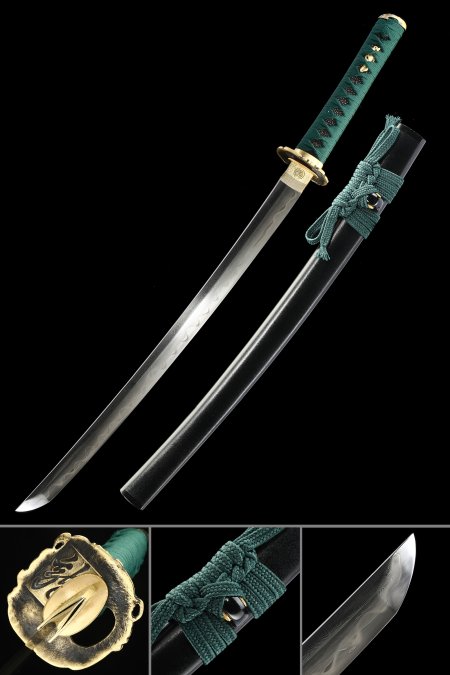
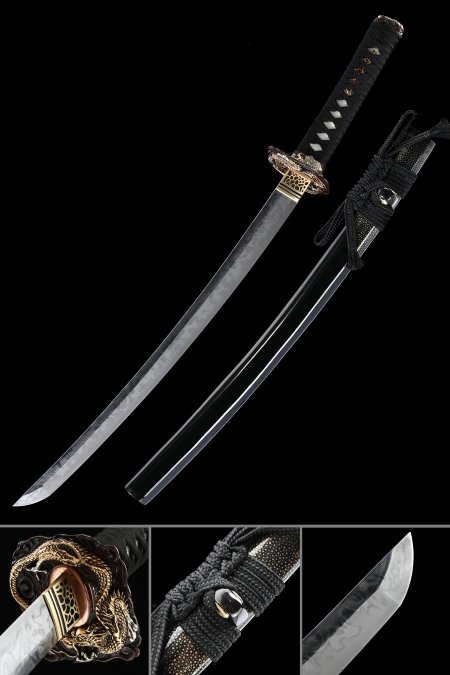
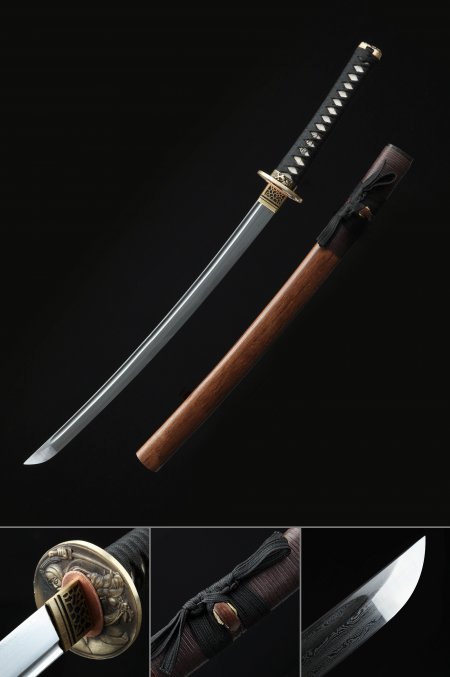
Free Shipping
229.00 USD
ON SALE! 15% OFF
Was: 269.00 USD
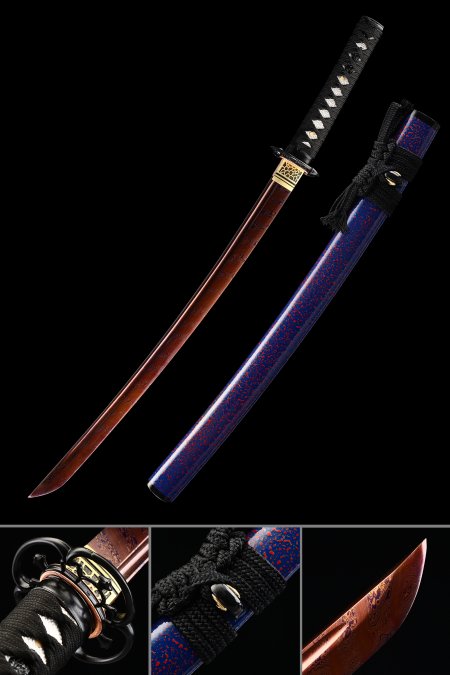
Free Shipping
209.00 USD
Related Collections
Flower Saya Katana88 items
Wave Blade Katana83 items
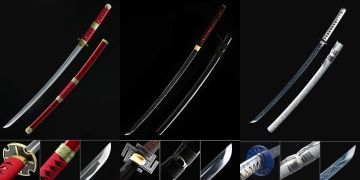
Geometric Tsuba Katana103 items
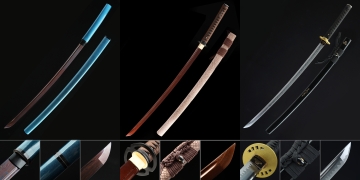
Plain Tsuba Katana89 items
Frequently Asked Questions
What steel types are used in Dragon Blade Wakizashi?
This collection spans three distinct steel categories, each offering different surface characteristics and collector appeal. Damascus steel wakizashi feature layered billets forge-welded and manipulated to produce flowing water-pattern surfaces - the visual variation is inherent to the material, not applied. T10 carbon steel delivers a classic high-carbon profile with a visible hamon temper line formed during differential clay-coating and quenching. Manganese steel offers enhanced toughness and a darker surface tone. Folded Melaleuca steel takes traditional multi-layer construction to a finely grained finish associated with historical Japanese smithing practices. Each steel type produces a visually distinct blade that rewards study under good light.
How does a wakizashi differ from a katana in a collection?
The wakizashi is the shorter companion blade of the traditional Japanese daisho pairing, typically measuring between 30 and 60 cm in blade length, compared to the katana's longer profile. In a display collection, the wakizashi occupies a different visual scale - its compact proportions make it ideal for smaller display cases, desk mounts, or as the second blade in a daisho presentation. Historically, the wakizashi was the blade a samurai retained indoors, carrying its own ceremonial significance independent of the katana. Collectors who display both blades together benefit from the visual contrast in scale while maintaining a unified aesthetic through matching tsuba design and saya finish - something this dragon-themed collection makes straightforward.
What makes a hamon visible on a collectible wakizashi?
A genuine hamon is a temper line that forms when the blade is differentially heat-treated - clay is applied along the spine before quenching, causing the edge area to cool faster and develop a harder crystalline structure called martensite. The boundary between this harder edge zone and the softer spine is what appears as the hamon. On T10 and high-carbon steel blades, this line becomes visible as a misty, wave-like pattern running along the lower portion of the blade. The exact shape - straight (suguha), wavy (notare), or irregular (gunome) - depends on how the clay is applied. On display-grade pieces, the hamon is a primary authentication marker that distinguishes genuinely heat-treated blades from purely decorative alternatives.
How should I care for a lacquered saya on display?
Lacquered saya are moisture-sensitive and should be kept in a stable environment away from direct sunlight, heating vents, or areas with high humidity fluctuation. UV exposure causes lacquer to fade and crack over time, particularly on dark blue and black finishes. For cleaning, use a soft dry cloth - avoid any liquid cleaners or polishes not specifically formulated for urushi or synthetic lacquer surfaces. The blade inside the saya should be lightly oiled with food-grade or sword-specific mineral oil before storage to prevent moisture transfer to the interior wood and maintain the metal surface. Remove the blade for inspection every few months and re-oil as needed. Gold-speckled and maki-e-style finishes require especially gentle handling to preserve the surface detail.
Is a dragon tsuba a historically grounded design choice?
Yes. Dragon imagery has appeared on Japanese sword fittings - including tsuba, fuchi, kashira, and menuki - since at least the Muromachi period. In Japanese mythology, the dragon (ryu) is associated with water, wisdom, and imperial authority, making it a natural choice for the symbolic vocabulary of samurai sword mountings. Many extant museum examples from the Edo period feature cast or pierced dragon tsuba in iron, copper alloys, and shakudo. The dragon designs in this collection draw on that iconographic tradition, rendering the motif in gold-tone and black-gold relief castings that echo historical fitting aesthetics. For collectors interested in thematically cohesive display pieces, the dragon tsuba provides a well-documented historical reference point rather than a purely modern invention.
Customer Reviews
Andrew Wong
Pennsylvania, United States
Minus a star for poor sheath retention which I fixed with a thin layer of wood glue.
Good blade and handle quality otherwise.
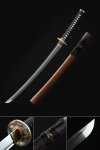 |
Damascus Steel Wakizashi with Brown Hardwood Saya - Lion Copper Tsuba, Dragon Engraved Blade |
Ronald Durbin
Missouri, United States
Wasn’t very pleased with tracking method was not good
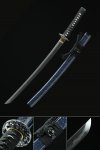 |
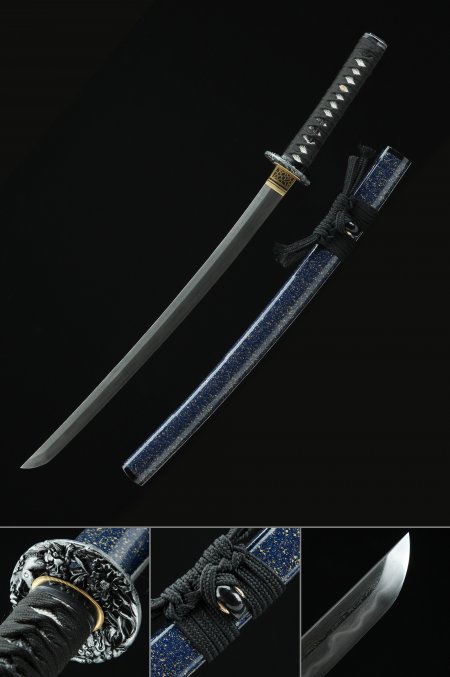
Damascus Steel Wakizashi with Real Hamon in Dark Blue Gold-Speckled Lacquer Saya - Dragon Tsuba |
Armando
Illinois, United States
Very clean sword very well made love everything about wish it was a little more sharp but otherwise super dope blade!!!!
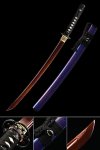 |
Damascus Steel Wakizashi with Dark Red Blade, Blue Lacquer Saya & Gold-Black Tsuba - Dragon Engraved |
Suzanne Juan
New York, United States
The detailing on this sword is amazing. The quality is impeccable. Excellent and fast shipping.
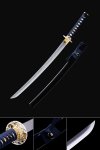 |
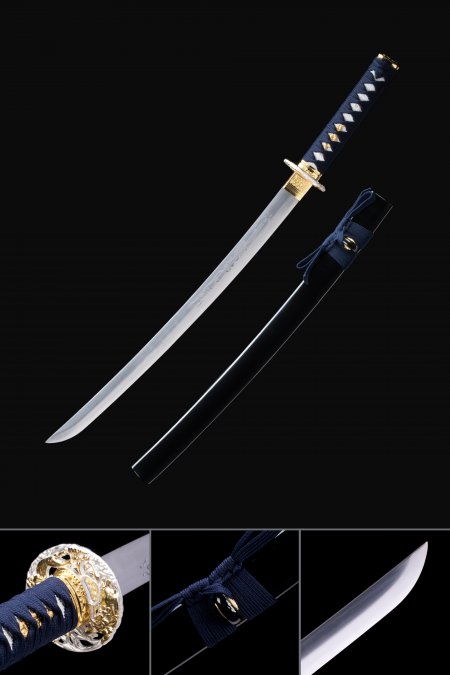
Manganese Steel Wakizashi with Dragon Engraving, Dark Blue Tsuka & Black Lacquer Saya |
Mark Samuel Pascual
Virginia, United States
Beautiful piece, the only negative I have to say is the saya is a little loose to hold the sword. Other than that, I am very satisfied with my purchase.
|
Damascus Steel Wakizashi with Brown Hardwood Saya - Lion Copper Tsuba, Dragon Engraved Blade |
Doug Johnson
Virginia, United States
Absolutely beautiful! Incredibly well built as well. Stunning... Definitely the real deal, not a imitation. Thanks!
|
Damascus Steel Wakizashi with Brown Hardwood Saya - Lion Copper Tsuba, Dragon Engraved Blade |