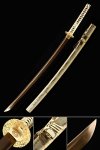
What makes 1090 carbon steel a good choice for a display katana?
1090 carbon steel contains approximately 0.90% carbon, which gives it enough density and grain structure to respond well to traditional forging and heat-treatment techniques. One visible result of this is the hamon — the wavy temper line along the blade's edge that appears when a smith applies differential hardening using a clay-coat method. Stainless steel cannot produce a genuine hamon this way, making 1090 a preferred material for collectors who want a blade that reflects authentic production methods. The steel also develops a natural patina over time, which many collectors regard as part of the piece's living character.
How does the gold finish on the blade and saya actually work?
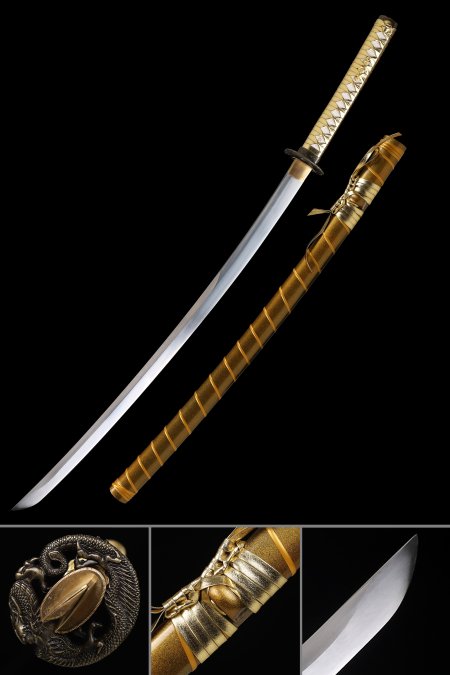
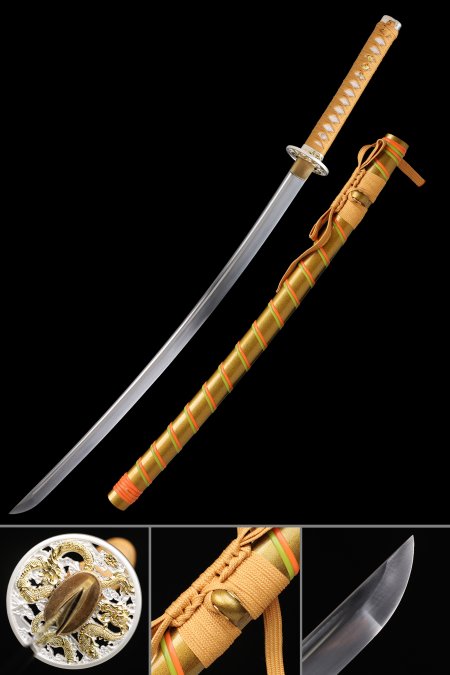
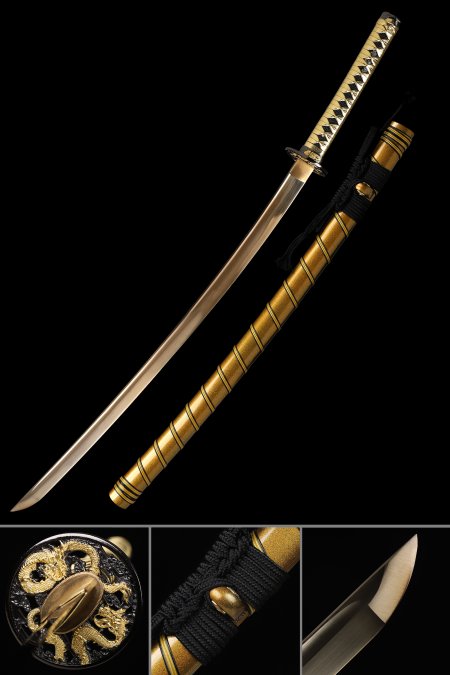
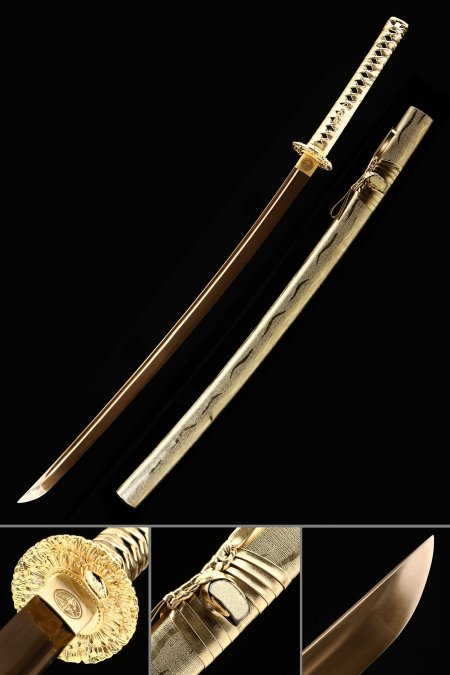
The gold tone on these katana is applied after the blade has been forged, heat-treated, and polished to its base finish. The saya — the scabbard — is typically crafted from hardwood and then lacquered in a gold-tone coating that bonds to the wood surface and resists minor surface abrasion. On some pieces, a roast-gold or antiqued gold effect is applied directly to the blade steel using a controlled oxidation or plating process that creates a warm, non-reflective tone distinct from a chrome or mirror polish. The result is a cohesive mounting where blade, tsuba, and saya share a unified color palette rather than appearing as mismatched components.
What is full-tang construction, and why does it matter for collectibles?
Full-tang means the steel of the blade extends continuously through the entire length of the handle, rather than ending at the guard or being attached with a separate tang insert. In practice, this means the handle scales or wrapping are fitted around a single uninterrupted piece of steel. For a display collectible, full-tang construction indicates a higher standard of manufacturing — the same structural approach used in historically significant Japanese swords. It also ensures the piece holds its proportions correctly when mounted on a stand, with the handle maintaining proper weight distribution relative to the blade.
How should I store and maintain a gold-tone carbon steel katana?
Carbon steel requires more attentive storage than stainless alternatives because it is susceptible to surface oxidation when exposed to humidity or skin oils. For a gold-tone katana kept as a display piece, apply a thin coat of camellia oil or mineral oil to the blade every few months using a soft lint-free cloth. Keep the piece away from direct sunlight, which can degrade both the lacquer on the saya and any cord wrapping on the handle. If your display environment experiences humidity fluctuations, consider a sealed display case with a silica gel packet to maintain stable conditions. Never store the blade inside the saya for extended periods without periodic airing, as trapped moisture accelerates surface discoloration.
How do dragon tsuba designs compare to floral tsuba on these katana?
Both tsuba styles in this collection are cast with detailed relief work, but they carry distinct visual weight and historical associations. Dragon tsuba tend toward bold, high-contrast designs with scaled texture and dimensional depth — the dragon motif in Japanese tradition represents strength and protection, making it a popular choice for prominent display pieces. Floral tsuba, such as the cherry blossom or chrysanthemum designs used in this collection, are rooted in the aesthetic tradition of court and ceremonial swords, where refined naturalistic motifs signaled cultural sophistication. Collectors building a thematic display often choose dragon tsuba as the focal piece and use floral or simpler tsuba designs as supporting elements.