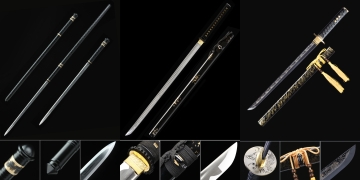
What makes T10 steel a preferred choice for wakizashi blades?
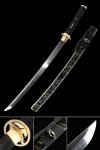
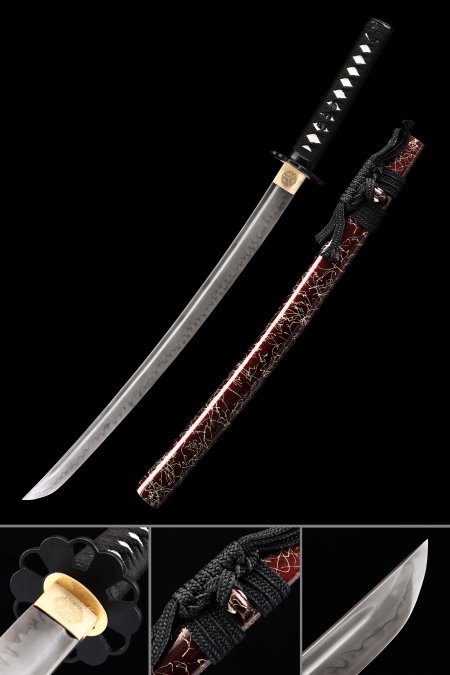
T10 tool steel contains a small percentage of tungsten, which refines the grain structure and improves wear resistance compared to standard high-carbon steels. When a T10 blade is clay-coated and differentially hardened, the resulting hamon tends to show exceptional clarity - the activity along the temper line, known as nie and nioi, is more pronounced and visually complex than what most 1060 or 1095 blades produce. For a collector focused on blade aesthetics, T10 is generally the more rewarding choice because the hamon becomes a genuine focal point rather than a subtle detail. The trade-off is that T10 requires attentive care: it is more susceptible to surface oxidation if left unprotected, so periodic application of a light mineral or choji oil is essential for long-term preservation.
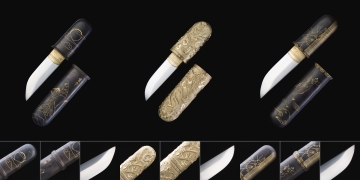
How does the gold vine saya decoration differ from plain lacquered scabbards?
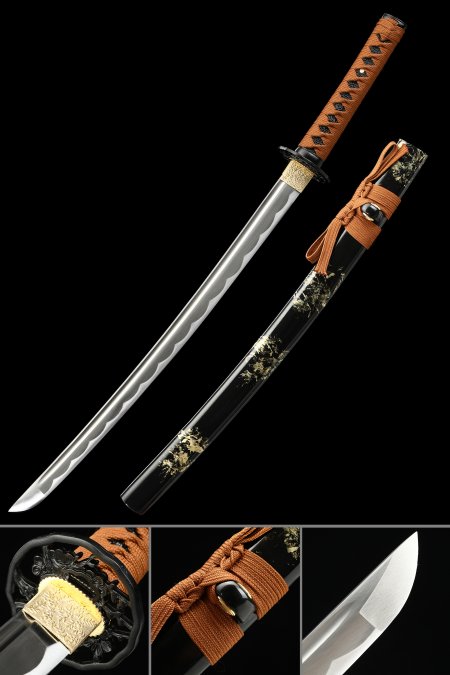
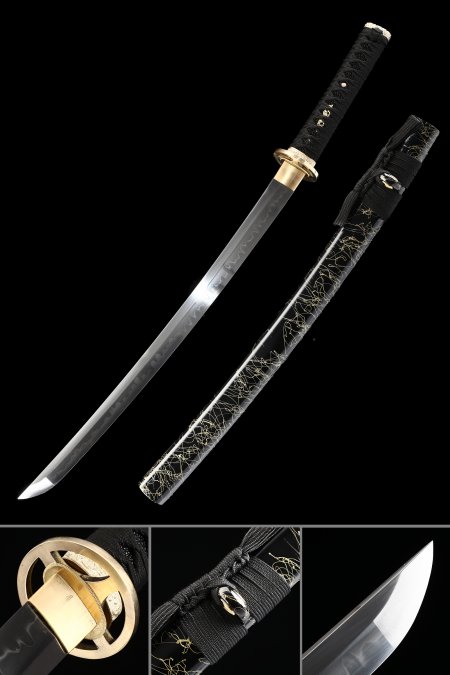
Plain lacquered saya prioritize uniformity - the goal is a flawless, glassy surface in a single color. Gold vine decoration introduces a second layer of craft: the vine motif is applied over the base lacquer using raised or painted goldwork, requiring precise control to keep the lines fluid and proportional along a curved surface. Historically, this style of ornamentation was associated with higher-grade mounts produced for officials or wealthy patrons during the Edo period. On a display collectible, the gold vine pattern serves a practical visual purpose as well - it creates contrast and movement that draws attention to the saya as an object in its own right, rather than a simple protective sleeve for the blade. The result is a piece that looks composed and intentional from any angle on a display stand.
What is the difference between a wakizashi and a tanto for display collections?
Both are short-bladed Japanese pieces, but they occupy distinct historical and aesthetic roles. A tanto typically measures under one shaku (roughly 30 cm) and was designed as a close-quarters utility and ceremonial piece, often with minimal curvature. A wakizashi falls between one and two shaku (roughly 30-60 cm) and carries a more pronounced curve and fuller blade geometry - closer in profile to a scaled-down katana. For display purposes, the wakizashi reads as a more complete sword-form: it accommodates a full tsuka wrap, a proper tsuba, and a generous saya with room for decorative work like the gold vine patterns in this collection. Collectors who want a piece that conveys the full visual language of Japanese sword furniture often find the wakizashi a more satisfying display object than the tanto.
How should I store a lacquered saya wakizashi to protect the finish?
Lacquer is durable but sensitive to prolonged direct sunlight and extreme humidity fluctuations. For long-term display, position the piece away from south- or west-facing windows where UV exposure is highest. A horizontal display stand is preferred over vertical mounting, which can stress the koiguchi (saya mouth) over time. If storing rather than displaying, wrap the saya loosely in a soft, acid-free cloth - avoid plastics, which can trap moisture. The blade itself should be lightly oiled before storage; draw it clear of the saya, apply a thin layer of choji or mineral oil with a soft cloth, and allow it to settle before resheathing. Check the piece every few months and reapply oil if the surface appears dry or shows any early discoloration.
Can a gold vine wakizashi be paired with a katana for a daisho display?
Yes, and this is one of the most popular display configurations for collectors with dedicated sword cabinets or wall-mounted stands. A daisho - the paired long and short blade set historically associated with samurai status - is a natural pairing to recreate as a display. To achieve a cohesive look, the key is matching the saya finish, tsuba style, and ito color across both pieces. Within the TrueKatana catalog, wakizashi from this gold vine collection share aesthetic DNA with several katana that feature black or dark lacquer saya and gold-accent fittings, making it straightforward to build a visually unified pair. When selecting pieces to display together, prioritize matching the tsuba motif - chrysanthemum tsuba on both, for example - over trying to match every detail exactly, as historical daisho sets were rarely perfectly identical.