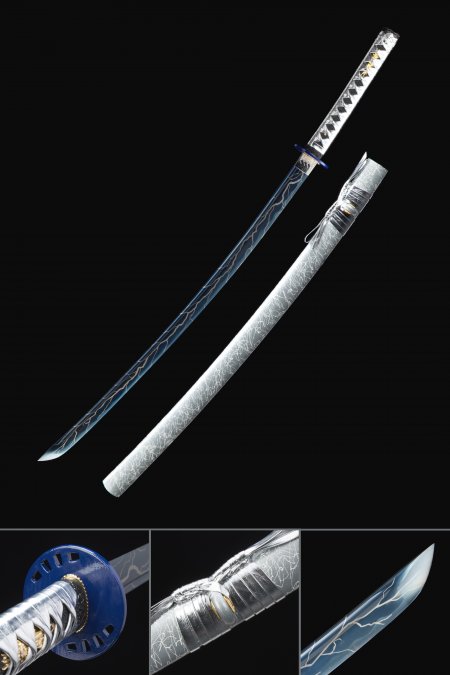
Gray Manganese Steel Katana

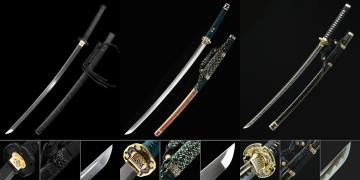
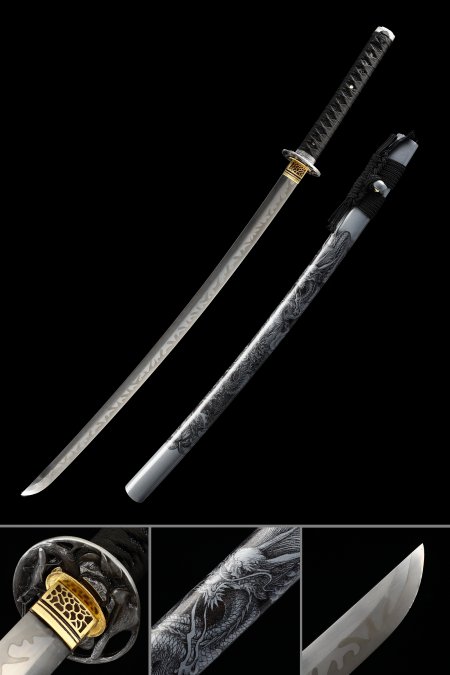
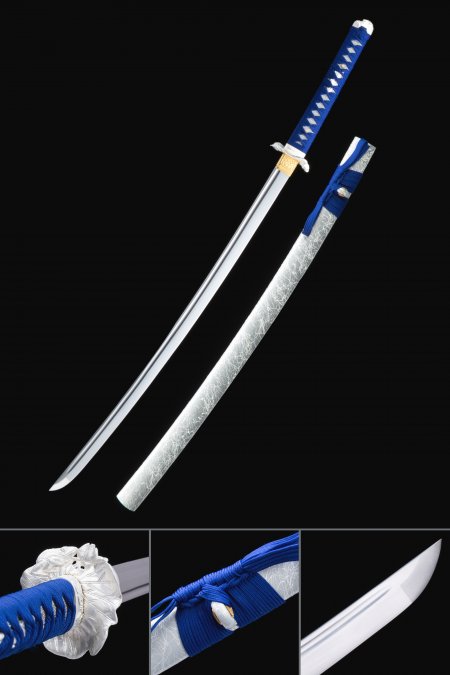
Gray Manganese Steel Katanas from TrueKatana bring together the understated elegance of a matte gray finish with the proven durability of high manganese steel — a material prized for its toughness and resilience in full-tang construction. Each piece is finished with hand-wrapped ito, ornate tsuba, and lacquered saya that make it a standout addition to any serious display collection. Enjoy free standard shipping on your order, along with our straightforward return policy for a confident collecting experience.
Showing 4 Products

Frequently Asked Questions

What makes manganese steel a good choice for display katanas?
High manganese steel — typically alloyed with 11% to 14% manganese content — is valued in collectible sword construction for its structural toughness and resistance to deformation over time. Unlike carbon steel, which can be brittle at high hardness levels, manganese steel maintains integrity under the minor handling and repositioning that display swords regularly experience. For a full-tang katana mounted on a wall or stand, this means the blade retains its straight, true profile for years without warping. It also takes surface treatments well, which is why the characteristic gray finish of this collection adheres evenly and ages gracefully without flaking or dulling unevenly.
How is the gray finish on these katana blades achieved?
The gray appearance on manganese steel katanas is the result of a controlled surface treatment applied after the blade is shaped and polished. Unlike stainless steel blades that are mirror-finished or carbon steel blades that develop a natural patina, manganese steel is often given a stone-wash, acid-etched, or matte blast treatment that exposes and stabilizes the grain structure of the alloy. The result is a consistent gray tone that resists fingerprinting better than polished steel and gives the blade a subdued, matte presence suited to modern display aesthetics. This finish is particularly effective at highlighting the blade's geometry — the curvature of the sori, the line of the shinogi — without the visual noise of a reflective surface.
What is a crackle-pattern saya and how is it made?
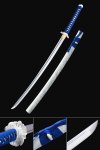
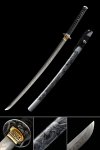
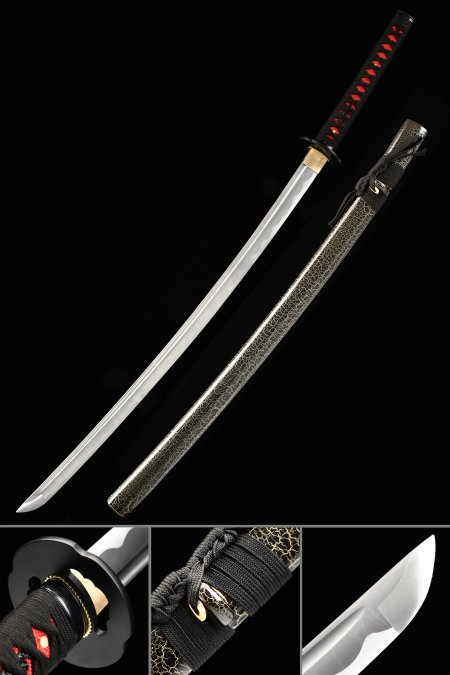
A crackle-pattern saya is a scabbard finished with a lacquering technique that intentionally produces a network of fine fracture lines across the surface, resembling aged ceramic glaze or dried earth. The effect is achieved by applying layers of lacquer with differing drying rates — the top layer contracts faster than the base coat, creating controlled cracking as it cures. Each saya produced this way has a subtly unique pattern, which collectors appreciate as a mark of handcrafted character rather than machine uniformity. In this collection, crackle saya appear in black and off-white variations, creating strong visual contrast against the gray blade and the wrapped handle above.
How should I store and maintain a gray manganese steel katana?
For long-term display and preservation, keep your manganese steel katana in a stable indoor environment with low humidity — ideally below 55% relative humidity. Moisture is the primary concern even for treated steel surfaces. Wipe the blade periodically with a lightly oiled cloth using a neutral mineral oil or traditional choji oil to maintain the surface treatment. Avoid touching the blade directly with bare hands, as skin oils can leave marks that dull the matte gray finish over time. Store the sword in its saya when not on display, and if wall-mounting, choose a mount that supports the blade horizontally or at a gentle angle rather than vertically, which reduces long-term stress on the tsuka and habaki fittings.
Are these katanas suitable as gifts for sword collectors?
Gray manganese steel katanas make excellent gifts for collectors who already own one or two more conventional pieces and are looking for something visually distinctive. The gray finish combined with decorative saya — particularly the dragon-engraved or crackle-lacquered options — gives these swords an immediate display presence that stands out against traditional black-lacquer or natural wood scabbard styles. The coordinated fittings — matching ito wrap colors, themed tsuba designs, and lacquered saya — mean the sword arrives as a complete, exhibition-ready collectible rather than a bare blade requiring additional assembly. For gifting, pairing one of these katanas with a compatible display stand creates a complete presentation suitable for a study, home office, or dedicated collection room.

Customer Reviews