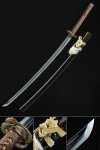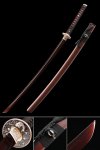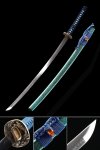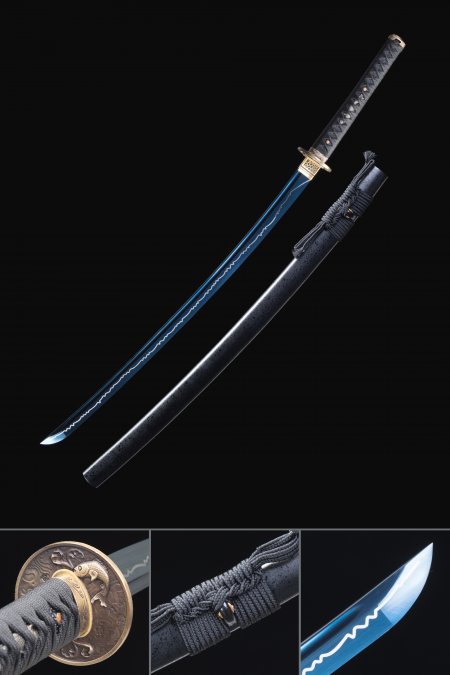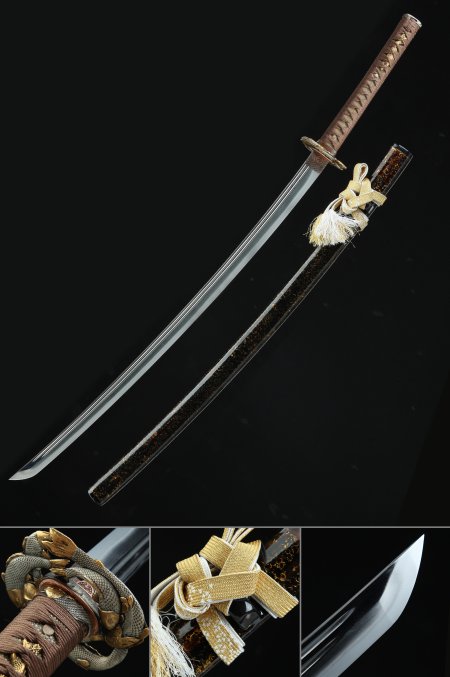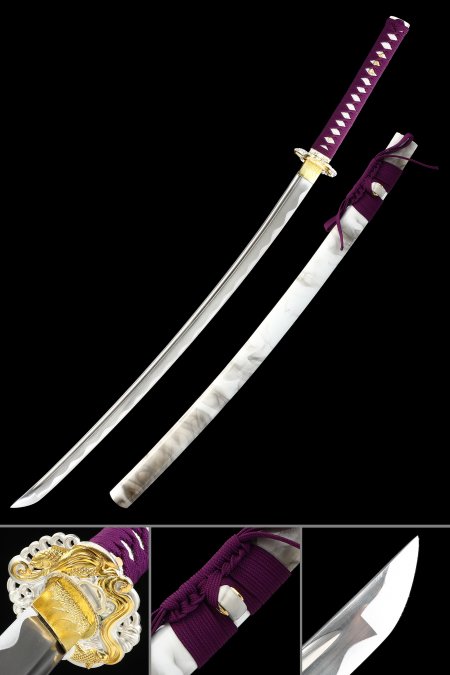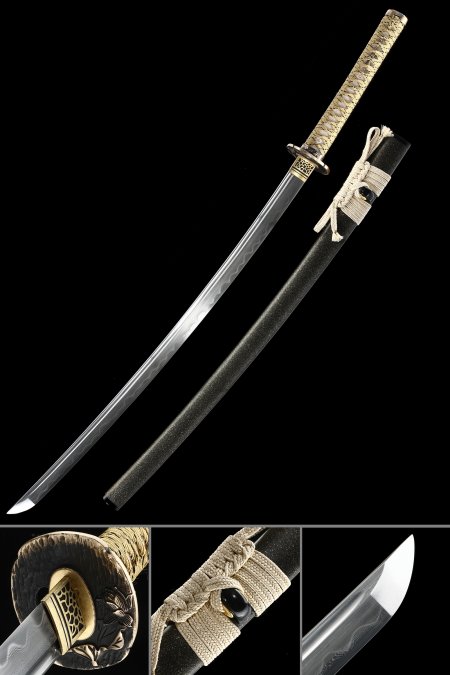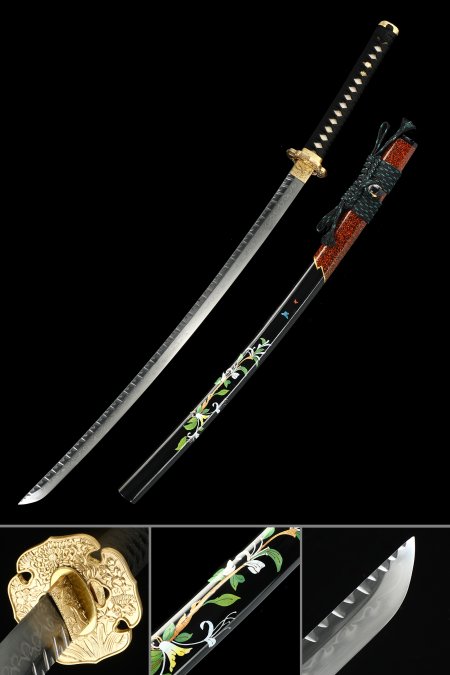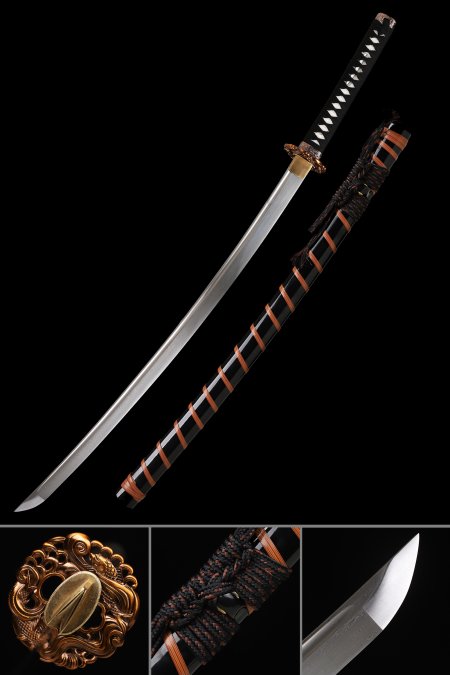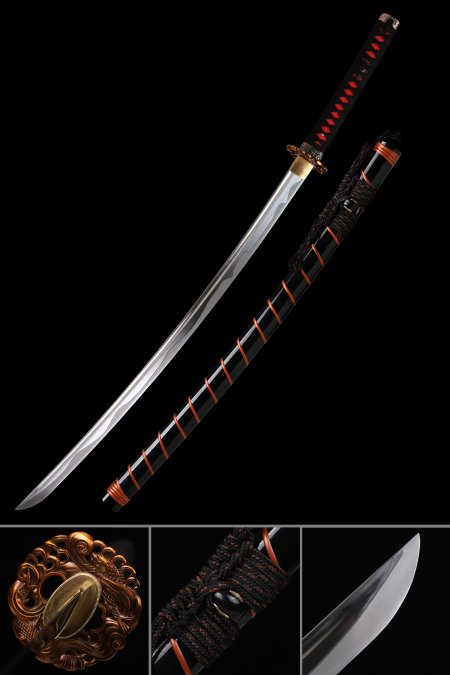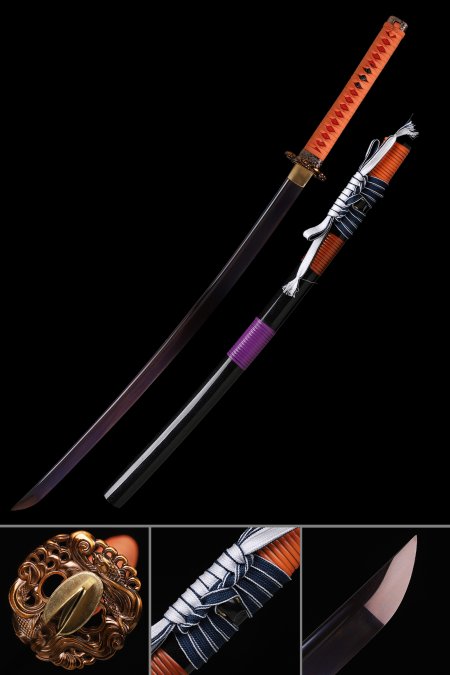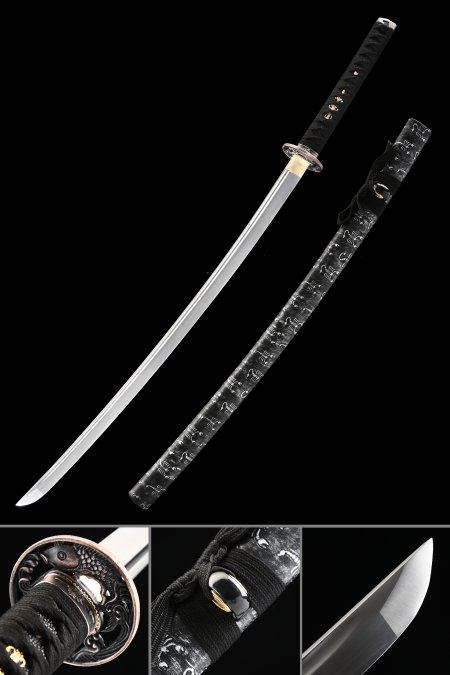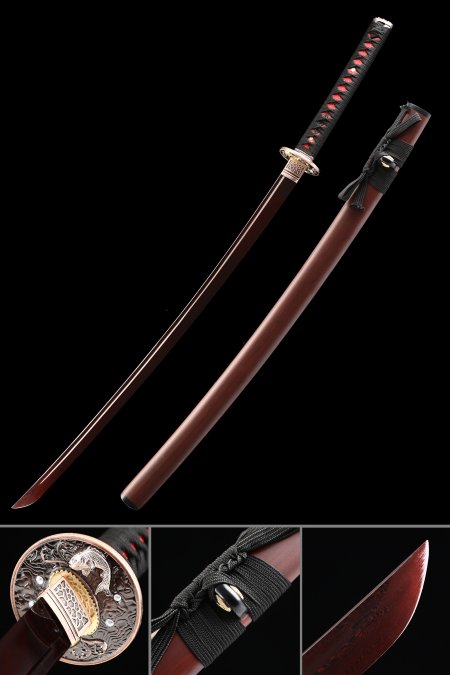
Koi Tsuba Katana

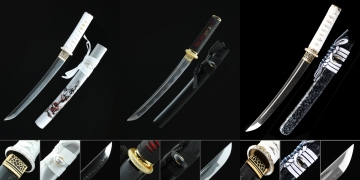
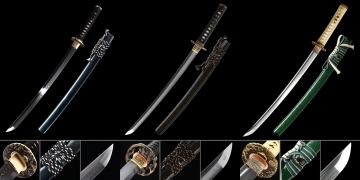
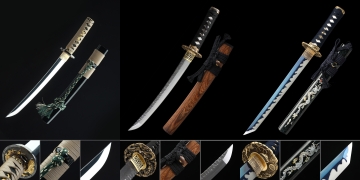
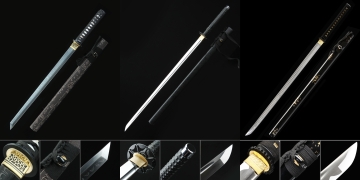
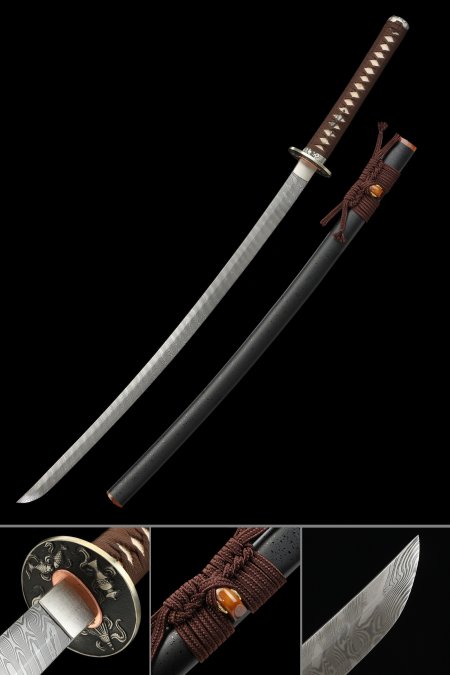
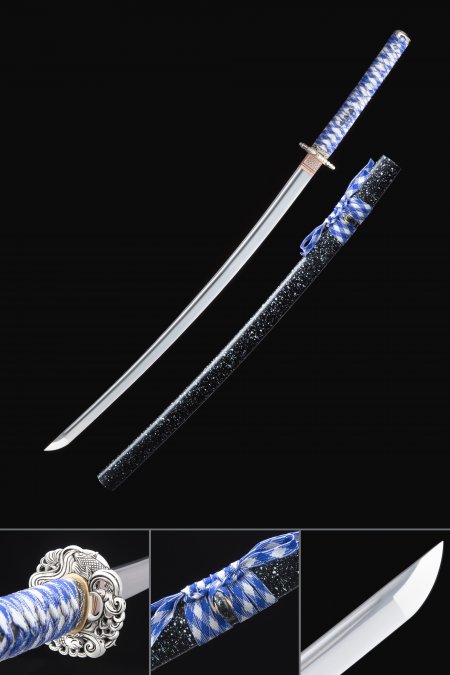
Koi tsuba katana pieces in our collection bring together expert hand-forging and intricate fittings design — each guard cast or carved with the flowing form of koi carp, a symbol of perseverance and good fortune in Japanese tradition. From T10 clay-tempered blades with authentic hamon to layered Damascus steel with wave-engraved surfaces, every katana is assembled with period-accurate hardware and lacquered hardwood saya. These are crafted for discerning collectors who value both visual artistry and metallurgical integrity. Enjoy free shipping and hassle-free returns on every order.
Showing 16 Products

Frequently Asked Questions

What makes a koi tsuba different from a standard katana guard?
A koi tsuba is a hand guard specifically cast, carved, or engraved to depict koi carp — often in flowing, three-dimensional relief. Unlike a plain iron or steel tsuba, a koi design tsuba is treated as decorative hardware: cast in alloy, bronze, or copper with gilded or patinated finishes. The koi motif carries symbolic weight in Japanese culture, representing perseverance and positive transformation, which is why it became a recurring subject for both sword fittings and broader decorative arts. From a collector's perspective, the tsuba is one of the most scrutinized components when evaluating a katana's overall presentation quality.
How does T10 clay-tempered steel differ from Damascus in these katanas?
T10 is a high-carbon tool steel prized for its fine carbide distribution, which allows it to hold a very clean edge geometry and accept differential clay tempering. When a T10 blade is clay-coated along the spine before quenching, the edge cools faster and hardens more, while the spine stays resilient — producing a visible hamon line along the edge. Damascus steel, by contrast, is made by forge-welding and repeatedly folding two or more alloys together. Its appeal is primarily visual: the etched surface reveals flowing banding patterns unique to each billet. Both are legitimate choices for display-grade collectibles; T10 is favored by collectors who prioritize authentic hamon, while Damascus appeals to those who value surface pattern artistry.
Are these katanas full-tang construction?
Yes. Every katana in this collection is built on a full-tang foundation, meaning the steel extends continuously from tip through the entire length of the handle. This construction method ensures the blade and handle are a single unified piece of steel, which is essential for structural integrity in a display-quality collectible. Handles are secured with traditional mekugi pins through the tsuka and wrapped with ito cord — either cotton or synthetic — in various colors to complement the saya finish. Full-tang construction also makes the piece more stable for long-term display on a katana stand without risk of handle loosening over time.
How should I store and maintain a koi tsuba katana for display?
Proper storage begins with keeping the blade away from humidity, which accelerates oxidation on carbon steel surfaces. Store the katana horizontally on a dedicated stand — traditionally with the edge facing upward — in a climate-controlled space away from direct sunlight, which can fade lacquer on the saya over time. Apply a thin coat of choji oil or food-grade mineral oil to the blade every two to three months, using a soft lint-free cloth. Avoid fingerprints on the blade surface, as skin oils accelerate rust spotting on high-carbon steel. The tsuba and copper or bronze fittings can be wiped with a dry cloth; avoid liquid cleaners that may dull patinated finishes. Storing the blade in the saya when not on display provides an additional layer of protection.
Is a koi tsuba katana a good gift for a Japanese culture enthusiast?
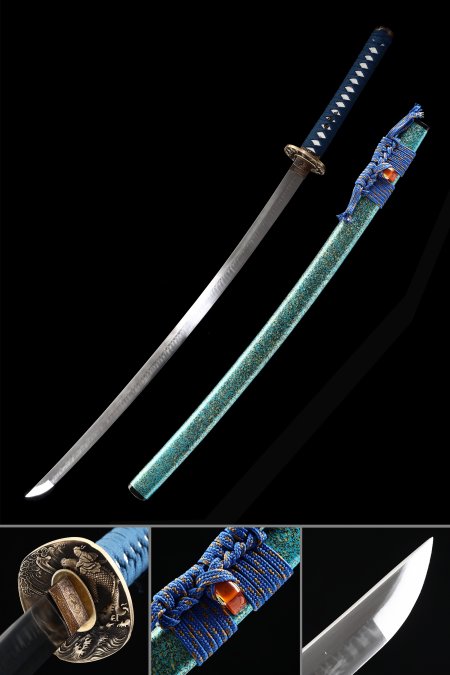
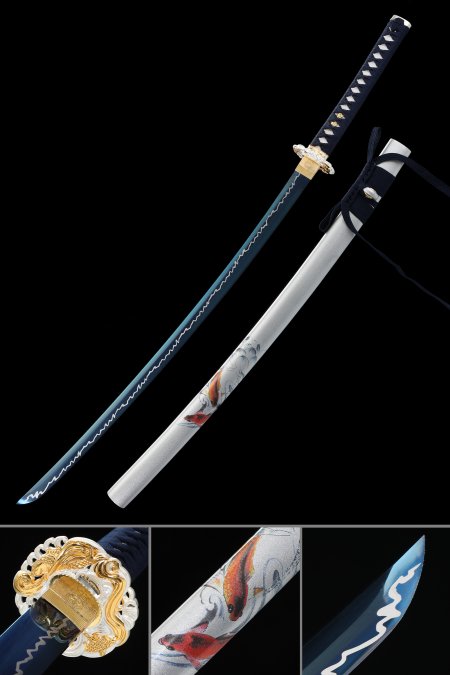
It is one of the more thoughtful options in the collectible edged art category, particularly because the koi motif has broadly recognizable cultural significance beyond niche sword collectors. A recipient familiar with Japanese art, mythology, or symbolism will immediately understand the thematic intent behind the piece. For gifting purposes, consider pairing the katana with a wall-mount display stand, which allows it to be showcased immediately. Katanas with matching color-coordinated saya and ito — such as the deep blue lacquer with dark blue ito combination — tend to present especially well as gift items. These pieces are sold as display and decorative collectibles, making them appropriate for adults who appreciate Japanese craft traditions.

Customer Reviews

Logan Davis Texas, United States

The only thing I did was wipe the blade with some blade oil to even out the shine. Definitely a wonderful piece for the price. The full tang is evident when swinging, the blade has a convex grind, the craftsmanship is superb for such an relatively low-priced sword. Absolutely love the purchase.
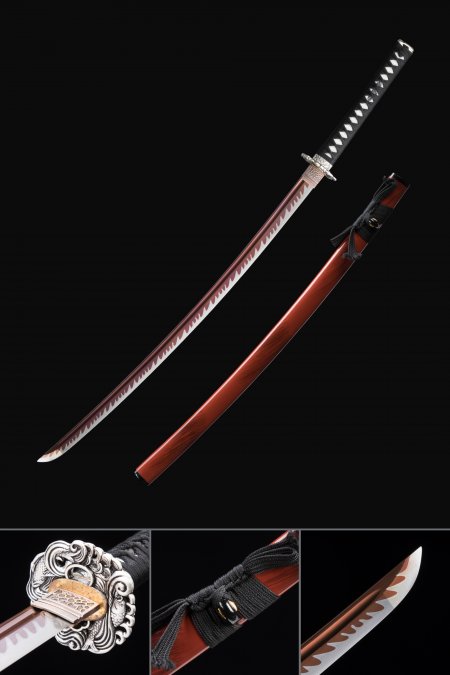
Oh and the blade is more of a burnt orange/red orange blade color depending on lighting, as opposed to crimson, which i was a bit disappointed about. I envisioned a more red/darkred tinted blade, but that is the most I can critique honestly. Seriously appreciate the attention to detail! I can only imagine the quality of the $2000 swords, maybe in another life I'd be able to afford one of those, haha.

Damascus Steel Katana with Crimson Red Folded Blade and Koi Fish Alloy Tsuba in Dark Red Hardwood Saya Damascus Steel Katana with Crimson Red Folded Blade and Koi Fish Alloy Tsuba in Dark Red Hardwood Saya