Red Blade Manganese Steel Ninjato
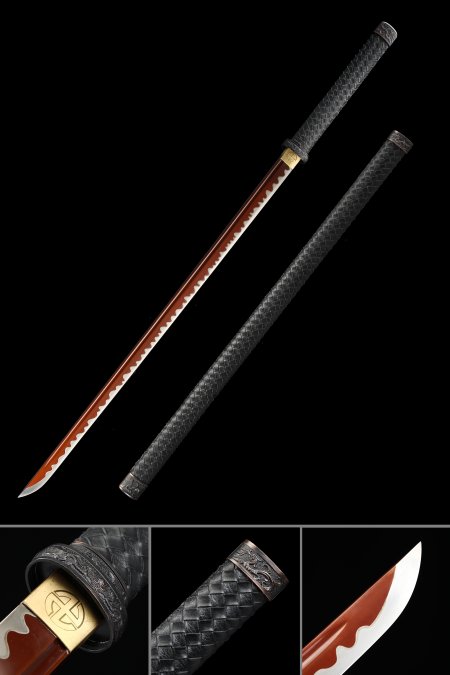
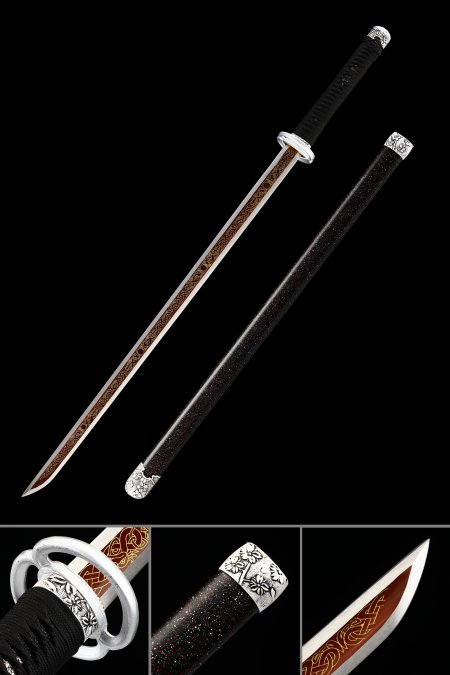
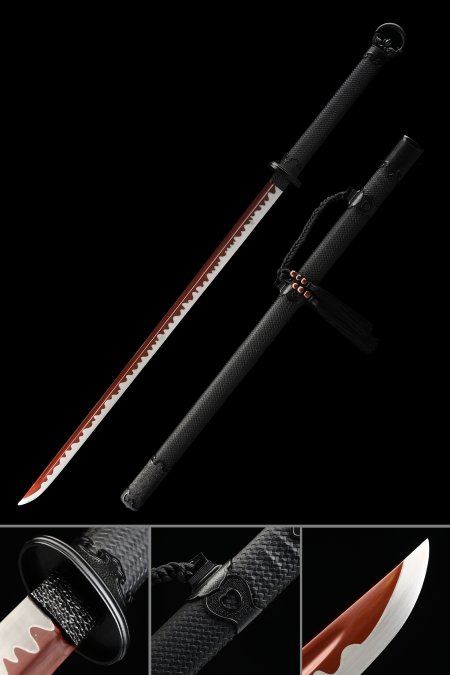
The Red Blade Manganese Steel Ninjato collection brings together a curated selection of straight-bladed Japanese swords finished with striking crimson surfaces and matched with detailed koshirae - from lacquered saya to ornate tsuba in silver and gold. Each piece is crafted from manganese steel and assembled with display-grade fittings that honor traditional ninjato aesthetics. Enjoy free standard shipping on your order, plus a hassle-free return policy for complete peace of mind.
Related Collections
White Manganese Steel Katana14 items
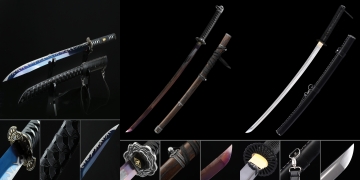
Brown Manganese Steel Katana18 items
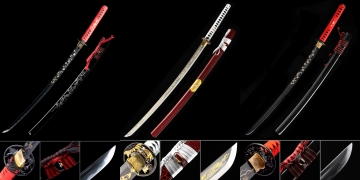
Darkred Manganese Steel Katana12 items
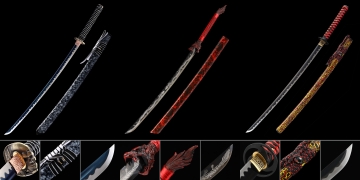
Frequently Asked Questions
What makes the red blade finish on these ninjato stand out?
The crimson surface on these ninjato is not a simple spray coat applied over raw steel. It is a deliberate finishing process applied to the manganese steel blade that produces a deep, consistent coloration across the full blade length. The result is a surface that reads as rich and intentional rather than decorative afterthought. When paired with a black lacquer saya and a silver or gold tsuba, the red blade creates a high-contrast ensemble that functions as a composed visual statement - the kind that works well on a wall-mounted display or a multi-piece collector's rack. The finish also provides a mild layer of surface protection, though routine oiling is still recommended to maintain the steel beneath.
How does manganese steel compare to carbon steel in display swords?
Manganese steel is an alloy that contains a higher proportion of manganese than standard carbon steel, which increases its toughness and resistance to surface deformation. In the context of decorative and collectible swords, this translates to a blade that holds its shape well under handling and resists minor surface damage during repositioning or inspection. Carbon steel - particularly high-carbon variants like 1045 or 1095 - is the material of choice for functional, sharpened blades intended for serious cutting practice. Manganese steel, by contrast, is well-suited for display-grade pieces where the priority is visual consistency, durability over years of static display, and the ability to hold surface treatments like the red finish seen in this collection.
Is a full-tang ninjato better for display than a partial-tang one?
For collectible display purposes, full-tang construction offers two meaningful advantages. First, it gives the sword a realistic weight distribution - the blade steel extends through the entire length of the tsuka, which means the piece feels substantial and balanced when held, not hollow or front-heavy. This matters when you're inspecting the sword or showing it to other collectors. Second, full-tang assembly is generally more durable over time: the handle is less likely to loosen or shift at the habaki area with repeated handling. Partial-tang designs can be visually identical from the outside but may develop play in the handle over years of display rotation. For a collection you intend to build on and maintain, full-tang is the more reliable foundation.
How should I care for the lacquered saya on a display ninjato?
Black lacquer saya require a bit more attention than plain wood because the lacquer surface can crack or dull if exposed to rapid temperature changes or high humidity over time. Keep the saya away from heating vents, air conditioning direct drafts, and windows with strong afternoon sun. When storing the sword, leave the blade seated in the saya rather than separating them for extended periods - this helps the saya retain its shape and prevents warping. Wipe the saya exterior with a dry, soft cloth to remove dust and fingerprints. Avoid any liquid cleaners or oils directly on the lacquer surface, as these can cause cloudiness or uneven sheen. A stable indoor environment with moderate humidity is the best long-term storage condition.
Can a red blade ninjato work as a gift for a Japanese sword collector?
A red blade ninjato makes a distinctive gift choice precisely because it sits at the intersection of traditional ninjato form and bold visual design - it appeals to collectors who already have a few conventional pieces and are looking for something that breaks the visual monotony of a display wall. The specific details worth noting for gifting are the tsuba style (silver flower motifs versus gold relief designs carry different aesthetics) and the saya finish, since a black lacquer saya reads as more formal and traditional than a leather-wrapped alternative. If the recipient collects thematically - for example, focusing on black-mounted Japanese pieces - the red blade creates a deliberate contrast that reads as intentional curation rather than a mismatched addition.