What does the red-white ito wrap mean on a katana?
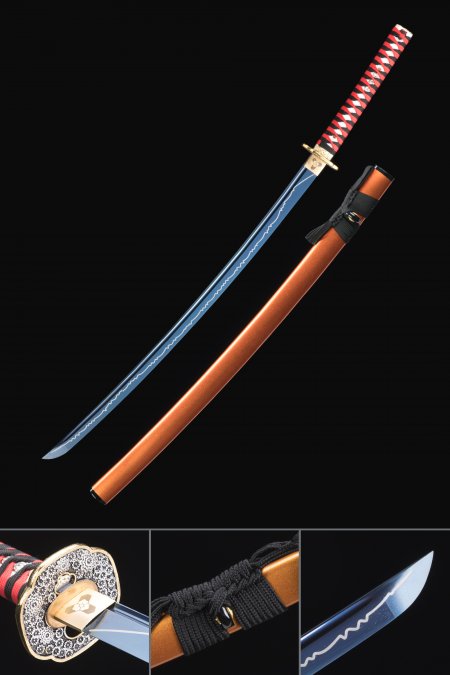
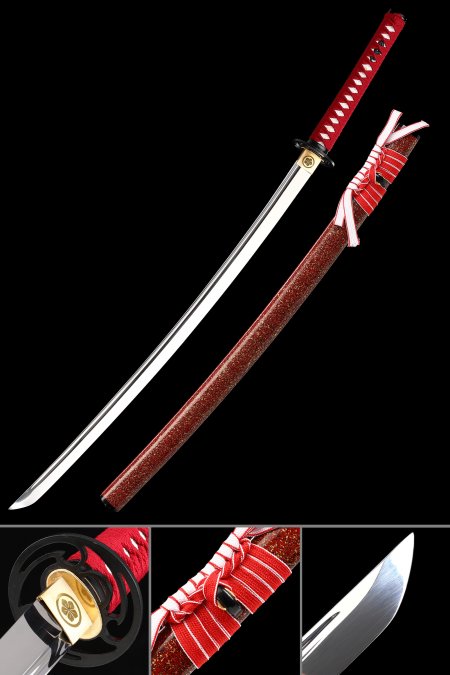
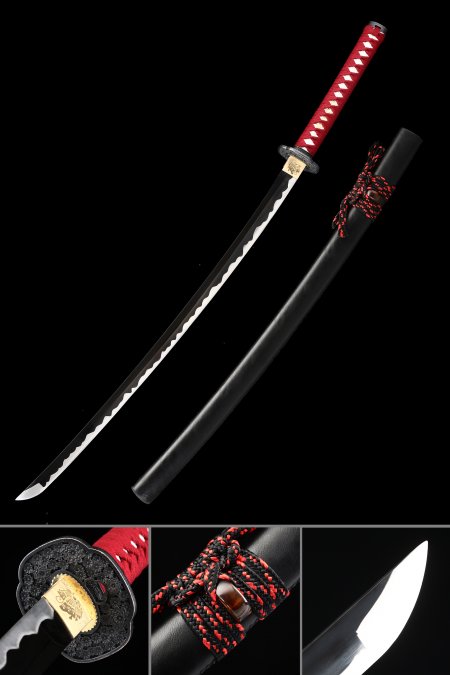
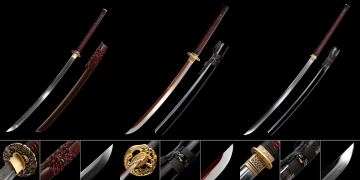
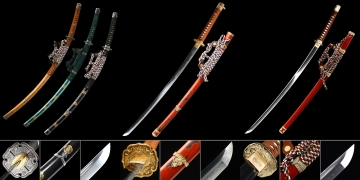
The ito wrap — the braided cord wound around a katana's handle — carries both aesthetic and cultural significance. Red and white together represent one of Japan's most recognized symbolic pairings, evoking purity and vitality in traditional contexts. On a display katana, this color combination is chosen for its bold visual contrast and its nod to classical Japanese ceremonial aesthetics. The wrap itself is applied over rayskin (same) in a diagonal crossing pattern that creates consistent diamond shapes along the length of the tsuka. A well-executed red-white wrap is evaluated by collectors for evenness of tension, spacing between diamonds, and how cleanly the ito terminates at the fuchi and kashira fittings.
What is the difference between 1095 carbon steel and manganese steel blades?
Both 1095 carbon steel and manganese steel are commonly used in display and collectible katana, but they have distinct characteristics worth understanding. 1095 is a high-carbon steel with roughly 0.95% carbon content, known for producing a visible hamon — the temper line along the blade — when differentially hardened. This makes it a favorite among collectors who value authentic surface detail and traditional blade aesthetics. Manganese steel, by contrast, contains added manganese for increased toughness and resistance to surface wear, and typically presents with a smoother, more uniform finish. It does not naturally produce a hamon through differential hardening. For display purposes, both perform well; the choice often comes down to whether you prioritize the visual authenticity of a hamon or the low-maintenance appearance of manganese steel.
How should I display a red-white handle katana at home?
A horizontal katana stand is the most traditional display format, positioning the blade edge-down in the classical Japanese style. For a red-white handle piece, consider the background — dark wall finishes or neutral wood tones tend to let the handle colors stand out without visual competition. Avoid placing your display katana in direct sunlight for extended periods, as UV exposure can fade dyed ito over time and may affect lacquered saya finishes. Glass-front display cases offer both visibility and protection from dust accumulation on the braid. If displaying multiple pieces together, mixing handle colors intentionally — such as pairing a red-white tsuka with a solid black handle — creates visual rhythm across a collection wall.
How do I maintain the ito wrap and saya on a display katana?
The ito braid on a display katana requires minimal but consistent care. Avoid exposing the handle to high humidity, which can cause cotton or synthetic ito to loosen, stretch, or develop mildew over time. If the wrap feels slightly loose after extended storage, this is normal with humidity cycling — simply keep the piece in a stable indoor environment. For the lacquered saya, wipe with a dry soft cloth to remove fingerprints; avoid liquid cleaners that can dull or crack the lacquer surface. The blade itself benefits from a thin coat of choji oil applied with a soft cloth every few months, especially on carbon steel variants, to prevent light surface oxidation. Always draw and sheathe slowly to protect both the blade finish and the saya interior.
Is a red-white katana a good gift for a Japanese culture enthusiast?
A red-white handle katana makes a genuinely distinctive gift for someone who appreciates Japanese aesthetics, history, or decorative arts. The color pairing is immediately recognizable and carries cultural meaning, making it more thoughtful than a generic display piece. When selecting as a gift, consider the full koshirae package — matching saya color, tsuba design, and blade finish all contribute to a cohesive presentation. A red lacquer saya paired with red-white ito and a detailed floral tsuba, for example, arrives as a complete visual statement rather than a single isolated element. These collectibles display well without requiring specialized knowledge to appreciate, which makes them accessible to enthusiasts at any stage of their collection.