
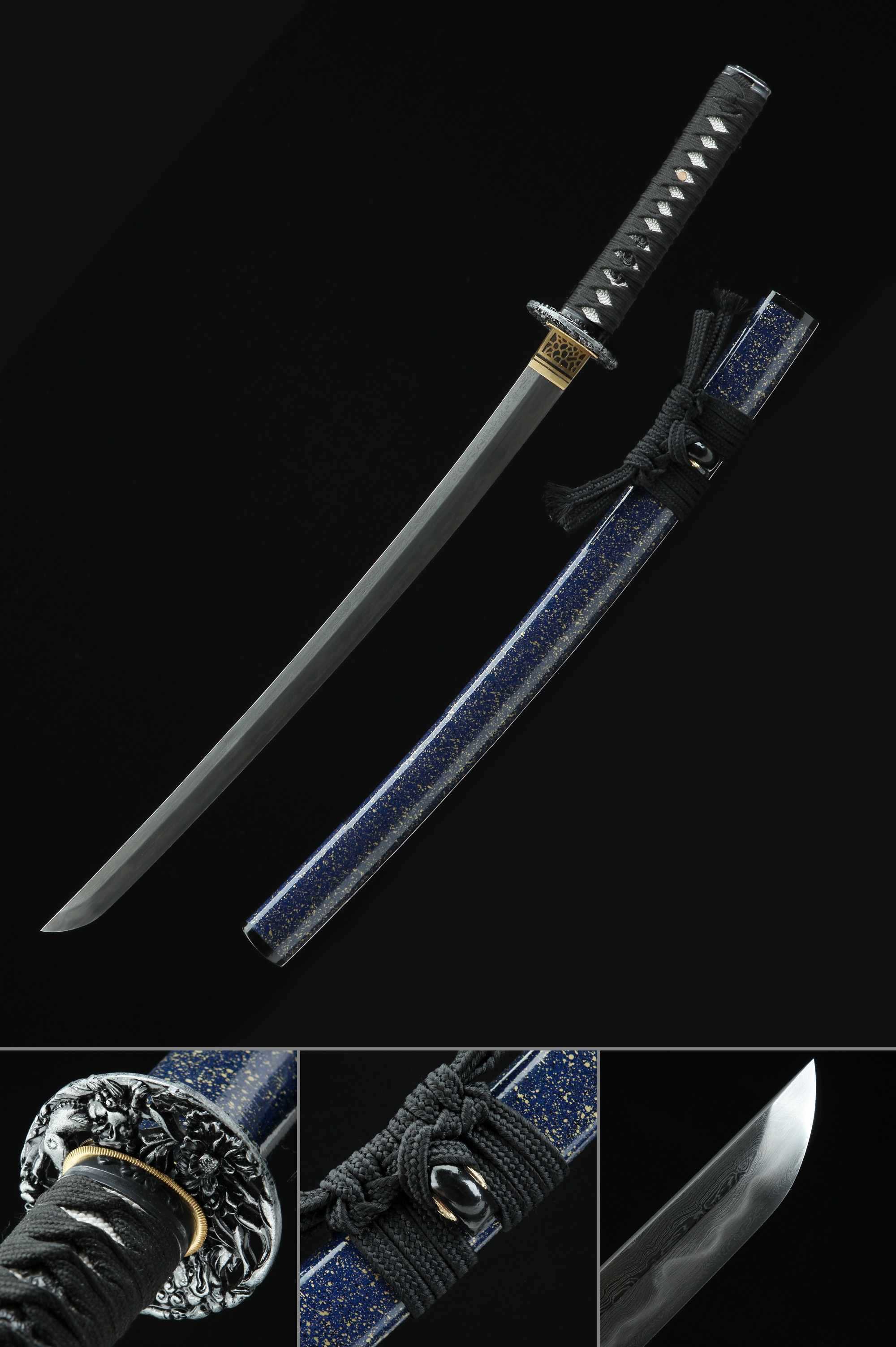
Damascus Steel Wakizashi with Real Hamon in Dark Blue Gold-Speckled Lacquer Saya - Dragon Tsuba
269.00 USD
10% OFF
Apply code: TK10OFF at the checkout page when you spend 129+
In-stock
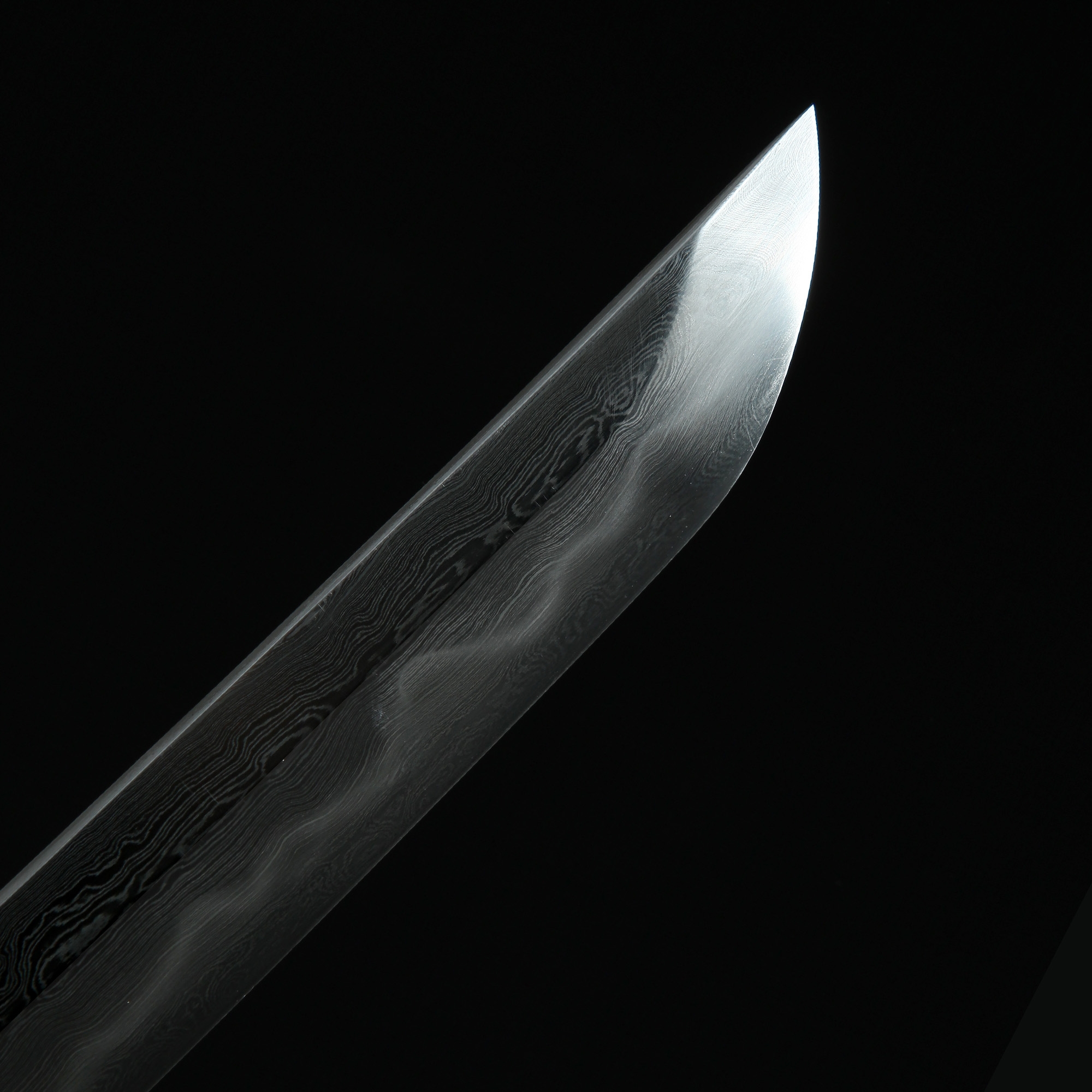
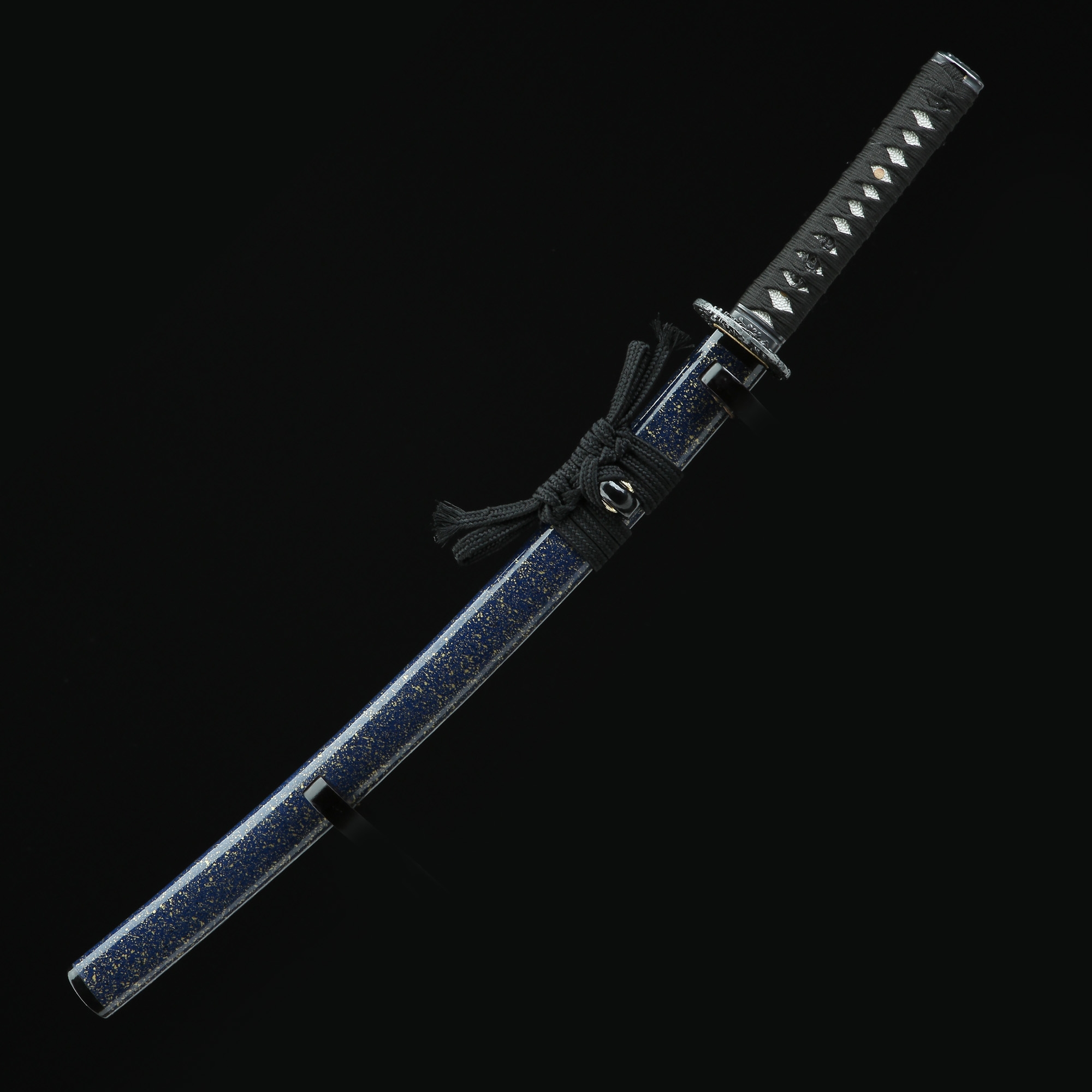
- Blade forged from folded damascus steel with a visible hamon line produced through heat treatment and oil quenching, finished by hand polishing to reveal the layered pattern across the full-tang construction.
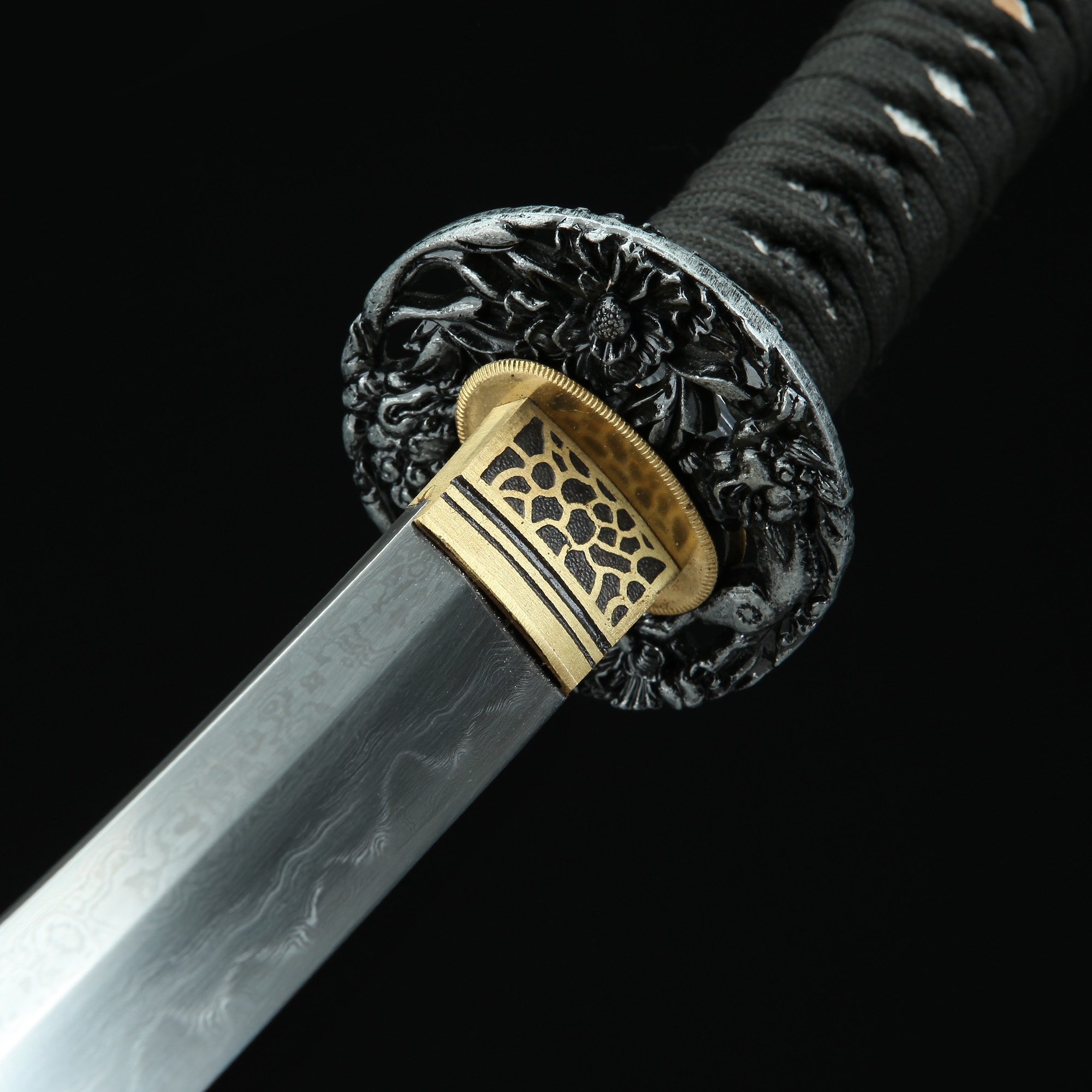
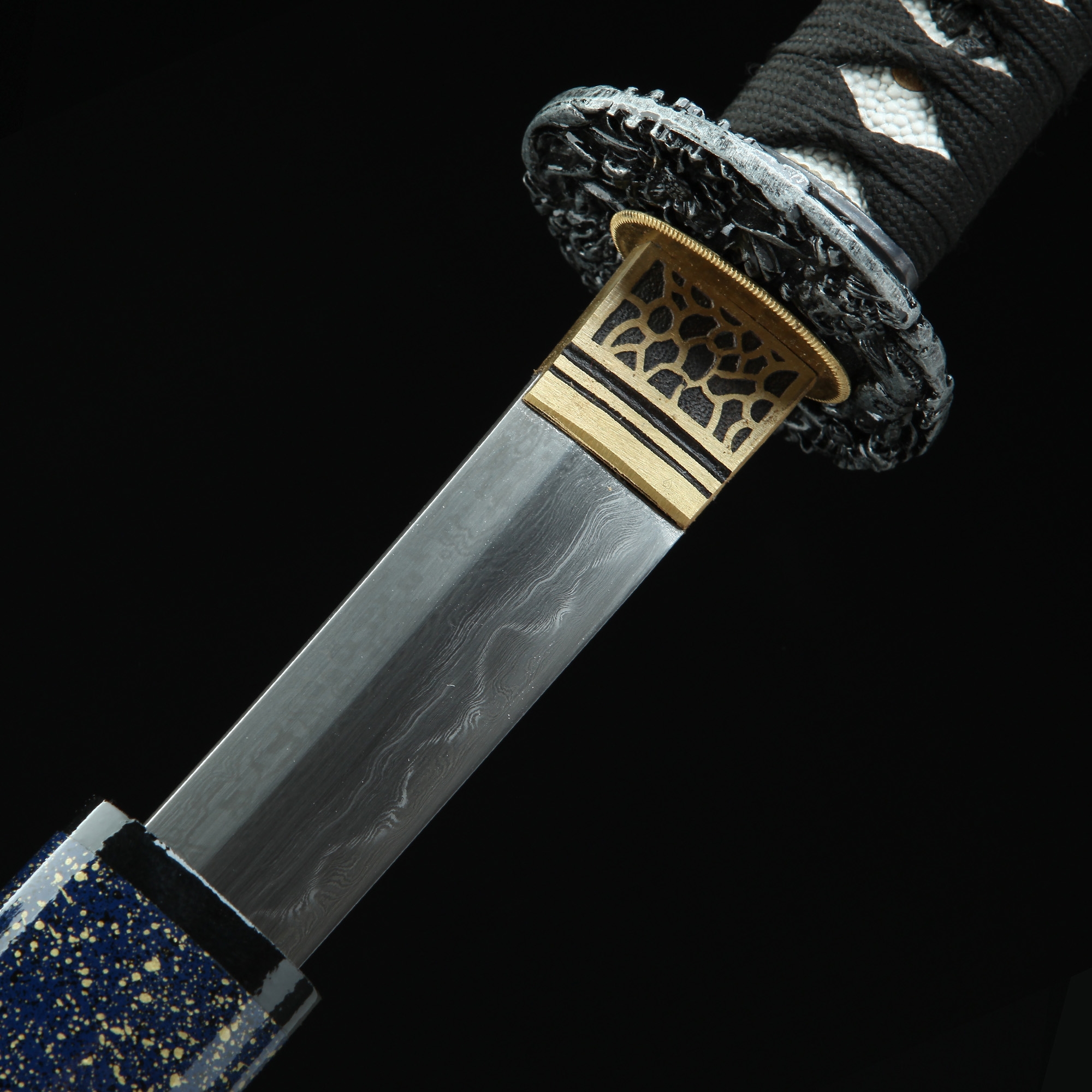
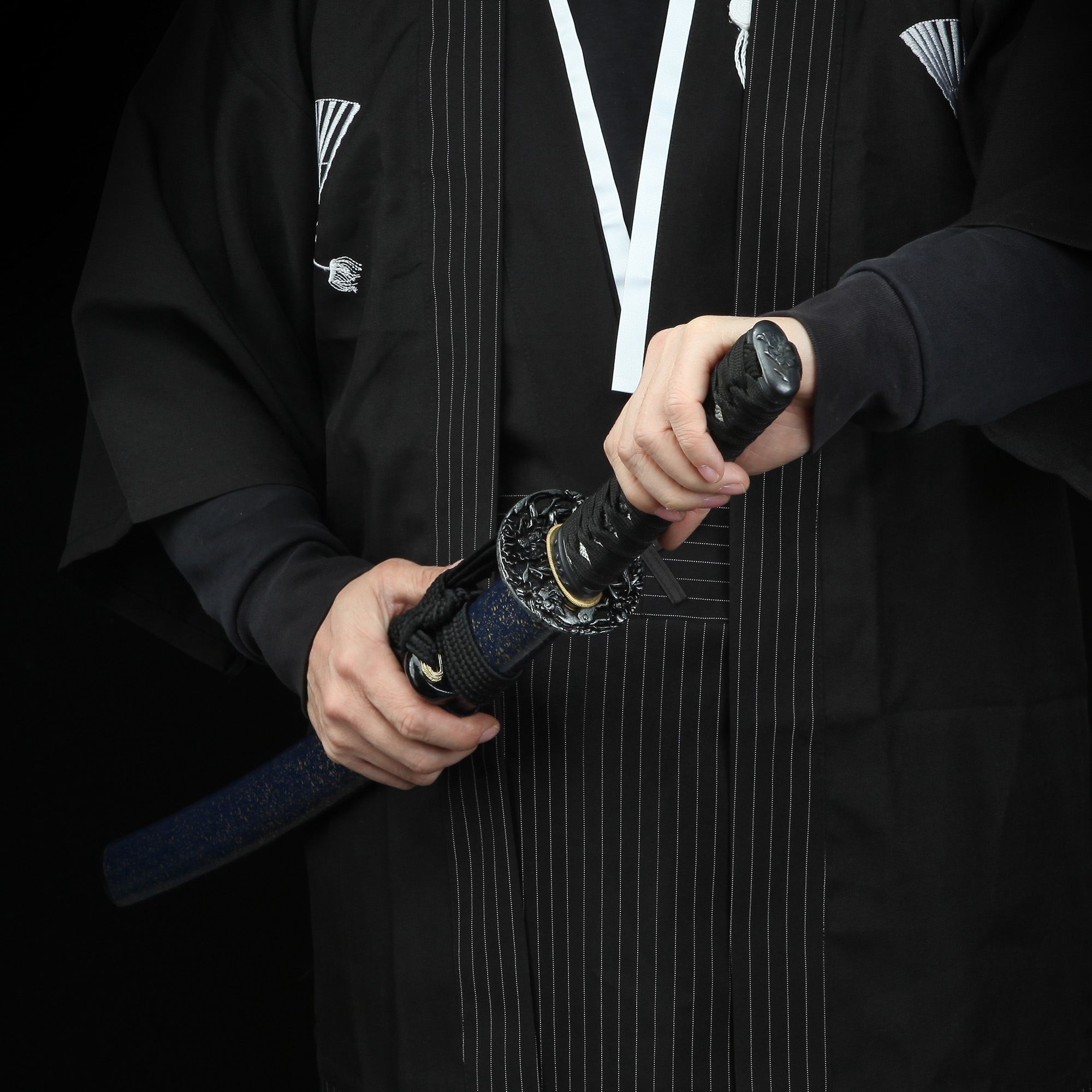
- Silver-tone dragon-themed alloy tsuba with high-relief sculpted detail; a gold-tone habaki collar bridges the guard and blade, adding a warm metallic contrast to the overall dark palette.
- Handle wrapped in black cotton ito over genuine white same (rayskin), with diamond-pattern spacing and black menuki accents secured beneath the cord - providing a firm, traditional grip feel.
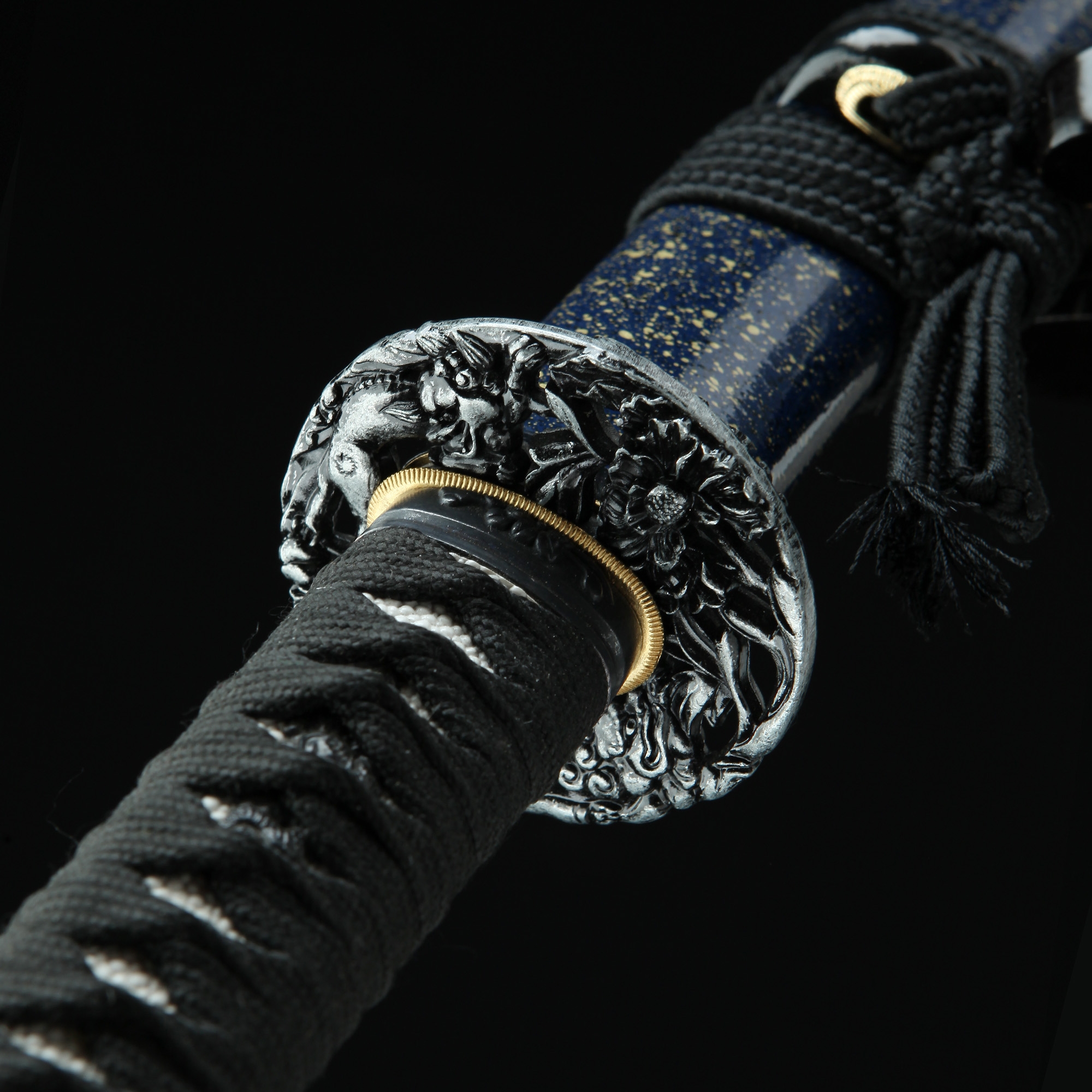
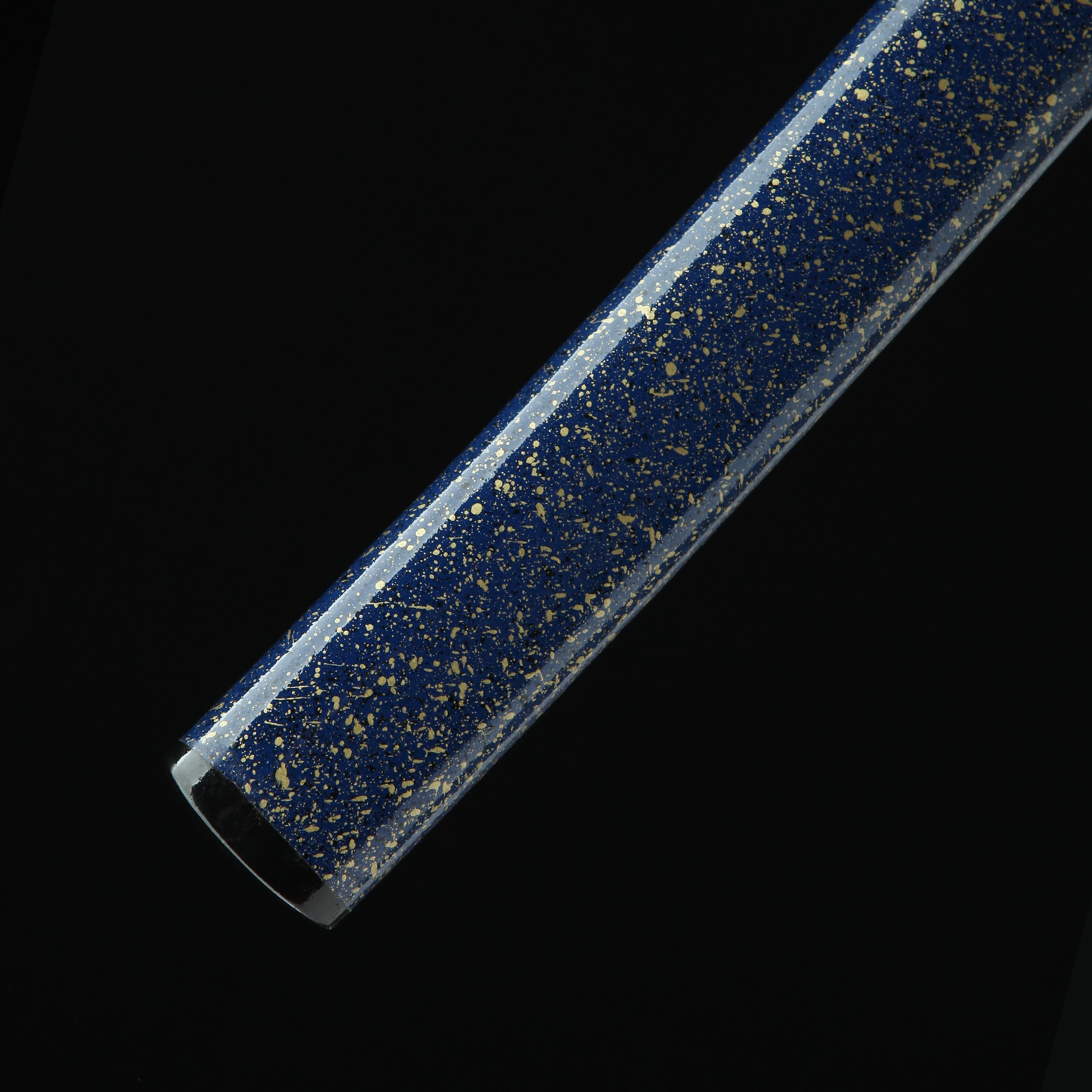
- Dark blue hardwood saya finished in natural lacquer with scattered gold speckle detail across the entire surface, paired with a black sageo cord tied at the kurikata for authentic koshirae presentation.
- Overall length 31 inches, weight 3 lbs; packaged in a 33 x 4 x 4 inch box at 4 lbs shipping weight. Sword stand not included.
 | Handmade by seasoned sword-smiths. |
 | Free U.S. express shipping. |
 | 30 day money back guarantee! |
 | SSL end-to-end encrypted secure payments. |
 | Trusted by 150,000+ purchased customers. |
Product Details
The blade on this wakizashi is forged from folded damascus steel, producing a layered surface pattern that becomes visible after hand polishing. Heat treatment and oil quenching generate a genuine hamon line along the edge - each sword carries a slightly unique temper line as a result of the process. The full-tang construction runs the steel continuously through the handle, keeping the assembly solid without mechanical fasteners. A gold-tone habaki collar seats flush at the base of the blade, transitioning cleanly into the guard.
The tsuba is cast from alloy in a silver tone and sculpted with a detailed dragon motif in high relief. The dragon imagery continues onto the blade itself, where an engraved dragon design runs along the flat near the tip, visible in the lower-right detail image. Together, the tsuba and blade engraving form a cohesive thematic statement without relying on added color.
The tsuka is built on a wood core wrapped in genuine white same (rayskin) and finished with black cotton ito in the traditional diamond pattern. Black menuki fittings are set beneath the cord wrap at regular intervals. The grip length and handle diameter suit a two-hand short-sword hold appropriate to wakizashi form. Explore more options in our Damascus Wakizashi collection if you want to compare blade patterns and handle configurations.
The saya is shaped from hardwood and finished in a deep blue natural lacquer with gold speckle distributed across the surface - giving the scabbard a starfield-like visual depth that photographs well against both light and dark backgrounds. A black sageo cord is threaded through the kurikata and tied in a traditional knot at the saya mouth, completing the koshirae-style presentation. If the blue finish is the primary draw, the Blue Wakizashi collection offers additional colorway variations worth comparing.
Overall length is 31 inches and the piece weighs 3 lbs. Shipping package measures 33 x 4 x 4 inches at 4 lbs. The sword stand shown in reference images is not included. This piece is suited for display, collection, and cosplay use.
- Blade forged from folded damascus steel with a visible hamon line produced through heat treatment and oil quenching, finished by hand polishing to reveal the layered pattern across the full-tang construction.
- Silver-tone dragon-themed alloy tsuba with high-relief sculpted detail; a gold-tone habaki collar bridges the guard and blade, adding a warm metallic contrast to the overall dark palette.
- Handle wrapped in black cotton ito over genuine white same (rayskin), with diamond-pattern spacing and black menuki accents secured beneath the cord - providing a firm, traditional grip feel.
- Dark blue hardwood saya finished in natural lacquer with scattered gold speckle detail across the entire surface, paired with a black sageo cord tied at the kurikata for authentic koshirae presentation.
- Overall length 31 inches, weight 3 lbs; packaged in a 33 x 4 x 4 inch box at 4 lbs shipping weight. Sword stand not included.
Specification
| Item Number | TK-JP-XY20088 |
|---|---|
| Primary Color | Blue |
| Primary Material | Damascus Steel |
| Saya Color | Dark Blue |
| Saya Material | Hardwood Lacquer |
| Tsuka Color | Black |
| Nagasa Color | Chrome |
| Sageo Color | Black |
| Tsuba Color | Silver |
| Tsuba Theme | Dragon |
| Nagasa Hamon | Yes |
| Blade Engraving | Dragon |
| Style | Koshirae |
| Dimensions | 31 Inches |
| Weight | 3.0 Pounds |
| Packing Size | 33 x 4 x 4 Inches |
| Shipping Weight | 4.0 Pounds |