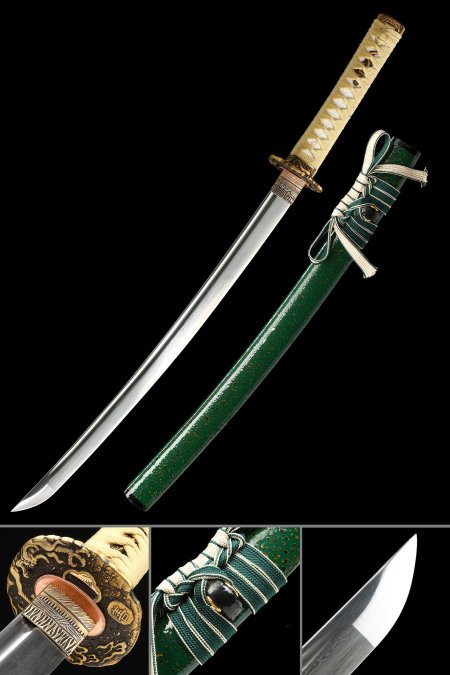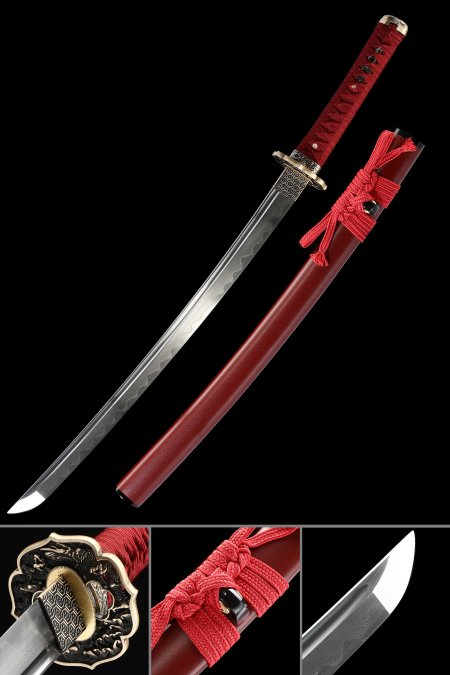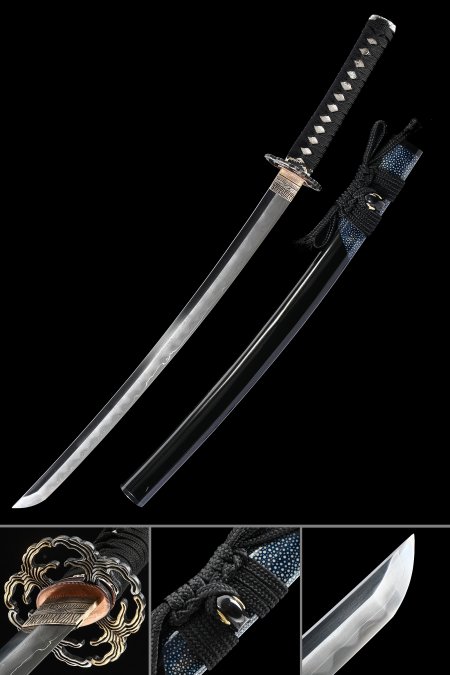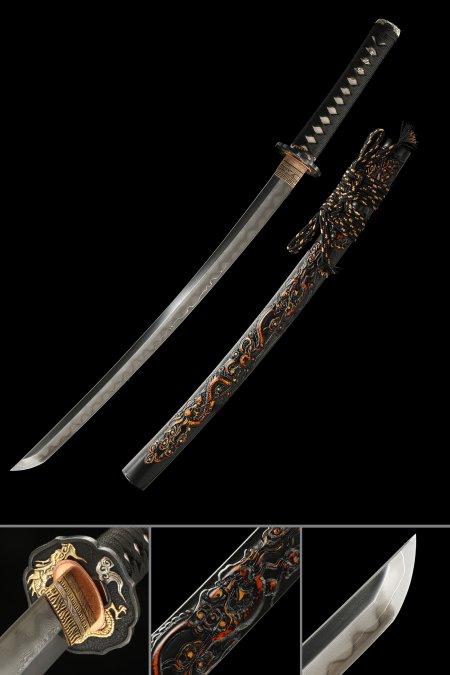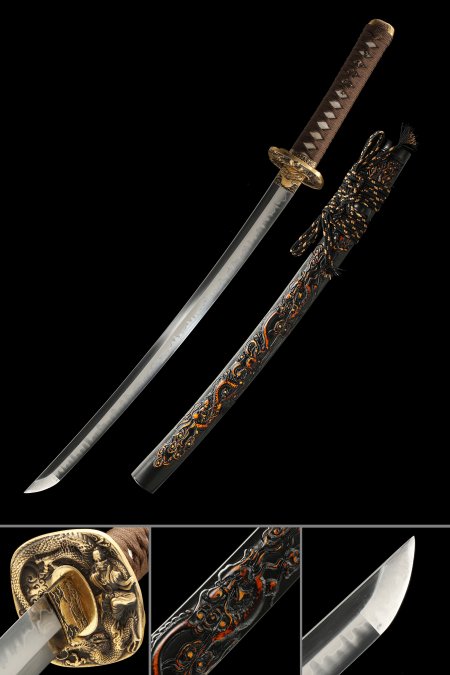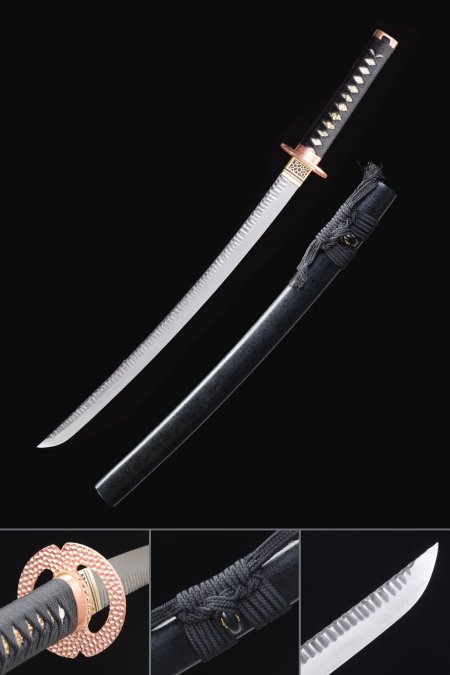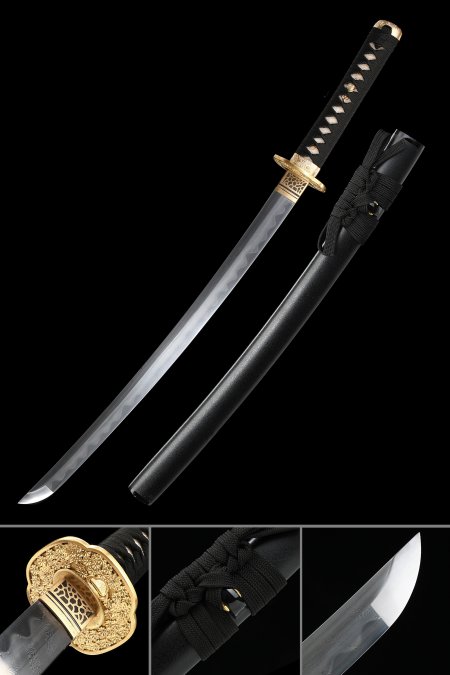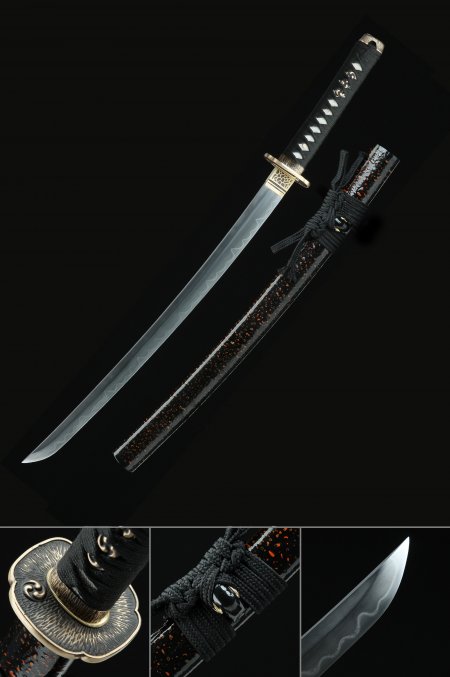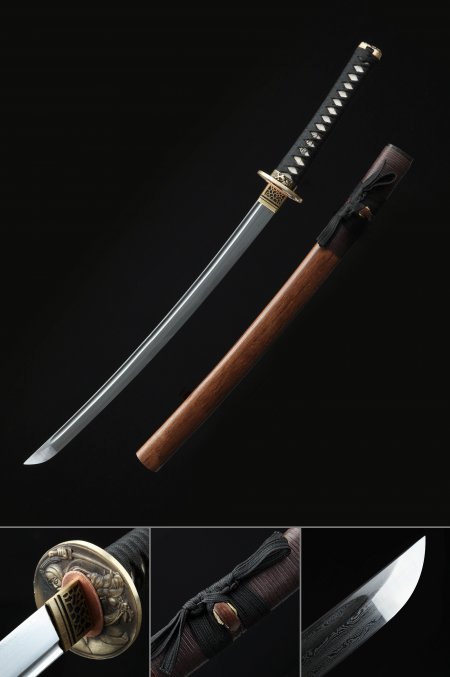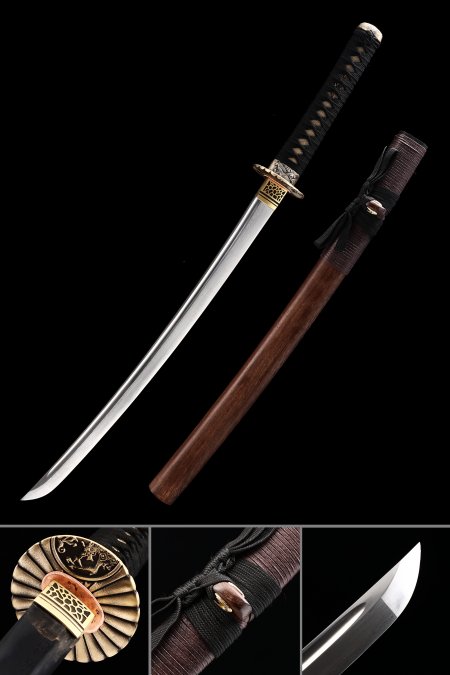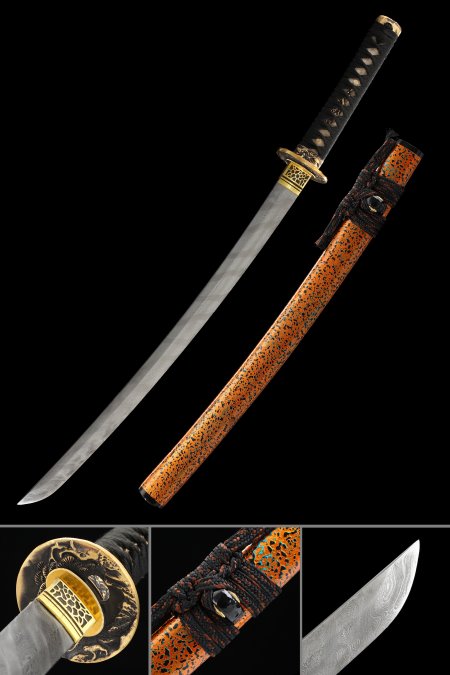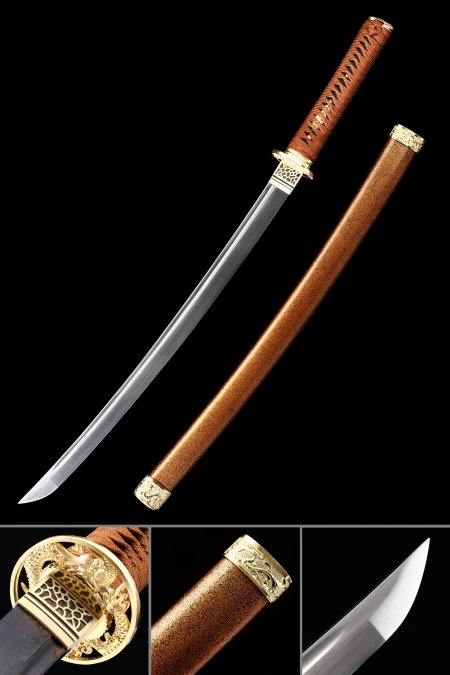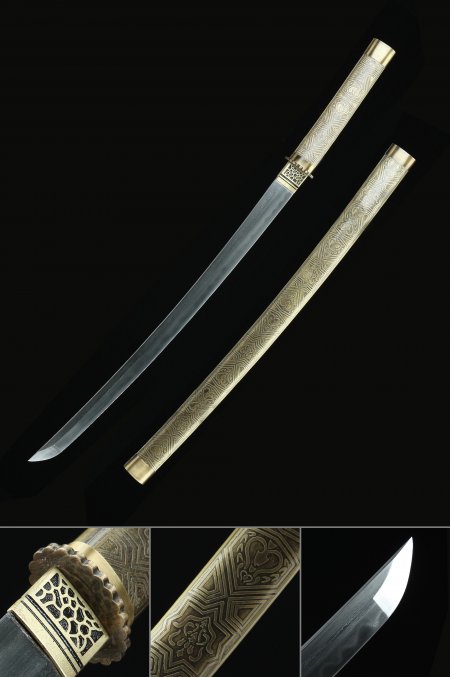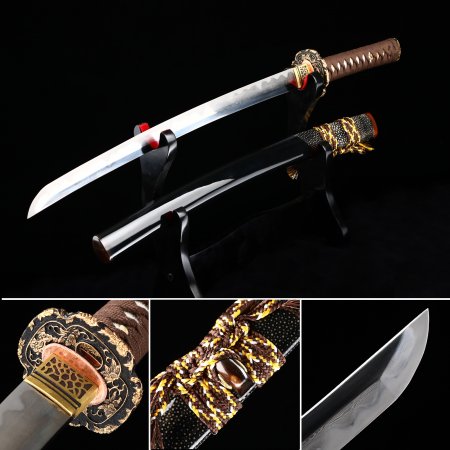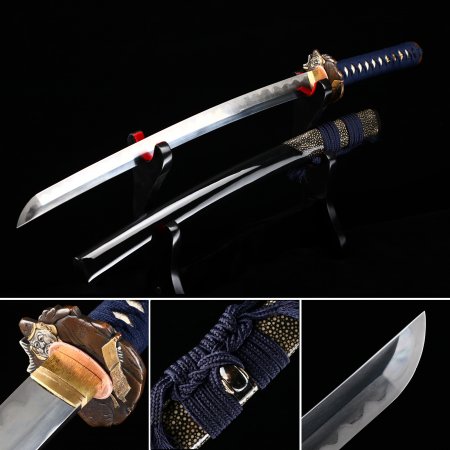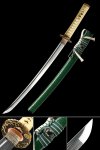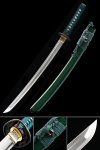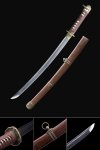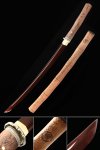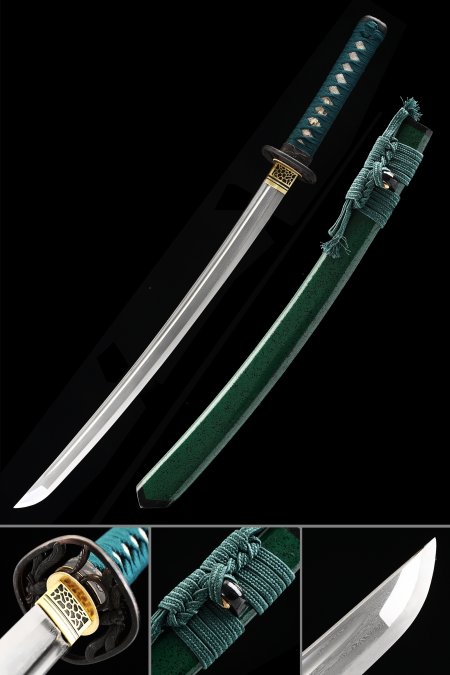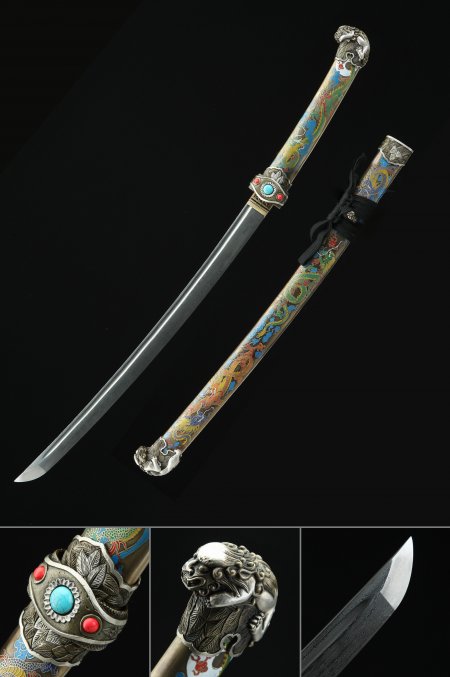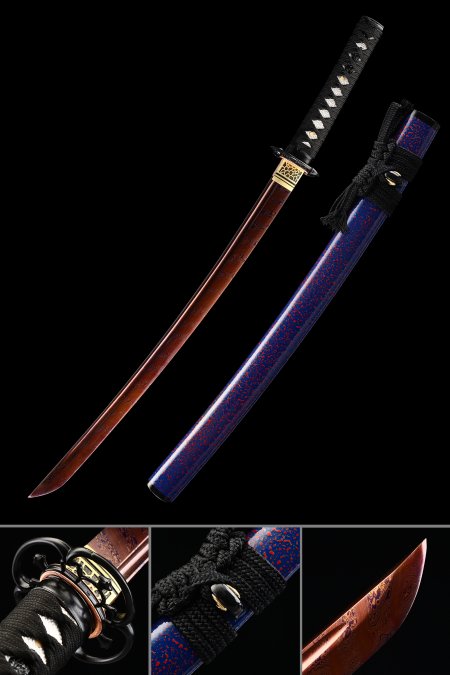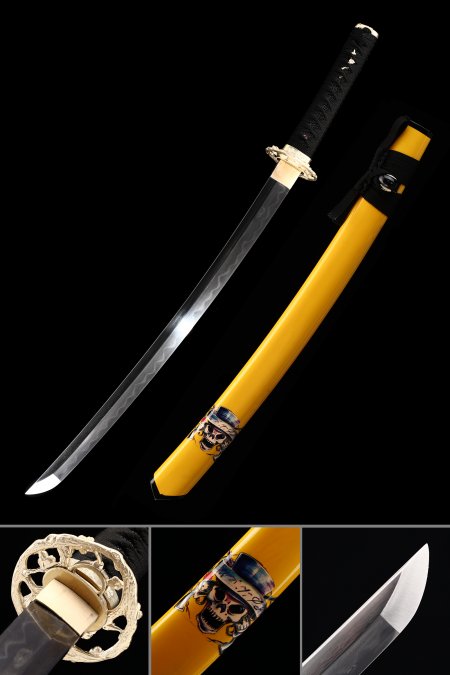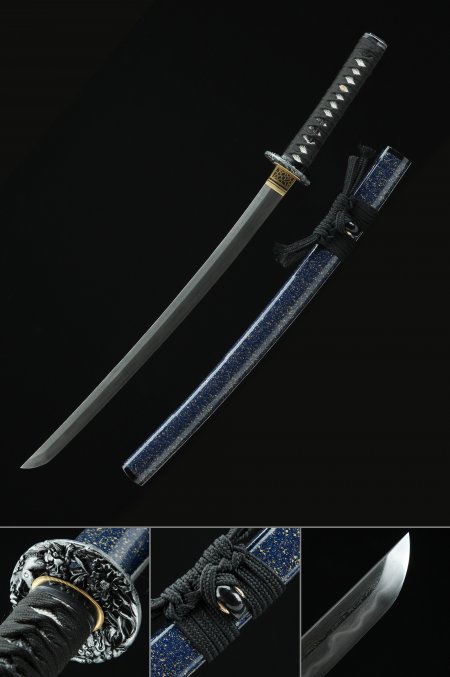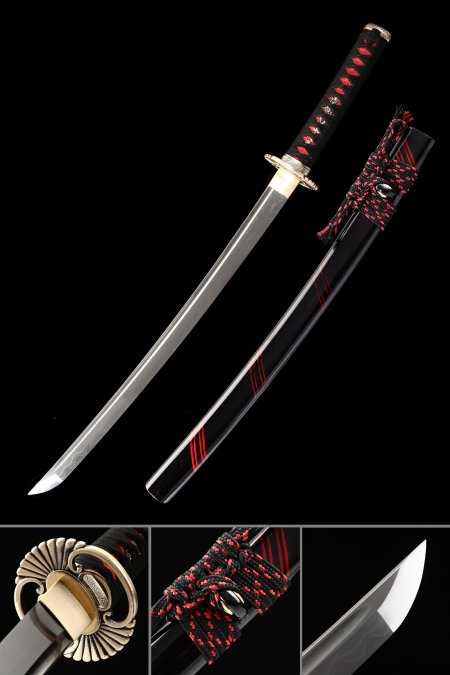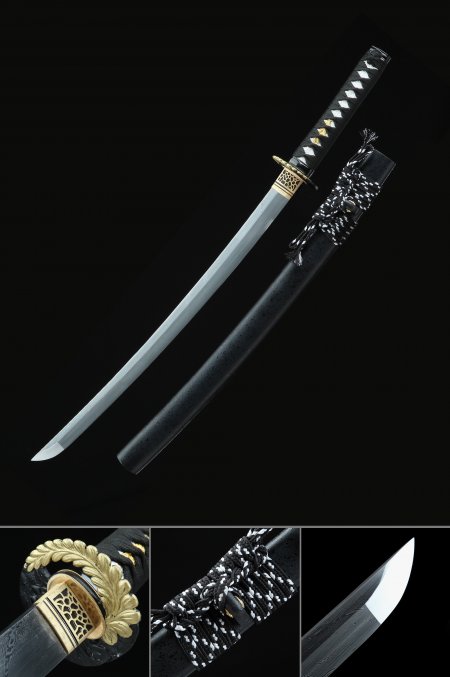
Damascus Wakizashi

Discover our collection of hand-forged Damascus wakizashi swords - Japanese companion blades crafted in fold-forged Damascus steel, where each blade's layered construction produces flowing surface patterns that make every piece genuinely unique. These collectibles bring together the intimate scale and historical significance of the wakizashi with the unmistakable visual complexity of Damascus steel, creating display pieces that reward both close inspection and display from across the room. Free US shipping and hassle-free returns are included on every order.
Showing 25 Products

Related Collections

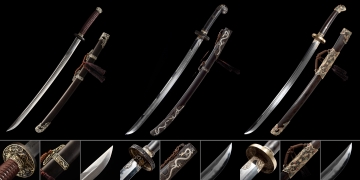
Damascus Odachi13 items


21 Reviews

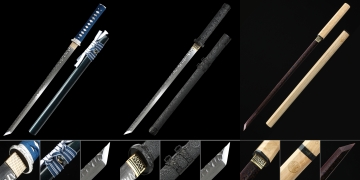
Damascus Ninjato19 items


19 Reviews

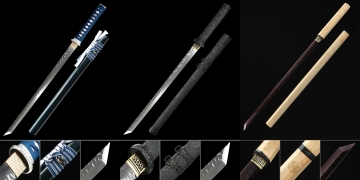
Damascus Chokuto19 items


19 Reviews

Damascus Broadsword7 items


1 Reviews

Frequently Asked Questions

What creates the unique surface patterns on a Damascus wakizashi blade?
Damascus steel is produced through a forge-folding process where multiple layers of steel are repeatedly folded and forge-welded together, creating a billet with hundreds of microscopic layers. After the blade is forged, ground, and polished to its final geometry, it undergoes acid etching - a step where the surface is treated with a mild acid solution that reacts differently with the high and low carbon layers within the folded steel. The differential reaction darkens the higher-carbon areas relative to the lower-carbon ones, revealing the flowing wave-like surface patterns that are Damascus steel's defining visual characteristic. Because the folding process introduces random variation at each stage - the exact fold geometry, the temperature distribution, the specific sequence of forming passes - no two Damascus blades produce identical surface patterns. This means every Damascus wakizashi is genuinely unique as a physical object, a characteristic that is particularly appealing to collectors who value individuality in their display pieces.
Are Damascus wakizashi swords suitable as display pieces for home collections?
Damascus wakizashi are excellent display pieces and are among the most visually rewarding Japanese sword collectibles precisely because of the surface patterning that Damascus steel produces. The wakizashi format - overall lengths of 20 to 28 inches with a blade of 13 to 20 inches - gives the Damascus patterning a substantial canvas to develop across while keeping the piece compact enough to display comfortably in most home environments. The curved blade surface of a wakizashi creates an interesting interaction with the Damascus layering: the pattern flows along the curvature of the blade edge and is visible from different angles as the light source changes. For wall display, a horizontal two-peg rack holds the blade and scabbard together and allows the Damascus patterning to be appreciated from across the room. Up close, the detail of the layering repays careful inspection in a way that single-finish steel blades do not. These pieces are positioned and sold as collectible display items, not for practical use.
How does a Damascus wakizashi compare to a standard carbon steel wakizashi?
Damascus wakizashi and standard carbon steel wakizashi differ primarily in blade material and the surface character that material produces. A standard carbon steel wakizashi - in grades like 1045, 1060, or 1095 - features a blade with a uniform polished or treated surface whose visual interest comes from the overall geometry and fit of the piece, and in some cases from a hamon temper line if the blade has been differentially heat-treated. A Damascus wakizashi features a blade forged from fold-welded layered steel whose surface, after acid etching, shows flowing water-like patterns that vary across the full blade face. This patterning makes each Damascus piece visually distinctive in a way that single-steel blades cannot replicate. In terms of structural construction, both types feature full-tang builds and proper heat treatment - the difference is in surface character and visual complexity rather than in fundamental construction approach. Damascus wakizashi typically carry a higher price point than equivalent carbon steel pieces, reflecting the additional labor involved in the fold-forging process.
How do I care for a Damascus wakizashi to preserve the blade pattern?
Caring for a Damascus wakizashi requires the same core routine as any high-carbon steel Japanese sword collectible, with particular attention to the etched blade surface. The acid-etching process that reveals the Damascus pattern leaves the blade surface slightly more textured and porous than a standard polished blade, which means it can interact with moisture more readily. After every handling session, wipe the full blade with a soft, dry lint-free cloth to remove fingerprints promptly. Apply a thin coat of camellia oil or quality mineral oil using a clean cloth and buff away any excess - this protects the steel and helps preserve the visual contrast of the Damascus pattern over time. Avoid abrasive cloths or polishing compounds, which can wear down the etched surface and reduce the pattern's visual clarity. Store the wakizashi on an open display rack or in its scabbard in a stable, low-humidity room. Avoid sealed plastic storage cases, which trap moisture against the blade. With this routine maintained consistently, the Damascus surface will retain its pattern clarity and visual character for many years of display use.

Customer Reviews

Joseph Evans Virginia, United States

The wakizashi that I received was absolutely gorgeous! The blade, handle, scabbard, and every detail was second to none…oh and it’s sharp as heck too, so don’t go fooling around or you’ll be admiring one of these beautiful weapons from the emergency room. This is my second time ordering from TrueKatana and both times it has been a home run! Love it!
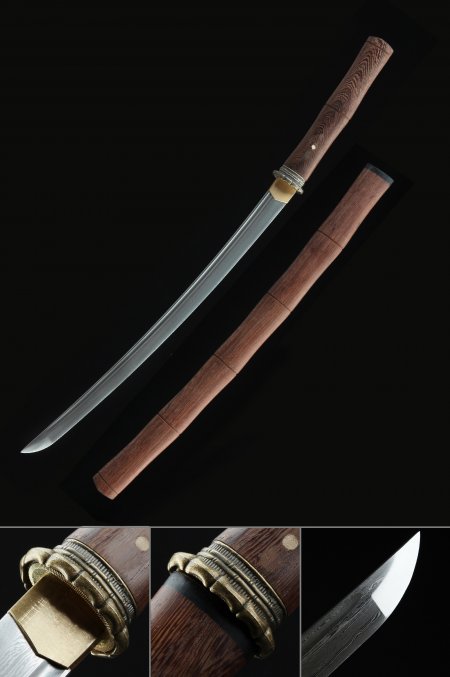
Damascus Steel Wakizashi with Rosewood Saya - Dragon Copper Tsuba, Black Ito, 21.25 Damascus Steel Wakizashi with Rosewood Saya - Dragon Copper Tsuba, Black Ito, 21.25" Blade