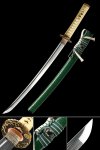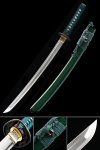
Green Damascus Steel Wakizashi

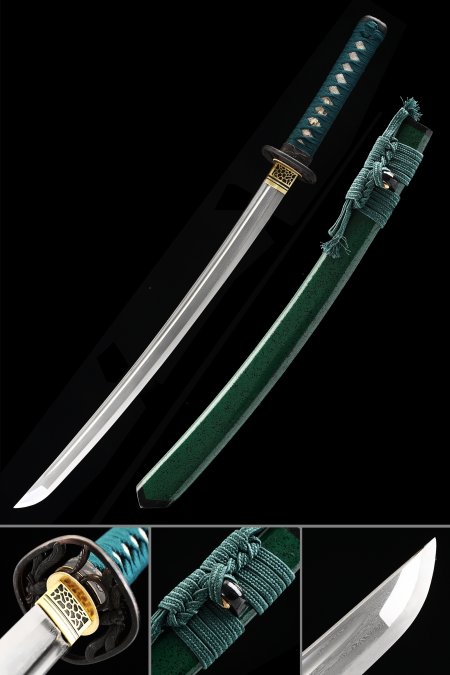
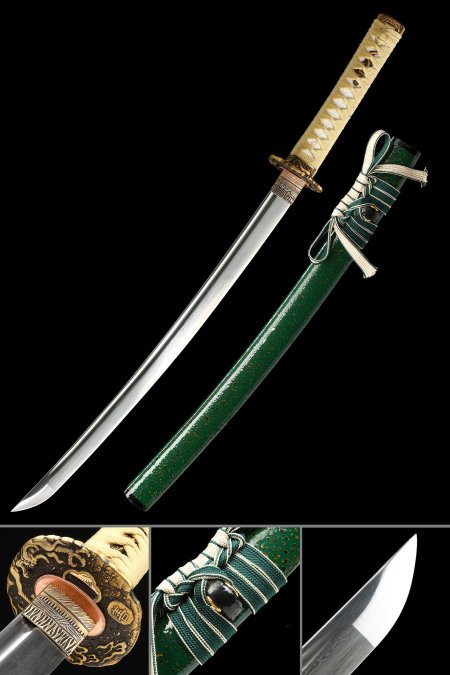
Green Damascus Steel Wakizashi swords bring together the mesmerizing fold-pattern aesthetics of Damascus steel and the refined proportions of the traditional Japanese short sword - a pairing that rewards serious collectors and display enthusiasts alike. Each piece in this collection is hand-forged, fitted with thoughtfully matched fittings, and finished in a distinctive green lacquer saya that sets it apart on any display stand or shadow box. Enjoy free shipping on your order, plus a hassle-free return policy for complete peace of mind.

Showing 2 Products

Related Collections

Damascus Ninjato19 items


19 Reviews

Damascus Naginata4 items


3 Reviews

Damascus Chokuto19 items


19 Reviews

Damascus Broadsword7 items


1 Reviews

Frequently Asked Questions

What makes Damascus steel wakizashi blades visually unique?
Damascus steel blades are produced by folding and forge-welding multiple layers of steel together, then etching the finished blade surface with an acid solution that reacts differently to the alternating steel compositions. The result is a flowing, wave-like grain pattern - sometimes called a "ladder" or "raindrop" pattern depending on how the billet was manipulated before grinding. Because the grain forms organically during forging, no two Damascus blades carry an identical pattern. On a wakizashi specifically, the shorter blade length compresses the pattern into a tighter visual field, often making the grain appear denser and more detailed than the same layer count would look on a longer katana blade. This inherent uniqueness is a primary reason collectors prize Damascus steel pieces as display centerpieces rather than simply as examples of a particular sword type.
How does a wakizashi differ from a katana in a display collection?
The wakizashi's defining characteristic is its blade length, which traditionally falls between roughly 12 and 24 inches - shorter than a katana's typical 27-plus-inch blade but longer than a tanto. In a display context, this size difference has practical consequences: a wakizashi fits comfortably on a single-tier tabletop stand or inside a standard wall-mounted shadow box where a full katana might feel crowded. Many collectors display a wakizashi and katana as a matched daisho pair, which was the traditional pairing worn together. The wakizashi also tends to have a slightly more compact handle and tsuba, giving it proportions that feel refined and self-contained rather than imposing - a different but equally valid aesthetic from the katana's commanding length.
Why is a green lacquer saya considered a distinctive collector choice?
In traditional Japanese sword mounting, black lacquer saya were by far the most common finish, with red and brown appearing occasionally on formal or high-status mountings. Deep green lacquer was comparatively rare, which is part of what gives green-mounted pieces a visually distinctive presence in a display collection dominated by black-saya pieces. From a design standpoint, green lacquer creates natural complementary contrast with copper or brass tsuba hardware, and it pairs well with both beige and darker ito wrapping colors. Collectors who think about their display as a curated set - rather than a random accumulation - often deliberately include one or two color-accent pieces to prevent visual monotony on a multi-sword display rack.
How should I maintain a Damascus steel wakizashi kept on display?
The primary maintenance task for a displayed Damascus steel blade is preventing surface oxidation. Apply a thin, even coat of choji oil or a comparable mineral-based blade oil to the entire blade surface every two to three months, or more frequently in humid climates. Use a soft, lint-free cloth and work in the direction of the grain rather than across it. When handling the blade for oiling, always wear cotton gloves - fingerprint acids accelerate surface spotting on patterned steel. The green lacquer saya should be stored separately from the blade during long-term display to prevent the interior wood lining from trapping moisture against the steel. Keep the display away from direct sunlight, which can fade lacquer finishes and dry out the handle ito over time.
Is a Damascus wakizashi a good gift for a Japanese sword enthusiast?
A Damascus steel wakizashi makes a particularly thoughtful gift for a collector precisely because it offers something visually distinctive that a standard high-carbon blade does not - the unrepeatable grain pattern means the recipient owns a genuinely one-of-a-kind object. The wakizashi's compact size also makes it easier to display in a home or office setting compared to a full-length katana, lowering the barrier for someone who is newer to collecting. Pieces with matched fittings - such as a dragon tsuba paired with a coordinated handle wrap and green lacquer saya - signal that design intention went into the object, which experienced collectors recognize and appreciate. For gifting, selecting a piece with a complete, cohesive mounting style is generally more meaningful than choosing on blade length or layer count alone.

Customer Reviews

Bobby Spencer North Caro, United States

Everything is good and tight but the bottom of the handle is a little loose and the blade could be a little sharper, but overall I like it a lot and you get what you pay for so get something in mind for yourself if you want something better, but it's a different sword than the katana and shorter movements or easier to move. The handle is good and tight but there is a little gap on one side of the handle that looks rushed to be finished and also the bottom butt of the handle is loose. Over all I think it's great for what it's worth

Damascus Steel Wakizashi with Green Lacquer Saya - Teal Cord Handle, Copper Tsuba, 20.47 Damascus Steel Wakizashi with Green Lacquer Saya - Teal Cord Handle, Copper Tsuba, 20.47" Blade