Blue Handle Tanto
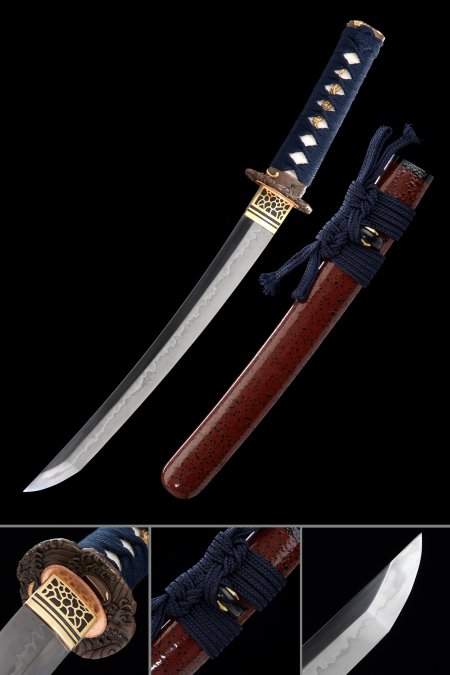
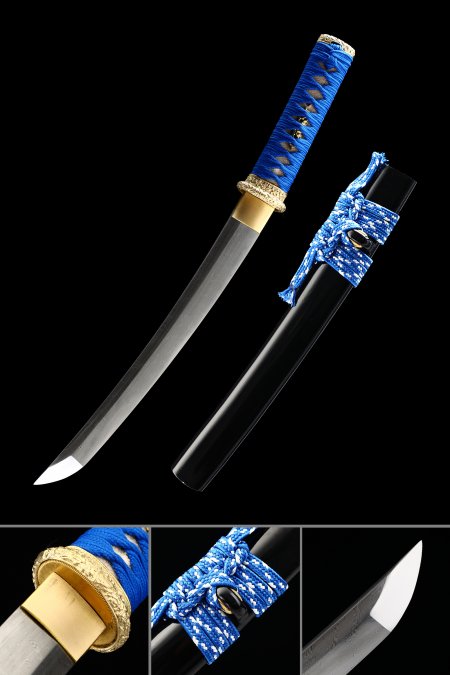
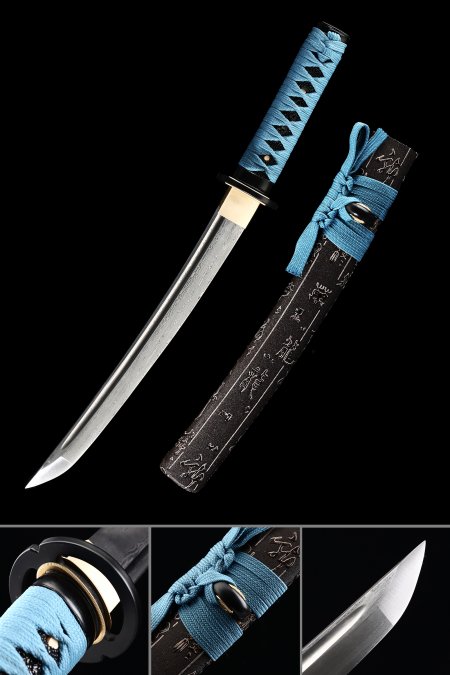
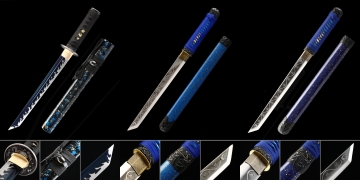
Blue handle tanto blades bring together the refined silhouette of traditional Japanese short swords and the striking visual contrast of deep-hued ito wrap. Each piece in this collection is hand-assembled with attention to authentic construction details - from the cord wrapping pattern to the fitted saya - making them compelling additions to any serious display. Free standard shipping on all orders, with hassle-free returns to ensure your collecting experience is seamless.
Related Collections
Frequently Asked Questions
What does the blue ito wrap on a tanto actually consist of?
Ito refers to the cord used to wrap the tsuka, or handle, of a Japanese short sword. On the pieces in this collection, the blue ito is wound in a traditional figure-eight pattern over a layer of same-gawa - the textured ray skin that covers the wooden handle core. The wrapping is not decorative in origin; it compresses the underlying materials into a cohesive assembly and creates the evenly spaced diamond-shaped openings that collectors recognize as the hallmark of proper tsuka construction. The color and material of the ito work together with the tsuba and saya finish to establish the overall aesthetic of the mounted blade.
How does T10 carbon steel differ from pattern-welded steel in a tanto?
T10 is a high-carbon tool steel with a small amount of tungsten, which contributes to edge retention and allows the blade to hold a well-defined hamon when clay tempered. The surface of a T10 tanto is typically polished to highlight the temper line rather than the steel's internal grain. Pattern-welded construction, by contrast, combines multiple steel types through forge-welding and repeated working, producing the layered surface grain that flows visually across the blade. A T10 tanto emphasizes the drama of the hamon; a pattern-welded tanto emphasizes the complexity of the steel itself. Both are legitimate collecting focuses with different visual priorities.
Is a tanto with a black lacquer saya harder to maintain than other finishes?
Black lacquered saya are among the most traditional finishes in Japanese sword mountings and are generally straightforward to maintain when handled with basic care. The lacquer surface should be wiped with a soft, dry cloth rather than damp materials, as prolonged moisture exposure can cause the finish to cloud or lift at seams over time. Avoid storing the saya in direct sunlight, which can fade and crack lacquer regardless of color. When the blade is stored inside the saya for extended periods, a light coat of blade oil on the carbon steel surface prevents condensation-related oxidation. The lacquer itself does not require periodic refinishing under normal indoor display conditions.
Can a blue handle tanto work as a display piece alongside longer swords?
Tanto pair naturally with katana and wakizashi on multi-tier display stands, and the blue ito theme can be coordinated across blade lengths if other pieces in your collection share the same handle color family. In Japanese tradition, the tanto completed a formal three-piece daisho-adjacent grouping, so displaying it alongside longer blades has clear historical precedent. The shorter profile of a tanto also makes it useful as a foreground element in a wall or shelf arrangement, allowing the longer blades behind it to read as a backdrop. A dedicated display stand sized for tanto keeps the piece at the correct angle without improvised supports.
What should I look for in a tanto's kanji-engraved saya as a collector?
Kanji engravings on a saya are evaluated on the quality of the carving itself - the depth and consistency of the cut, the accuracy of the characters, and whether the engraving was done before or after lacquering. Pre-lacquer engraving typically results in cleaner edges where the finish follows the carved contour. Post-lacquer engraving can sometimes show chipping at the edges of the characters under magnification. The content of the kanji also carries meaning for collectors who can read them; phrases referencing virtue, nature, or classic poetic imagery are historically consistent with traditional sword culture, while purely decorative arrangements may indicate a more contemporary design approach.