Brown 1060 Carbon Steel Ninjato
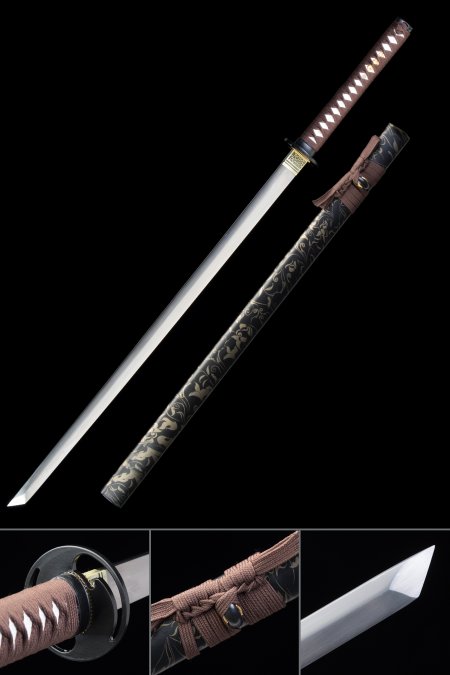
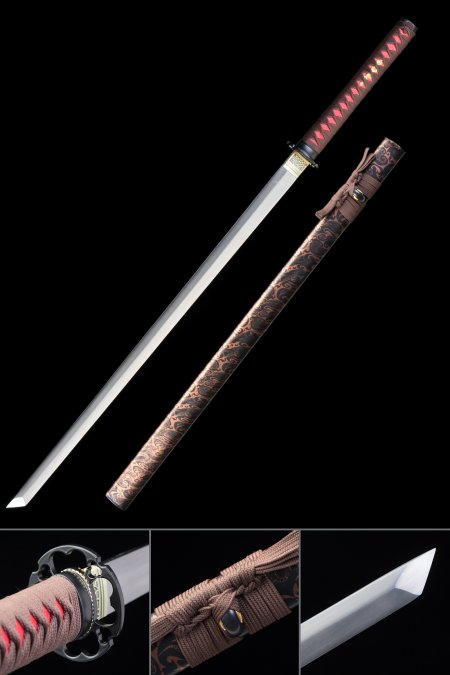
The Brown 1060 Carbon Steel Ninjato collection brings together straight-bladed Japanese swords crafted from 1060 medium-high carbon steel - a grade prized for its balance of edge retention and resilience under real-world handling. Each piece features hand-wrapped brown tsuka and artisan-finished saya, making them as visually compelling on a display stand as they are meaningful to a serious collector. Explore the collection and enjoy free shipping on every order, backed by our hassle-free return policy.
Related Collections
Frequently Asked Questions
What makes 1060 carbon steel a good choice for a ninjato?
1060 carbon steel sits at a practical midpoint in the carbon-steel spectrum. Its roughly 0.60% carbon content allows the blade to be heat-treated to a hardness that holds a well-finished edge without becoming brittle enough to chip under normal handling. For a straight-bladed collectible that will be displayed, mounted, and periodically handled, this grade offers a forgiving balance that harder steels like 1095 or T10 do not always provide. The result is a blade that polishes to a clean finish, shows good grain structure along the hamon (temper line), and remains structurally stable over time on a display rack.
How does a ninjato differ from a chokuto as a collectible?
Both forms share a straight, single-edged blade profile, but their historical framing separates them meaningfully for collectors. The chokuto is an ancient form predating Japan's iconic curved blades, with origins tracing back to continental Asian sword traditions of the Nara period and earlier. The ninjato, by contrast, is associated with the covert operatives of Japan's feudal era and carries a distinct cultural identity in sword history. On the display wall, they look similar in silhouette, but the fittings, saya style, and decorative language of each type typically reflect their different historical contexts - giving collectors a reason to own both forms.
Does the brown ito wrap affect how the sword is displayed?
Absolutely, and in a positive way. Brown ito cord creates a warm, earthy tone that complements both dark lacquer saya and natural wood display stands. Unlike synthetic wraps that can look flat under room lighting, traditionally applied ito over same (ray skin) produces a subtle three-dimensional texture - the diamond pattern casts small shadows that give the tsuka visual depth from across a room. The menuki ornaments positioned beneath the wrap add further focal points. When paired with a dragon-patterned or floral-lacquered saya, the brown tsuka creates a cohesive tonal palette that reads as intentional and refined rather than mismatched.
How should I store a carbon steel ninjato to prevent rust?
Carbon steel requires more active care than stainless, but the routine is simple. Apply a thin coat of choji oil or food-grade mineral oil to the blade every two to three months - more frequently if you live in a humid or coastal environment. Before sheathing the blade in its saya, ensure both surfaces are dry; moisture trapped between blade and saya is the most common source of patina progressing into active rust. For open display, keep the piece away from direct sunlight, heating vents, and kitchens. A horizontal wall mount or a padded display stand that supports the blade without contact points along the edge is ideal for long-term preservation of both the steel finish and the lacquer saya.
Is a full-tang construction important for a display ninjato?
Yes - full-tang construction means the blade's steel extends completely through the handle rather than terminating at a short stub (rat-tail tang). For a wall-mounted or stand-displayed piece, this matters because it eliminates the risk of the blade loosening from the handle over years of environmental cycling (humidity and temperature changes cause materials to expand and contract). A full-tang ninjato remains structurally stable on a horizontal display rack indefinitely, whereas partial-tang construction can develop subtle wobble over time. For collectors who take down their pieces regularly to examine or photograph them, full-tang assembly also simply feels more solid and substantial in hand.
Customer Reviews
Bryan Eliseo Gutierrez Arriaza
Connecticut, United States
The sheath was broken on arrival but that’s okay the sword was beautiful
 |
Chokuto Sword 1060 Carbon Steel - Brown-Red Cord Handle, Dragon Patterned Brown Saya |