What makes a chokuto different from a katana?
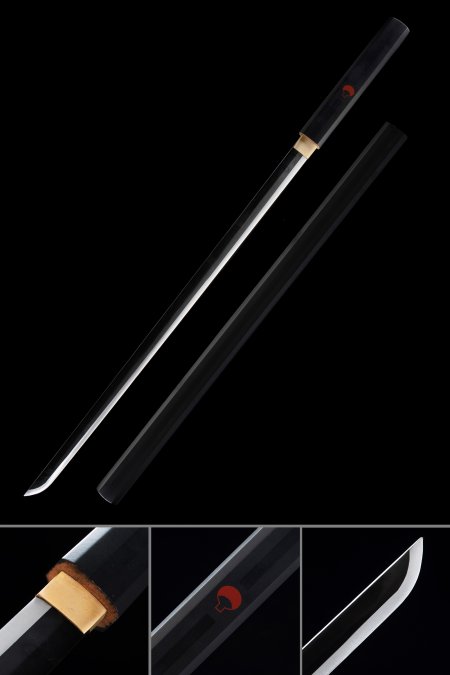
The most fundamental difference is blade geometry. A katana features a pronounced curve along its length, a design innovation that emerged in Japan around the late Heian period and became the defining characteristic of samurai swordsmanship. The chokuto, by contrast, is completely straight and single-edged, reflecting an older blade tradition that predates the curved forms. In the Naruto series, Sasuke Uchiha carries a chokuto, and that choice is visually intentional — the rigid, uncompromising straight line of the blade reinforces his character's aesthetic identity. For collectors, this distinction matters because the silhouette of a displayed chokuto reads very differently on a wall mount or stand compared to a katana, offering a cleaner, more architectural profile.
What steel is used in Naruto chokuto replicas?
The Sasuke Uchiha chokuto replica in this collection features a blade forged from 1045 high-carbon steel, a material widely respected in the collectible and display sword community. 1045 carbon steel contains approximately 0.45% carbon content, which gives it meaningful hardness and a satisfying heft that distinguishes it from decorative stainless steel pieces. Full-tang construction — meaning the steel runs continuously from blade tip through the entire length of the handle — ensures structural solidity that collectors who value authenticity will appreciate. The matte black finish on the blade and saya replicates the visual tone of Sasuke's sword as it appears in the anime, rather than opting for a generic polished look.
How should I care for a carbon steel chokuto display piece?
Carbon steel requires more attentive maintenance than stainless steel, but the process is straightforward. Apply a thin layer of mineral oil or traditional Japanese choji oil to the blade surface every two to three months using a soft cloth, working from the base toward the tip. This prevents oxidation and keeps the steel in excellent display condition. Always store the blade inside its saya when not on active display, as the lacquered wood provides a layer of protection. Avoid placing the piece near windows with direct sun exposure — UV light degrades lacquer finishes and can cause the saya to warp or crack over time. A stable, low-humidity environment is ideal for long-term preservation.
Is this a good gift for a Naruto fan?
A Naruto chokuto replica makes a genuinely memorable gift for fans who have moved beyond standard merchandise like posters or figures. Because it is a full-size, hand-fitted collectible with series-accurate detailing — including the Uchiha clan crest on the saya — it occupies a different category from mass-produced novelty items. It works particularly well for fans who already display anime art or figurines, as the sword can anchor a dedicated Naruto or Sasuke themed display. For gifting purposes, the piece arrives ready to display, and the visual drama of a full-size straight-blade replica tends to make a strong impression when unboxed. It suits milestone occasions like graduations, significant birthdays, or holidays for collectors in their late teens and beyond.
Can a chokuto replica be wall-mounted for display?
Yes, and wall mounting is one of the most effective ways to showcase a chokuto's straight-blade silhouette. Because the blade has no curve, it reads cleanly against a flat wall surface — the geometry is unambiguous and visually striking from across a room. Standard horizontal katana wall mounts accommodate the chokuto's proportions well. Position the piece at eye level for maximum visual impact, ideally against a neutral or dark background that allows the matte black saya and blade to stand out. If you prefer a floor or shelf display, a two-tier sword stand with adjustable pegs works for the straight profile. Whichever mounting method you choose, ensure the piece is fully secured and positioned away from high-traffic areas.