Carbon Steel Tanto Sword

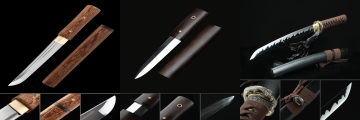
Browse our collection of carbon steel tanto swords - hand-forged Japanese short blades in high-carbon steel grades including 1045 and T10, covering the full range of tanto styles from standard tsuba-fitted tanto to clay-tempered shirasaya pieces capable of displaying a visible hamon. Every piece features full-tang construction and authentic fittings, delivering genuine Japanese blade craftsmanship in a compact and versatile display format. Free US shipping and hassle-free returns included.
Showing 72 Products

Related Collections

1060 Carbon Steel Katana77 items


643 Reviews

1065 Carbon Steel Katana31 items


192 Reviews

Frequently Asked Questions

What carbon steel grades are used in tanto swords and how do they compare?
Carbon steel tanto swords in this collection use two primary grades that offer different performance characteristics at different price points. 1045 carbon steel has approximately 0.45% carbon content, making it a tough and workable grade that is widely used for accessible tanto collectibles. It can be properly heat-treated for a good baseline hardness, provides reliable full-tang construction, and produces a consistent blade surface appropriate to a well-made entry-level tanto. T10 carbon steel is the premium grade: its carbon content is more precisely controlled and its grain structure finer than 1045, allowing for the differential heat treatment that produces a visible hamon temper line. T10 clay-tempered tanto are the pinnacle of the carbon steel tanto category for collectors who prioritize blade character over price accessibility. Both grades are genuine high-carbon steel appropriate to quality Japanese-style sword construction, and both are used with full-tang construction and mekugi retention pins throughout the collection.
What is a hamon and how does it form on a carbon steel tanto?
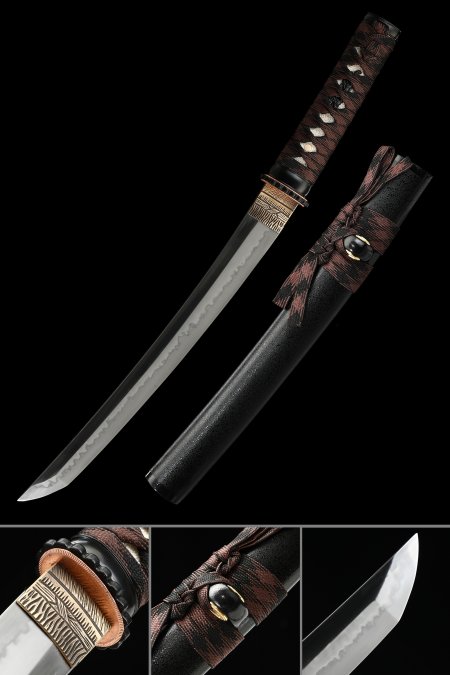
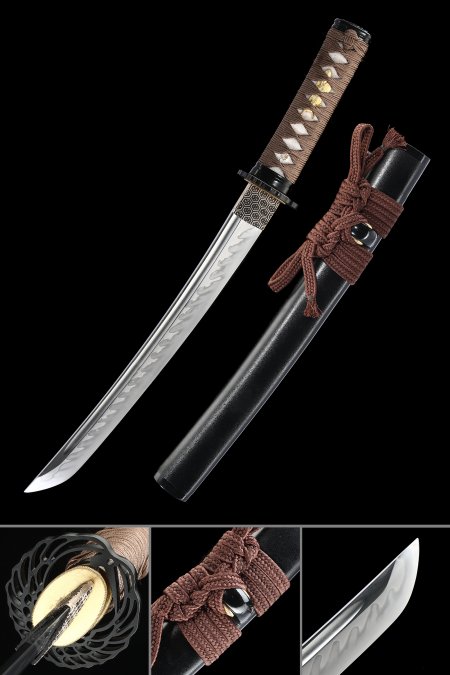
A hamon is the visible temper line that forms along the edge of a carbon steel blade during differential heat treatment - the wave-patterned boundary between the hard edge zone and the tougher spine zone that results from clay-tempered quenching. During the clay-tempering process, a layer of clay is applied to the blade spine before the blade is brought to critical temperature and quenched. The clay insulates the spine area, causing it to cool more slowly than the unprotected edge. The edge zone, cooling rapidly, transforms into a hard martensite structure; the spine, cooling slowly, retains a tougher but softer pearlitic structure. The boundary between these two zones is where the hamon forms, visible as a milky or clouded line in the steel that follows the contour of the clay application. On a T10 tanto, the hamon typically shows visible activity within the transition zone - crystalline structures called nie and nioi - that experienced collectors evaluate as indicators of the heat treatment quality and the skill of the smith. The hamon's specific pattern is unique to each blade, making T10 clay-tempered tanto individually distinctive.
What tanto styles are available in the carbon steel tanto collection?
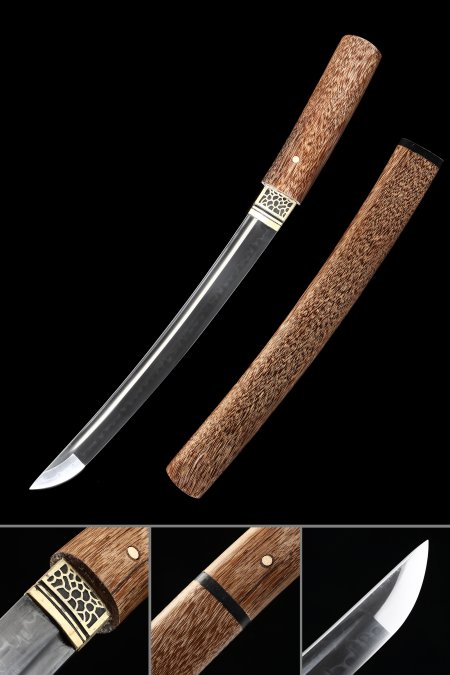
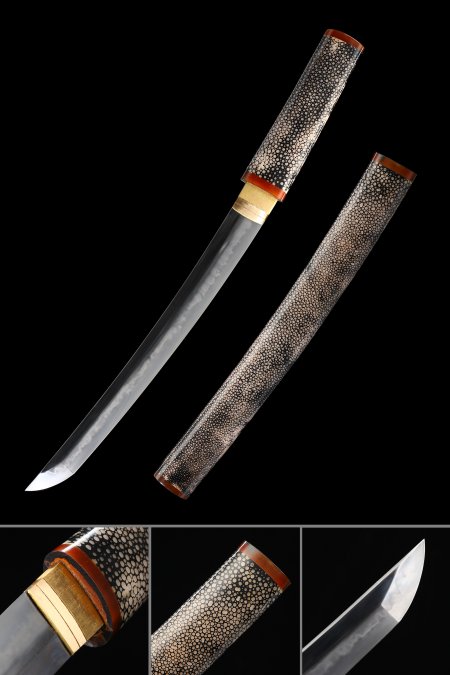
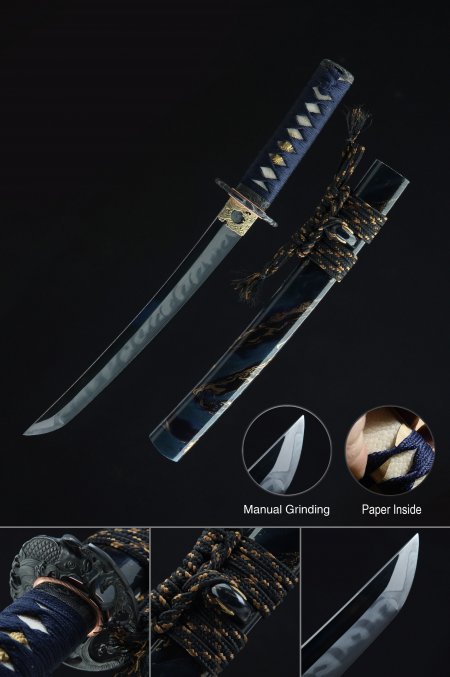
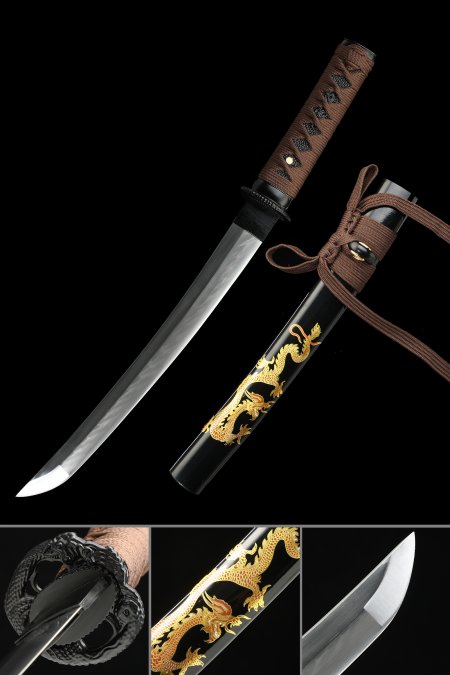
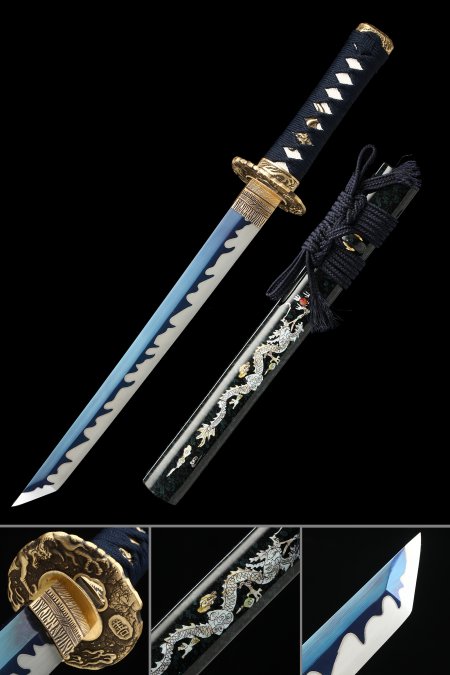
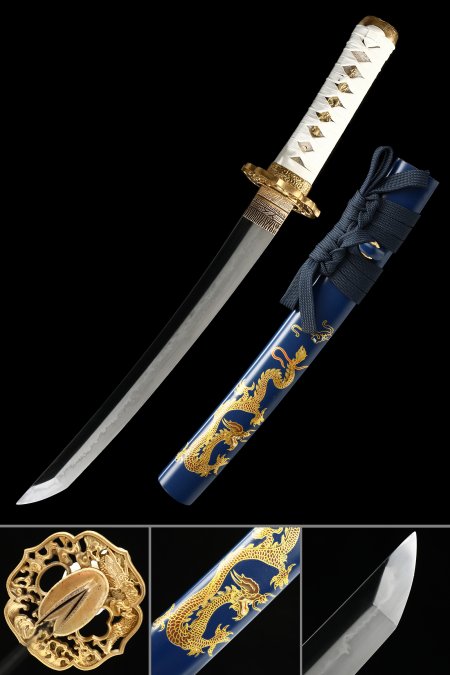
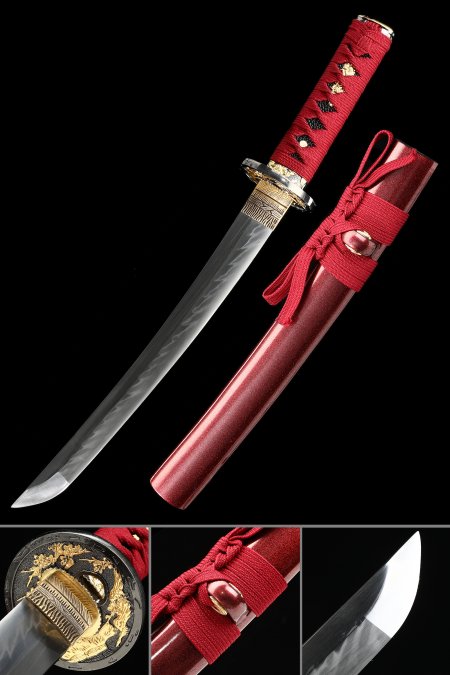
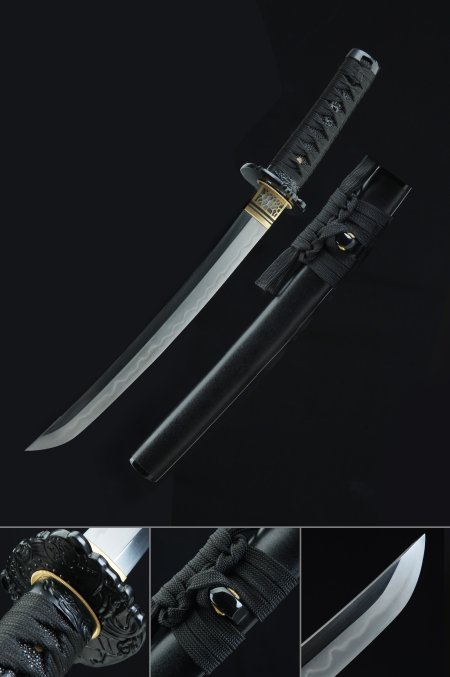
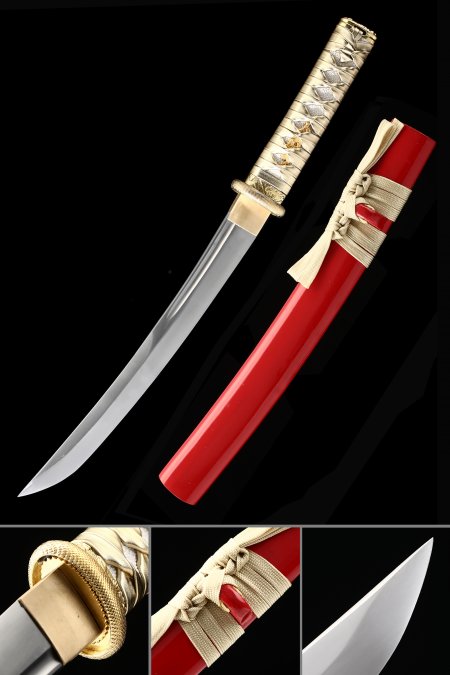
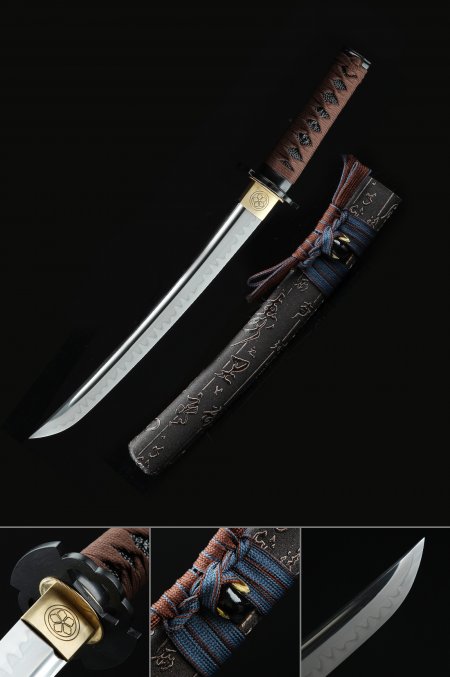
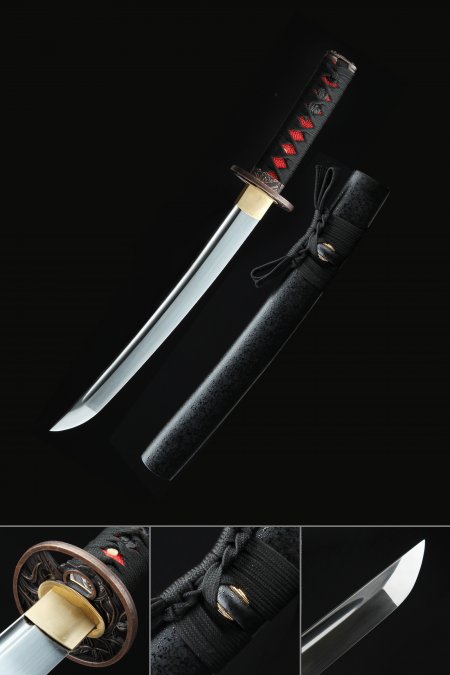
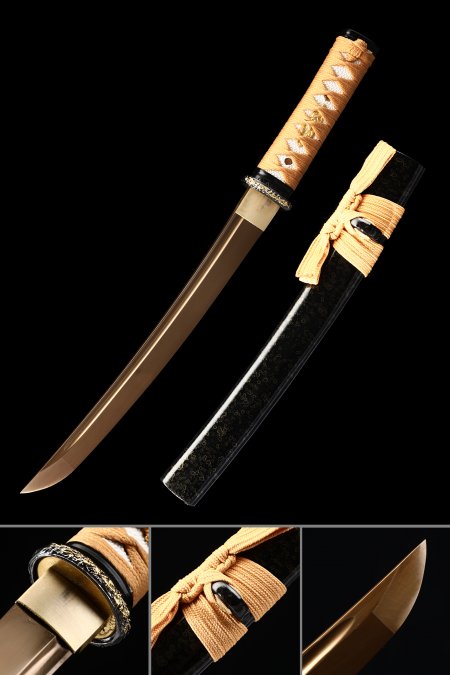
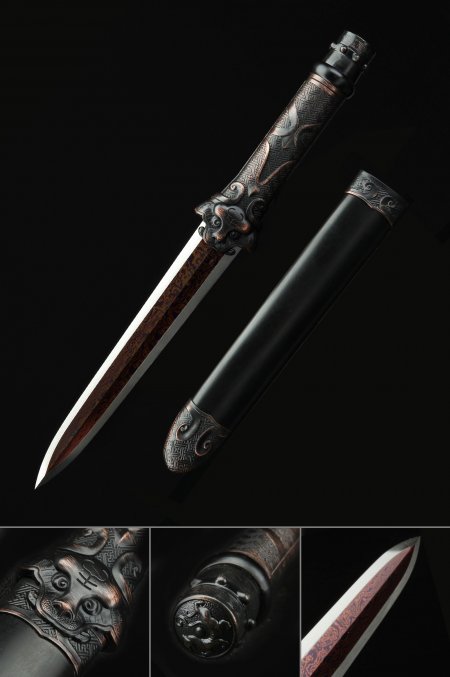
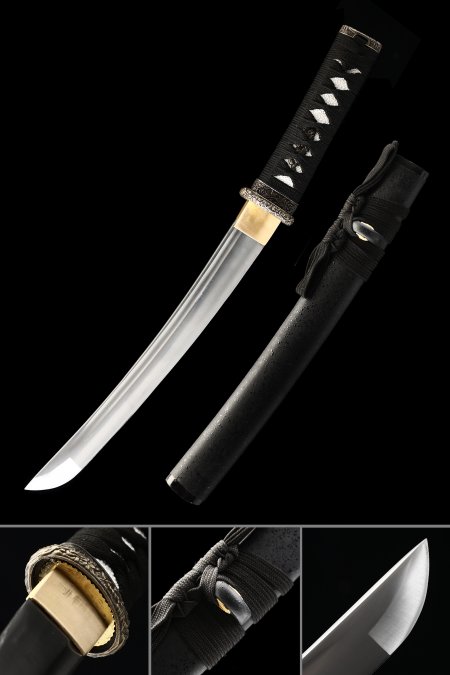
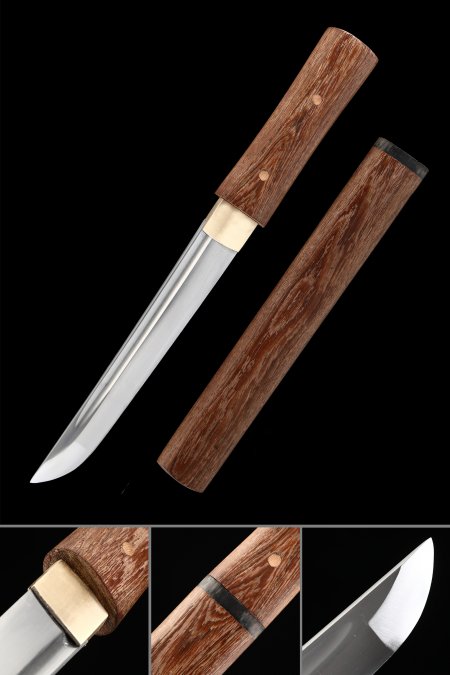
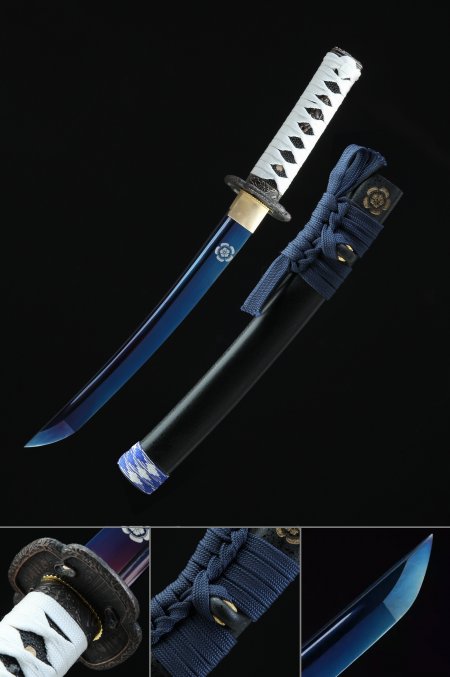
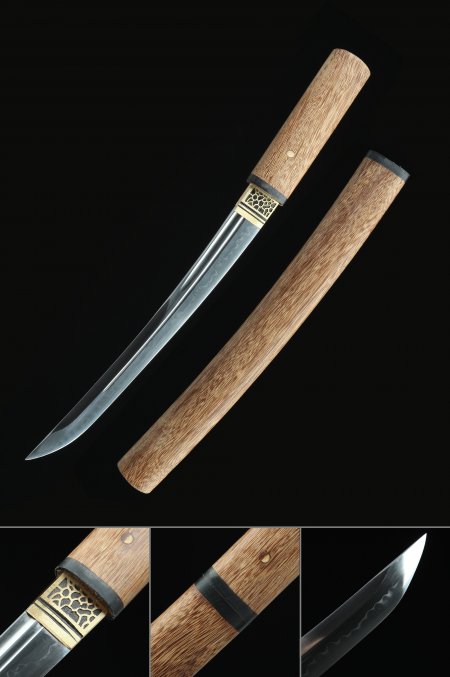
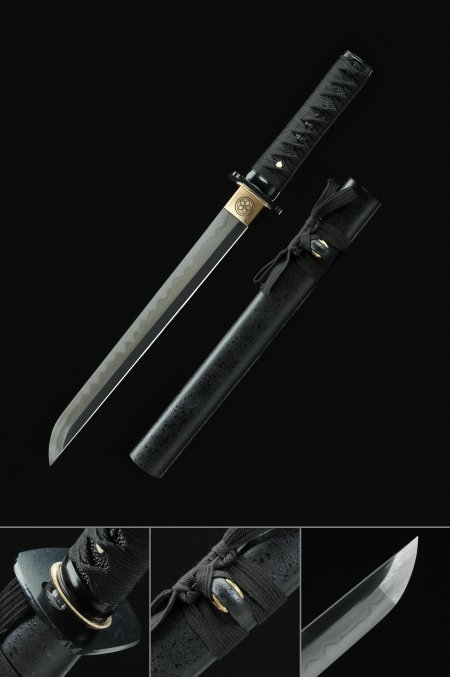
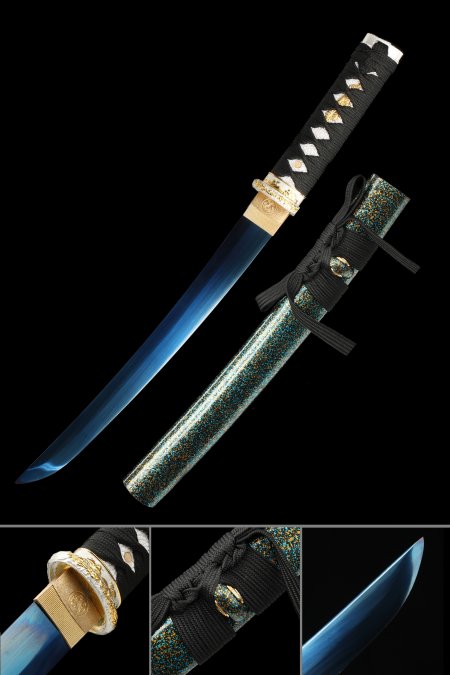
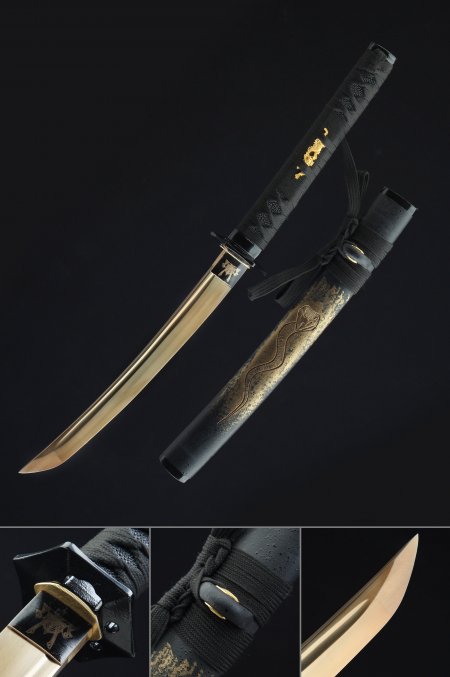
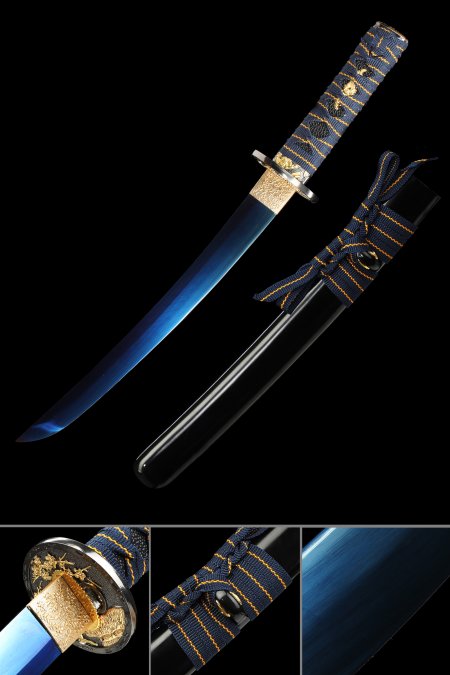
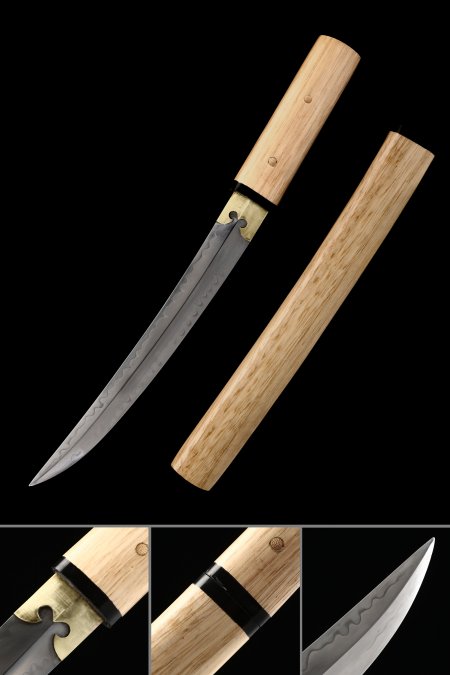
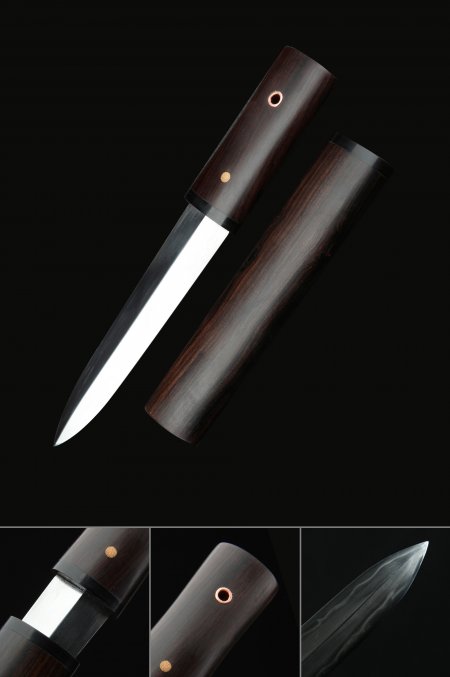
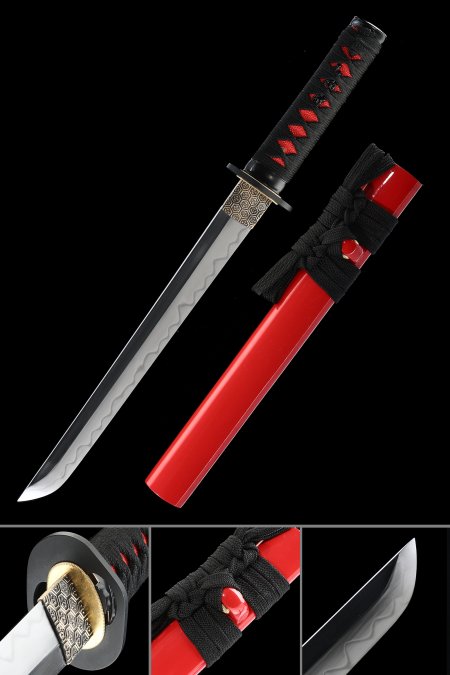
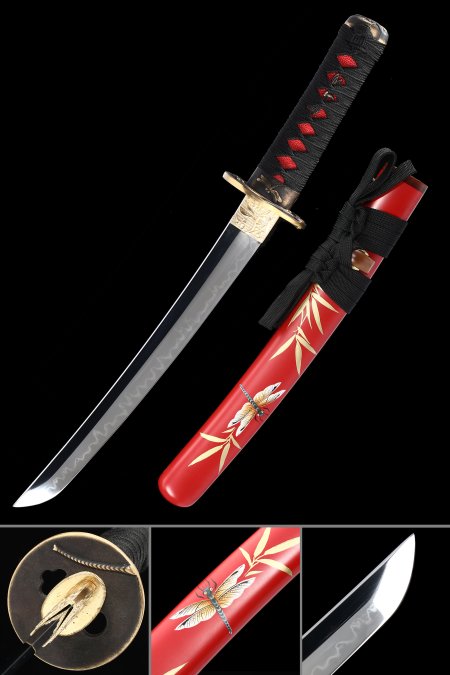
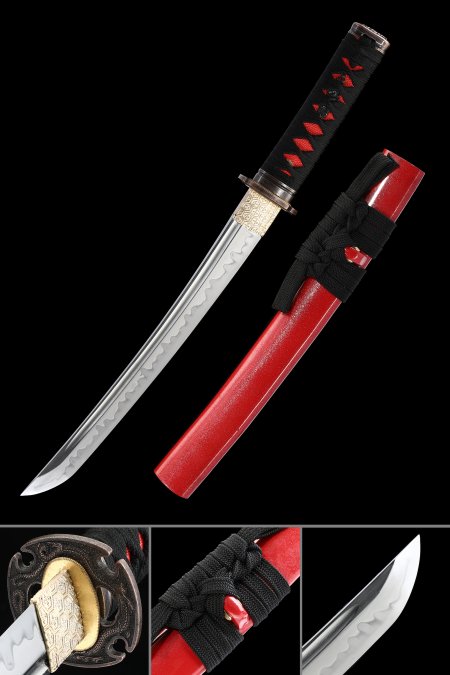
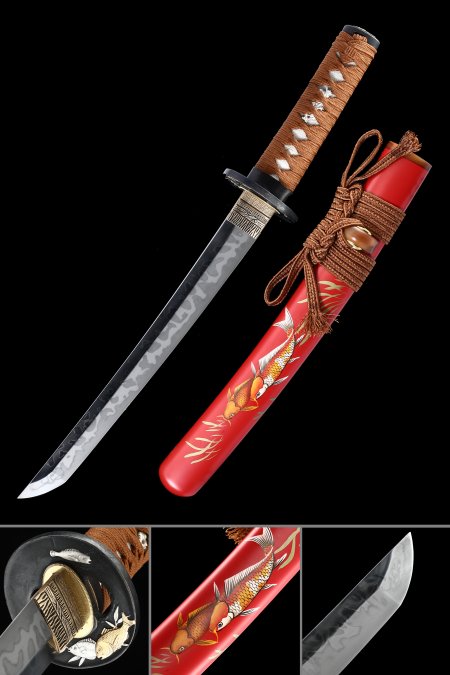
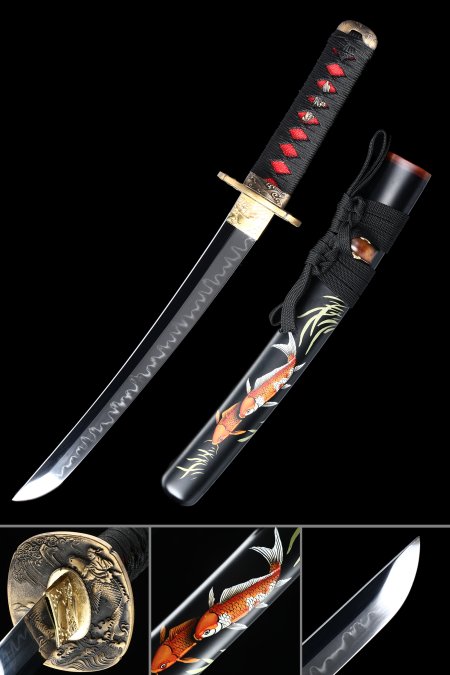
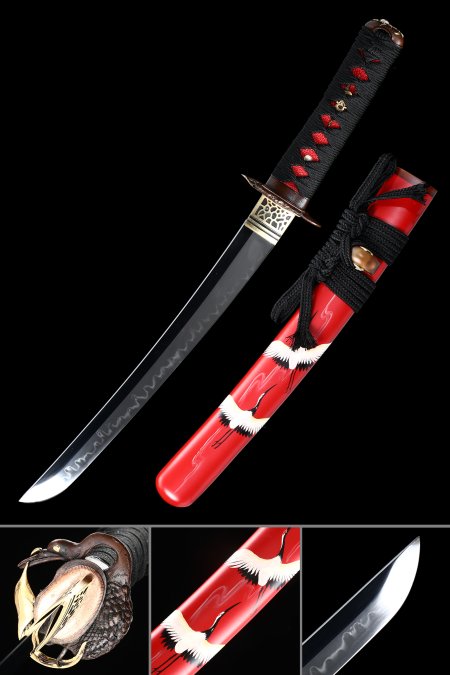
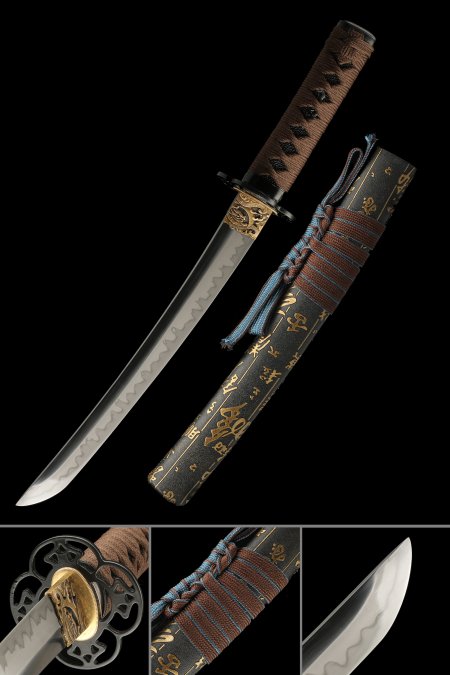
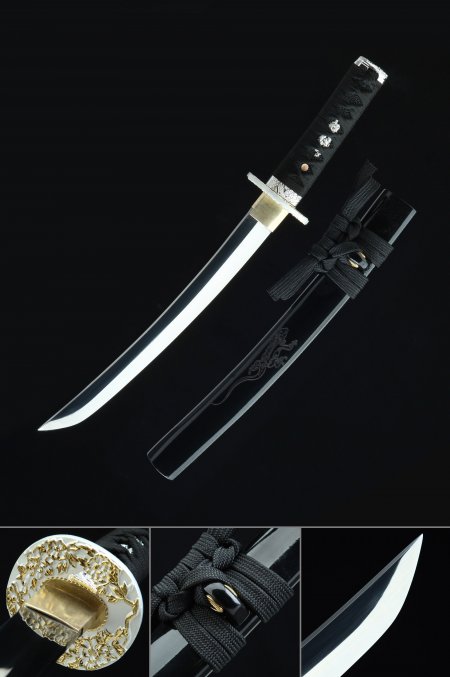
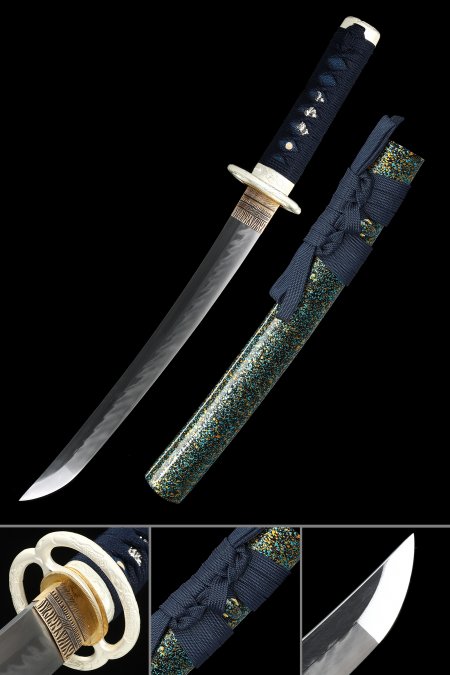
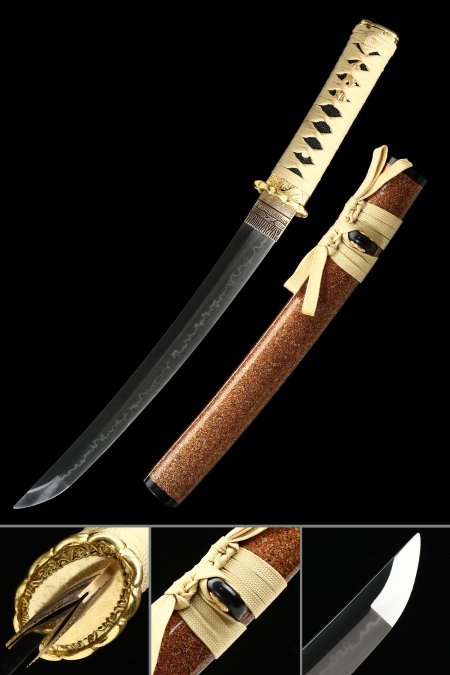
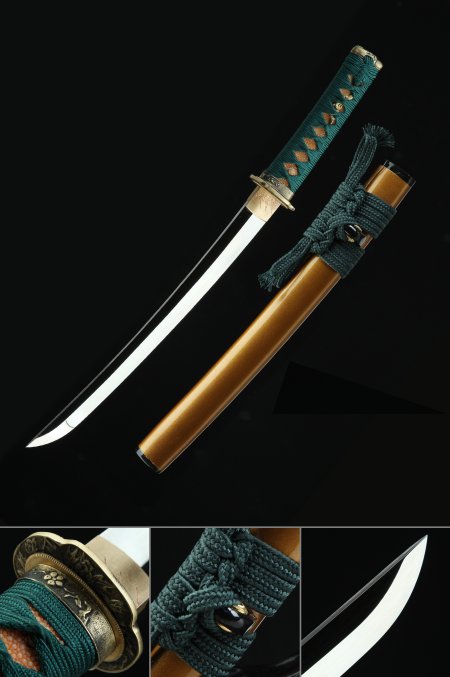
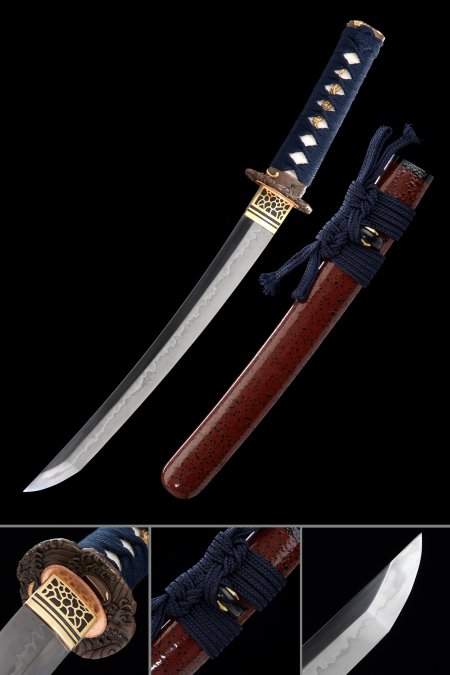
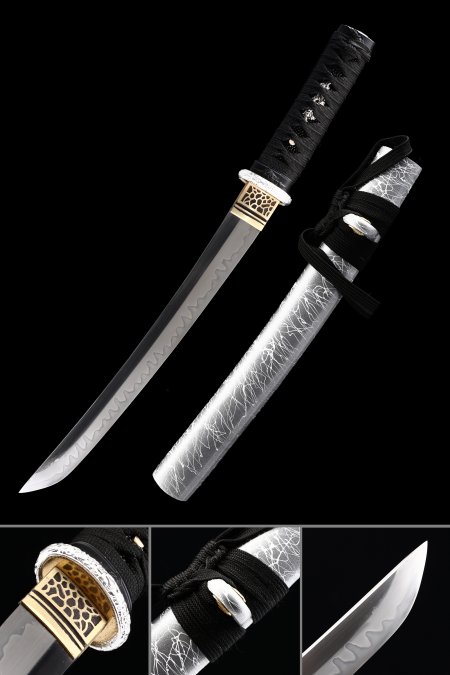
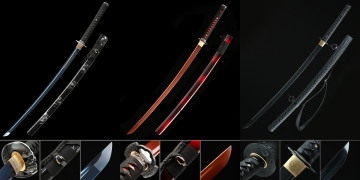
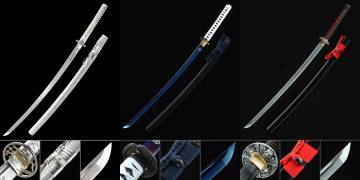
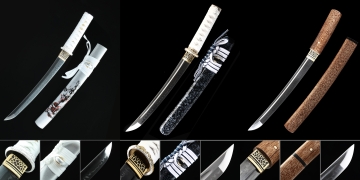
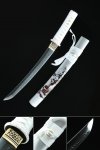
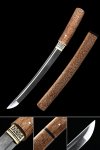
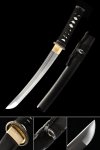
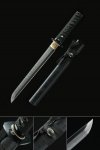
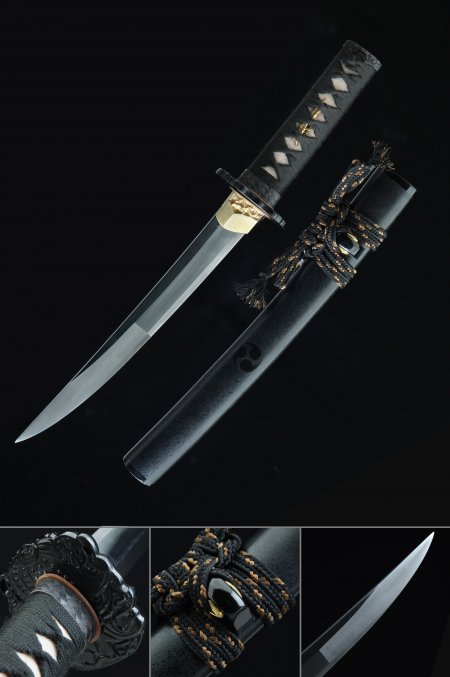
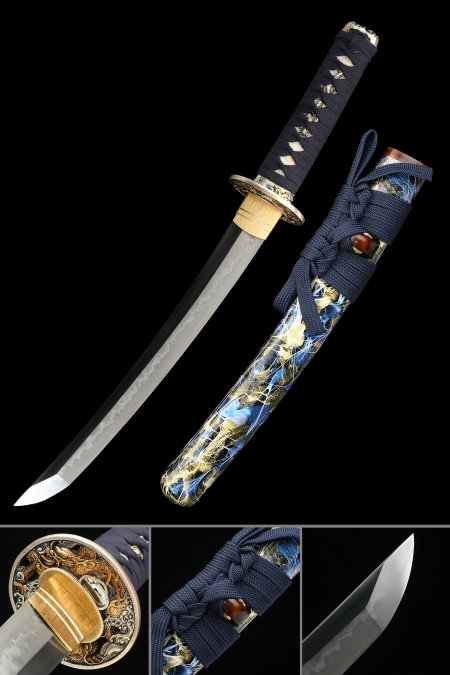
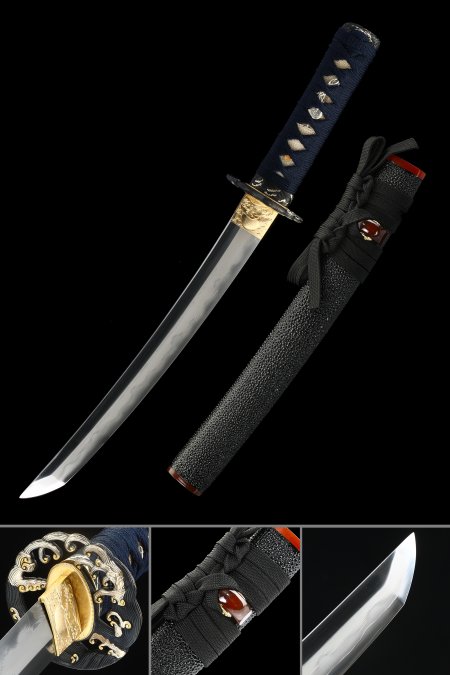
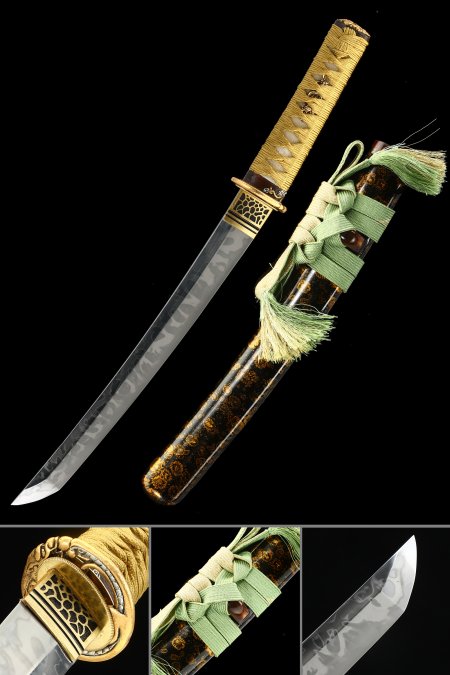
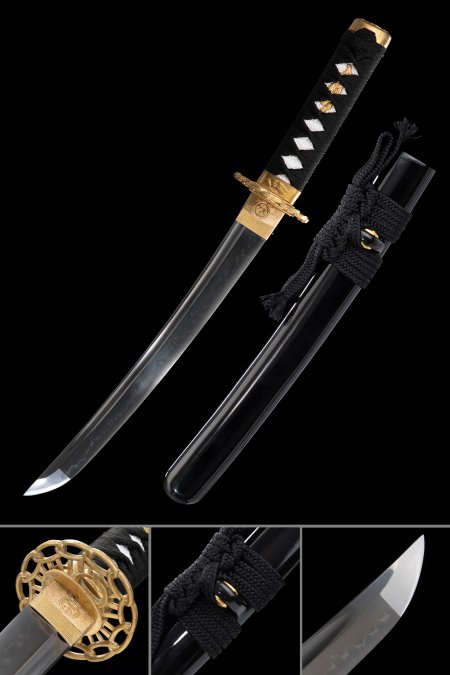
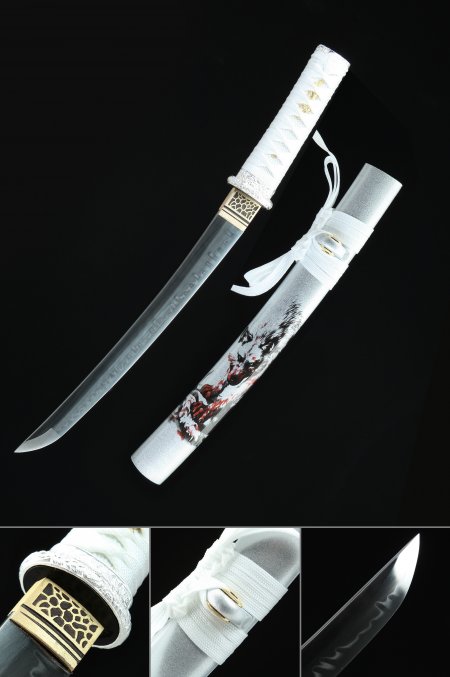
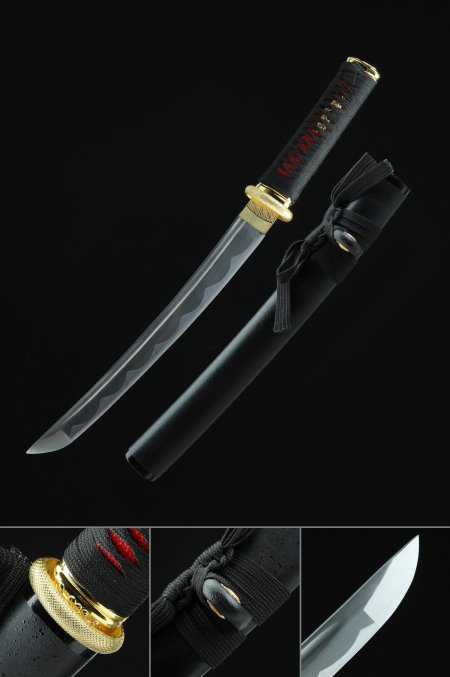
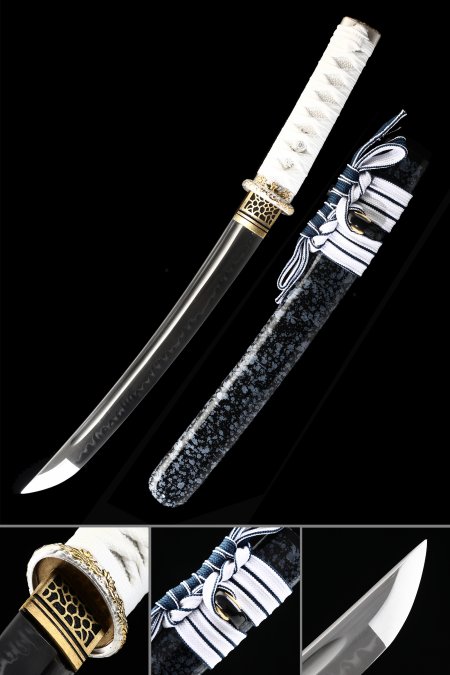
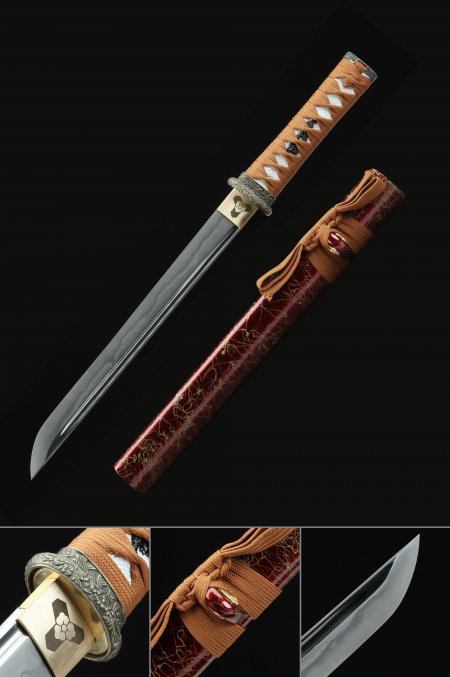
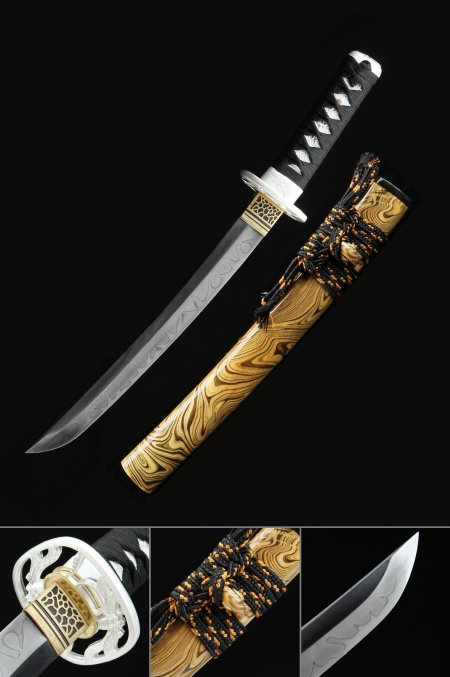
Carbon steel tanto swords in this collection cover the main tanto configurations that collectors most commonly seek. Standard tanto in 1045 carbon steel are available in black and natural wood scabbard finishes with conventional tsuba guard and ito-wrapped handle - the most familiar and historically accurate tanto configuration. Shirasaya tanto in T10 carbon steel present the blade in plain unadorned wooden scabbard and handle, the traditional storage format that emphasizes the blade's steel character and hamon over ornamental fittings. Double-edge tanto feature symmetrical blade geometry where both edges meet at the tip, a distinctive variation that differs visually from the standard single-edged tanto profile. The Ghost of Tsushima replica tanto in 1065 carbon steel with a blue scabbard finish provides an anime-inspired option for collectors who want a tanto with design associations to popular Japanese media. Shirasaya tanto with T10 clay-tempered blades are available in white scabbard configurations, creating a visually striking minimalist presentation.
How does the compact tanto blade length affect the hamon's appearance?
The tanto's compact blade length - typically six to twelve inches - actually enhances the hamon's visual impact rather than diminishing it. On a full-length katana, the hamon runs along a blade of twenty-seven to thirty inches, and viewing it requires stepping back or holding the blade at arm's length. On a tanto, the hamon runs along a blade that is close and accessible for inspection in the hand, allowing the collector to examine the hamon's detail - the activity within the temper zone, the nie and nioi crystalline structures, the precision of the hamon's boundary line - at a comfortable viewing distance. This accessibility makes the hamon evaluation process more immediate and rewarding on a tanto than on a longer blade. Additionally, the compact blade means the hamon occupies a proportionally larger fraction of the visible blade surface than on a longer sword, making it a more prominent and visually dominant element of the piece as a whole. For collectors who prioritize hamon quality as a collecting criterion, a well-made T10 clay-tempered tanto delivers exceptional hamon visibility in a compact and display-friendly format.

Customer Reviews