Chrysanthemum Tsuba Hamidashi
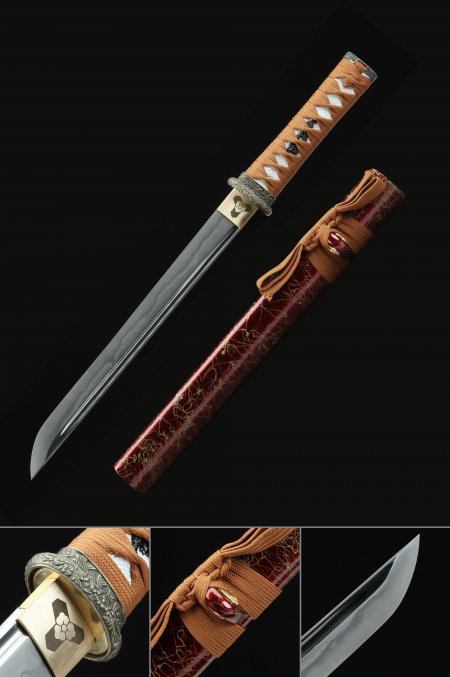
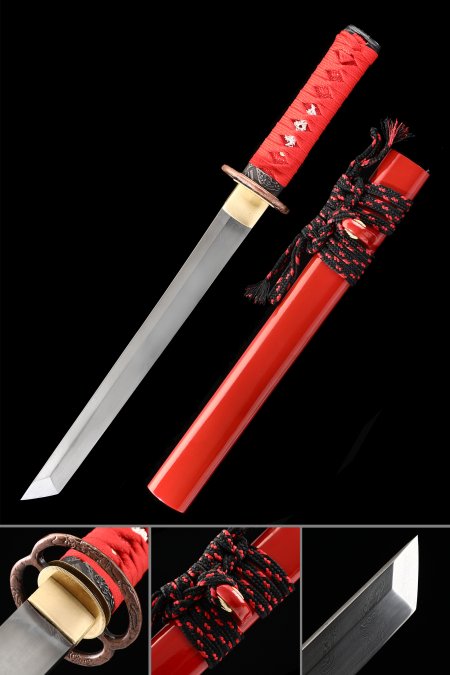
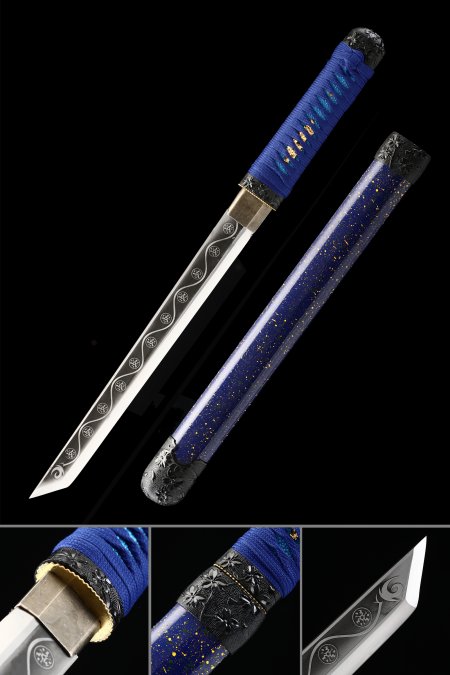
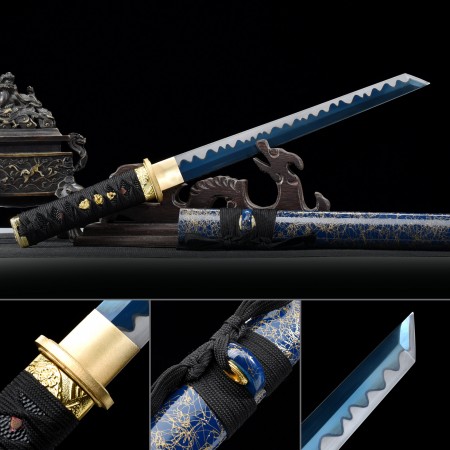
The Chrysanthemum Tsuba Hamidashi collection brings together short-blade tantos distinguished by their hand-fitted chrysanthemum-motif guards - a symbol of imperial refinement in Japanese metalwork tradition. Each piece is crafted with genuine attention to fittings, lacquered saya, and wrapped handles that honor classical koshigatana aesthetics. Every order ships free with hassle-free returns, so adding to your display collection is completely risk-free.
Related Collections
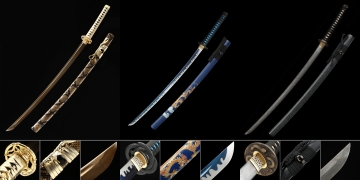
Snake Tsuba Katana41 items
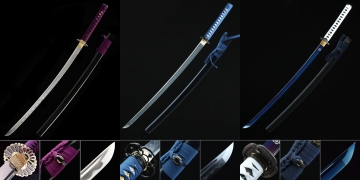
Flower Tsuba Katana61 items
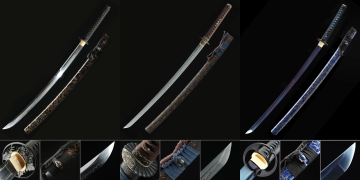
Vine Saya Katana47 items
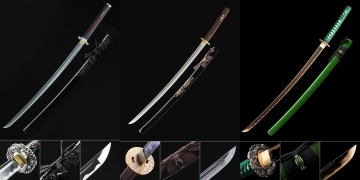
Wave Tsuba Katana40 items
Frequently Asked Questions
What makes a hamidashi different from a standard tanto?
The defining characteristic of a hamidashi is its tsuba - a guard sized only slightly larger than the handle's width, barely projecting beyond the grip. A standard tanto typically either lacks a tsuba entirely (the aikuchi configuration) or features a full-sized, clearly defined guard. The hamidashi occupies a specific middle ground: it carries the formality implied by a guard while maintaining the compact, streamlined silhouette associated with short koshigatana-style blades. In collecting terms, this makes the hamidashi a more nuanced display piece - the small tsuba becomes a concentrated canvas for decorative craftsmanship, which is why the chrysanthemum motif reads so powerfully on these guards despite their modest scale.
What does the chrysanthemum symbol mean on Japanese blade fittings?
The chrysanthemum - kiku - has carried imperial significance in Japan since at least the early 13th century, when Emperor Go-Toba adopted the sixteen-petal form as a personal emblem. Over subsequent centuries, the motif became associated with authority, longevity, and ceremonial distinction, appearing across lacquerware, textiles, and blade fittings. On tsuba specifically, a chrysanthemum rendering indicated prestige-level koshirae - the full set of fittings accompanying a blade. For modern collectors, pieces featuring this motif carry that historical visual language, making them particularly meaningful as display objects rather than generic decorative items. The symbolic weight of the design adds a layer of cultural context that elevates these pieces beyond their material construction alone.
How does T10 steel differ from 1045 carbon steel in these tantos?
T10 and 1045 carbon steel differ primarily in carbon content and the presence of trace tungsten in T10. Standard 1045 steel contains approximately 0.45% carbon - adequate for a well-finished display blade with good surface polish and durability. T10 steel sits closer to 1.0% carbon content and includes a small tungsten addition that refines grain structure, allowing for a more detailed and visually defined hamon when differential clay hardening is applied during heat treatment. For collectors, the hamon - the visible temper line along the edge - is one of the most sought-after aesthetic features on a blade, as it reflects an authentic traditional process and creates a unique visual signature on each individual piece. T10 pieces are generally preferred by collectors who prioritize blade surface detail over uniformity.
How should I store lacquered saya to keep them in display condition?
Lacquered saya are more sensitive to environmental conditions than the blade itself. The primary concerns are humidity fluctuation and direct sunlight. High humidity can cause the lacquer to lift or blister at the seams where the wooden saya halves are joined, while extremely dry conditions can cause cracking. Aim to store pieces in an environment between 45-60% relative humidity. Keep them away from windows or any light source with significant UV output, as prolonged exposure fades lacquer pigment - particularly relevant for the deep red and blue finishes in this collection. A horizontal display stand reduces stress on the habaki and prevents warping. For long-term storage, wrapping the saya lightly in acid-free cloth before placing it in a case adds a useful buffer against dust and contact scratches.
Are these chrysanthemum tsuba tantos a good choice as a gift for collectors?
These pieces work particularly well as gifts for collectors interested in Japanese cultural history, decorative metalwork, or curated blade display. The chrysanthemum tsuba provides an immediate conversation point - it connects the piece to a traceable historical tradition rather than being purely aesthetic. The variety of steel types and saya colors within this collection also makes it practical to select a piece aligned with a recipient's existing display palette. For someone building a themed Japanese blade arrangement, a hamidashi with contrasting lacquer color and a distinctive tsuba motif adds meaningful visual variety without duplicating what a standard tanto already contributes. Presentation is inherently self-contained - the lacquered saya, wrapped handle, and fitted guard require no additional accessories to display properly.