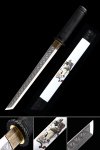
What makes a hamidashi tanto different from a standard tanto?
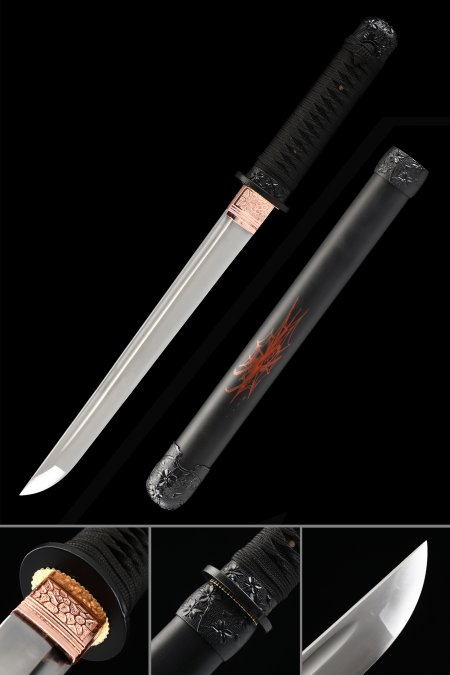
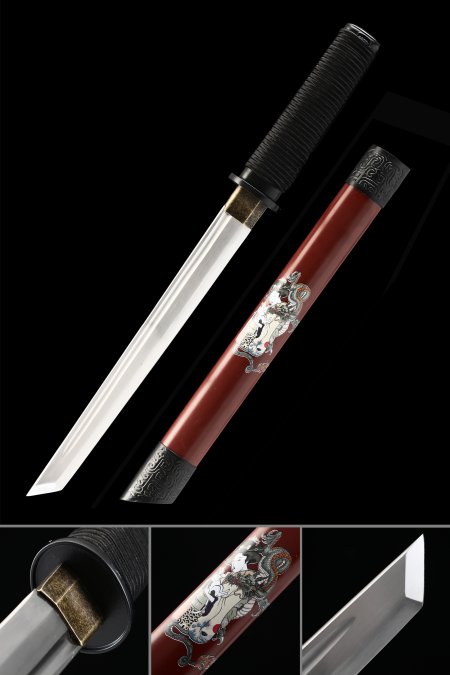
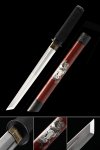
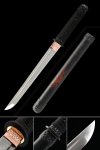
The defining difference is the tsuba, or hand guard. A standard tanto typically features a full circular or shaped tsuba that extends noticeably beyond the handle width. A hamidashi tanto uses a dramatically reduced guard — one that barely protrudes past the handle profile at all. The word itself references this abbreviated form. In terms of collectibility, this gives the hamidashi a cleaner, more elongated silhouette that many collectors prefer for display. The blade geometry and length remain consistent with the tanto format; only the guard treatment changes, but that single detail shifts the entire visual personality of the piece.
What is a wave hamon and how is it created on these blades?
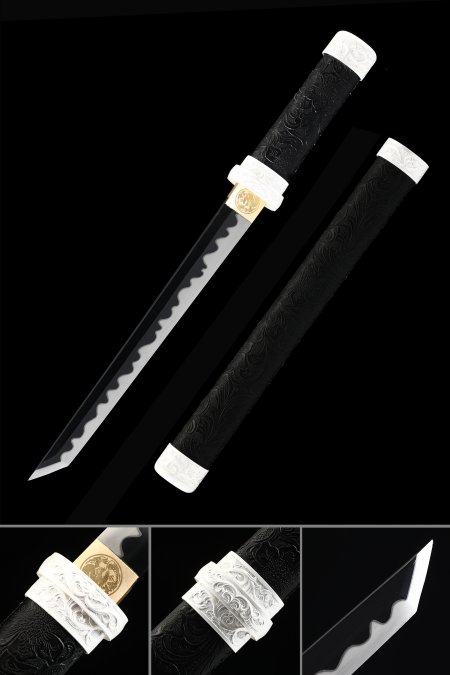
A hamon is the visible temper line that appears along the edge of a differentially heat-treated blade. On the pieces in this collection, the wave hamon presents as a flowing, undulating line running the length of the edge, created by applying a clay coating to the spine before the hardening process. The clay insulates the spine, causing it to cool more slowly than the edge, which produces contrasting crystalline structures in the steel. On manganese steel, this process yields a hamon with good visual clarity. The wave pattern specifically — known as notare or midare depending on its regularity — has deep roots in classical Japanese blade aesthetics and remains one of the most recognized features collectors look for.
How should I store a lacquered saya tanto to protect the finish?
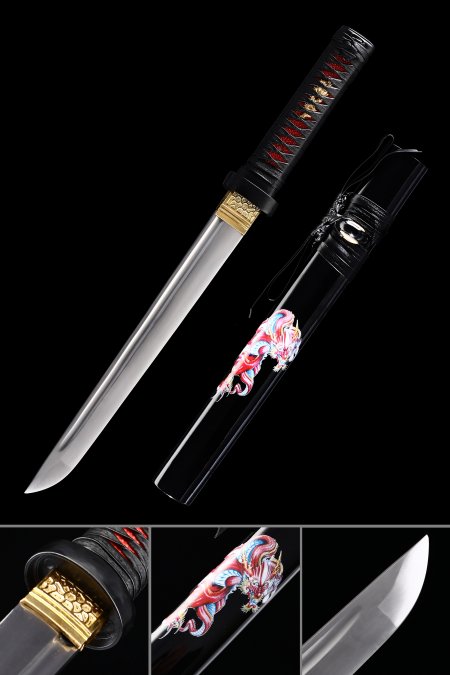
Lacquered saya are more sensitive to environmental conditions than plain wood or synthetic scabbards. Keep the piece away from prolonged direct sunlight, which causes lacquer to yellow, crack, or lose its depth of color over time. Humidity is equally important — aim for a stable range between 45% and 55% relative humidity. Drastic swings between dry and moist air cause the wood beneath the lacquer to expand and contract, eventually leading to hairline crazing in the finish. Store the mounted piece horizontally on a padded stand rather than in a sealed case with no air circulation. Wipe the saya surface occasionally with a clean, dry microfiber cloth to remove dust without abrading the lacquer.
Does the Damascus-pattern blade in this collection use real pattern-welded steel?
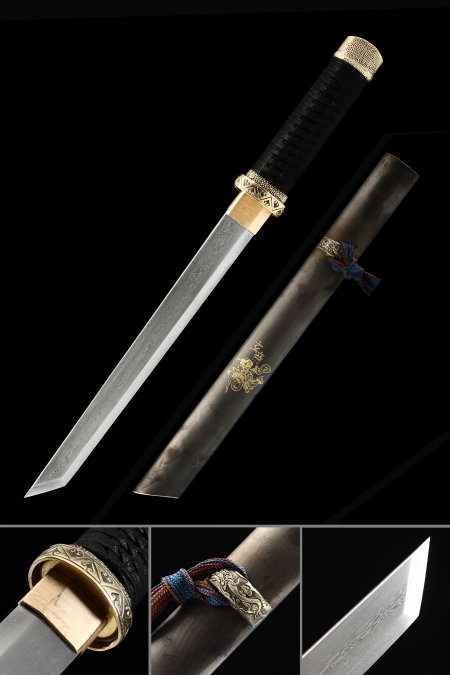
The Damascus-pattern blade in this series achieves its visual effect through a surface treatment applied to high manganese steel, rather than through traditional pattern-welded construction. Authentic pattern-welded steel — often called Damascus — involves forge-welding multiple steel billets, folding, and drawing out the material repeatedly to create layered flow lines throughout the entire cross-section of the blade. The result in this collection is a decorative Damascus-style appearance that delivers strong visual contrast and a distinctive surface character suited for display. Collectors should note this distinction when comparing pieces, as it affects both the manufacturing process and the blade's intended purpose as a collectible rather than a functional cutting implement.
Are these tanto suitable as gifts for Japanese sword enthusiasts?
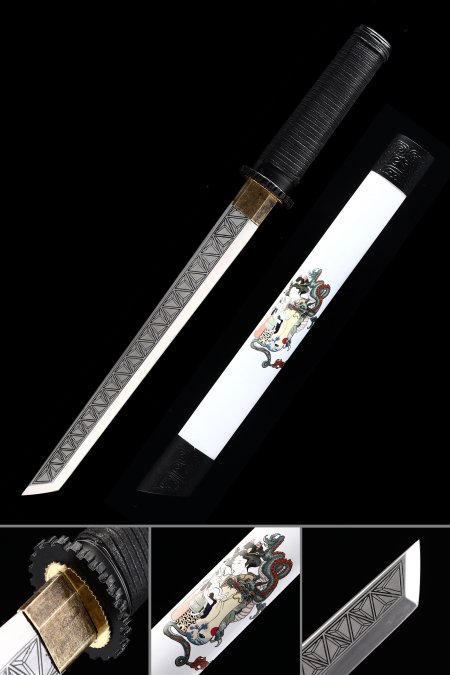
They present well as gifts precisely because each piece is a complete, presentation-ready collectible rather than a bare blade. The combination of lacquered saya, dragon artwork, cord-wrapped handle, and matched tsuba means the recipient receives a visually cohesive object that requires no additional fittings or accessories. The varied finishes across the collection — black, white, or red lacquer; gold or rose gold tsuba; geometric or hamon blade treatments — make it practical to select a piece that fits the recipient's existing display palette. For someone new to Japanese blade collecting, a hamidashi tanto is also an approachable entry point: smaller in scale than a katana, easier to display in limited space, and rich with traditional detail.