What does the sageo cord actually do on a katana?
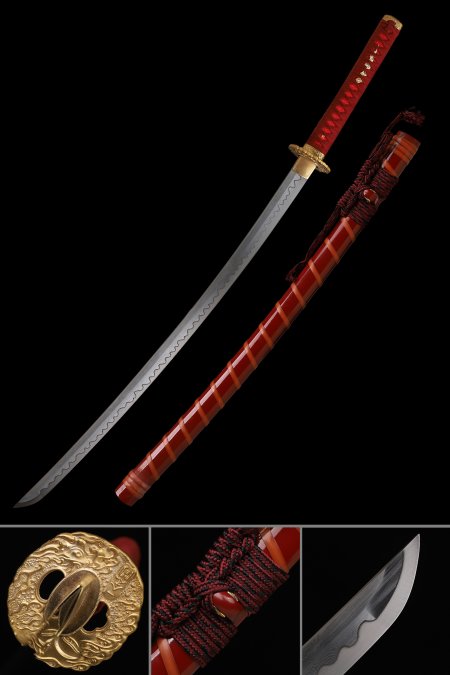
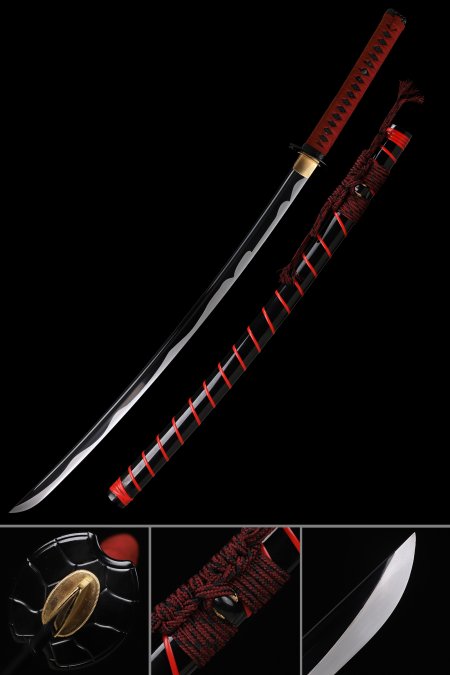
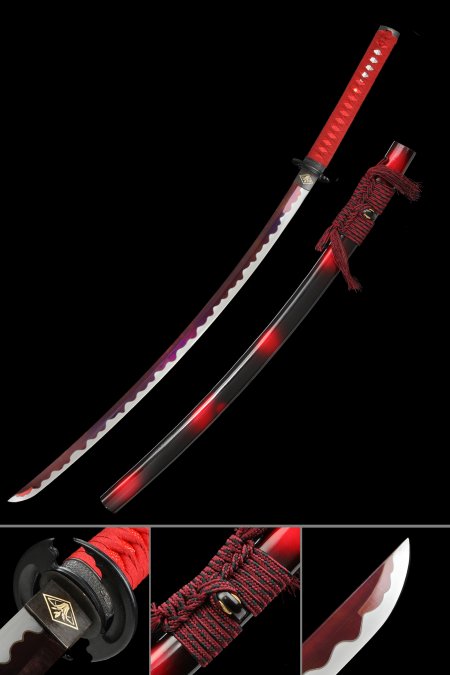
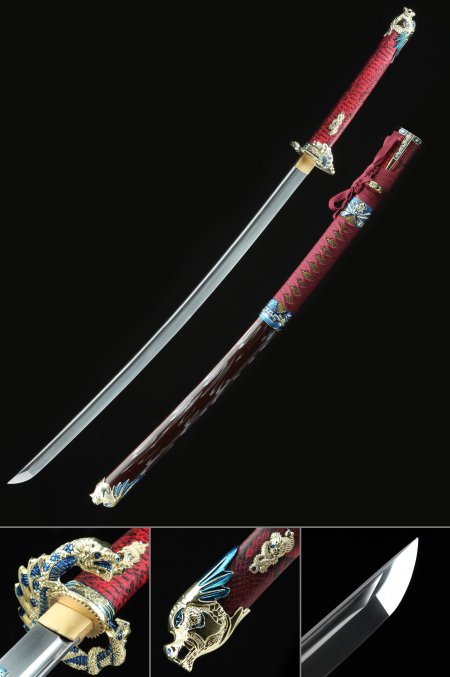
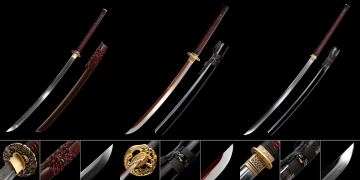
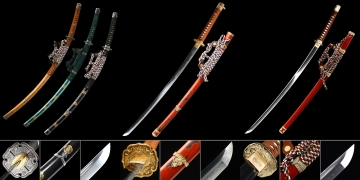
The sageo is the cord threaded through the kurigata — the small knob on the side of the saya — and historically served a practical function: it was used to secure the scabbard to the wearer's obi (sash) and could be unwound for various restraining or utility purposes. In the context of display and collectible katana, the sageo's role is entirely aesthetic, but it remains one of the most important visual elements of a complete mounting. The length, material, color, and weave pattern all contribute to the overall composition. Dark red sageo are particularly prized by collectors because the warm crimson tone harmonizes with lacquered saya, gold or bronze tsuba, and brown or red ito wrapping, creating a unified color palette across the entire koshirae.
How is folded melaleuca steel different from standard carbon steel?
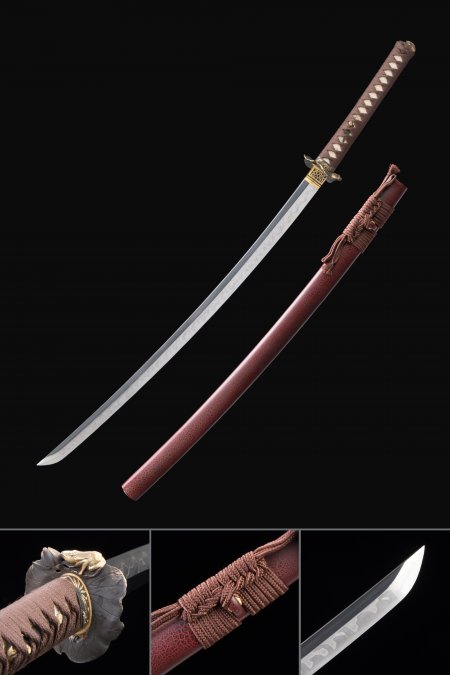
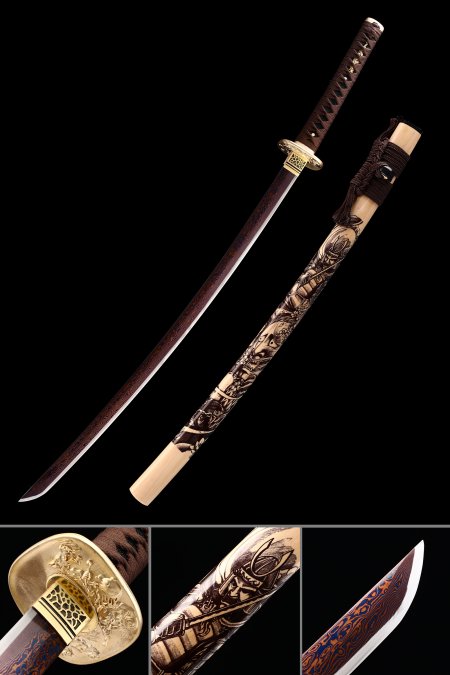
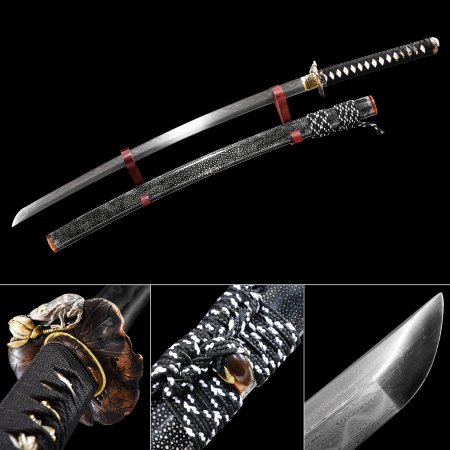
Folded melaleuca steel — sometimes called Damascus laminate in Western markets — is produced by repeatedly folding and forge-welding layers of steel together. This process creates the distinctive visible grain patterns, known as jihada, across the blade's surface. The flowing line patterns shift in appearance depending on the angle of light and the polish level, giving each blade a unique visual identity. Standard high-carbon steel such as 1060 or 1090, by contrast, is homogeneous — its surface character comes primarily from the hamon created during differential hardening rather than from the steel's internal structure. For collectors, folded blades offer a more visually complex surface, while single-steel carbon blades tend to display a cleaner, more dramatic hamon line.
How should I store a lacquered saya katana long-term?
Lacquered saya are more durable than plain wood but still benefit from consistent care. Store the katana horizontally or at a slight angle — edge up, as is traditional — in a low-humidity environment. Avoid placing lacquered saya in direct sunlight for extended periods, as UV exposure can fade the pigment and cause surface checking over time. If your display area experiences humidity swings, a cedar-lined storage box or a silica gel packet nearby helps stabilize the environment. Periodically remove the blade from the saya, wipe the blade surface lightly with a soft cloth, and apply a very thin coat of choji oil to prevent surface oxidation. Never store the blade inside the saya for months at a time without inspection, as moisture trapped between blade and saya can cause spotting on the steel.
Is a real hamon purely decorative, or does it indicate something about the steel?
A real hamon — as opposed to an acid-etched or polished-in simulation — is direct physical evidence of differential hardening. During the traditional clay-tempering process, the smith applies a layer of refractory clay along the spine and sides of the blade before the hardening quench. The clay-coated areas cool more slowly, remaining relatively softer, while the exposed edge cools rapidly and hardens into a martensitic structure. The boundary between these two zones is the hamon, and under proper lighting it displays activity — nie (coarse martensite crystals), nioi (fine haze), and various classical formations like notare or gunome. When shopping for a collectible katana, a real hamon on T10 or folded steel is a reliable indicator that the blade received genuine heat treatment rather than surface decoration alone.
What display setup works best for a dark red sageo katana?
Dark red cord and lacquer work reads best under warm-toned ambient lighting — incandescent or warm LED at around 2700K–3000K brings out the depth of crimson lacquer and the warmth of bronze or gold fittings. A two-tier horizontal katana stand in natural wood or black lacquered finish provides a clean visual base without competing with the sword's own palette. If you prefer wall mounting, a single-sword horizontal bracket keeps the sageo visible along the full length of the saya, which is often the most photogenic presentation. For a more curated display, pairing the katana with a matching tanto or wakizashi that shares the same red-and-gold color scheme creates a daishō-inspired arrangement without requiring a matched set.