What makes a flame blade wakizashi different from a standard one?
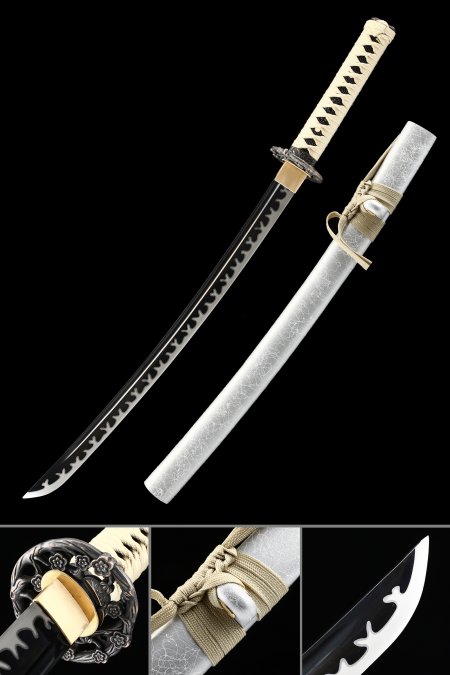
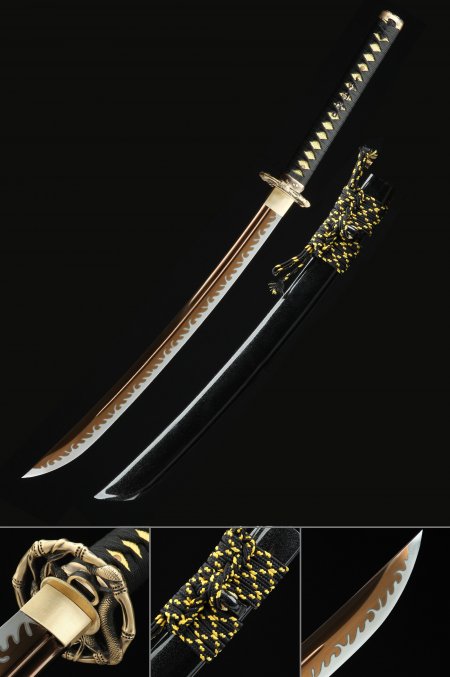
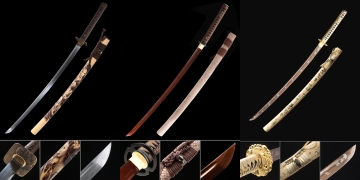
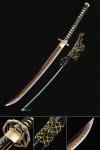
A standard wakizashi typically follows a straight or gently curved shinogi-zukuri blade profile — the same fundamental geometry used across most traditional Japanese swords. A flame blade wakizashi replaces that linear edge with a continuous, wave-like silhouette that ripples from the habaki to the tip. This undulating profile is not a random variation; it requires precise, consistent grinding to ensure each curve maintains uniform depth and spacing. From a display standpoint, the visual effect is dramatic — the blade appears to be in motion even at rest. Historically, this style was associated more with ceremonial and artistic pieces than with everyday sword production, which gives flame blade examples a distinctive place in any serious Japanese sword collection.
Why is high manganese steel used for flame blade designs?
Manganese steel is valued in decorative sword production for its surface hardness, toughness, and strong response to polishing. For a flame blade specifically, the material choice matters at a technical level: the undulating edge profile requires the steel to hold its shape cleanly through multiple grinding passes without the edge deforming or the surface developing uneven reflections. Softer steel alloys can produce a flame silhouette, but the definition of each curve tends to look less crisp under close inspection. Manganese steel's composition allows the grinder to work with precision, resulting in a finished blade where the wave geometry reads as sharply articulated artistry. For display collectors who examine pieces under direct light, this material-level detail is immediately visible.
How should I store and maintain a flame blade wakizashi?
Proper storage centers on three concerns: moisture control, surface protection, and physical support. Apply a light coat of choji oil or mineral oil along the blade surface every three to six months — this creates a protective barrier against oxidation without building up residue that attracts dust. When storing in a saya, ensure the fit is snug but not so tight that the blade scrapes against the interior lacquer on insertion or removal. For long-term display, avoid positioning the sword in direct sunlight, which can fade lacquer finishes and cause handle wrappings to dry and crack over time. A horizontal display stand distributes weight evenly; vertical storage in a sealed case with a silica gel packet is effective for humid environments. Handle the blade surface with cotton gloves to prevent skin oils from leaving fingerprints that can cause pitting over months.
Is a flame blade wakizashi a good gift for a Japanese sword collector?
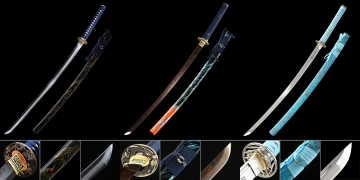
For a collector who already owns conventional katana or standard wakizashi mountings, a flame blade piece is a genuinely distinctive addition — it occupies a visual category that most mainstream Japanese sword collections don't cover. The ornate koshirae available in this style, such as snake tsuba with black-gold lacquered saya or plum blossom fittings with white lacquer finishes, elevate the piece beyond a generic display item into something with clear thematic and symbolic identity. It works especially well as a gift when the recipient has an existing collection with a unified aesthetic, as the flame blade acts as a statement centerpiece rather than a duplicate of pieces they likely already own. A padded display box or wall-mount stand paired alongside makes for a complete, presentation-ready gift.
What does the snake tsuba symbolize on a Japanese sword mounting?
In Japanese iconography, the snake — or hebi — carries layered meanings depending on context. It is frequently associated with protection, transformation, and hidden wisdom, as snakes were believed in many East Asian traditions to guard sacred spaces and treasures. On sword fittings, the snake motif gained particular traction during the Edo period, when artisans competed to produce tsuba with elaborate symbolic programs rather than simple geometric designs. A snake-motif tsuba on a flame blade wakizashi creates an intentional visual dialogue: the sinuous, undulating form of the serpent mirrors the wave-like geometry of the blade itself, making the entire mounting feel like a unified design statement. For collectors interested in Japanese metalworking traditions, tsuba with naturalistic motifs like the snake represent some of the most technically demanding work in the craft.