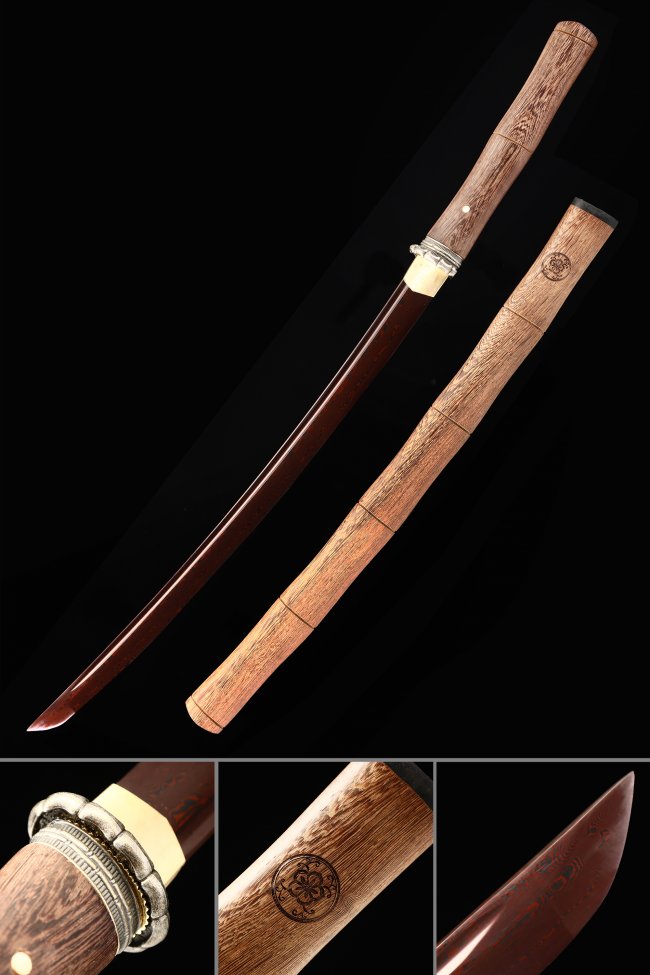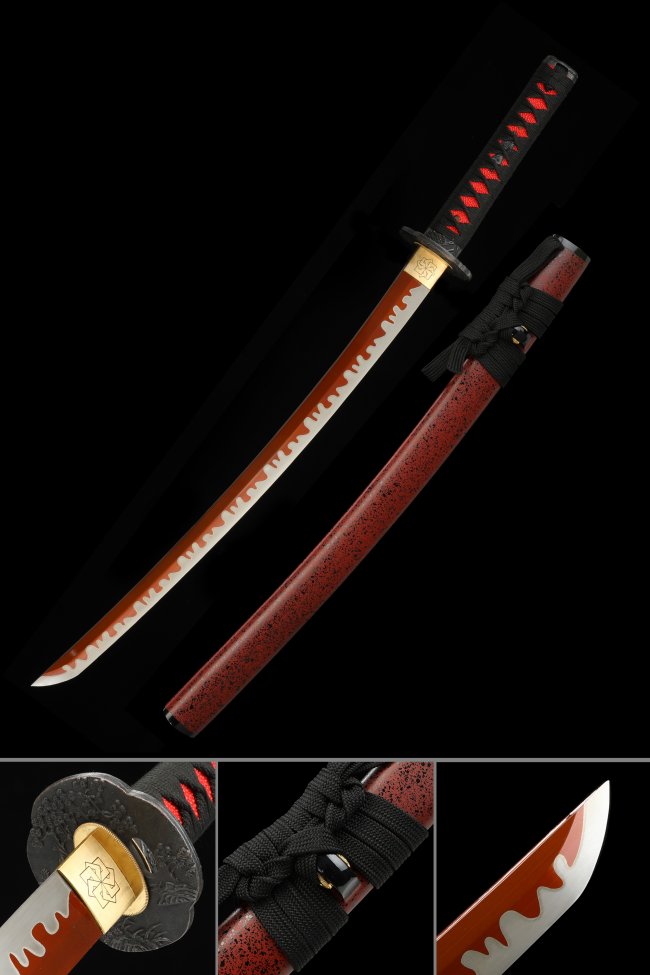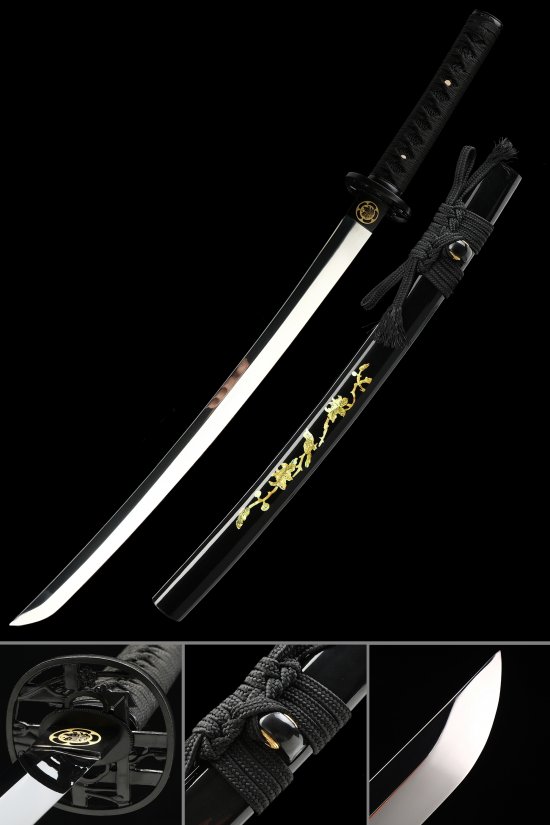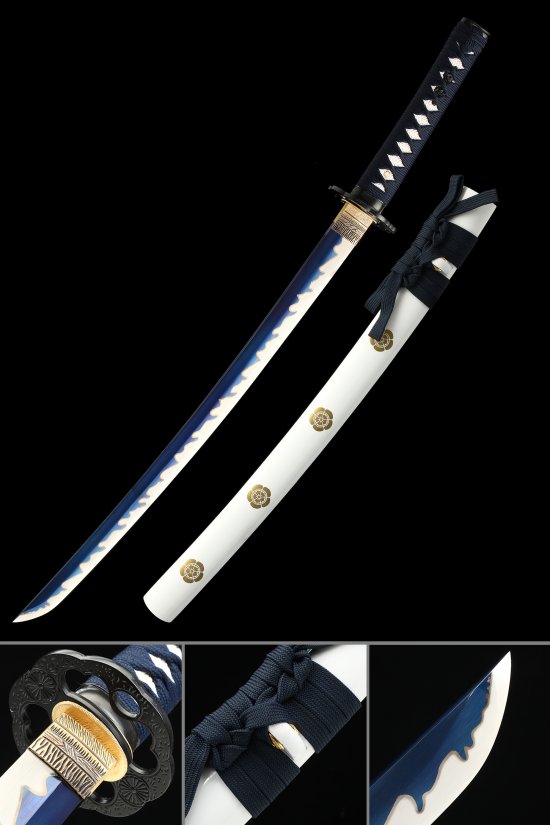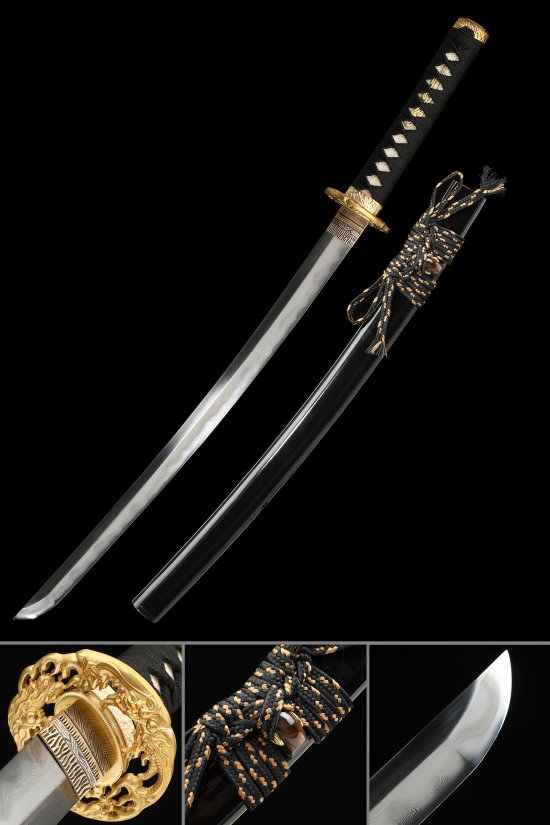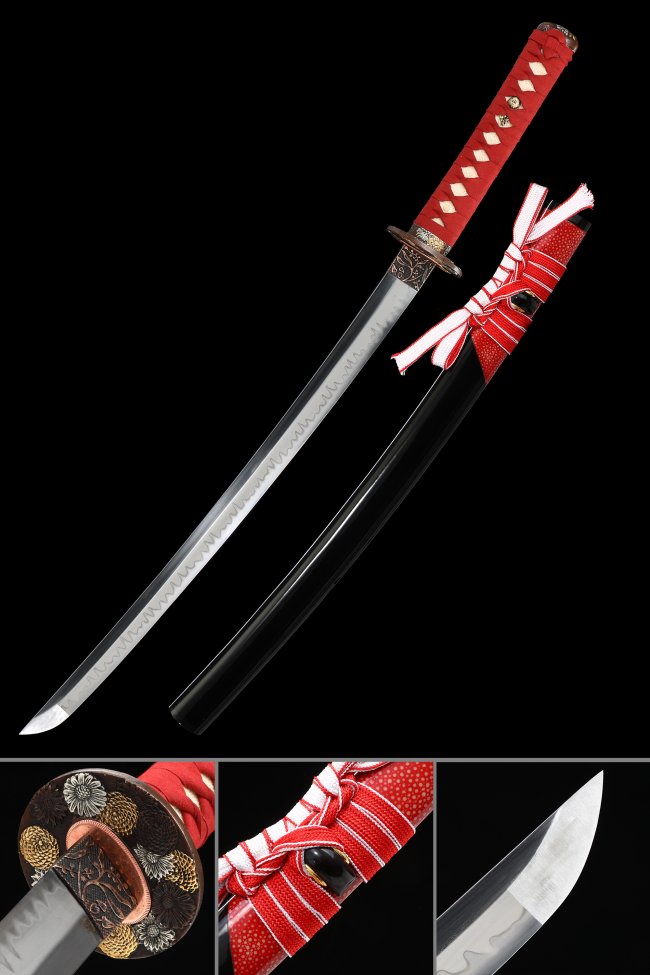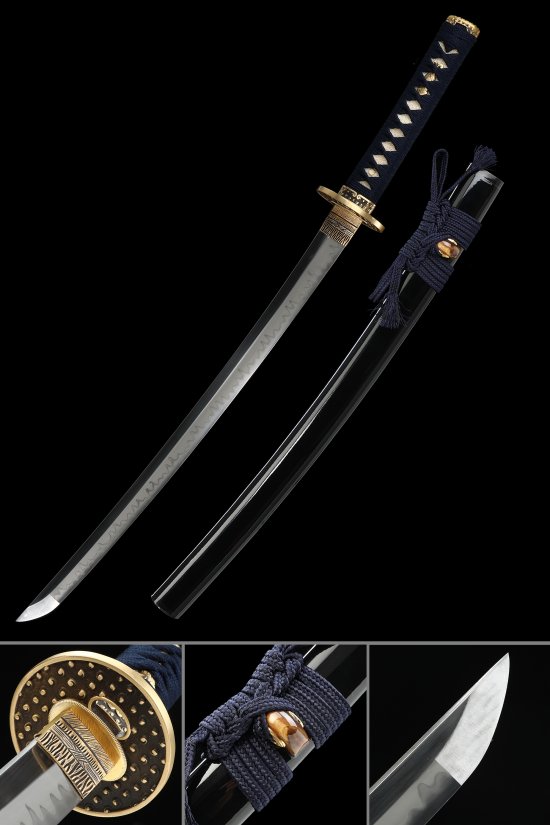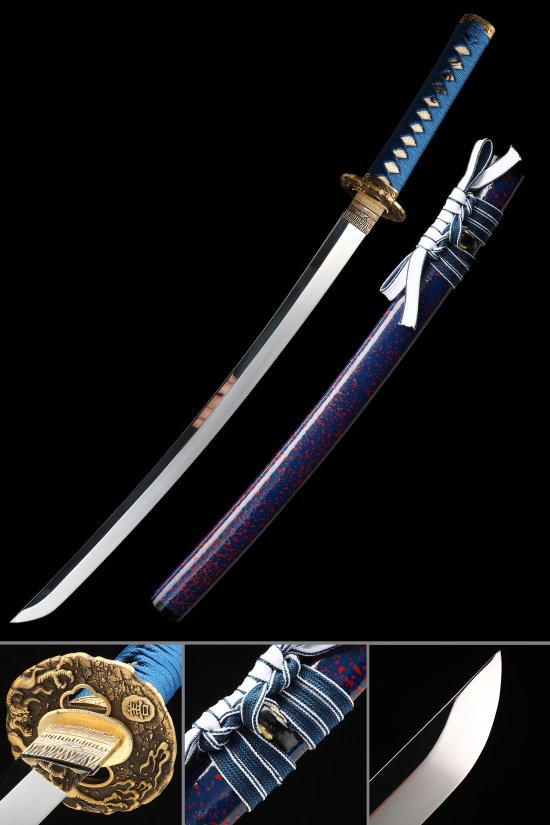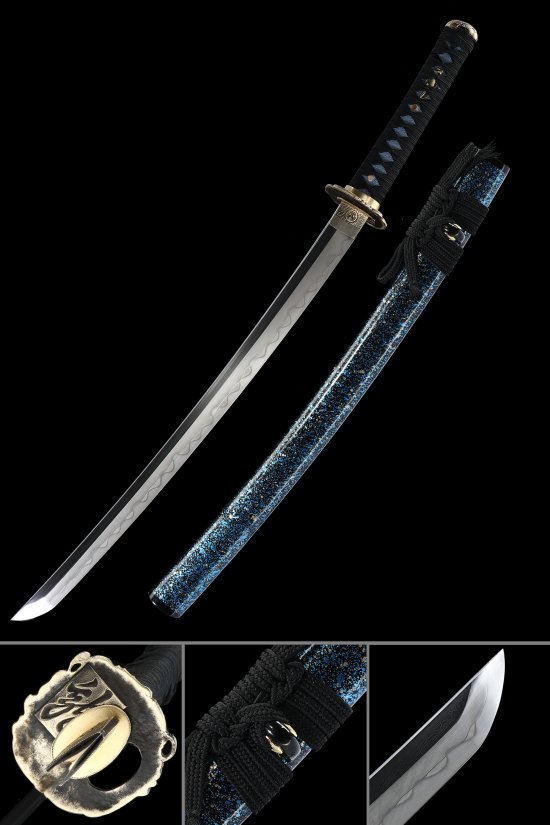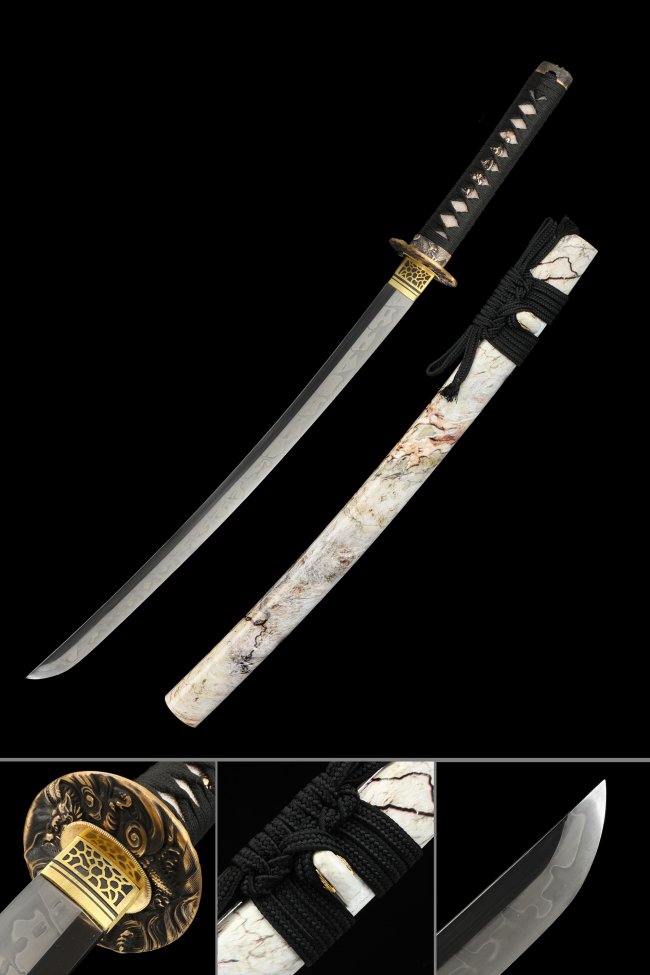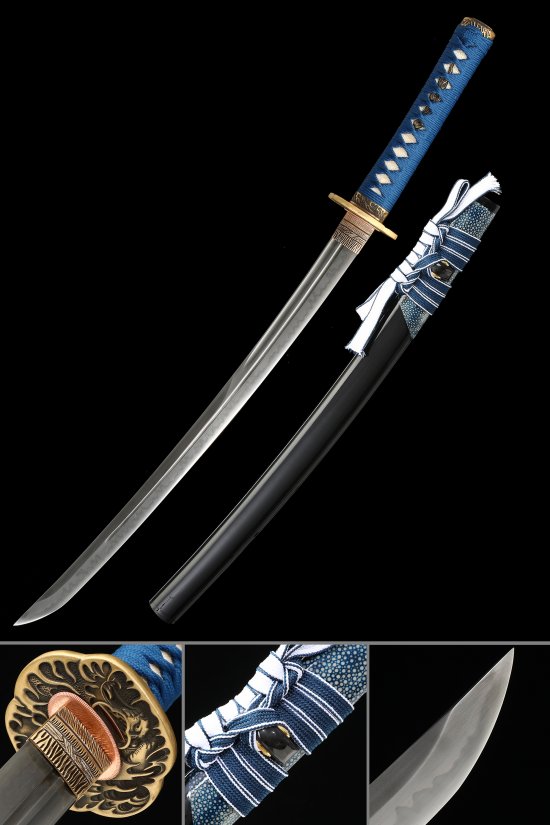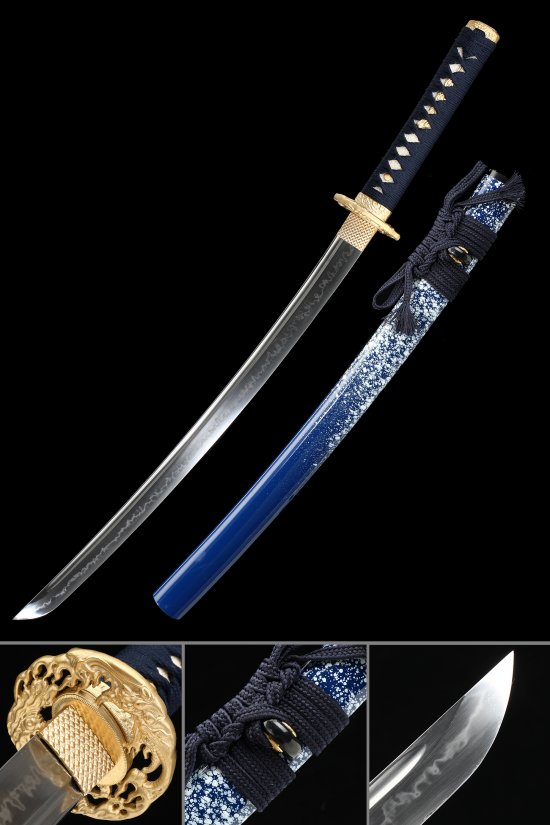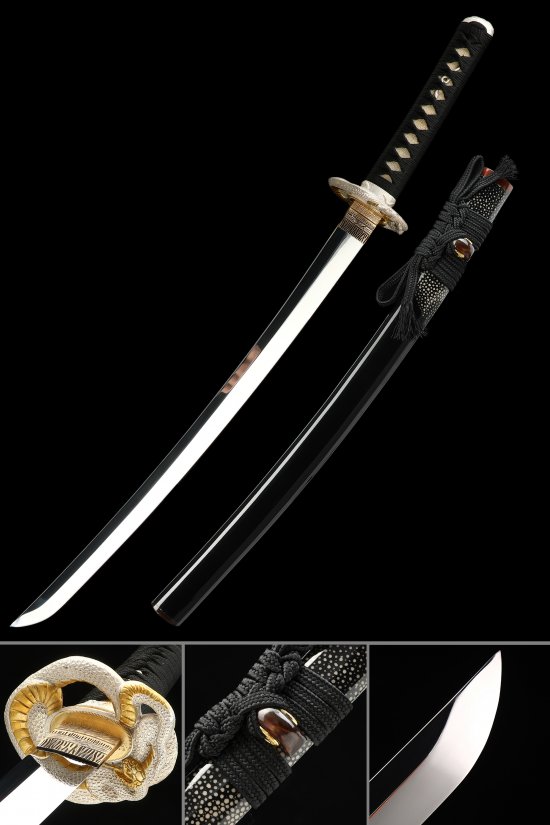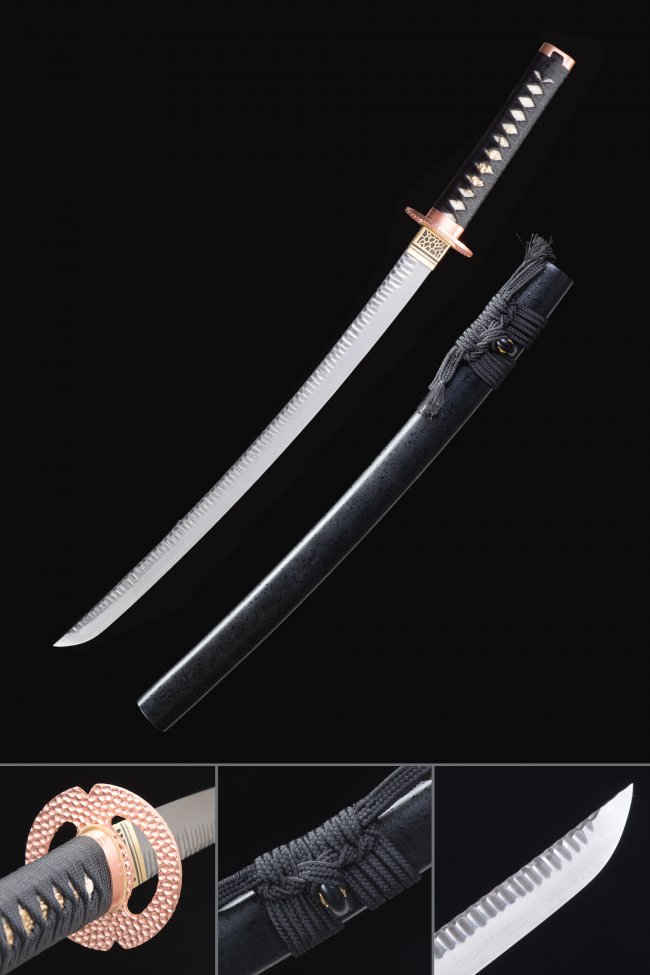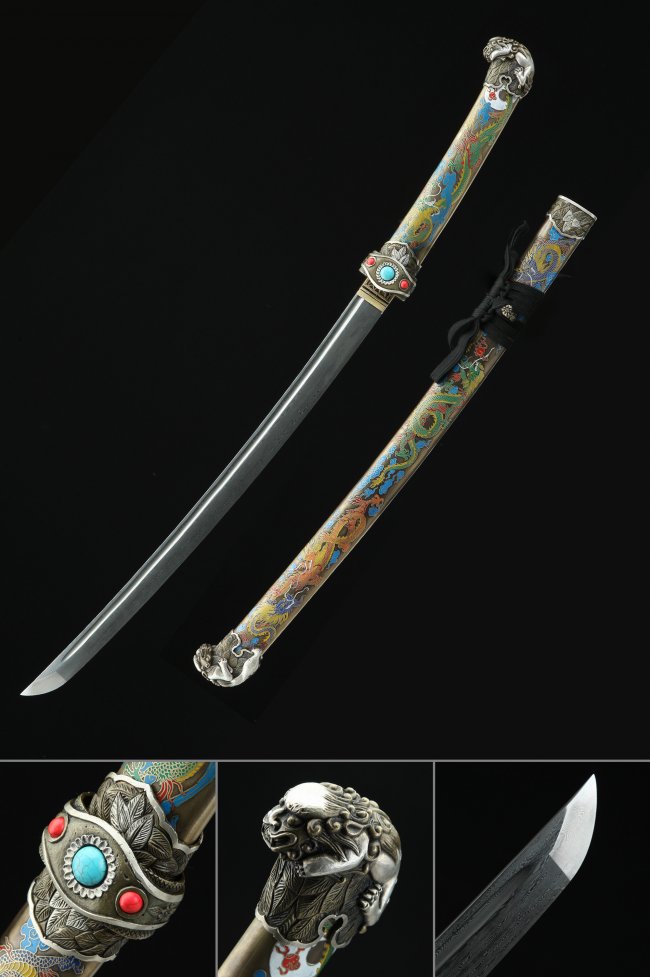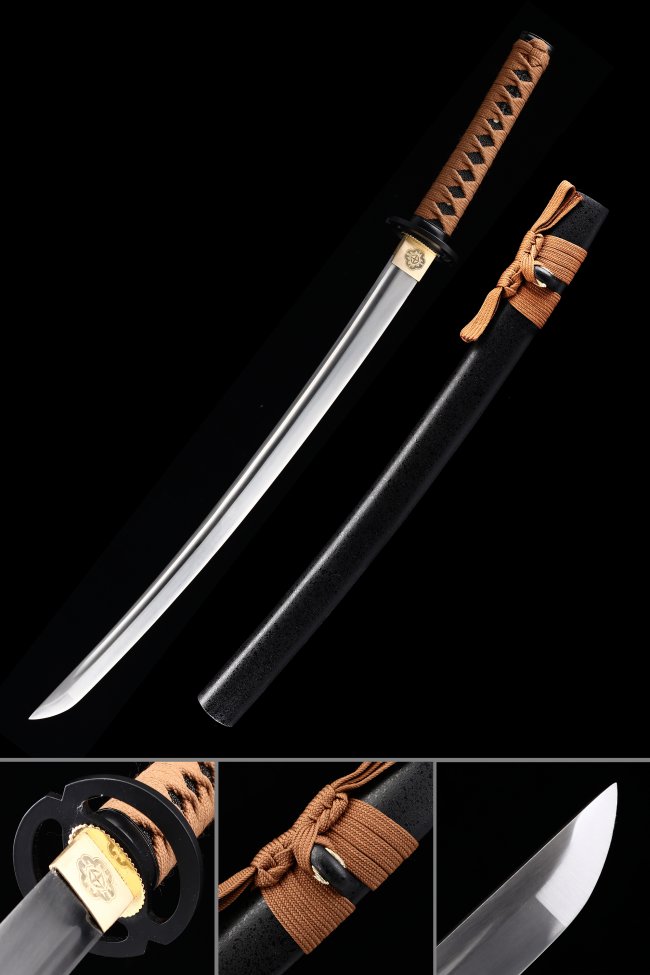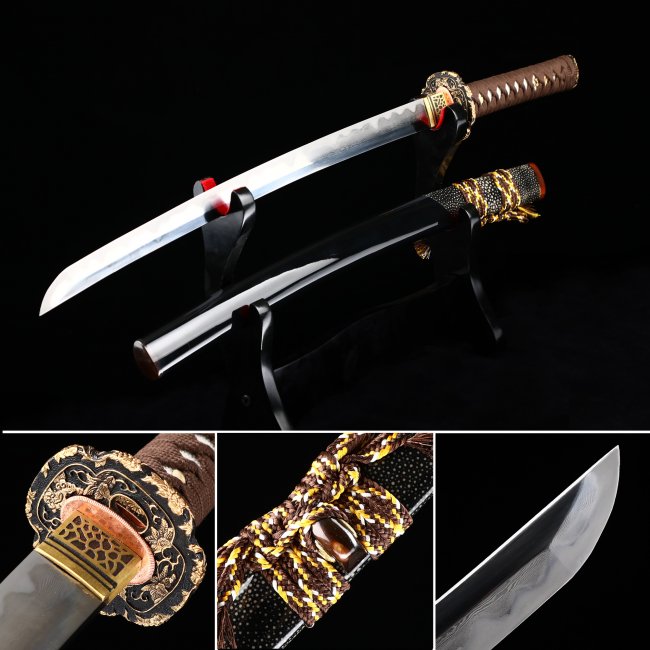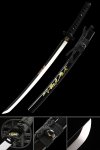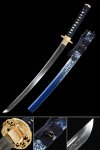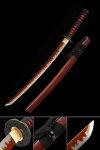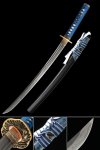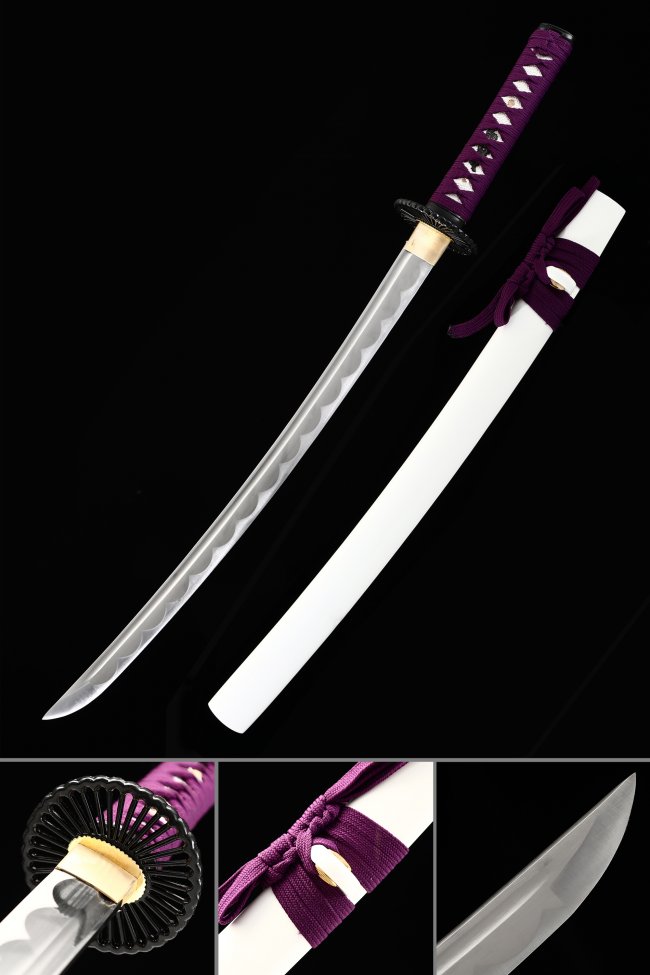
Full Tang Wakizashi
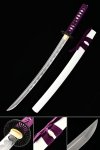
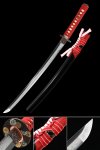
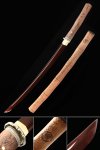
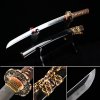
Every wakizashi here is built the way it should be — blade steel running unbroken through the entire handle, locked in place with bamboo mekugi pins. No welded rods, no threaded bolts, no shortcuts. These are companion swords forged from a single piece of carbon steel, hand-shaped and properly assembled so the blade and grip work as one unit. Whether you carry it alongside a katana in a traditional daisho pairing or display it as a standalone piece, a full tang wakizashi delivers the structural integrity that separates a real sword from a wall decoration.


Related Collections
Frequently Asked Questions
What is the difference between a wakizashi and a katana?
The fundamental difference is blade length: a katana has a blade of 60 centimeters or longer, while a wakizashi blade falls between 30 and 60 centimeters. This isn't just a sizing distinction — it changes how the sword handles, what it's used for, and how it's carried. A katana is a two-handed weapon optimized for open-space combat with sweeping cuts and powerful strikes, while a wakizashi is lighter, faster to draw, and designed for one-handed use in confined spaces where a katana's length becomes a disadvantage. In terms of construction, both swords use identical forging methods, steel types, and mounting styles — a wakizashi is essentially a scaled-down katana with the same curvature profile, the same tang construction, the same tsuba-guard-grip assembly. The historical relationship between the two is inseparable: samurai wore them as the daisho pair, with the katana as the primary weapon and the wakizashi as the constant companion that never left the warrior's side. For collectors, the practical differences matter too — a wakizashi requires less display space, is easier to handle and draw for inspection, weighs less, and is typically more affordable in the same steel grade and finishing tier. Many collectors start with a katana and add a wakizashi later to complete a daisho pair, especially in a matching finish like all-black. If you're choosing between the two, consider starting with whatever fits your available display space, then expanding with a matched piece from the katana and wakizashi set collection when you're ready to pair them up.
What is a full tang wakizashi and why does it matter?
A full tang wakizashi is a Japanese short sword where the blade steel extends as a single, continuous piece through the entire handle — from the cutting tip all the way to the pommel cap. The portion of steel inside the handle is called the nakago, and it is secured by one or two bamboo pins called mekugi that pass through aligned holes in the tang and the wooden handle core. This construction method has been the standard in authentic Japanese sword making for centuries because it creates the strongest possible bond between blade and handle. The alternative — a partial tang, rat-tail tang, or welded tang — uses a thin metal rod attached to the blade base that extends only partway into the grip. These weaker constructions exist mainly to reduce manufacturing cost and are found on decorative wall-hangers and budget replicas. Under any real stress — cutting, drawing practice, or even an accidental drop — a partial tang can fail catastrophically. The handle can crack, the blade can loosen, or in worst cases the blade separates from the handle entirely during a swing. A full tang eliminates these failure modes because the continuous steel distributes impact forces along the entire length of the assembly. For anyone planning to use their wakizashi for martial arts training, tameshigiri cutting, or even just regular handling and display, full tang construction is not optional — it's the baseline requirement for a sword you can trust. Beyond safety, full tang construction affects balance and feel. The weight of the steel running through the handle shifts the center of gravity closer to the guard, which gives you better control during cuts and makes the sword feel more responsive in hand. A full tang wakizashi sword simply handles better than a partial tang version of the same design, and that difference is immediately noticeable the first time you pick one up.
What steel is best for a full tang wakizashi?
The best steel depends on how you plan to use the sword, and there's no single answer that covers every buyer. For cutting practice and tameshigiri, T10 tool steel is the top choice among serious practitioners. T10 contains tungsten, which increases hardness and wear resistance beyond what standard carbon steel offers. It holds an edge through extended cutting sessions, responds exceptionally well to clay tempering with vivid hamon development, and produces blades that are both visually striking and functionally excellent. The main consideration with T10 is that its hardness makes it slightly less forgiving of poor cutting angles — technique matters more because the steel is less flexible than softer options. For a balance between performance and durability, 1095 high carbon steel is the sweet spot. It's hard enough to hold a sharp edge and develops beautiful hamon patterns during clay tempering, while remaining accessible for intermediate practitioners who are still refining their technique. The 1095 designation means approximately 0.95 percent carbon content, which is high enough for excellent edge hardness when properly heat treated. For beginners or buyers who want a functional sword without worrying about maintenance intensity, 1060 carbon steel offers the most forgiving experience. It's tough, flexible enough to absorb mistakes without chipping, and takes a serviceable edge that's easy to maintain. Damascus folded steel is primarily an aesthetic choice — the repeated folding creates visible grain patterns across the blade surface that make each piece unique, but functionally the blade performs based on whatever base steel was used in the billet. Spring steel options like 9260 offer extreme flexibility and near-unbreakable toughness, making them ideal for heavy cutting or martial arts training where the sword takes repeated impact. For display-focused buyers, any of these steels work well, but T10 and 1095 produce the most visually dramatic blades due to their superior hamon development during the battle ready wakizashi forging process.
ow long is a typical wakizashi blade?
A wakizashi blade measures between 30 and 60 centimeters, which translates to roughly 12 to 24 inches. This range is defined by Japanese sword classification tradition — anything shorter than 30 centimeters falls into tanto territory, and anything longer than 60 centimeters enters katana classification. Within that range, you'll find significant variation. Shorter wakizashi blades around 30 to 40 centimeters feel closer to a large knife or tanto, making them compact, fast to draw, and easy to control with one hand. These shorter versions work well for close-quarters practice drills and fit comfortably in tighter display spaces. Mid-range blades around 45 to 50 centimeters represent the most common wakizashi length and provide the best balance between reach, control, and portability. This is the length most people picture when they think of a traditional samurai companion sword, and it's the size that pairs most naturally with a standard katana in a daisho set. Longer wakizashi approaching 55 to 60 centimeters blur the line with short katana, sometimes called ko-katana. These longer versions offer more reach and cutting leverage while remaining more maneuverable than a full katana in confined spaces. Some practitioners specifically seek out long wakizashi for two-sword technique training, where the companion blade needs enough length to be effective as an offensive weapon rather than just a parrying tool. Overall sword length including handle typically adds another 10 to 15 centimeters beyond the blade measurement. When choosing a length, think about your primary use case. Display buyers should consider wall space and stand proportions. Martial artists should match the length to their training style. Daisho collectors should ensure the wakizashi blade is visibly shorter than their katana to maintain the traditional size contrast that defines the katana set aesthetic.
Can you use a full tang wakizashi for cutting practice?
Yes — in fact, a full tang wakizashi with proper construction and suitable steel is an excellent cutting tool. The shorter blade makes it more forgiving for beginners learning proper technique because the reduced length means less leverage working against you if your angle is slightly off. Many tameshigiri practitioners start with a wakizashi before moving to a full katana precisely because the learning curve is gentler. For cutting soft targets like tatami mats and water-filled bottles, virtually any full tang wakizashi in 1045 or higher carbon steel will perform well. The blade has enough weight and edge geometry to make clean cuts through rolled tatami, and the shorter length makes single-hand cutting techniques more accessible. For medium and harder targets like thick tatami bundles or green bamboo, you'll want 1095 or T10 steel with a properly hardened edge — typically in the 58 to 62 HRC range. These harder steels maintain their edge through multiple cuts without rolling or dulling significantly. The key requirements for a cutting-capable wakizashi go beyond just the steel grade. The blade needs correct geometry — appropriate thickness at the spine tapering to a thin edge, with distal taper from guard to tip. The handle must be tight with no wobble, secured by properly fitted mekugi pins through a full tang. The edge should be factory sharpened or professionally sharpened to a geometry suitable for cutting. And the balance should feel natural in your hand, with the center of gravity sitting where it gives you control rather than fighting your grip. One practical advantage of cutting with a wakizashi instead of a katana is the reduced space requirement. You can set up a cutting stand in a smaller yard, garage, or workshop where a full katana swing would be dangerous. The authentic Japanese wakizashi in this collection are built to handle real cutting — they're working swords, not decorative objects pretending to be weapons.
Is a full tang wakizashi good for self-defense?
This question comes up frequently in forums and deserves a careful answer. From a purely technical standpoint, a full tang wakizashi is a real weapon with a sharp edge and solid construction — it is absolutely capable of causing serious harm. The shorter blade compared to a katana actually makes it more practical in indoor and confined-space scenarios, which is exactly how samurai used it historically. The wakizashi was the blade that went everywhere, including indoors where the katana stayed at the door. Its compact size allows faster draws and more maneuverability in tight spaces like hallways and rooms. However, the practical reality of using any sword for modern self-defense raises significant legal, practical, and ethical concerns that go well beyond the sword's capability. In most jurisdictions, carrying a sword in public is illegal, and using a bladed weapon in a confrontation — even a defensive one — creates severe legal liability. Laws around self-defense with weapons vary dramatically by location, and the consequences of getting it wrong are life-altering. From a practical standpoint, modern self-defense experts consistently recommend purpose-built tools designed for defensive situations rather than traditional weapons that require years of training to use effectively. A wakizashi in untrained hands is more dangerous to the user than to an attacker. Proper wakizashi technique requires extensive practice in drawing, cutting angles, and distance management — skills that take months or years to develop under qualified instruction. That said, many martial artists train with wakizashi specifically because the skills transfer to general self-awareness, spatial judgment, and physical discipline. The wakizashi sword tradition carries a martial heritage worth studying for its own sake, even if the sword itself isn't your go-to home defense plan. If self-defense capability matters to you, invest in proper training first — the sword is only as effective as the person holding it.
How much does a good full tang wakizashi cost?
Pricing for full tang wakizashi spans a wide range, and understanding what you get at each level helps you spend wisely without overpaying or buying something that disappoints. Under a hundred dollars, you're unlikely to find genuine full tang construction with quality carbon steel. This price range is dominated by stainless steel decorative pieces and partial tang wall-hangers with etched cosmetic hamon. They look acceptable in photographs but don't hold up to physical inspection or any functional use. Between one hundred and two hundred dollars, you enter the territory of genuine hand-forged full tang wakizashi in basic carbon steels like 1045 and 1060. These swords have real tang construction, functional edges, and acceptable fittings. The hamon may be acid-etched rather than clay-tempered at this price point, and the fittings will be simpler cast alloys rather than hand-finished copper. For a first functional wakizashi or a casual display piece, this range delivers honest value. The sweet spot sits between two hundred and four hundred dollars. Here you find clay-tempered blades with genuine hamon in steels like 1095 and T10, better fitting quality with copper alloy tsuba and menuki, genuine ray skin under properly tensioned handle wrapping, and lacquered saya with real depth to the finish. The construction quality at this price point produces swords that satisfy both display collectors and cutting practitioners. Between four hundred and seven hundred dollars, you're getting premium steel, excellent heat treatment, hand-carved fittings with detailed artistry, and saya finishing that approaches custom work. These are the wakizashi that experienced collectors call exceptional values — swords where the craftsmanship exceeds what the price tag would suggest. Above seven hundred dollars enters semi-custom and custom territory where specific design elements can be requested. For most buyers looking for a quality full tang wakizashi that performs well and looks impressive on display, the two hundred to four hundred dollar range offers the strongest combination of genuine craftsmanship and accessible pricing.
Can a wakizashi be used for iaido practice?
Yes, and there's a specific tradition within Japanese martial arts that uses the wakizashi for formal practice. Kodachi techniques — methods using the shorter companion sword — appear in several classical sword schools and form an important part of two-sword training methods like nito-ryu, the style made famous by Miyamoto Musashi. In these systems, the practitioner wields a katana in one hand and a wakizashi in the other, requiring comfort with both blade lengths. Many iaido schools include wakizashi-specific kata that teach drawing, cutting, and resheathing with the shorter blade. The mechanics differ from katana iaido because the shorter blade changes the draw path, the cutting arc, and the distance management. These differences make wakizashi practice valuable even for students who primarily train with katana, because the skills transfer — particularly the one-handed control and the awareness of working at closer range. For iaido practice specifically, you need a wakizashi built to handle repeated drawing and resheathing. The saya mouth needs proper fit — tight enough to hold the blade securely during wear but smooth enough to allow clean draws without excessive force. The habaki should seat firmly without being so tight that it requires muscle to break free. The blade edge can be either sharp or unsharpened depending on your school's requirements and your experience level. TrueKatana offers iaito wakizashi designed specifically for training, with construction optimized for the demands of repeated drawing practice. Full tang construction is non-negotiable for iaido because the repeated impact of drawing and cutting kata stresses the handle assembly thousands of times over a training lifetime — a partial tang will fail long before your technique matures.
Customer Reviews
absolutely beautiful a true work of art completed by a true craftsman
![]() |
1045 Carbon Steel Wakizashi Sword Full Tang with Purple Tsuka Wrap and White Piano Lacquer Saya |
The sword I ordered reached safely in good condition to Indonesia. The quality is good no complaint. The people in True Katana are friendly and helpful. Thank you True Katana
![]() |
T10 Manganese Steel Wakizashi with Red Ito, Chrysanthemum Tsuba in Black Lacquer Saya |
It is a very beautiful wakizashi. The steel and binding are very nice. The handle though does have a small wiggle in the base of it.
![]() |
1045 Carbon Steel Wakizashi Sword Full Tang with Purple Tsuka Wrap and White Piano Lacquer Saya |
Great quality and craftsmanship! Will definitely purchase additional items in the future.
![]() |
Pattern Steel Wakizashi with Red Blade and Natural Wenge Wood Saya - Full Tang Japanese Short Sword |
A very beautiful short sword. It is a gift for my adult daughter and she will love it.
![]() |
Damascus Steel Wakizashi with Real Hamon, Full Tang Blade in Black-Gold Koshirae |
Nice piece r
Blade is about 20 inches r
Correct size for a traditional Wakizashi. r
Happy with it.
![]() |
1095 Carbon Steel Wakizashi with Black Lacquer Saya and Chrysanthemum Alloy Tsuba |
Overall, I love the sword, well-made, and sharp edge however, unfortunately, the sheath was slightly damaged upon receiving
![]() |
T10 Carbon Steel Wakizashi with Real Hamon in Blue-White Lacquer Saya - Gold Dragon Tsuba |
Pretty cool never had one before this is my first one. But I love it, will definitely be buying more.
![]() |
Manganese Steel Wakizashi with Red Blade & Black-Red Tsuka in Chrysanthemum Koshirae |