
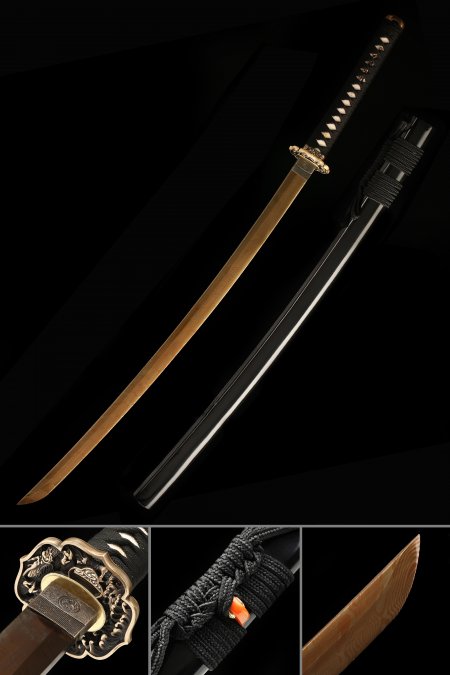
Gold Blade Damascus Steel Katana
The Gold Blade Damascus Steel Katana collection brings together the ancient art of pattern-welded steel and a striking gold-tinted finish, resulting in display pieces that command immediate attention. Each katana is hand-forged from folded Damascus steel, revealing flowing hiraita and mokume grain patterns beneath a lustrous gilded surface. Collectors receive free standard shipping on every order, backed by a hassle-free return policy for complete peace of mind.
Free Shipping
269.00 USD
Related Collections
Damascus Steel Sword78 items
Damascus Naginata4 items
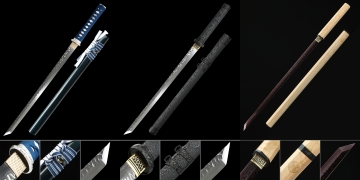
Damascus Steel Ninjato19 items
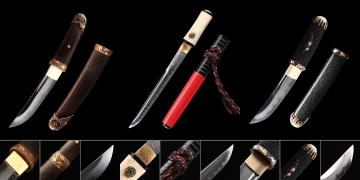
Damascus Steel Aikuchi8 items
Frequently Asked Questions
What makes a Damascus steel blade look gold?
The gold appearance on these katana comes from a specialized surface treatment applied after the Damascus steel has been acid-etched to reveal its layered grain. Unlike paint or simple plating, the process works with the etched topography of the steel, allowing the natural hada — the visible folded grain pattern — to remain prominent beneath the warm amber-gold tone. The result is a finish that shifts in appearance depending on lighting angle, making the Damascus layering look almost luminous under directional display lighting. The treatment is applied as a final step in the finishing process and does not obscure the metallurgical character of the underlying steel.
How is Damascus steel different from mono-steel in a display katana?
Mono-steel blades — those forged from a single billet of high-carbon steel — produce a clean, uniform surface with visible hamon (temper line) as the primary visual feature. Damascus, or pattern-welded steel, involves stacking and forge-welding multiple steel types together, then folding the billet repeatedly to create hundreds of layers. When acid-etched, the differing carbon content between layers reacts at different rates, producing the flowing, organic grain patterns Damascus is known for. For display collectors, this means every Damascus blade carries a surface that is visually richer and inherently one-of-a-kind — a significant distinction when the piece is meant to be seen rather than used.
Does the tsuba style affect the overall display aesthetic?
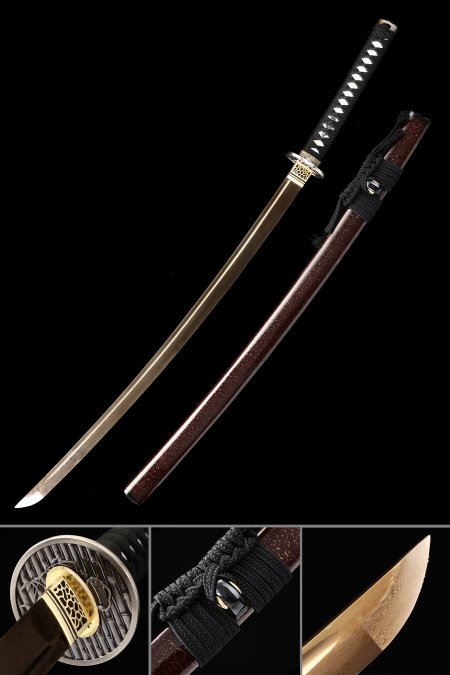
Significantly. The tsuba — the handguard positioned between blade and handle — is often the most visually prominent fitting on a mounted katana, and its design sets the tone for the entire koshirae. In this collection, the bamboo tsuba pairs with a dark red hardwood saya to create a naturalistic, warm-toned display aesthetic that complements the gold blade without visual competition. The dragon tsuba on the black lacquer saya configuration takes the opposite approach: high contrast, bold iconography, and a lacquer depth that makes the gilded blade appear to float. Collectors choosing between configurations should consider the display environment — warm wood tones suit traditional or rustic settings, while the black lacquer variant suits modern or minimalist display spaces.
How should I care for a gold-finished Damascus katana in long-term storage?
Long-term care for a gold-finished Damascus blade follows the same principles as any high-carbon steel collectible, with one additional consideration: avoid abrasive polishing compounds entirely, as these can alter the surface treatment. For maintenance, apply a thin, even coat of choji oil — traditional Japanese sword oil — to the blade every two to three months using a soft cloth or nuguigami. Store the katana in its saya horizontally or at a slight angle, edge upward in the traditional Japanese manner, in a location with stable humidity below 60%. Avoid storage near exterior walls in humid climates. Never use silicone-based sprays, which can trap moisture under the finish over time.
Is a gold blade Damascus katana a good choice as a collector's gift?
It is one of the more distinctive gift options in the Japanese sword collectible space precisely because it combines two elements — Damascus patterning and the gold blade finish — that each have strong visual impact on their own. Together, they produce a display piece that reads as extraordinary even to someone unfamiliar with the technical details of sword construction. For gift-giving, the configuration choice matters: the dark red hardwood and bamboo tsuba set suits collectors who appreciate natural materials and traditional aesthetics, while the black lacquer and dragon tsuba set appeals to those drawn to bold, graphic presentation. Both arrive with a fitted saya, making them presentation-ready without requiring additional display accessories.