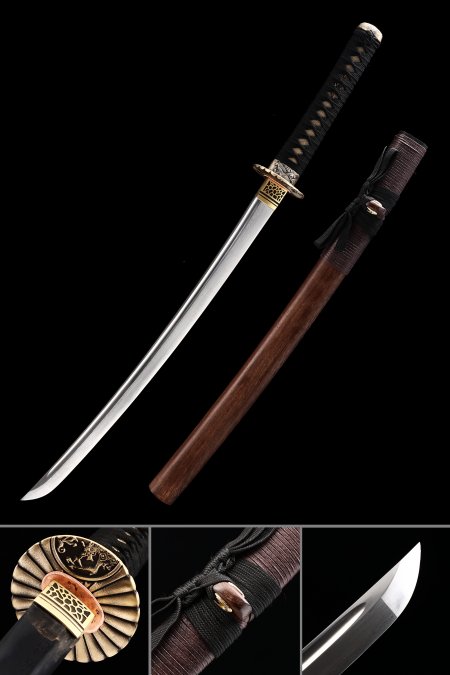
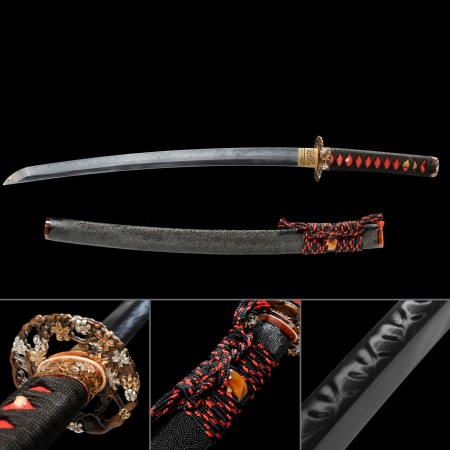
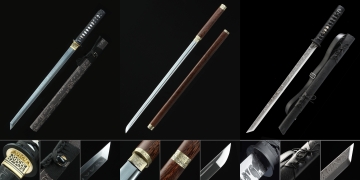
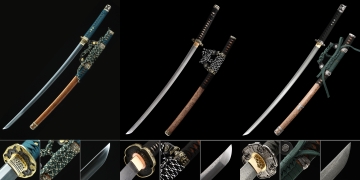
Gold Brown Tsuba Wakizashi

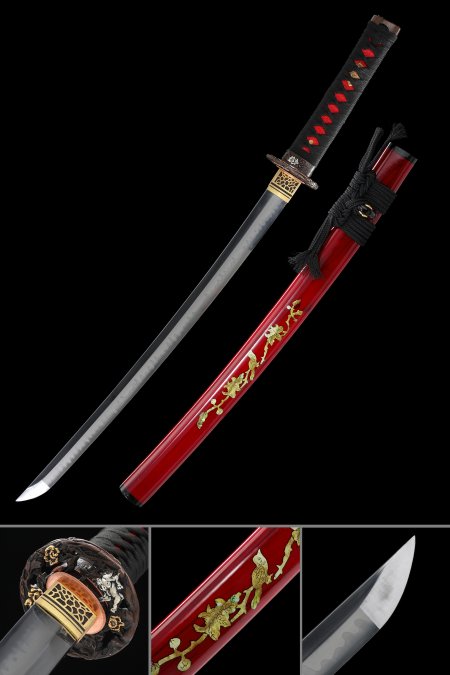
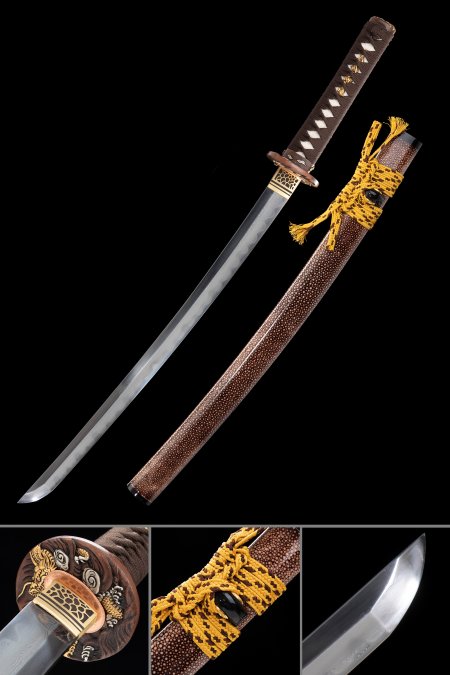
Gold-brown tsuba wakizashi blends classical Japanese smithing with rich, warm-toned fittings that collectors instantly recognize as hallmarks of refined koshirae craftsmanship. Each piece in this collection pairs hand-forged blades - in Damascus, T10 carbon, or folded Melaleuca steel - with ornately detailed tsuba finished in layered gold and brown tones that complement rayskin-wrapped handles and lacquered saya. Free standard shipping is included on every order, along with hassle-free returns for a confident collecting experience.
Showing 4 Products

Frequently Asked Questions

What makes gold-brown tsuba different from standard iron tsuba?
Standard iron tsuba - the most historically common type - were finished in dark, oxidized tones that minimized visual distraction and blended with utilitarian koshirae. Gold-brown tsuba, by contrast, are crafted from brass, copper alloy, or shakudo-adjacent materials then hand-finished to produce warm, layered tones that range from deep amber to bright gold depending on the angle of light. This finish requires more material refinement and finishing time than plain iron, and the result is a tsuba that functions as a focal point of the koshirae rather than a purely structural element. Collectors often cite the warm-toned tsuba as the single detail most responsible for the overall character of a wakizashi's presentation.
How does T10 steel differ from Damascus in a wakizashi blade?
T10 is a high-carbon tool steel with a tungsten addition that improves wear resistance and allows for differential clay-tempering - the process that produces a genuine hamon along the blade's edge. The result is a blade with a harder edge zone and a more resilient spine, with the hamon visible as a natural wave or mist-like boundary between the two zones. Damascus, by contrast, is created by forge-welding layers of contrasting steels, then drawing and folding them repeatedly until a flowing grain pattern emerges across the entire blade surface. T10 displays its character primarily along the edge; Damascus displays it across the full flat. Neither is superior - they appeal to different collecting sensibilities, with T10 favored for hamon detail and Damascus for surface artistry.
Is rayskin (samegawa) durable enough for long-term display?
Samegawa - genuine ray skin - is one of the most durable natural grip materials used in Japanese blade fittings. Its pebbly, calcified nodule surface resists compression and moisture better than most wrapped leathers, and when properly maintained it retains its texture and color for decades. For display purposes, the main risk is prolonged direct sunlight, which can fade the natural cream or brown tone of the skin over time. Keeping the wakizashi away from UV exposure and applying a very light coat of Renaissance Wax or similar archival-grade microcrystalline wax to the samegawa once or twice a year is sufficient to preserve it. The skin on the saya in select pieces in this collection also benefits from the same treatment.
What display setup works best for a wakizashi collection?
Wakizashi are typically 18 to 24 inches in overall length, which makes them well-suited to both horizontal and vertical display stands. A two-tier horizontal stand that holds both a katana and wakizashi is the traditional daisho pairing arrangement and works especially well when both blades share complementary koshirae - such as matching gold-brown tsuba across pieces. Vertical wall-mounted racks draw attention to the tsuba and handle wrap, which is particularly effective when displaying ornately finished pieces like those with dragon or floral tsuba motifs. For enclosed cases, silica gel packets help manage humidity, and a 40-60% relative humidity range is generally recommended to prevent any movement in wooden components like the saya or handle core.
Are these wakizashi suitable as gifts for collectors?
A gold-brown tsuba wakizashi makes a considered gift for anyone with an interest in Japanese blade history, martial arts heritage, or decorative metalwork. The combination of hand-forged steel and detailed fittings gives the piece genuine craft value rather than the appearance of a mass-produced reproduction. For gifting, pieces with a full koshirae - fitted saya, sageo cord, and matching ito wrap - present well out of the box without requiring additional accessories. If the recipient collects daisho-style displays, pairing a wakizashi from this collection with a katana in a matching aesthetic from our Wakizashi collection creates a cohesive presentation that experienced collectors recognize immediately as intentional and well-matched.

Customer Reviews

Joseph Evans Virginia, United States

The wakizashi that I received was absolutely gorgeous! The blade, handle, scabbard, and every detail was second to none…oh and it’s sharp as heck too, so don’t go fooling around or you’ll be admiring one of these beautiful weapons from the emergency room. This is my second time ordering from TrueKatana and both times it has been a home run! Love it!
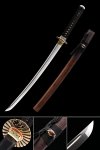
Damascus Steel Wakizashi with Rosewood Saya - Dragon Copper Tsuba, Black Ito, 21.25 Damascus Steel Wakizashi with Rosewood Saya - Dragon Copper Tsuba, Black Ito, 21.25" Blade
William Schmidtke Illinois, United States

Sword arrived in good condition. Was very happy with fit and finish. Overall impression was outstanding, but...
Medallions were both located over one end of each peg hole making removing of pegs impossible. Have sent email to customerservice. Tried to type in proper japanese terminology but spell check says no. Assuming this is resolved satisfactorily and promptly, I award you maximum stars. I would remind anyone reading this that how a company resolves the inevitable "ooops" is the true mark of its worth. Seriously, look forward to dealing with you in the future. And consider adding sword bags to your accessories line.

Damascus Steel Wakizashi with Rosewood Saya - Dragon Copper Tsuba, Black Ito, 21.25 Damascus Steel Wakizashi with Rosewood Saya - Dragon Copper Tsuba, Black Ito, 21.25" Blade