What makes Damascus steel tanto different from standard high-carbon blades?
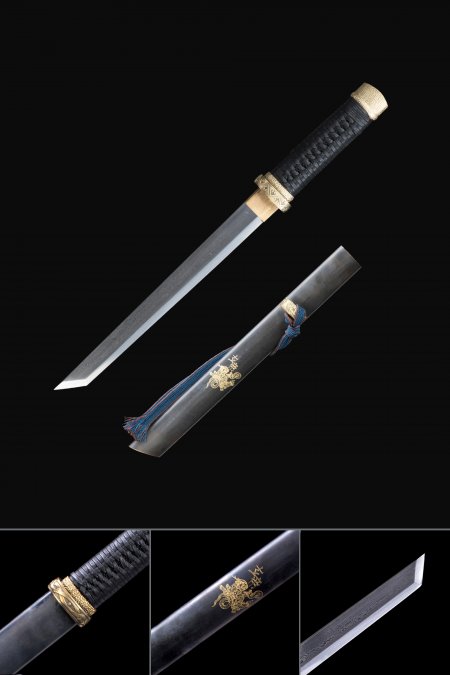
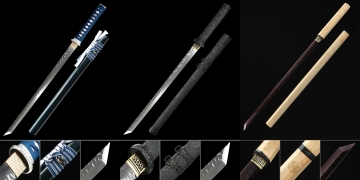
Damascus steel is produced by forge-welding multiple layers of steel with differing carbon content, then repeatedly folding and drawing out the billet under heat. This process creates the flowing, organic grain pattern visible on the blade's surface — a direct expression of the material's internal structure. Standard monosteel blades, even those made from premium high-carbon stock like 1095 or T10, present a uniform surface that relies on polishing and hamon activity for visual interest. Damascus tanto offer an additional layer of visual complexity: the pattern shifts as light moves across the blade, revealing depth that monosteel simply cannot replicate. For collectors, this distinction matters both aesthetically and in terms of the skill required to produce a coherent, well-distributed pattern across a short-blade format like the tanto.
Why is gray chosen as the mounting color for some tanto collections?
Gray mountings — whether achieved through gray rayskin saya, oxidized copper fittings, or subdued cord wrapping — serve a specific visual function: they create a neutral, cool-toned backdrop that allows the Damascus pattern and hamon line to dominate the composition. Bolder mounting colors like red or gold can compete with the steel's surface activity, drawing the eye away from the blade's most technically interesting elements. Gray, by contrast, recedes and frames. This approach aligns with a certain school of Japanese aesthetic sensibility that values restraint and intentional understatement, allowing individual material qualities to speak without decorative interference. Collectors who prefer display pieces that reward close examination tend to favor this color discipline.
What is aikuchi style, and how does it affect the tanto's appearance?
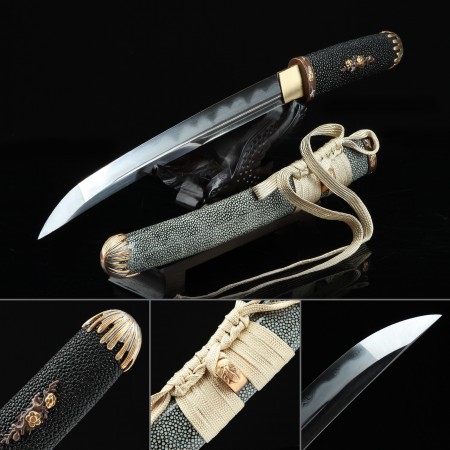
Aikuchi is a Japanese mounting style defined by the complete absence of a tsuba (hand guard). In standard tanto or katana fittings, the tsuba acts as a visual and structural break between the handle and the blade. Removing it creates a seamless, uninterrupted line from the end of the handle through to the saya opening — a silhouette that reads as unusually clean and unified. Historically, aikuchi tanto were associated with civilian formal wear, where the concealed carry context made a low-profile mounting appropriate. In a display context, the aikuchi format draws attention to the quality of the handle wrap and the fit between handle and saya, since there is no tsuba to mask minor gaps or inconsistencies. It is a format that demands precision in assembly and rewards collectors who appreciate minimalist construction.
How should I care for the rayskin saya on a display tanto?
Rayskin, or same, is a naturally granular material derived from ray hide that has been used in Japanese sword fittings for centuries. On a saya, it provides both grip texture and a degree of moisture resistance. To maintain a rayskin saya in display condition, avoid direct sunlight, which can fade and dry the skin over time. Periodic light conditioning with a product designed for exotic leathers — applied sparingly with a soft cloth — keeps the material supple without darkening or staining the surface. Store the tanto horizontally on a dedicated stand rather than upright, which can place uneven stress on the saya's lacquered or wrapped sections. Do not insert the blade with wet or oiled hands, as accumulated residue inside the saya can affect both the blade surface and the interior lining over time.
Are Damascus tanto a good choice as a display gift for collectors?
Damascus tanto make a compelling gift for collectors who value craft history and material specificity. The compact format — typically under 12 inches in overall length — makes tanto easier to display in a broader range of spaces than a full-length katana, while the short-blade tradition carries its own distinct historical lineage within Japanese culture. A gray Damascus tanto with coordinated saya and handle presents as a complete, aesthetically considered object rather than a generic decorative piece, which tends to resonate with informed recipients who can recognize the choices made in steel selection, mounting color, and assembly style. Pairing with a dedicated display stand enhances the presentation and makes the gift immediately ready for exhibition without additional sourcing.