What makes a tachi different from a katana in terms of mounting?
The primary distinction lies in how the blade is worn and consequently how the saya is mounted. A tachi was suspended edge-down from the belt using a sageo cord tied through kurikata fittings, which is why the sageo on tachi mountings tends to be longer and more prominently featured than on katana. Katana, by contrast, were thrust through the obi edge-up. This difference affects the geometry of the tsuba, the placement of the habaki, and the overall curvature profile — tachi typically have a more pronounced taper and curve designed to draw cleanly from an edge-down position. For display collectors, mounting a tachi horizontally with the edge facing down is the historically accurate presentation, and purpose-built tachi stands reflect this orientation.
How does manganese steel compare to 1095 carbon in a tachi blade?
Manganese steel and 1095 high-carbon steel each bring different metallurgical character to a forged blade. Manganese steel — sometimes referred to as Hadfield steel in industrial contexts — contains a higher manganese content that improves toughness and resistance to stress fracturing, making it particularly suited to longer blade formats like nodachi and tachi where flex under its own weight becomes a consideration during display. 1095 carbon steel, by contrast, is valued by collectors for its predictable grain structure and the clean hamon activity it produces during differential hardening. A 1095 blade polished to a fine finish will show a more defined transition line between the hardened edge and the softer spine, which is a detail many collectors specifically seek. Neither is objectively superior — the choice reflects what a collector prioritizes: structural resilience or visual grain definition.
What is the significance of a green sageo on historical Japanese blades?
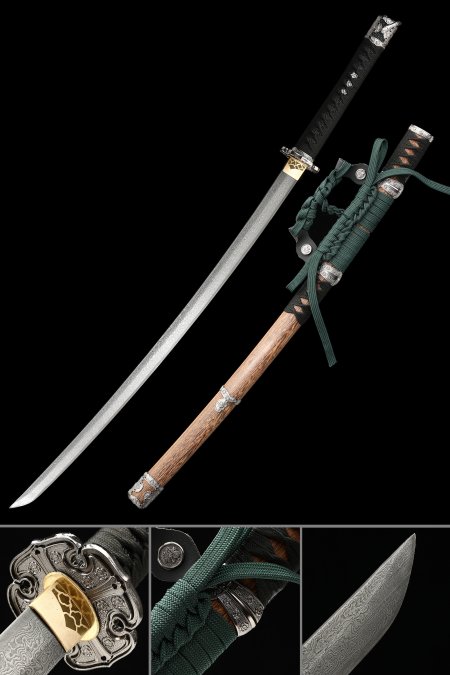
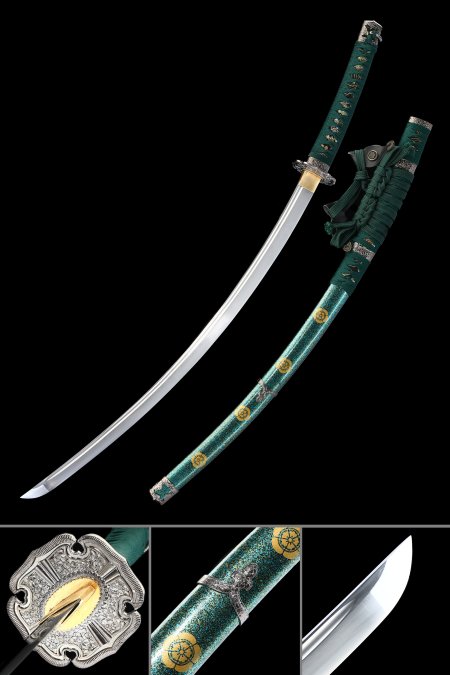
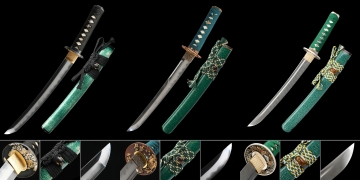
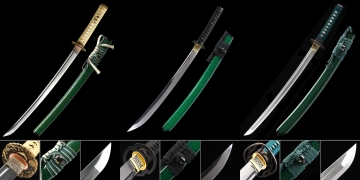
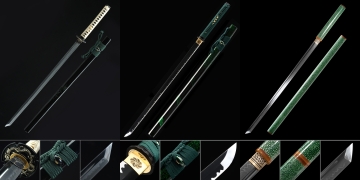
In classical Japanese blade mountings, sageo color was rarely arbitrary. Green — produced historically through silk dyeing with plant-based pigments — appeared in ceremonial and high-status mountings, often associated with specific court functions or aesthetic schools that valued its association with nature and renewal. Unlike black sageo, which carried a more martial and utilitarian connotation, green signaled deliberate ornamentation and was more frequently seen on tachi intended for formal presentation rather than field use. Modern collectors who choose green sageo pieces are working within this established visual tradition, even when the piece itself is a contemporary collectible. The cord color functions as a secondary signature that shapes the entire tonal impression of the mounted blade.
How should I care for a lacquered saya on a display tachi?
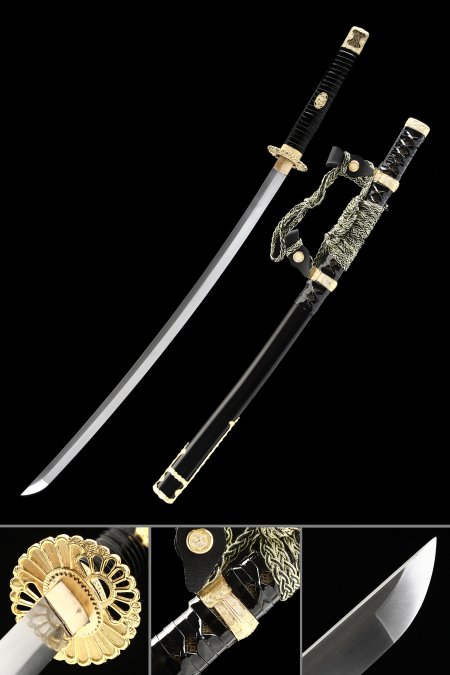
Lacquered saya require a different maintenance approach than bare wood or synthetic finishes. The lacquer layer, whether black or colored like the teal finish on the Odachi in this collection, can develop micro-cracks if exposed to low humidity for extended periods. In climate-controlled rooms where winter heating reduces ambient moisture, placing a small humidity buffer near the display stand helps prevent this. Avoid direct sunlight, which will fade both the lacquer pigment and the sageo cord color over time. For the interior of the saya, a light application of choji oil applied with a soft cloth twice a year prevents the wood from contracting around the blade's habaki. Never use silicone-based polishes on lacquered surfaces — they can soften and cloud the finish in ways that are difficult to reverse.
Is a Damascus steel tachi a good choice as a collector's display centerpiece?
Damascus — or pattern-welded — steel is among the most visually compelling blade materials for display purposes precisely because no two blades share an identical surface pattern. The folding and welding process that produces the layered billet creates visible flow lines across the blade face that shift in character under different lighting angles, giving the piece an almost kinetic quality when displayed under directional gallery lighting. For collectors who want a tachi that draws sustained visual interest from anyone viewing the display, Damascus offers an advantage over uniform monosteel that is difficult to overstate. The natural rosewood saya and green sageo pairing in this collection's Damascus tachi creates a warm, organic color palette that suits both traditional Japanese interior arrangements and contemporary display cabinetry.