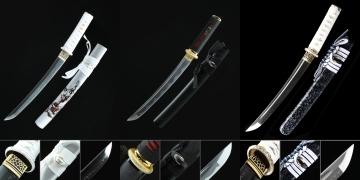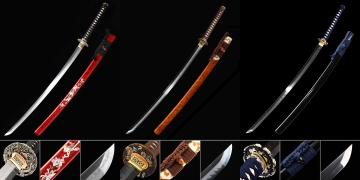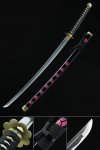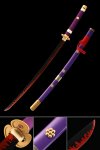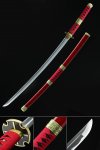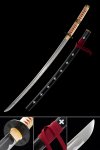
One Piece Sword

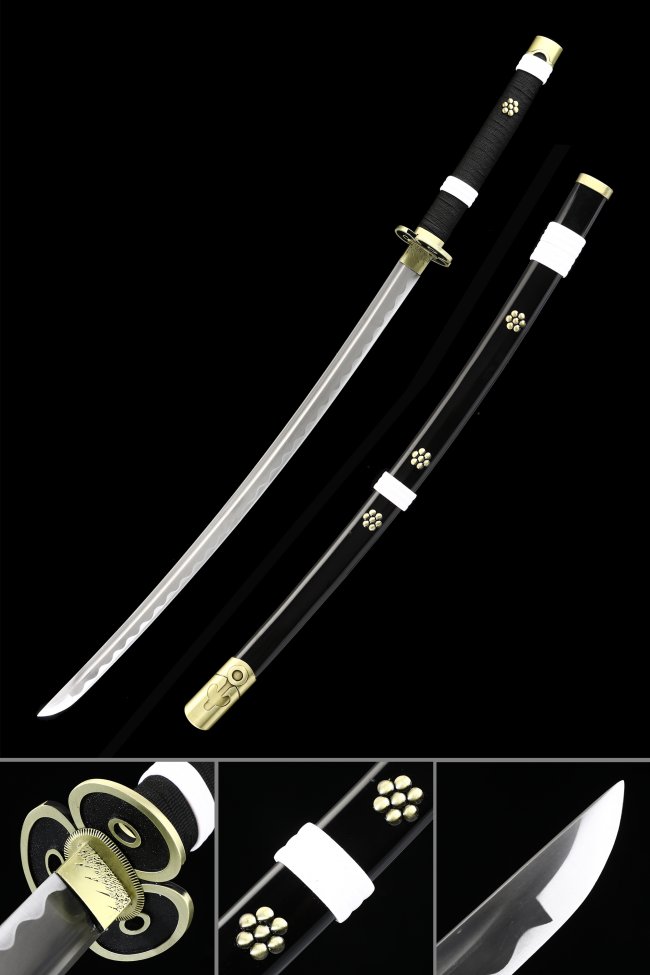
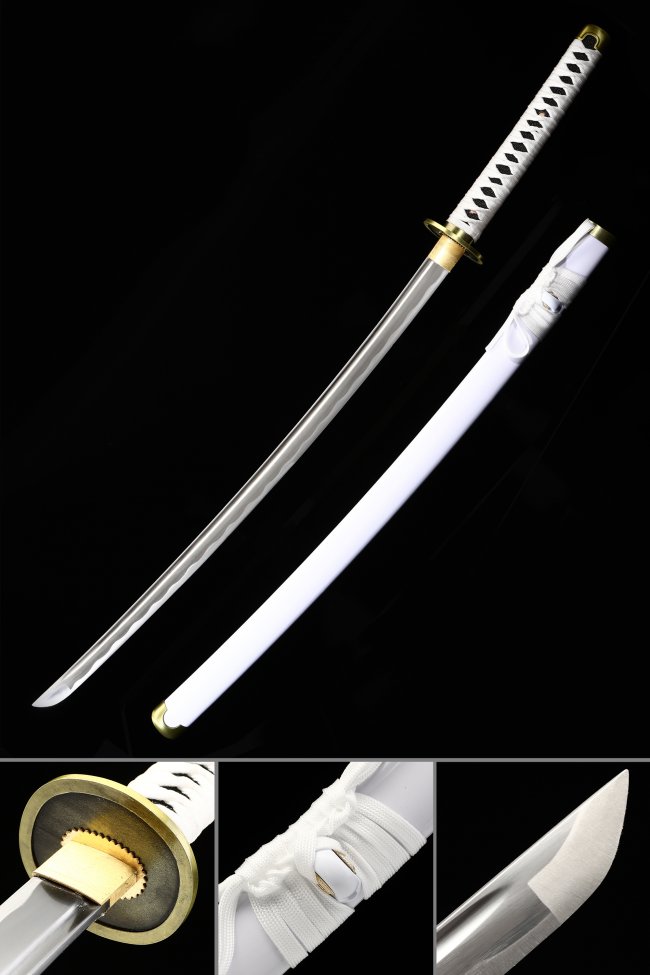
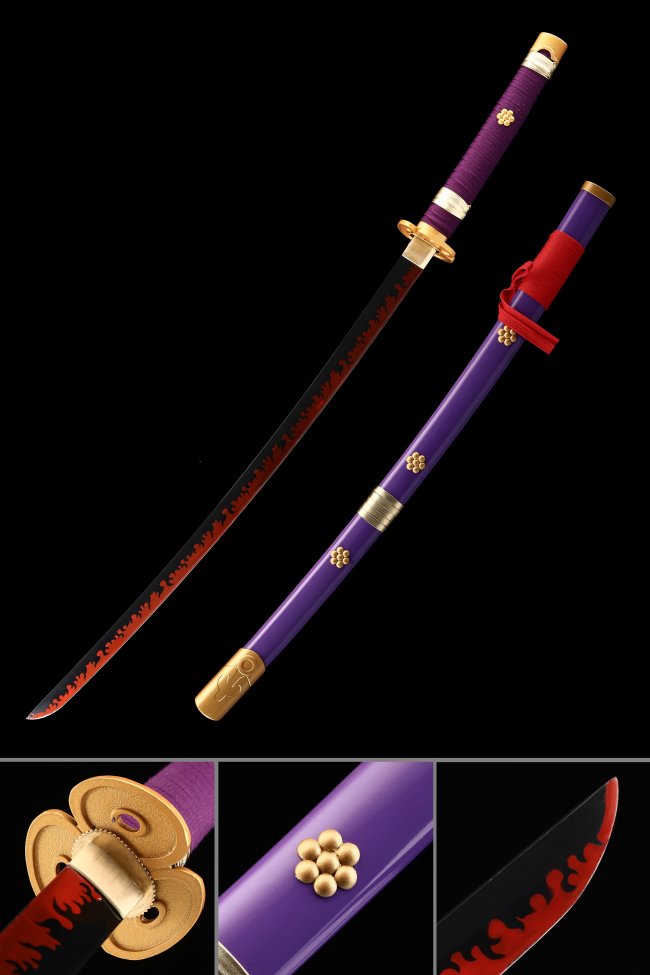
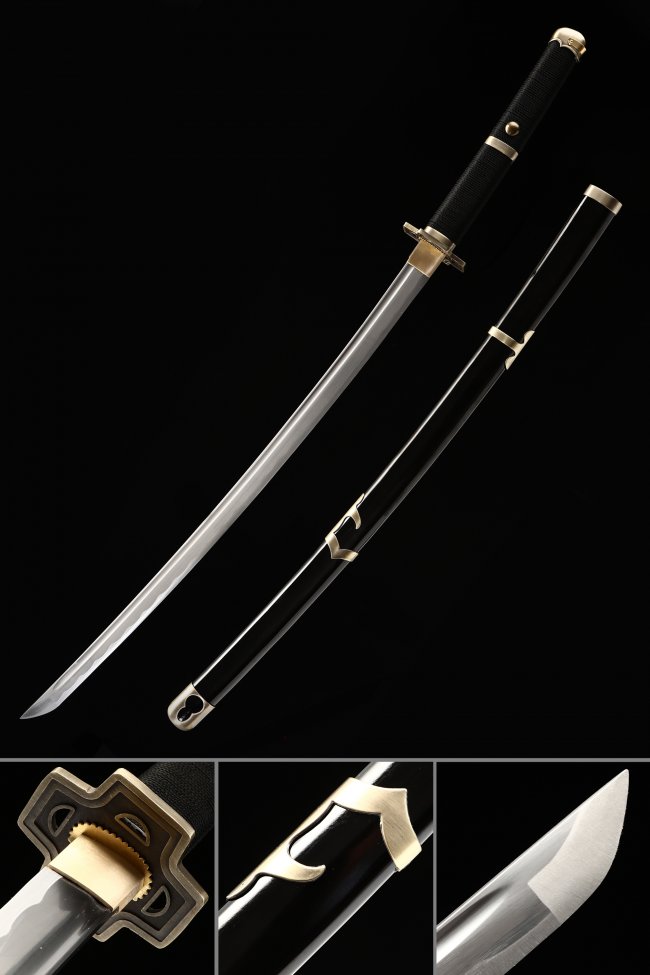
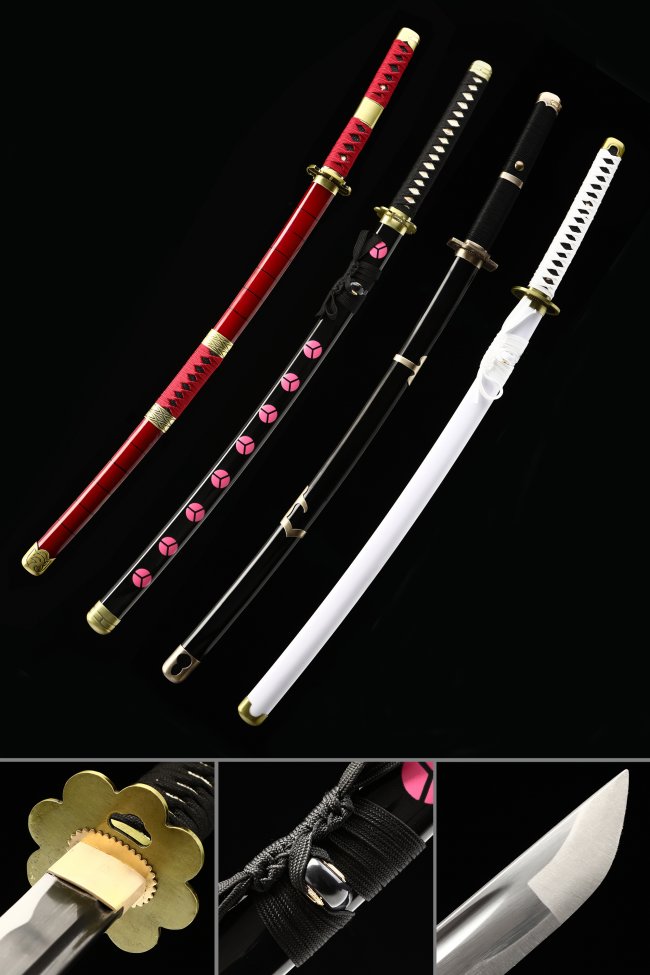
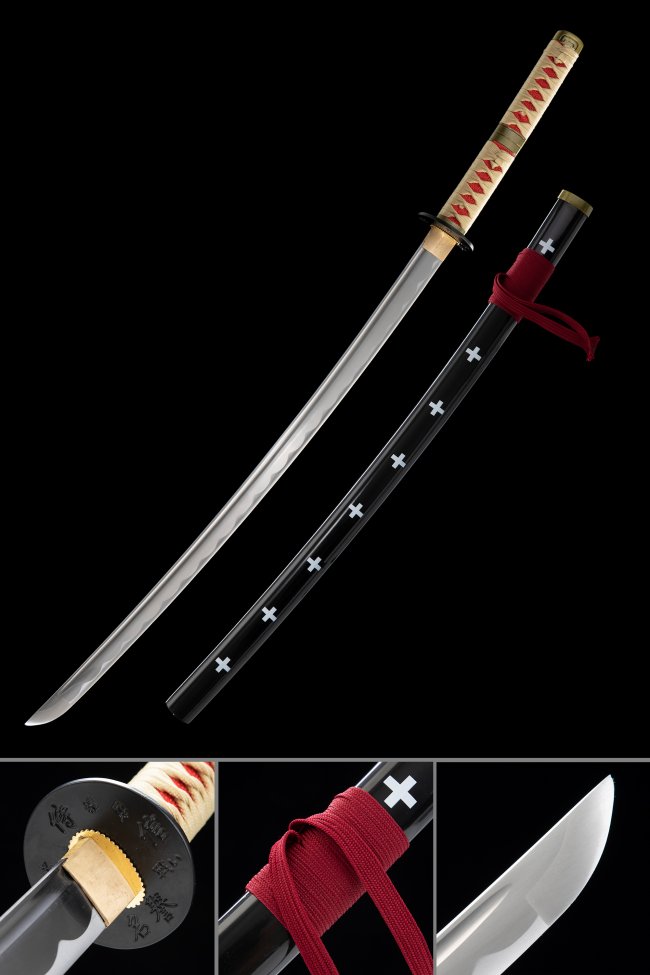
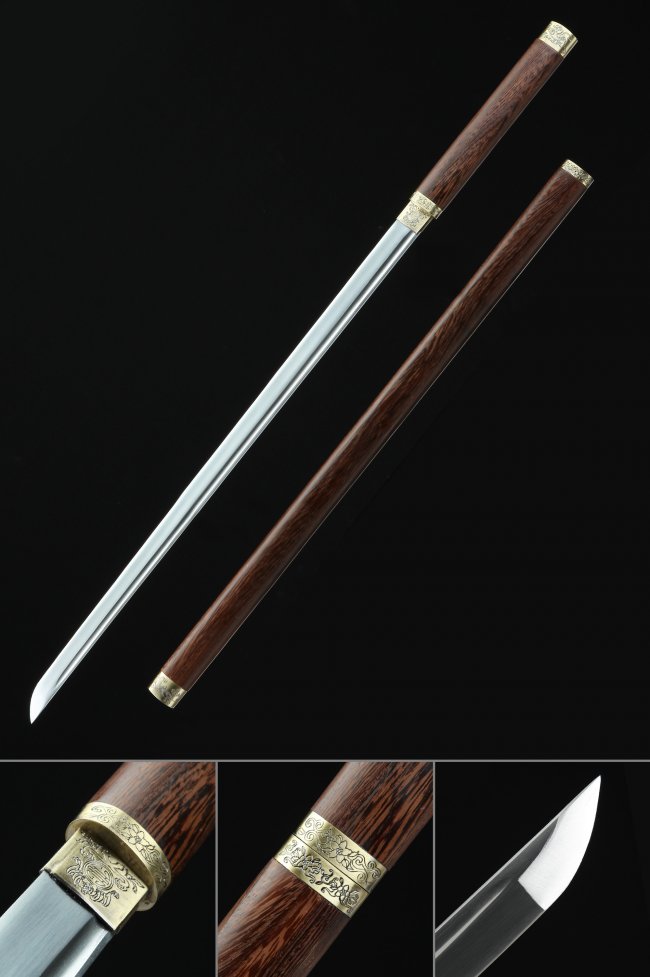
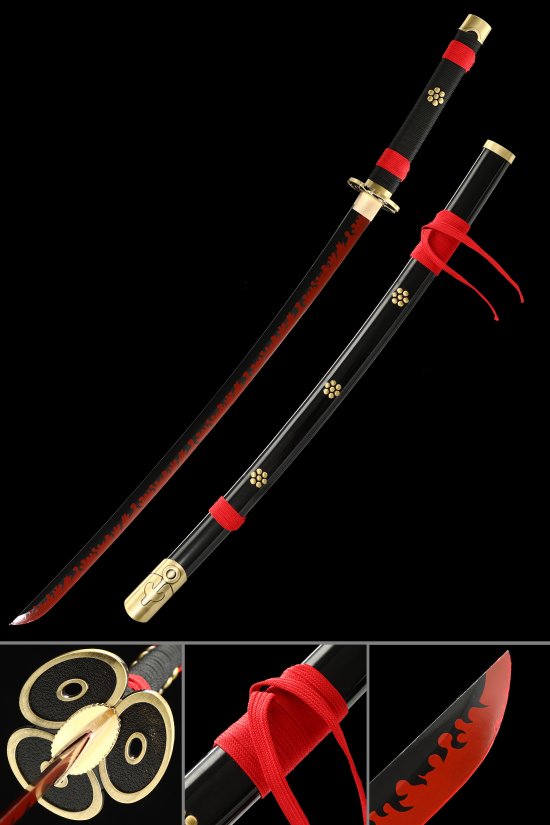
Every One Piece sword in this collection is a hand-forged tribute to the blades that made Eiichiro Oda's pirate saga legendary — Roronoa Zoro's Wado Ichimonji, the black Shusui, the cursed Sandai Kitetsu, the shaved-down Enma, Trafalgar Law's Kikoku nodachi, and Luffy's iconic silhouette from the live-action arc. Each piece is forged from real high-carbon steel (1060, 1095, T10 clay-tempered, or folded Damascus), fitted with a full-tang nakago, genuine ray-skin same', and tight ito wrap so it handles like a functional Japanese daito rather than a cosplay prop. Every saya is hand-lacquered to match the anime reference, from Wado's pristine white to Shusui's jet black to Kikoku's spotted yellow. Backed by 100,000+ happy collectors, 9,800+ verified reviews, a 4.9/5 rating, free US shipping, and our 30-day satisfaction guarantee, TrueKatana gives One Piece fans a complete lineup for display, cosplay, and training.

Showing 13 Products

Frequently Asked Questions

What is a One Piece sword?

A "One Piece sword" is a replica of one of the named, story-significant blades wielded by characters in Eiichiro Oda's long-running manga and anime One Piece. Unlike most anime franchises, which give the protagonist one signature weapon, One Piece features an entire catalog of legendary swords tied to specific characters, story arcs, and a fictional ranking system modeled on real Japanese Wazamono classifications. Collectors use the term as a category that spans everything from Roronoa Zoro's three-sword trio to Trafalgar Law's oversized Kikoku nodachi to Kozuki Oden's paired legendary blades from the Wano arc.

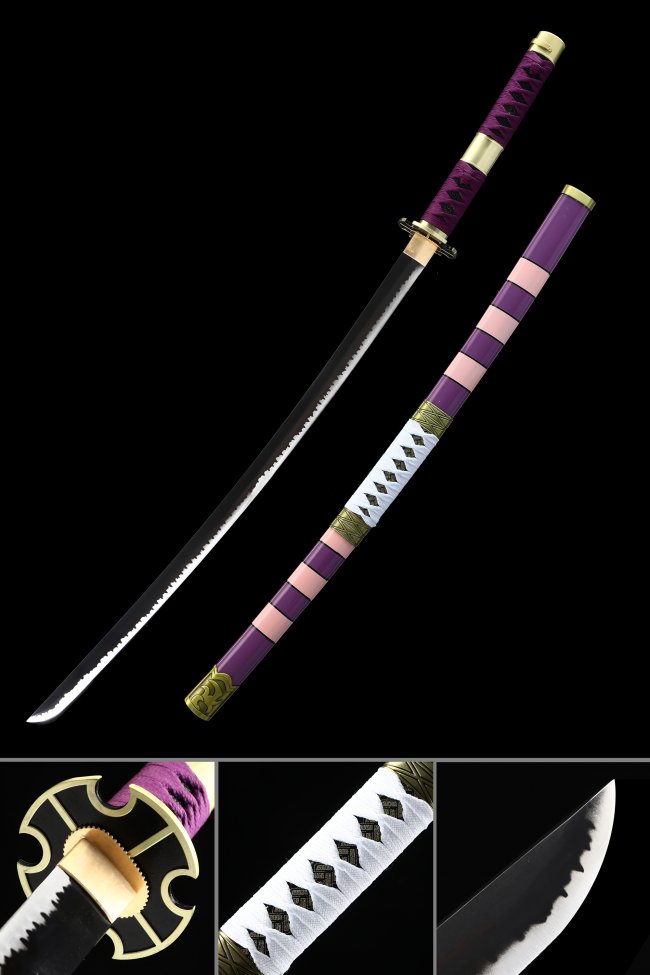
Our One Piece sword collection gathers these named blades into a single category so fans can shop the entire franchise in one place. The lineup includes Zoro's Wado Ichimonji (the white-sheathed katana inherited from his childhood friend Kuina), Sandai Kitetsu (the cursed third-generation blade with its flame hamon), Shusui (Ryuma's jet-black legendary katana), Enma (the Oden heirloom that eventually passes to Zoro), Law's Kikoku nodachi (the oversized yellow-spotted sword with the round black tsuba), Luffy's live-action silhouette, and the broader Oden-Wano lineup including Ame no Habakiri. Each blade is forged in real carbon steel — 1045, 1060, 1095, T10 clay-tempered, 9260 spring, or folded Damascus — and built on a full-tang nakago with traditional mekugi pegs, genuine ray-skin same', and tight ito wrap.

Fans buy One Piece swords for three main reasons. Cosplayers want convention-ready blades that read instantly in photography — Zoro's three-sword pose is one of the most iconic anime cosplays in the world, and a poorly-made prop ruins the shot. Display collectors want a themed wall that recreates the Grand Line inside their home, with Zoro's trio as the centerpiece and supporting character blades flowing out from there. Practitioners want a full-tang functional daito that honors their favorite swordsman while still being capable of real tameshigiri practice on soft targets or single tatami omote.

Every product page in the collection lists the exact steel, blade length, tsuka length, weight, and fitting details so you can match the right tier and silhouette to your intended use. Whether you are building the Zoro trio, anchoring a Wano arc display around Oden's legacy blades, or just adding Luffy's sword to a mixed anime shelf, the category gives you a consistent quality standard across every character. Unlike generic anime sword shops that treat One Piece as an afterthought, this lineup is curated by fans who actually follow the manga chapter by chapter and update the catalog whenever a new named blade appears in the story.

How do I collect Zoro's three swords?

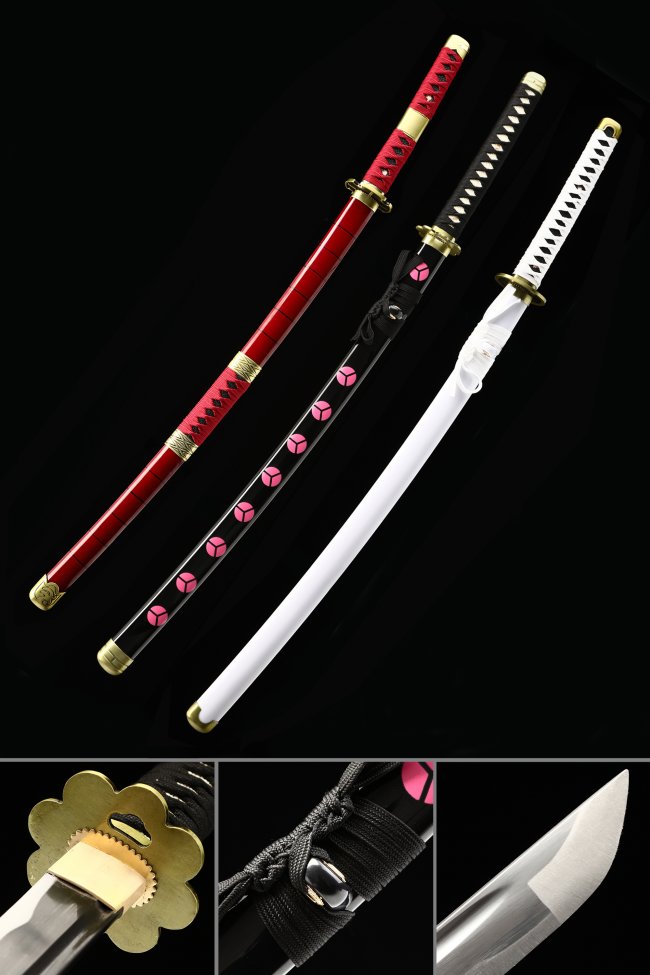
Building Zoro's Santoryu set — his signature Three-Sword Style — is the most popular project in One Piece sword collecting, and there are two ways to do it. The fastest path is to buy the matched Zoro katana set bundle, which ships all three blades together in the same steel grade and with consistent construction quality across every piece. The bundle saves money compared to buying the three blades separately and guarantees the tsuba, saya, and wrap details harmonize on the wall.

The second path is to build the trio one blade at a time from the Roronoa Zoro sword category. This is the right approach if you want to mix steel tiers — for example, a premium T10 Wado Ichimonji as the centerpiece paired with 1060 Kitetsu and Shusui in the supporting roles — or if you want to follow Zoro's story arc chronologically, adding each blade as he acquires it in the manga.

Zoro's three swords change across the series, so you also need to decide which story arc you want to represent. The pre-Thriller Bark trio is Wado, Kitetsu, and Yubashiri — but Yubashiri is destroyed on Enies Lobby and replaced by Shusui after Thriller Bark. The post-Thriller Bark trio is Wado, Kitetsu, and Shusui, which is the most commonly recreated lineup. The post-Wano trio is Wado, Kitetsu, and Enma, reflecting Shusui being returned to Wano in exchange for Oden's Enma. All three configurations are valid, and serious collectors often own the full evolution — Shusui and Enma displayed side by side to represent the transition.

The traditional display layout is horizontal three-tier: Wado Ichimonji on top (it is Zoro's most prized blade and the one he holds in his mouth), Sandai Kitetsu in the middle (right-hand blade), and Shusui or Enma on the bottom (left-hand blade). This reads cleanly from a distance and matches the way fans instinctively picture the set.

If you are buying the trio for active cosplay rather than static display, make sure all three saya have snug koiguchi fits so the blades do not rattle during the famous mouth-held Wado pose. Every set we ship is inspected for exactly this before it leaves the workshop.

One extra tip for hardcore Zoro cosplayers. The mouth-held Wado pose looks simple in photos but is surprisingly hard to hold for more than a few seconds at a time without jaw fatigue. Practice the grip at home with a lighter prop before the convention, pad the saya's koiguchi lightly with soft tape if the hardwood is rough on teeth, and brief your photographer to capture the shot in three or four quick bursts rather than one long pose.

Which One Piece sword should I start with?

For most first-time One Piece collectors, the right starting blade is Zoro's Wado Ichimonji — the white-sheathed katana he has carried since the first chapter of the manga. Three reasons make Wado the default recommendation. First, it is the single most recognizable One Piece sword in the world; any anime fan who sees it will know instantly what it is, which makes it the highest-impact single purchase for display or cosplay. Second, the white saya with its pristine lacquer finish photographs beautifully against almost any wall color, and the simple round guard keeps the silhouette clean. Third, Wado's proportions are standard katana dimensions, which makes it the easiest blade in the collection to handle, draw, and maintain for a new owner.

If Wado does not fit your budget at the steel tier you want, the second-best starting blade is the Sandai Kitetsu, Zoro's cursed third-generation sword. Kitetsu has a more dramatic silhouette than Wado — the flame-pattern hamon reads strongly in display photography, and the cursed-blade backstory gives it extra narrative weight at conventions. It is also slightly more affordable in most steel grades because the fittings are simpler.

For fans who prefer Trafalgar Law to Zoro, the starting blade is the Kikoku nodachi. Kikoku is oversized — closer to 50 inches overall than the standard 40 — which makes it dramatic on the wall but challenging to transport for cosplay. If you are picking a nodachi as your first One Piece sword, plan the mounting and storage carefully before ordering.

Luffy fans should start with Luffy's sword from the live-action arc. Oden fans should start with either Enma or Ame no Habakiri from the One Piece Oden sword collection, depending on which half of the Wano story matters more to them.

Whichever blade you pick, we recommend 1060 steel for a first purchase. It is the workhorse grade that balances affordability, handling, and real full-tang construction without the premium price of T10 or folded Damascus. If you decide a year later that you want to step up, 1060 gives you enough hands-on experience to make an informed decision on the next tier.

A practical note on budget planning. Collectors who know they will eventually own multiple One Piece blades often ask whether to save up for a single premium T10 sword or buy two 1060 blades for the same money. The honest answer is that two complementary blades almost always read better on the wall than a single isolated piece, and 1060 is a perfectly respectable grade for display. Unless you specifically want to do heavy tameshigiri on premium steel, the two-blade approach builds a more satisfying collection faster.

Is the Kikoku nodachi really that long?

Yes — Kikoku is Trafalgar Law's signature oversized nodachi, and its length is one of its most defining features in the anime. In One Piece, Law carries Kikoku on his shoulder because it is too long to wear at the hip like a standard katana, and the oversized silhouette is a visual shorthand for his character just as much as his tattoos and furry hat. Our One Piece Kikoku katana replicas preserve this proportion faithfully — the standard Kikoku ships at roughly 48–52 inches overall, with a blade of about 33–36 inches, a long tsuka designed for two-handed grip with plenty of spacing, and the round black tsuba against the spotted yellow saya that makes the sword instantly recognizable.

Those dimensions have real consequences for how you handle, transport, and display the blade. Kikoku will not fit in a standard 40-inch sword bag or a typical over-shoulder carry sling — you need an extended nodachi case or a custom wrap. It will not fit comfortably in the back seat of a small sedan for ride-share transport to a convention, and it is too long for most airline checked-baggage hard cases without a specifically-sized nodachi container. Plan the logistics before you order if you intend to travel with the sword.

On the wall, Kikoku is dramatic but demanding. A standard horizontal two-peg katana wall mount rated for a regular 40-inch daito is usually too narrow to cradle Kikoku comfortably — you need either a widened custom mount or a vertical wall holder that gives the blade room to drop its full length. Vertical display works especially well for Kikoku because the spotted saya reads beautifully floor-to-ceiling and the character's own shoulder-carry posture in the anime is closer to vertical than horizontal.

Handling Kikoku in the hand is also different from a standard katana. The extra length shifts the balance point further from the tsuba, which makes one-handed swings dramatically harder and rewards the two-handed grip Law uses in almost every fight. Practitioners should think of Kikoku as a nodachi first and an anime prop second — everything that is true for traditional odachi handling applies, including the need for more clearance overhead during practice swings. If you want the Law silhouette but not the oversized logistics, a standard-length Trafalgar Law's sword variant is available in a few listings at shorter dimensions that still preserve the spotted saya and round black tsuba.

What about Luffy's sword from the live-action?

Luffy is famously sword-free in the original manga and anime — his signature Gomu Gomu no fighting style relies entirely on his rubber devil fruit powers rather than a bladed weapon. This changed with the Netflix live-action adaptation, which gave Luffy a specific sword silhouette in several early scenes that fans immediately wanted as collectible replicas. The Luffy's sword category covers that live-action blade in faithful detail, letting fans add Luffy to an otherwise weapon-free character lineup.

The live-action Luffy sword is designed to fit the character's look rather than follow traditional Japanese swordsmithing exactly — it has a lighter, almost improvised aesthetic that reads as something a pirate captain might grab from a shipboard rack rather than a legendary named blade. The hilt wrap is simple, the guard is minimal, and the overall silhouette is scaled to be visually balanced for Luffy's smaller on-screen frame. Our replicas preserve this feel while still using real full-tang carbon-steel construction underneath.

For collectors building a complete Straw Hat display, Luffy's sword serves a specific purpose: it is the blade that lets you put the captain on the same wall as Zoro's trio, creating a two-character centerpiece that anchors any One Piece room. Without it, Luffy is represented only by his iconic straw hat, which some display collectors want to pair with an actual sword rather than leave as a lone hat on a shelf.

For cosplayers, the live-action Luffy blade is optional — most traditional Luffy cosplays do not include any sword at all because it is not part of the manga character. But if you are specifically recreating the live-action adaptation's early episodes, the sword is a necessary prop, and the silhouette needs to match exactly for the cosplay to read correctly in photography. Our version is designed around reference frames from the Netflix series.

Steel tier choice for Luffy's sword follows the same rules as any other blade in the One Piece sword collection. 1045 or 1060 is perfect for display and cosplay use. 1095 and T10 are available for collectors who want the blade to handle real tameshigiri practice. Whatever tier you pick, the sword ships with the same hand-forged full-tang construction standard as Zoro's trio, Law's Kikoku, and every other named blade in the category. The live-action-inspired fittings are the same quality level as the traditional Japanese-style pieces — no shortcuts because the character is newer to the sword lineup.

Which steel grade should I pick?

Steel choice for a One Piece sword is the same decision you would make on any traditional katana, and the answer depends on how you plan to use the blade. If the sword will live on a wall as a cosplay and display piece and never cut anything, 1045 high-carbon steel is the starting tier — affordable, clean in appearance, and perfectly weighted for convention carry during long photo days.

1060 is the workhorse grade, and it is the default recommendation for most first-time buyers. It is tougher than 1045, more forgiving of imperfect swing mechanics, and capable of light backyard cutting on water bottles, pool noodles, and rolled newspaper without damage. This is the tier at which Zoro's trio, Law's Kikoku, and the broader One Piece anime sword lineup become genuine functional weapons rather than just display pieces.

1095 sits a step up: harder, sharper, and capable of single tatami omote cutting when swung correctly. It is the intermediate practitioner's choice and the tier where the hamon line starts to show as a distinct visual feature on polished blades like Wado Ichimonji.

T10 clay-tempered tool steel is the premium tier. The clay-tempering process produces a genuinely differential-hardened blade with a dramatic natural hamon, ideal for collectors who want the Wado Ichimonji or Enma to be both a beautiful display piece and a serious cutting tool. T10 survives stacked tatami practice without chipping when handled with correct form.

Folded Damascus is a premium aesthetic choice rather than a pure performance upgrade. The visible layered pattern reads beautifully on polished blades and is unique to each piece, making every Damascus One Piece sword effectively one-of-a-kind. It is especially striking on the Shusui and Zoro black katana silhouettes where the folded lines show through the darkened finish.

9260 spring steel is the durability pick — essentially unbreakable, which makes it the safest choice for rough handling or for fans who want a sword they can swing freely without worrying about chipping. It is less traditional visually but mechanically the toughest grade in the catalog.

Rule of thumb for One Piece buyers: display only, 1045; first real sword, 1060; cutting practice, 1095 or T10; premium display, T10 or folded Damascus; maximum durability, 9260. Most new owners land on 1060 for their first blade and step up to T10 for their second or third purchase once they have a clearer sense of how they actually use the collection — whether it sits on the wall, travels to conventions, or gets swung at soft targets in the backyard.

How do I care for the saya's colored lacquer?

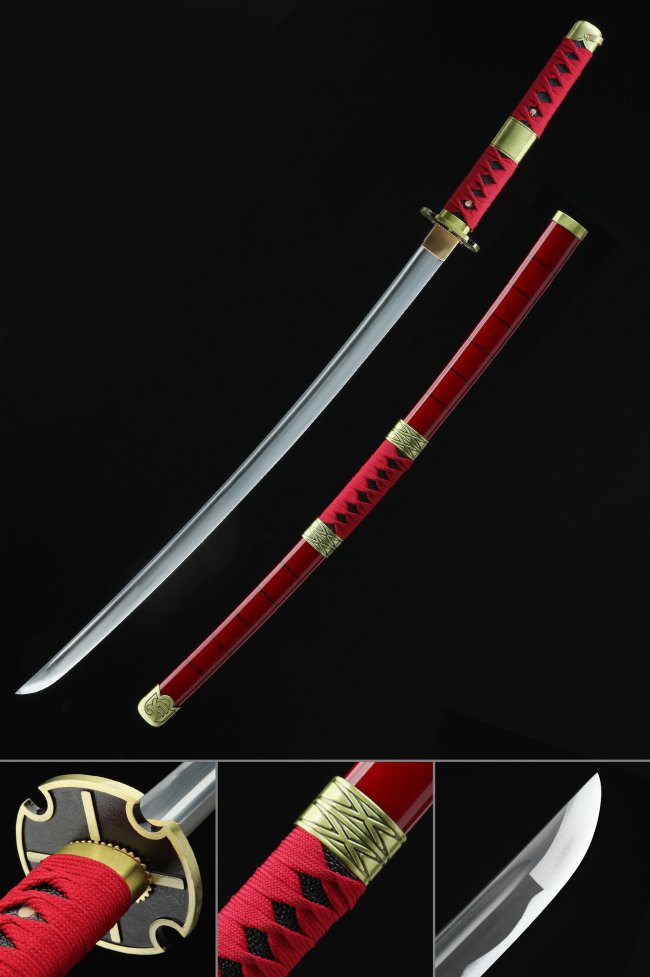
One Piece swords are unusual in the anime-replica world because so many of the named blades have distinctive colored saya — Wado's pristine white, Shusui's jet black, Kikoku's spotted yellow, Kitetsu's brown wood-grain finish, Enma's deep red, Ame no Habakiri's gold. Protecting these colored finishes takes slightly more care than a standard black lacquer saya because the pigments show wear and fading more visibly.

The most important rule is to keep the saya out of direct sunlight. UV exposure fades pigmented lacquer within a few years — especially reds, yellows, and whites, which are the three most common problem colors in the One Piece lineup. If your display wall gets afternoon sun, either move the sword to a different wall, install a sheer curtain, or apply a UV-blocking window film. This single step will add decades to the life of a Kikoku or Wado saya.

The second rule is to wipe the saya with a clean, dry microfiber cloth during your monthly sword maintenance routine. Fingerprints and skin oils slowly etch into lacquer finishes if left in place for long periods, and colored lacquer shows this staining more visibly than black. Use a dry cloth only — never household polish, furniture wax, or spray cleaners, all of which leave residue that attracts dust and can discolor the pigment.

The third rule is to mount the sword on a hardwood katana wall mount with felt-lined pegs rather than resting it on bare wood or exposed metal. Felt protects the lacquer from contact polishing, which is the single most common cause of shallow wear lines on displayed blades. Check the felt periodically and replace it if it compresses or tears.

If your colored saya ever develops a small scratch or scuff, do not attempt to repaint it yourself with hardware-store lacquer. Contact our support team with photos — we can usually match the original pigment and walk you through the options, which range from a light touch-up at home using specific materials we provide, to a full professional refinish for severe damage. Amateur paint over a scuff almost always looks worse than the scuff itself and can lower the display value of the sword permanently.

One last note on Kikoku specifically: the spotted yellow saya uses a two-tone lacquer that is especially vulnerable to fingerprint etching. Treat it carefully, wear gloves during first unboxing if possible, and avoid handling the saya directly with bare hands during cosplay preparation whenever you can.

Customer Reviews

Cart 0 Items

Your cart is empty