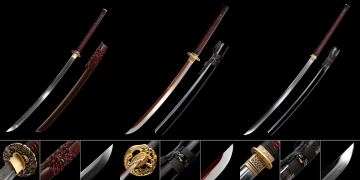
Red Saya Tachi

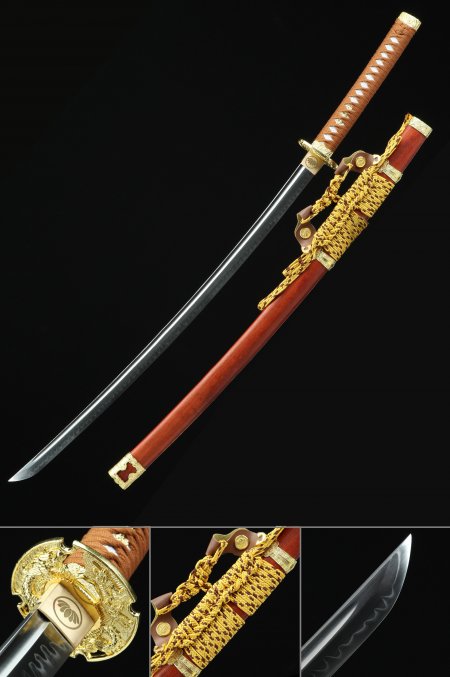
Red Saya Tachi brings together the sweeping curvature of classical Japanese tachi design and the bold visual presence of hand-applied red lacquer scabbards. Each piece in this collection is hand-forged from high-carbon T10 steel, featuring a genuine clay-tempered hamon along the blade and ornate gold-finished tsuba in chrysanthemum or peony motifs. Cord-wrapped handles provide an authentic aesthetic rooted in Heian and Kamakura period craftsmanship. Free standard shipping on all orders, with hassle-free returns.
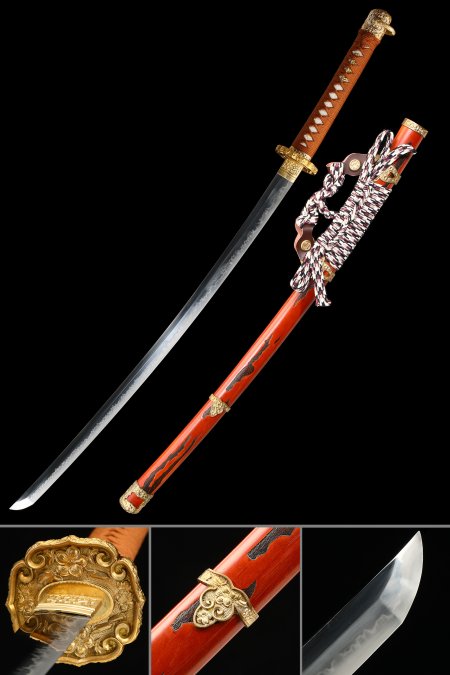
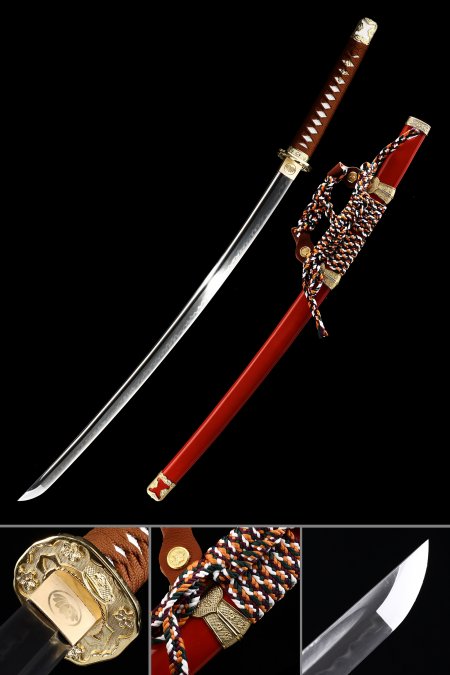
Showing 3 Products

Related Collections

Gold Katana17 items


171 Reviews

Red Ninjato7 items


29 Reviews

White Katana56 items


785 Reviews

Red Naginata1 items


Reviews

Frequently Asked Questions

What makes a tachi different from a katana?
The tachi predates the katana by roughly two to three centuries and differs in several measurable ways. A tachi typically has a nagasa (blade length) exceeding 70 cm, a more pronounced tori-sori curvature concentrated toward the base of the blade, and a signature (mei) on the side of the tang that faces outward when worn edge-down. Katana, by contrast, were worn edge-up through the obi, and their curvature tends to be more evenly distributed. The tachi’s design was optimized for mounted use, where a sweeping draw from a hanging scabbard was more effective than the quick iaijutsu draws associated with katana. In display contexts, tachi are typically mounted horizontally with the cutting edge facing downward—the opposite orientation from katana.
What is a real hamon, and why does it matter for collectors?
A real hamon is the temper line produced during differential heat treatment, where clay is applied to the spine of the blade before quenching in water. The clay insulates the spine, causing it to cool slowly and remain relatively soft (pearlite structure), while the uncoated edge hardens rapidly into martensite. The visible boundary between these two crystalline structures is the hamon. In T10 steel, the high carbon content and trace tungsten support fine grain formation, which makes hamon activity—including nie (bright granular particles) and nioi (misty transition zones)—especially vivid under light. An acid-etched or painted hamon is purely cosmetic and lacks this metallurgical authenticity. For collectors, a genuine hamon signals that the blade underwent real differential tempering, which is the same fundamental process used in traditional Japanese sword-making.
How should I care for a T10 steel tachi on long-term display?
T10 high-carbon steel will develop surface oxidation if left unprotected, especially in humid environments. For display maintenance, apply a thin coat of choji oil (traditional clove-based sword oil) or a neutral mineral oil to the blade every two to four months using a soft cotton cloth, working from the habaki toward the tip. Avoid fingerprint contact on the blade surface—skin oils accelerate spotting. Store or display the tachi away from direct sunlight, which can fade the red lacquer saya over time, and keep it in an environment with stable humidity between 40–60%. If the saya develops small cracks in the lacquer, avoid forcing the blade in or out, as lacquer fragments can scratch the blade finish. Periodically inspect the tsuka wrap for loosening and re-secure any displaced cord ends.
What do the chrysanthemum and peony tsuba designs represent?
In Japanese decorative tradition, both motifs carry specific cultural weight. The chrysanthemum (kiku) is closely associated with the Imperial Household and appears on the Imperial Seal of Japan. On sword fittings, it connotes longevity, resilience, and noble lineage. The peony (botan) is sometimes called the ‘king of flowers’ in East Asian aesthetics and represents honor, good fortune, and high status—making it a frequent choice for formal sword mounts from the Edo period onward. Gold-finished tsuba bearing these motifs are not merely decorative choices; they place the piece within a recognizable iconographic tradition that collectors and enthusiasts familiar with Japanese sword history will immediately recognize. These motifs also appear in lacquerware, ceramics, and textile patterns of the same eras, making them authentic visual anchors for a period-informed display.
Is a red saya tachi a good centerpiece for a Japanese sword display?
Yes—the red lacquer saya creates high visual contrast against both neutral wall backgrounds and darker display surfaces, making it one of the most impactful choices for a focal piece. Tachi are traditionally displayed horizontally on a dedicated tachi stand (tachi-kake) with the edge facing downward, which orients the curvature of the blade in the visually intended direction. Red was historically used in formal and ceremonial tachi mounts because it signaled status and visibility in procession settings. Paired with gold tsuba fittings and a cord-wrapped handle, the complete color palette—red, gold, silver, and brown—is cohesive and historically grounded. Collectors who want to build a complementary display often pair a red saya tachi with a contrasting black-saya katana or a similarly scaled Odachi to create depth and visual hierarchy across blade lengths.

Customer Reviews